Concept
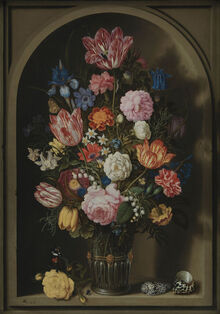
I chose this research topic because I believe that small, everyday objects hold significant importance in 17th-century Dutch painting. Their depiction in still lifes is not accidental—such details help us understand not only the artists' style but also reflect the specific societal customs, culture, and morals of that era. These objects often served as carriers of symbolic meaning, revealing the inner worlds, values, and perspectives of people. Furthermore, unlike large scenes or portraits, small objects offer an opportunity to explore the daily lives and material possessions of both common and wealthy people, making them exceptionally valuable for historical and cultural analysis.
The relevance of this topic stems from the modern world’s increasing focus on details and nuances—elements that help us understand not only the images of the era but also the inner life of the individual. Within the context of studying 17th-century art, small objects allow us to reveal subtle facets of social and spiritual values, while also demonstrating how artists employed them to convey deep meaning. Given globalization and the rapid exchange of information, it is crucial to be able to analyze not just major narratives, but also the details that often serve as keys to understanding entire cultural strata. This is precisely why researching the role and significance of small, everyday objects in Dutch painting is so timely, helping to expand our understanding of the cultural identity of that period.
The goals and objectives of this research are connected to the desire to understand precisely how small objects influence the perception of a painting and what they can reveal about the era and society. The main objective is to identify the symbolic meanings and functions of these details in still lifes. The work plans to analyze the most common objects, their placement, context, and semantic nuances. It is also important to show how artists used these small objects to form the overall mood and message of the painting. The research objectives include gathering and systematizing information on the types of objects, their symbolism, as well as comparing various works to identify commonalities and differences. This approach will help to understand why small details played such a vital role in creating the semantic layer of the still life and what role they fulfilled in communicating with the viewer.
The choice of topic stems from a personal interest in the Golden Age, as well as a desire to understand how ideas, values, and social attitudes were conveyed through ordinary objects. Through the study of still lifes, it became clear that small, everyday items are not merely decoration, but important carriers of cultural codes. They allow one to delve deep into the era, to grasp the mentality of the people, and their views on the material and spiritual world. This approach seems particularly relevant in the modern world, where great importance is placed on the details and nuances that reveal the inner essence of the subject matter.
Contents
1. Concept 2. Analysis of Still Life Genre 3. Symbolism 4. Functions of Small Household Items 5. Conclusion 6. Bibliography 7. Image Sources
Still Life Genre Analysis
Still life as a genre in painting developed particularly during the Dutch Golden Age. It became not only a means to showcase an artist’s mastery in rendering fine details but also a vehicle for conveying deep meanings and symbols. The focus centers on diverse, small, everyday objects, which include tableware, foodstuffs, household items, and luxury goods.
Jan Davids de Heem. Still Life. 1606–1683/84.
The primary types of depicted objects include tableware (vases, plates, mugs, pitchers), food items (fruits, vegetables, bread, fish, meat), as well as household goods—clocks, books, musical instruments, and jewelry.
Jan Davids de Heem, «Flowers in a Vase.» c. 1660.
Some compositions feature symbolic objects representing the transience of life, wealth, moral values, or religious ideas. For instance, broken dishware or a half-burned candle can symbolize the fleeting nature of existence, while precious items signify riches and worldly pleasures.

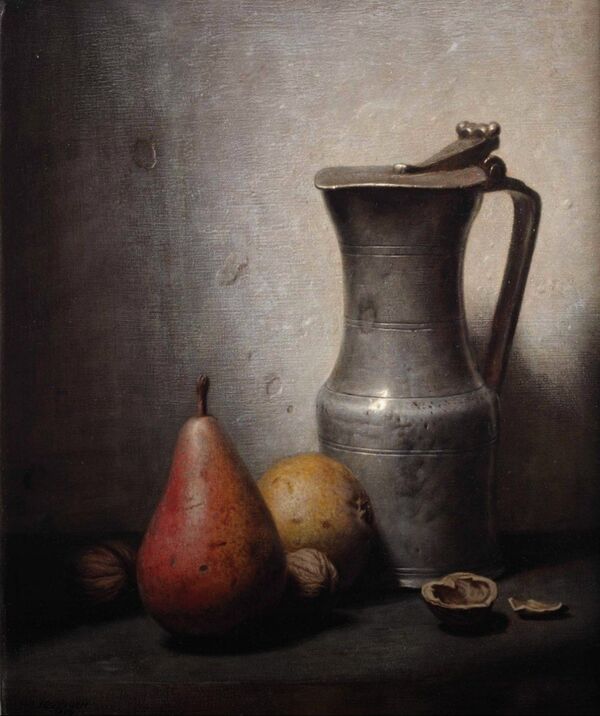
1. Peter Klasen. Still Life. 17th Century. 2. Johannes Hendrick Everssen. Still Life. 17th Century.
The execution style of the still lifes is characterized by high realism. Artists employed techniques for accurately rendering textures, chiaroscuro effects, and vibrant colors. The primary goal was to achieve an effect of natural life, allowing the viewer to sense the reality of the depicted objects. Contrasts of light and shadow were frequently used in the technique, which added depth and volume to the composition. The proper arrangement of objects plays a crucial role—the compositional harmony and balance created through symmetry or asymmetry, designed to enhance visual perception.
Martien Boullem de Stomme. «Still Life with a Nautilus Cup» 17th century.
Still life possessed distinct characteristics in different schools and with various artists.
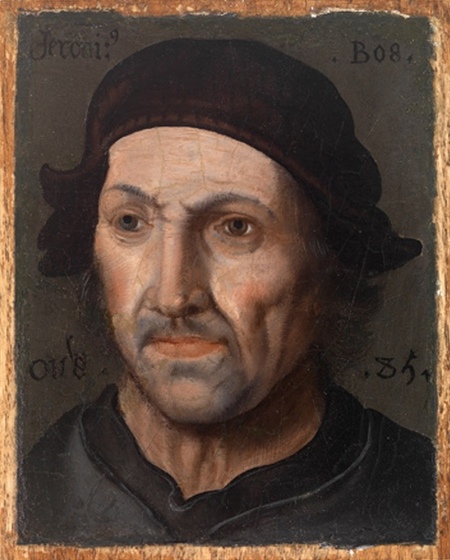
For example, in Hieronymus Bosch’s work, one can observe grotesque or allegorical elements laden with numerous symbols.
Hieronymus Bosch, «The Garden of Earthly Delights.» Fragment
Hieronymus Bosch. Still Life. c. 17th Century.
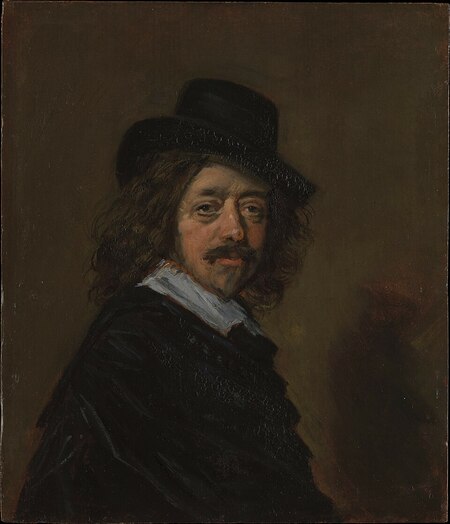
And France Hals brings elegance and richness of detail, emphasizing luxury and grace.
Francis Hals, «Banquet of the Officers of the Holy George Rifle Company in 1616, ” 1616. Canvas, oil. Fragment.
Francis Hals, «Revelers at Maslenitsa.» 1616. Fragment

Yan Vermeer’s works often showcase meticulous detail and the interplay of light, emphasizing the beauty of simple objects. While the still lifes of Caravaggio or his followers might feature more dramatic light and shadow, creating a distinct atmosphere.

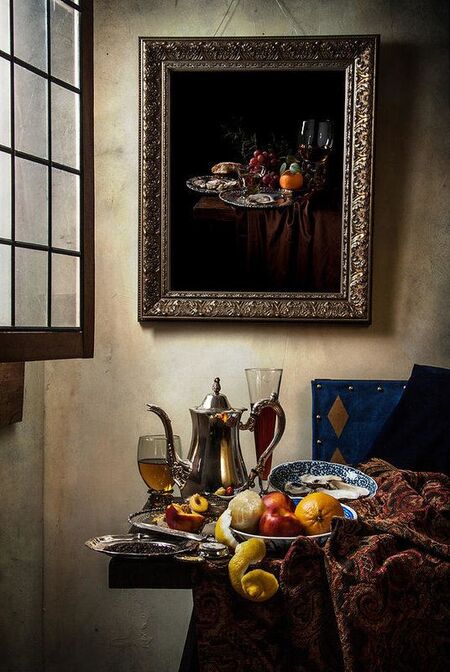
1. Jan Vermeer. Still Life. 17th century. 2. Jan Vermeer. Still Life. 17th century.
These works demonstrate the diversity of techniques, styles, and meanings within the still life genre, allowing us to understand how artists from different eras and schools utilized small, everyday objects to convey profound ideas and aesthetic values. Overall, the still life is not only a mastery of capturing detail but also a window into the thought and culture of the era in which it was created.
Symbolism
In still lifes, special significance was given to the symbolism of colors, forms, and the arrangement of objects. Each element often carried a hidden meaning and could tell the viewer much without words. For example, the bright, saturated colors of fruits and vegetables emphasized freshness and abundance, while their careful placement created a sense of order and harmony. Simultaneously, scattered or partially damaged objects could symbolize the fleeting nature of life and the transience of pleasure.
Jan Davidsz. de Heem, «Still Life with Fruit and Bouquet.» c. 1660–1670.
The color palette played a significant role: saturated, warm tones were associated with abundance and prosperity, while pale or dark shades suggested transience and passing time.