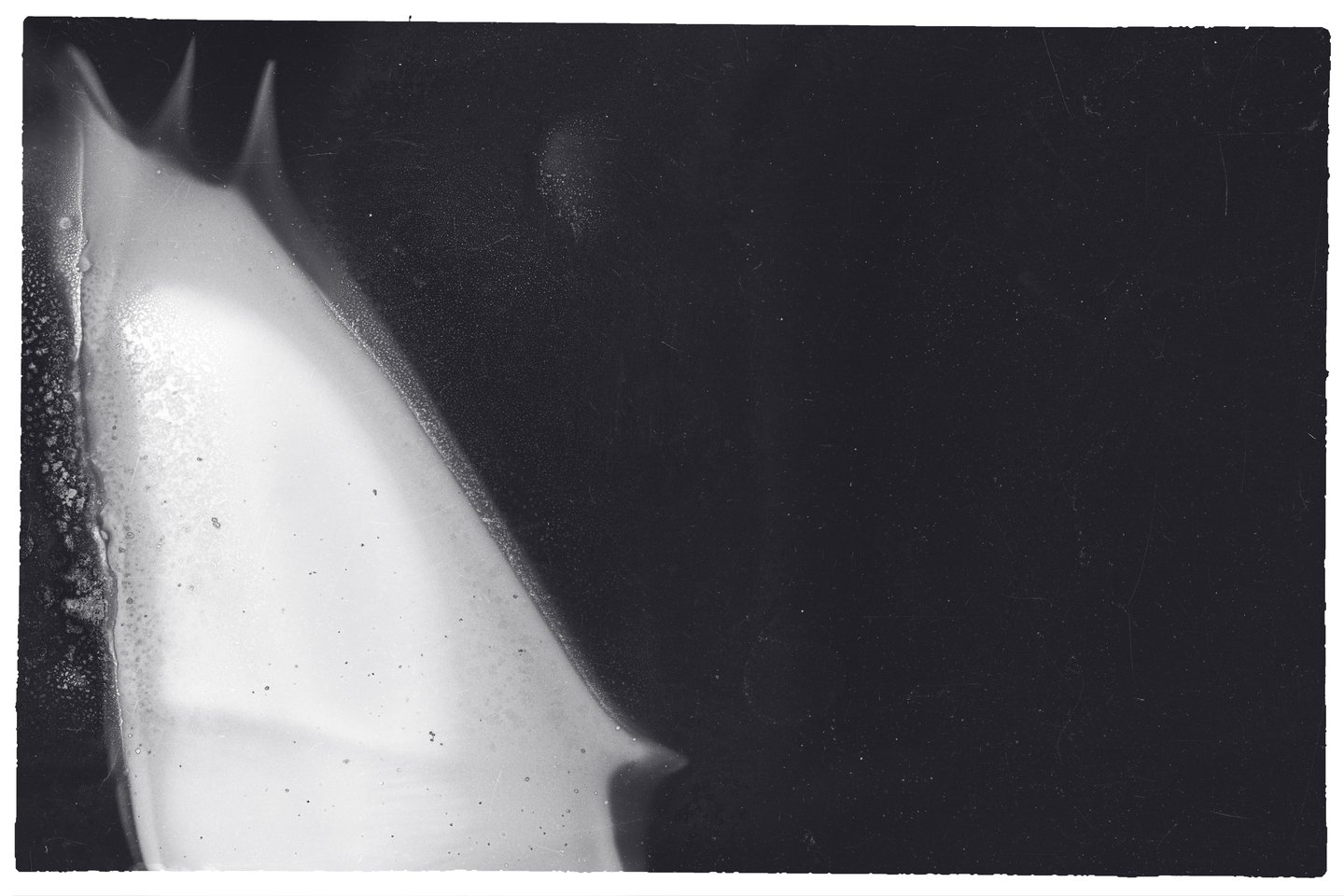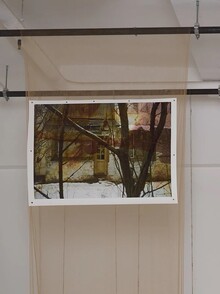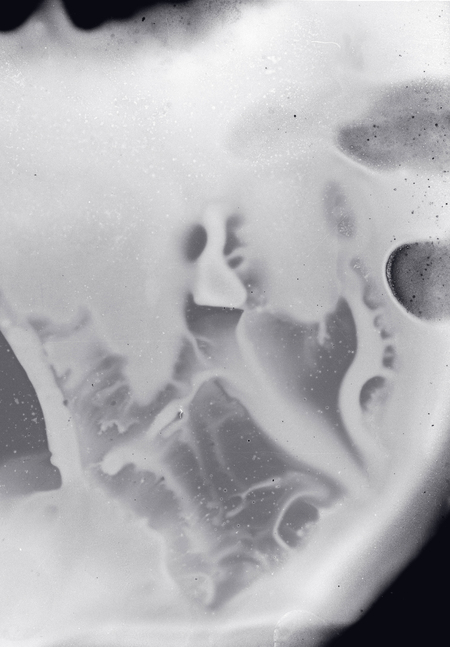
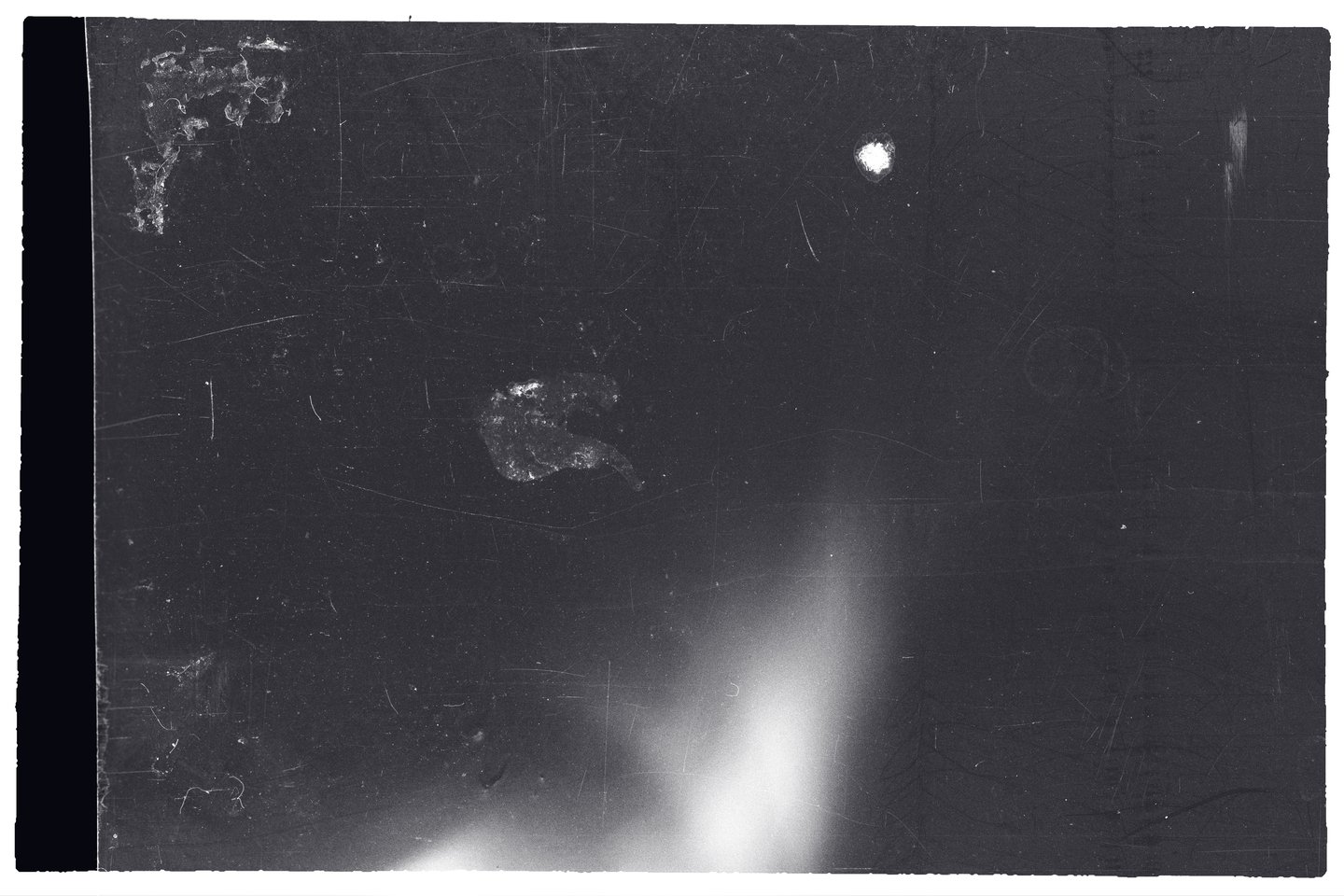
We have already discussed how the artist Shaburov began photographing nature through the lens of photography: the same small field of peas; the wall every half hour; without focusing; in the darkness; and finally—for the sake of the experiment’s ultimate purity—capturing fleeting moments without ever unscrewing the lens cap. It seemed that nothing was recorded on the film, but no—the moments of time that would never repeat themselves remained. But that is only half the story. The artwork is more important than the initial idea and must have an impact on its own merits. Therefore, Shaburov did not develop the film very well so that his black photographic frames visually resembled the night sky with an infinite number of barely discernible details. Later, to complete the project, he intensified this—he shot two more rolls of film, deliberately developing them poorly and scratching them to create abstract photographic canvases. Also: standard photographic film in the USSR originally contained 36 frames. That is why all of Shaburov’s series consisted of 36 prints. However, in this particular case, the film was forensic, purchased by the Regional Bureau of Forensic Medicine where Shaburov worked in large reels via bank transfer, and he wound as much as would fit onto the spool.
Original size 3508x2339
More projects in photography
Yuliya Hlestkova Georgievna
Одна из самых важных задач фотографии — сохранить любую информацию о текущем этапе жизни для будущих поколений. С течением времени методы получения и печати снимков меняются так же как и вся окружающая человека жизнь. Чтобы лучше понять прошлое, иногда бывает полезно воссоздать старинные технологии и посмотреть на то немногое, что нам досталось в наследство от уходящей эпохи, глазами старой оптики. Попытка смоделировать искусственно старый архив памяти — это своеобразный способ размораживания не только исторических технологий съемки и аналогового способа печати фото, но и самого видения времени и чувства пространства всем предыдущим поколением.