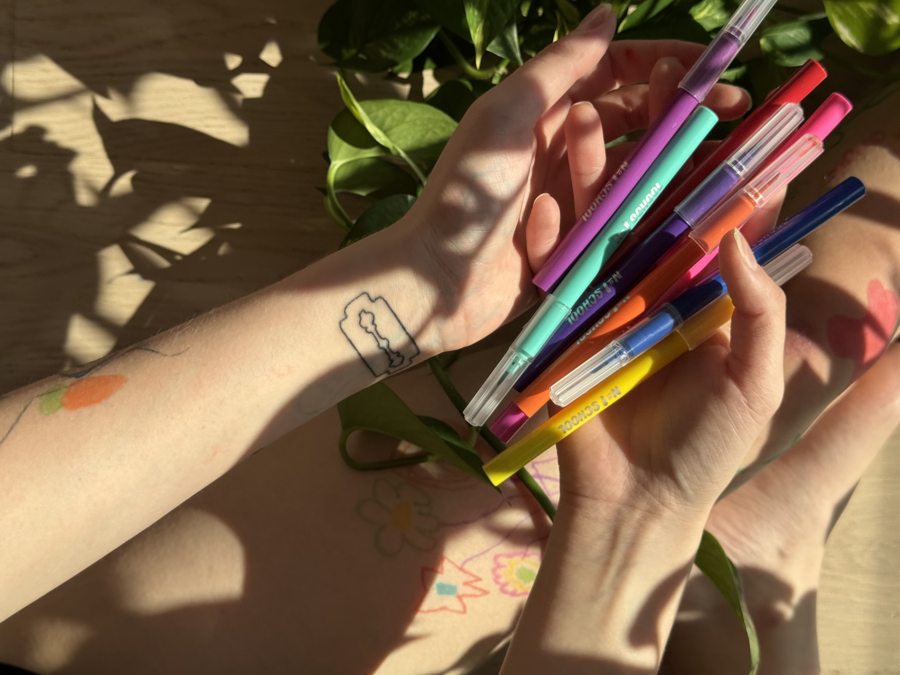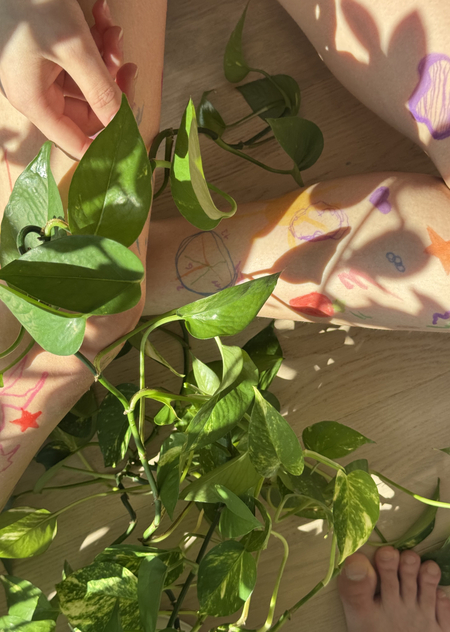
I gave my younger brother and his friends washable children’s markers and asked them to cover my body in drawings—naive, random, ephemeral. Like these lines, washed away by a single swipe of damp cloth, childhood passed unnoticed and without a trace, leaving no clear boundary between «was» and «vanished.» Photography is the only way to capture what cannot be physically held: it shows the moment of the drawing’s greatest vibrancy, knowing in advance that both the skin and the line upon it are destined to fade.
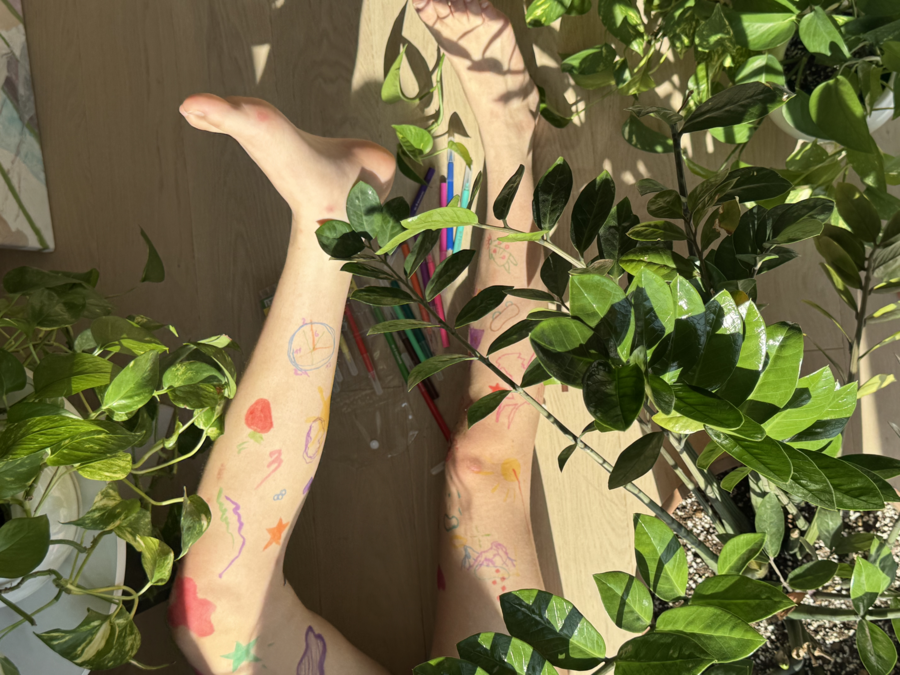
Felt-tip markers wash away with water as easily and subtly as childhood itself: not all at once, not on one specific day, but gradually, blurred, without a clear boundary of transition. While the drawing is visible on the skin, it seems as if it will last forever, but the moment you wipe it with a damp cloth—it vanishes without a trace, as if it never existed. We don’t notice the moment we stop being children, just as we don’t notice the second the marker completely washes off the skin.
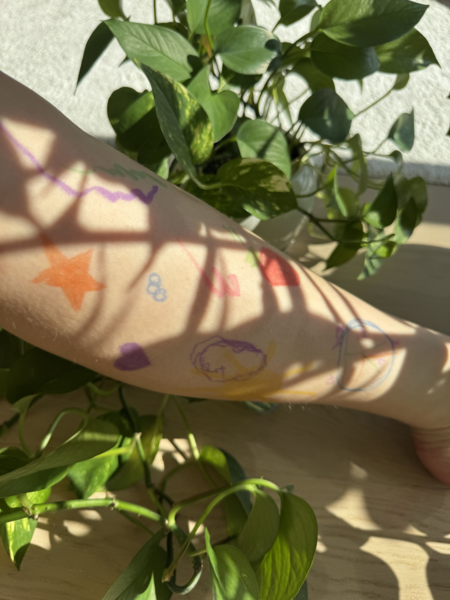
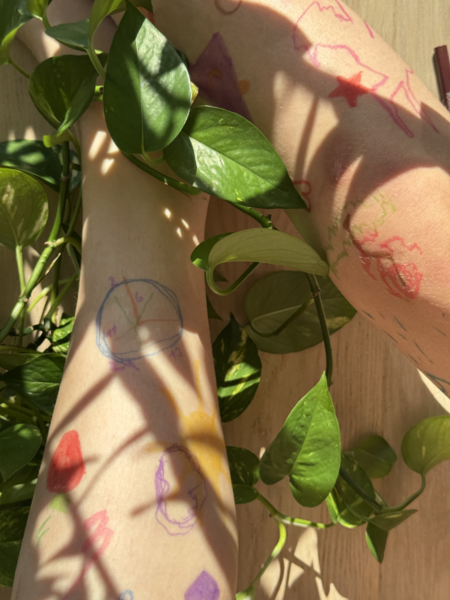
The photograph captures the drawing at its moment of maximum brilliance, knowing in advance that both the skin and the line upon it are destined to fade. The snapshot preserves the trace of something that was real, visible, applied with the trust and lightness of a child’s hand—and yet, it vanished as subtly as a line disappears beneath a drop of water.