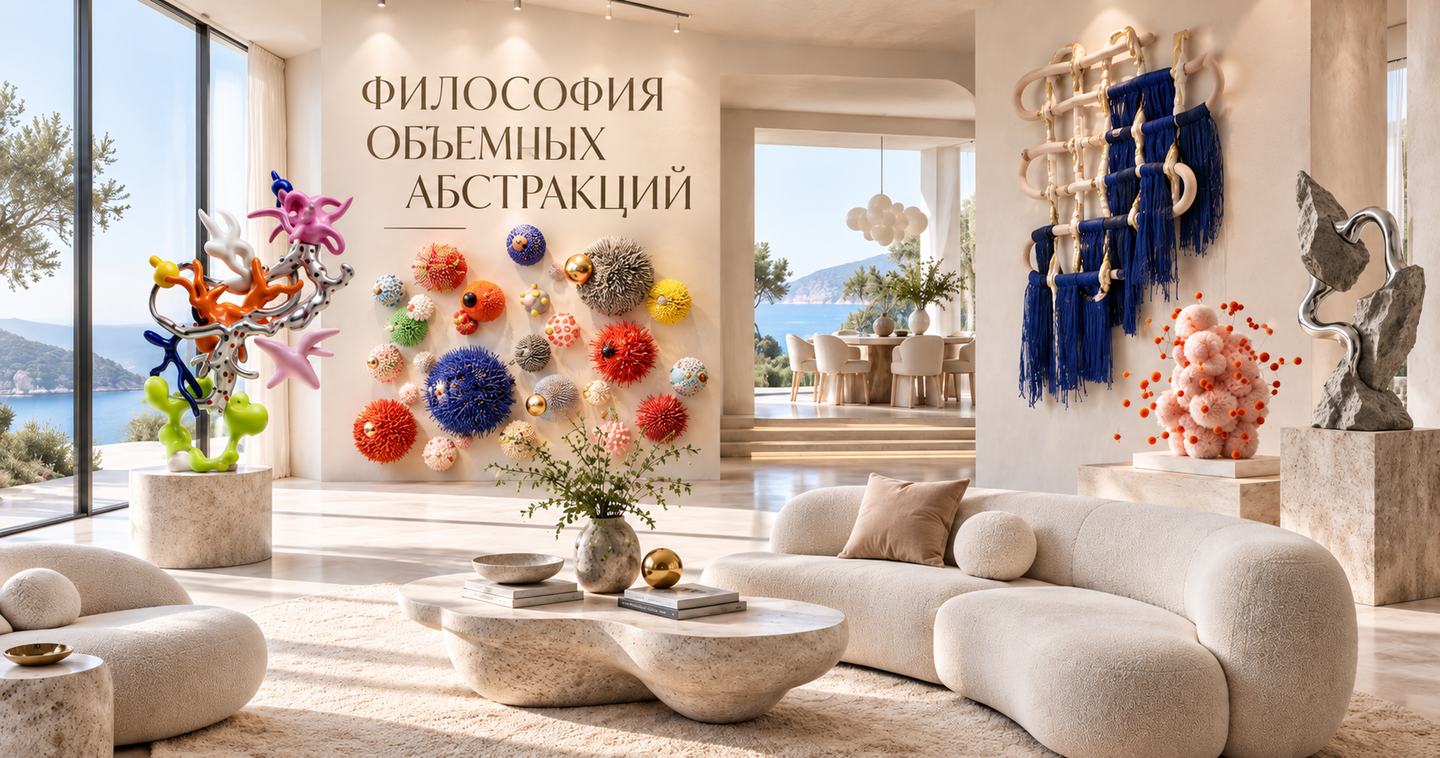
Learn to transform ideas, emotions, and philosophical concepts into contemporary sculptural art. Explore the language of abstraction, experiment with form, material, and space to create unique art objects where every line, texture, and volume becomes part of the artistic statement.
Contemporary abstract art transcends familiar visual representation. It becomes a method for exploring the world, conveying internal states, and contemplating space, time, movement, and human perception. Three-dimensional abstractions hold a special place within this direction—artworks where meaning is revealed through the plasticity of form, rhythm, texture, light, shadow, and interaction with the surrounding space. Unlike representational imagery, volumetric abstraction does not offer the viewer a ready-made narrative. Instead, it creates a space for personal interpretation, emotional response, and reflection.
The relevance of this course stems from the contemporary interest within fine art and interior design in original works that possess not only decorative expressiveness but also unique artistic content.
The primary goal of the program: To teach students how to create not merely aesthetic three-dimensional compositions, but independent artistic statements where form, texture, material, and space are subservient to a conscious, authorial concept. The education integrates three areas: Art Philosophy: exploring meaning, emotion, association, and artistic concepts. Plastic Language: working with volume, rhythm, chiaroscuro, texture, and space. Authorial Design: creating original works, artistic series, and conceptual art objects.
This course is suitable for practicing artists aiming to expand their artistic language. Authors of interior painting and volumetric panels. Sculptors and masters of decorative arts and crafts. Interior designers and art decorators. Creative individuals interested in contemporary conceptual art. Artists building their own signature collection or portfolio.
Recommended level of preparation: basic skills in composition and working with artistic materials. However, the program can be adapted for motivated beginner students. For teens aged 16–17, an adapted version is available, taking into account safety age requirements.
Students will learn: The core principles of contemporary abstract art. The potential of three-dimensional form as a carrier of artistic meaning. Methods for creating conceptual artistic imagery. The laws of volumetric-spatial composition. The principles governing the interaction of form, texture, color, and light. The nuances of perceiving abstract art. Material properties for creating sculptural works. The principles of developing original artistic series. Students will also learn to: Formulate an independent artistic concept. Translate abstract ideas into visual and plastic forms. Create volumetric compositions with a deliberate artistic concept. Experiment with form and material. Use texture and relief to convey emotional states. Develop conceptual panels and art objects. Create series of interrelated works. Integrate abstract art into contemporary interior spaces. Present and defend an original artistic vision. Practical Skills Students will gain experience in: Artistic research. Conceptual sketching. Plastic modeling. Creating relief and sculptural compositions. Experimental material work. Modeling and prototyping. Developing individual artistic series. Creating an art portfolio.
Total duration — 72 academic hours.
Final Educational Event
Exhibition «BEYOND THE SHAPE»
The program culminates in a collective exhibition of the students’ original projects.
The exhibition features:
Abstract sculptural panels.
Sculptural compositions.
Diptychs and triptychs.
Modular art objects.
Experimental artworks.
Conceptual installations.
Each piece is accompanied by a brief artist statement detailing the concept and the specifics of the plastic solution.
The exhibition serves not only as the final assessment but also as the students’ first experience in public artistic expression.
Main educational outcome Upon completing the course, the student will be capable of independently formulating an artistic idea and realizing it in a contemporary three-dimensional work, using form, space, texture, and material as conscious means of artistic expression.