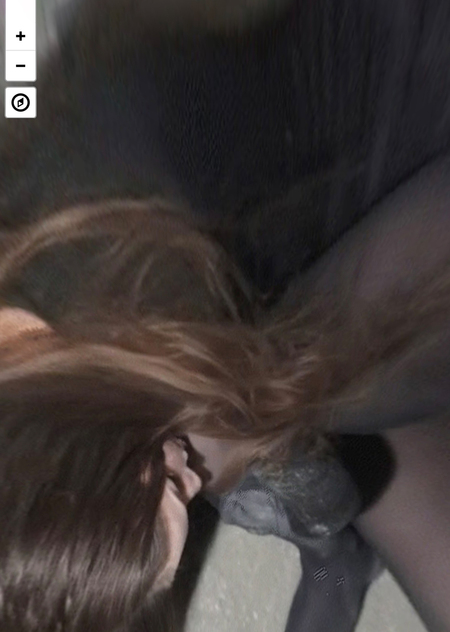
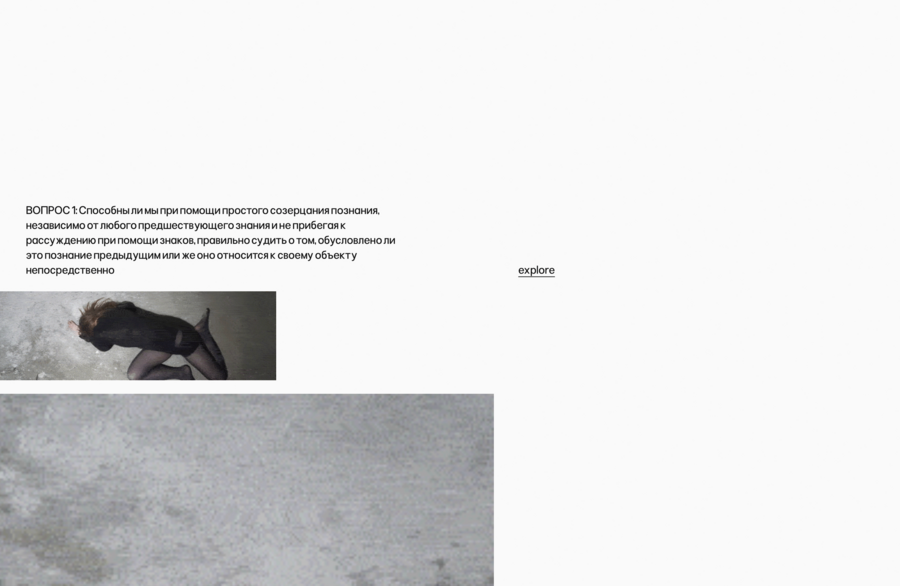
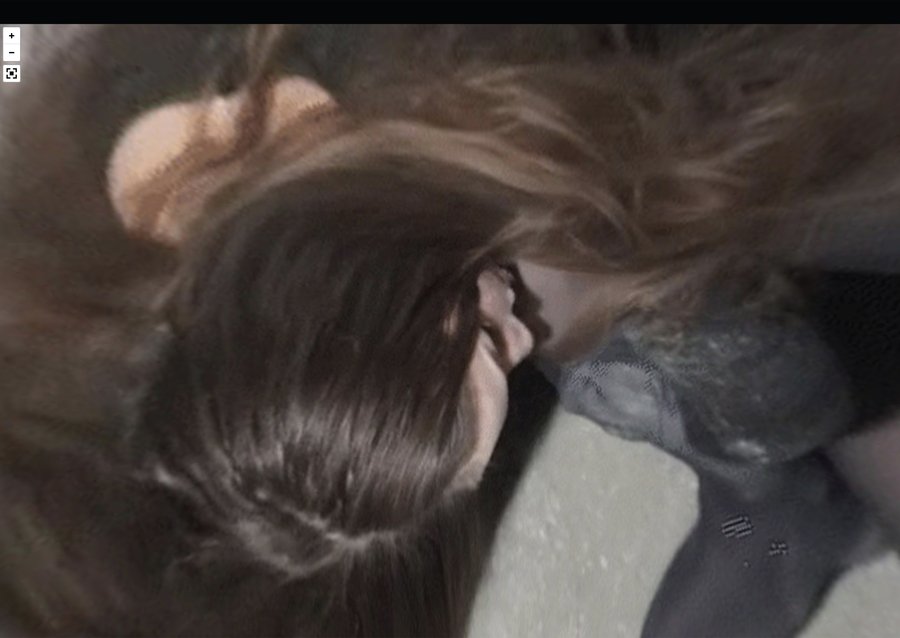
The site is conceived as a digital environment for contemplation, where the viewer confronts a fragmented field of signs: fragments of spliced video, panoramas featuring digital artifacts, and chaotically arranged imagery.

QUESTION 1: Can we correctly determine, merely through contemplation—independent of any prior knowledge and without recourse to reasoning via signs—whether knowledge is conditioned by something preceding it or if it relates directly to its object?
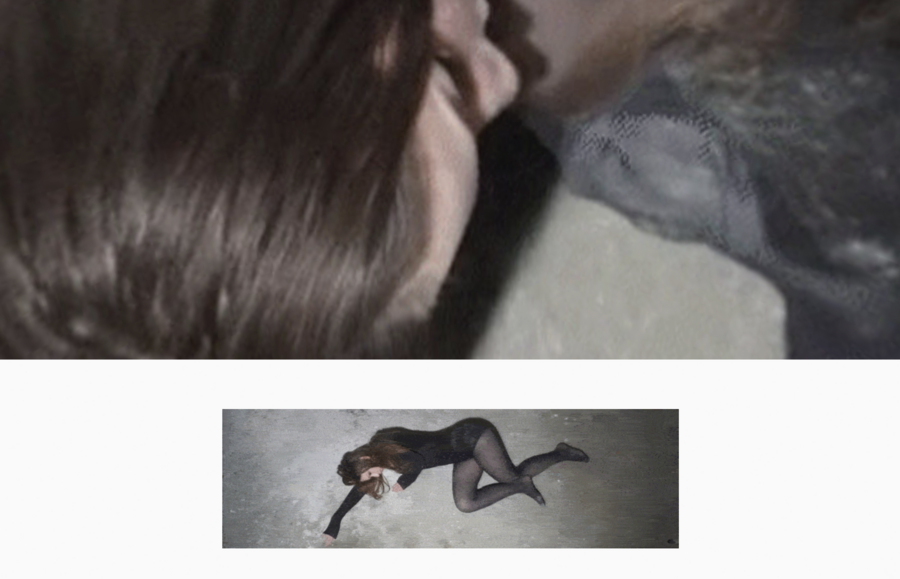
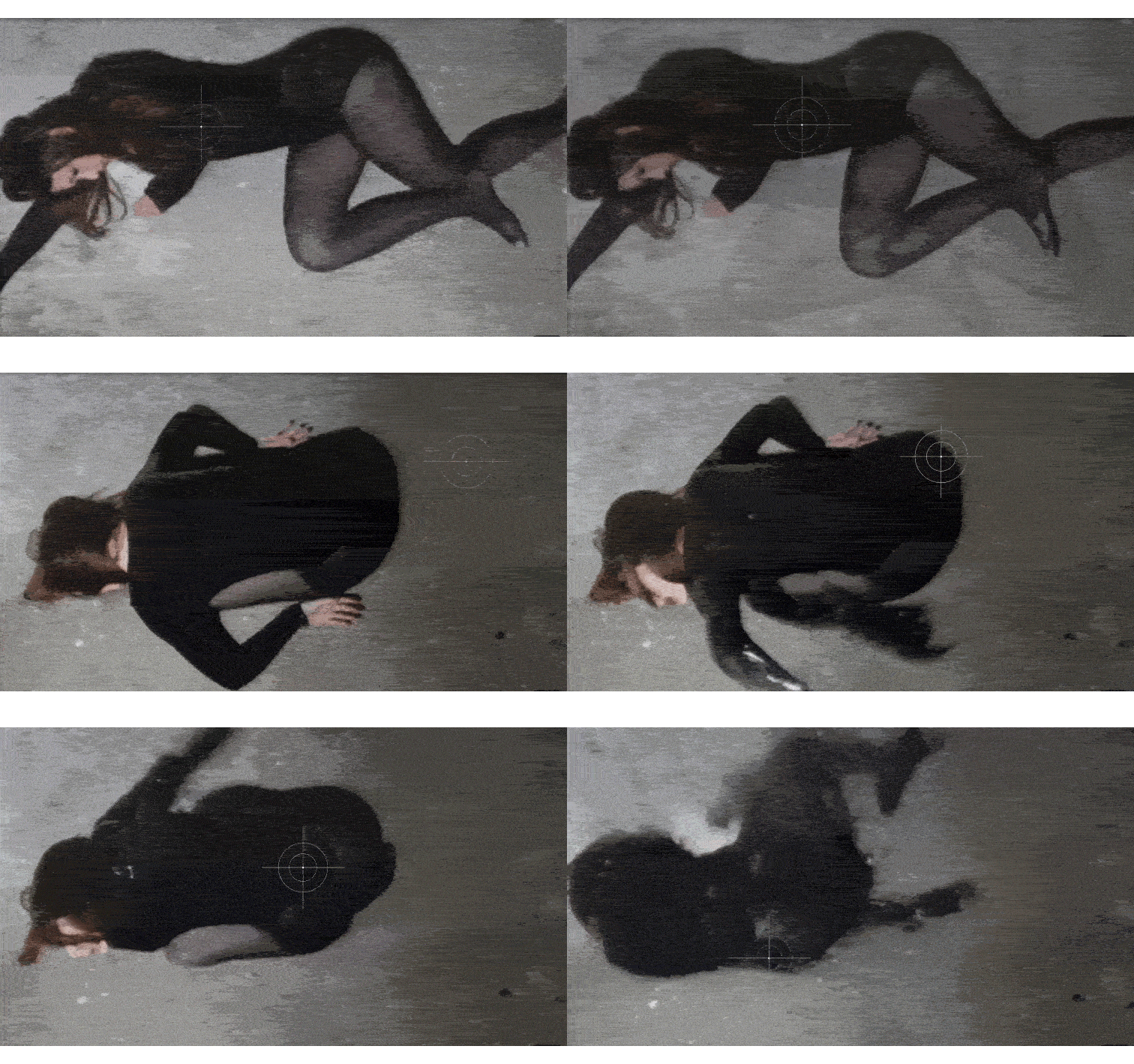
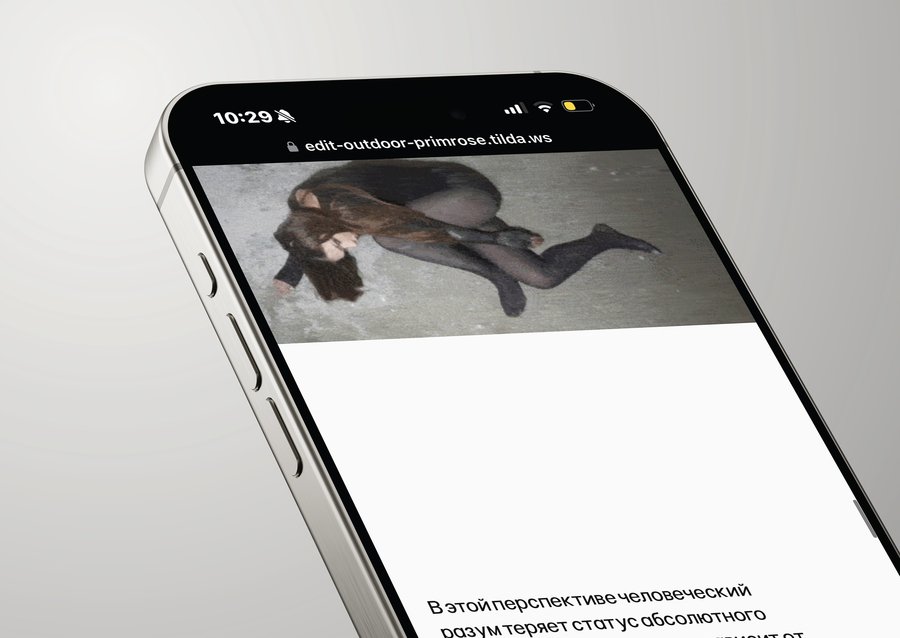
The website is built around the concept of the digital Other—an algorithmic system that does not think in the human sense but is capable of continuing the sign. Video fragments present the body as a problem of form: human movement is fed into a neural network without a verbal prompt, and the machine attempts to complete it through probabilistic image connections. The resulting errors—bifurcated limbs, unstable contours, ruptures in plasticity—are examined as manifestations of a different logic of perception, a logic accessible on the site.

Thought emerges from a preceding sign. Internal knowledge also passes through external signs. Thinking turns out to be a process of semiosis, where a sign triggers interpretation, and that interpretation becomes a new sign.
The machine continues human movement through error, but is this strictly an error? Can I discuss this through the lens of the Other?
It cannot access the weight of a lying person, kinesthesia, or the embodied experience of gesture.
Yet, it produces a convincing trace of movement because conviction is born from formal operation. Human plasticity passes through a computational environment and returns as inhuman plasticity.
252.
A person says to themselves: «Aristotle is human; therefore, he is capable of making mistakes.» Did he not consider that all people are capable of making mistakes, even if he did not state it explicitly? The answer is that he genuinely thought so, as indicated by his use of «therefore.» If this is the case, our question does not pertain to a fact but rather constitutes a demand for intellectual clarity.
From this perspective, the human mind loses its status as the absolute source of meaning. It itself depends on the semiotic environment. Thought does not coincide with pure inner experience; it exists as a transition between signs. Therefore, the question of artificial intelligence can be reframed. What is important is not whether the model possesses consciousness. What matters is whether it can engage in the chain of semiotic transitions and generate a result that alters the interpretive field.