
Концепция
Five characters from the play Metherling are positioned across five points of «Mokhotovskaya» Moscow, so that each character becomes a metaphor for a specific stage in the history of theater.
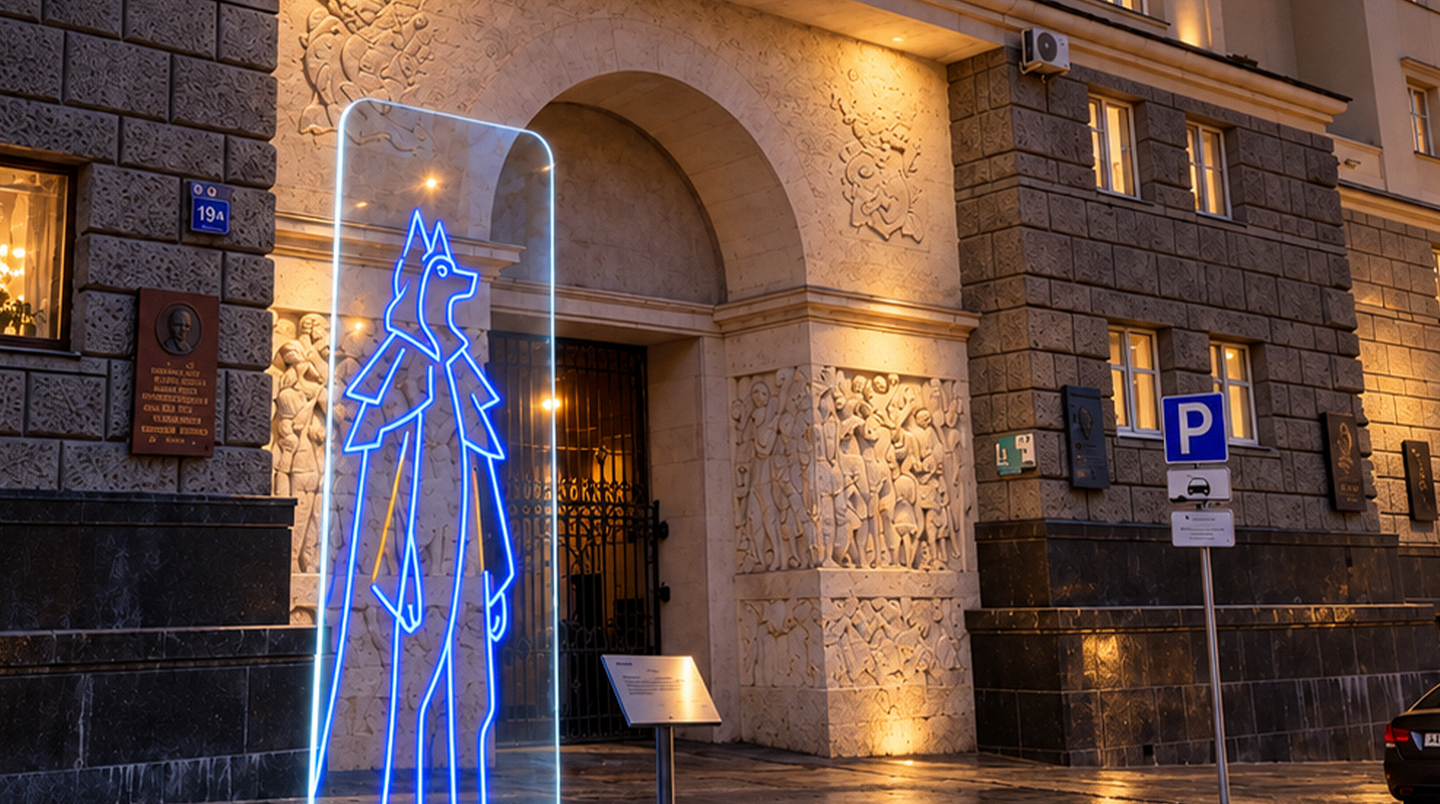
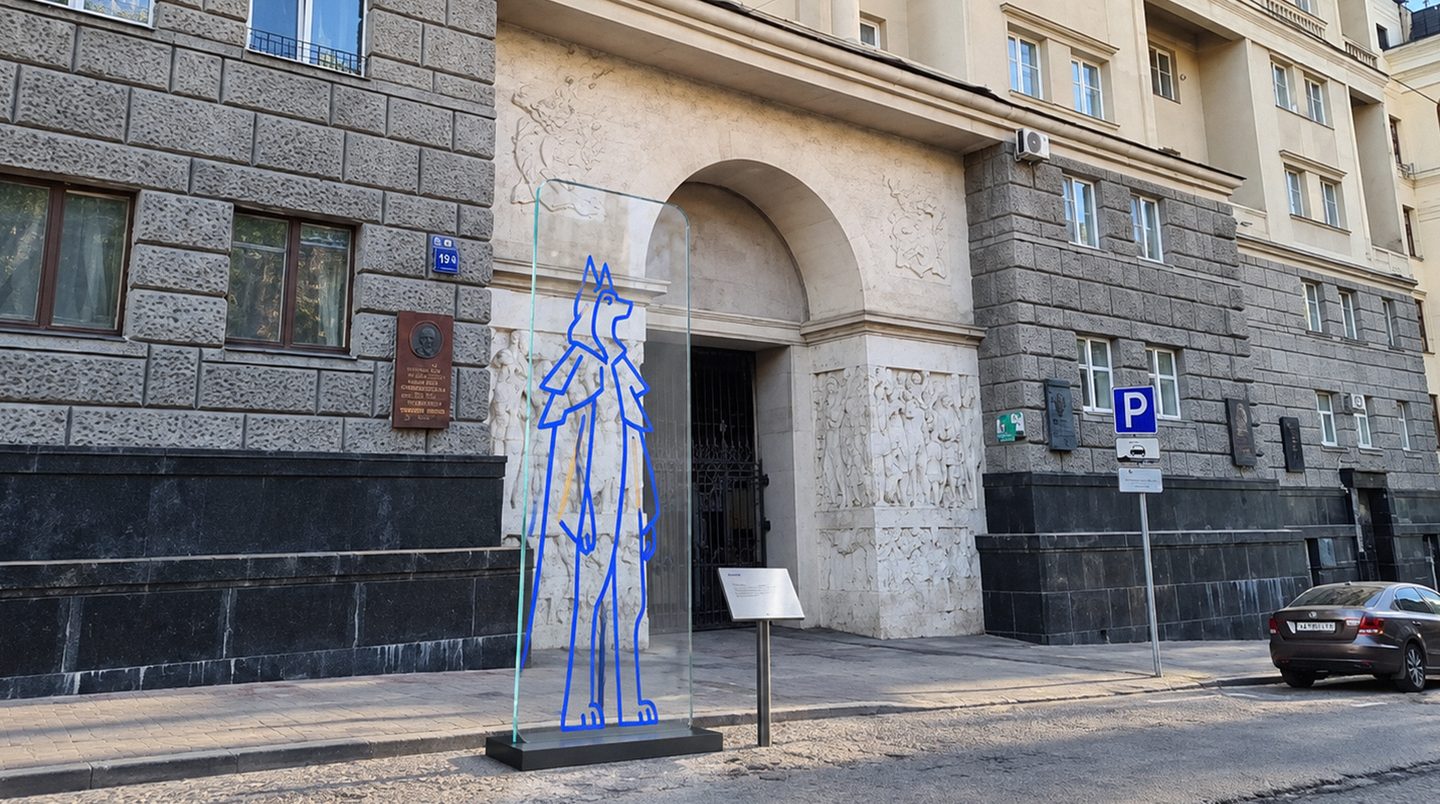
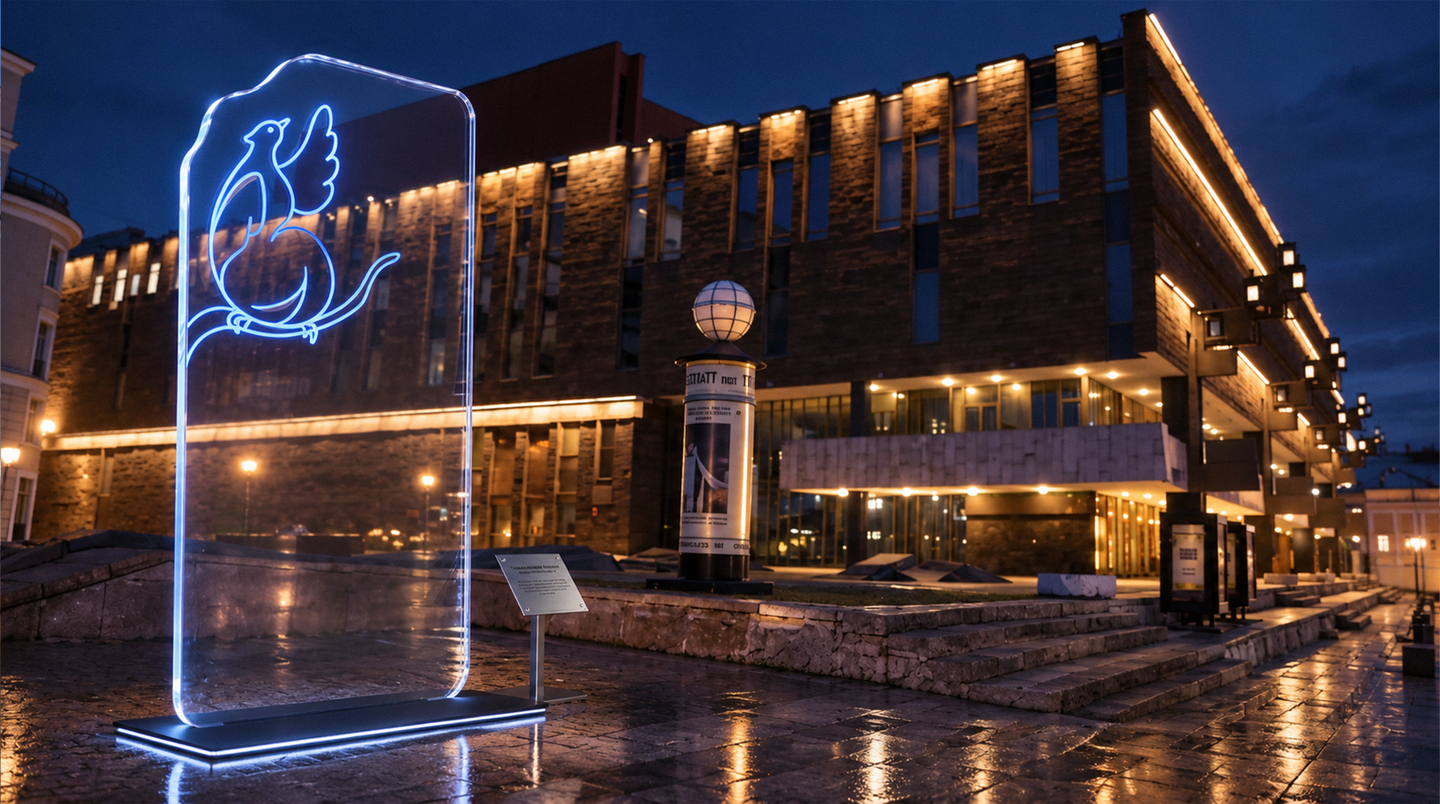
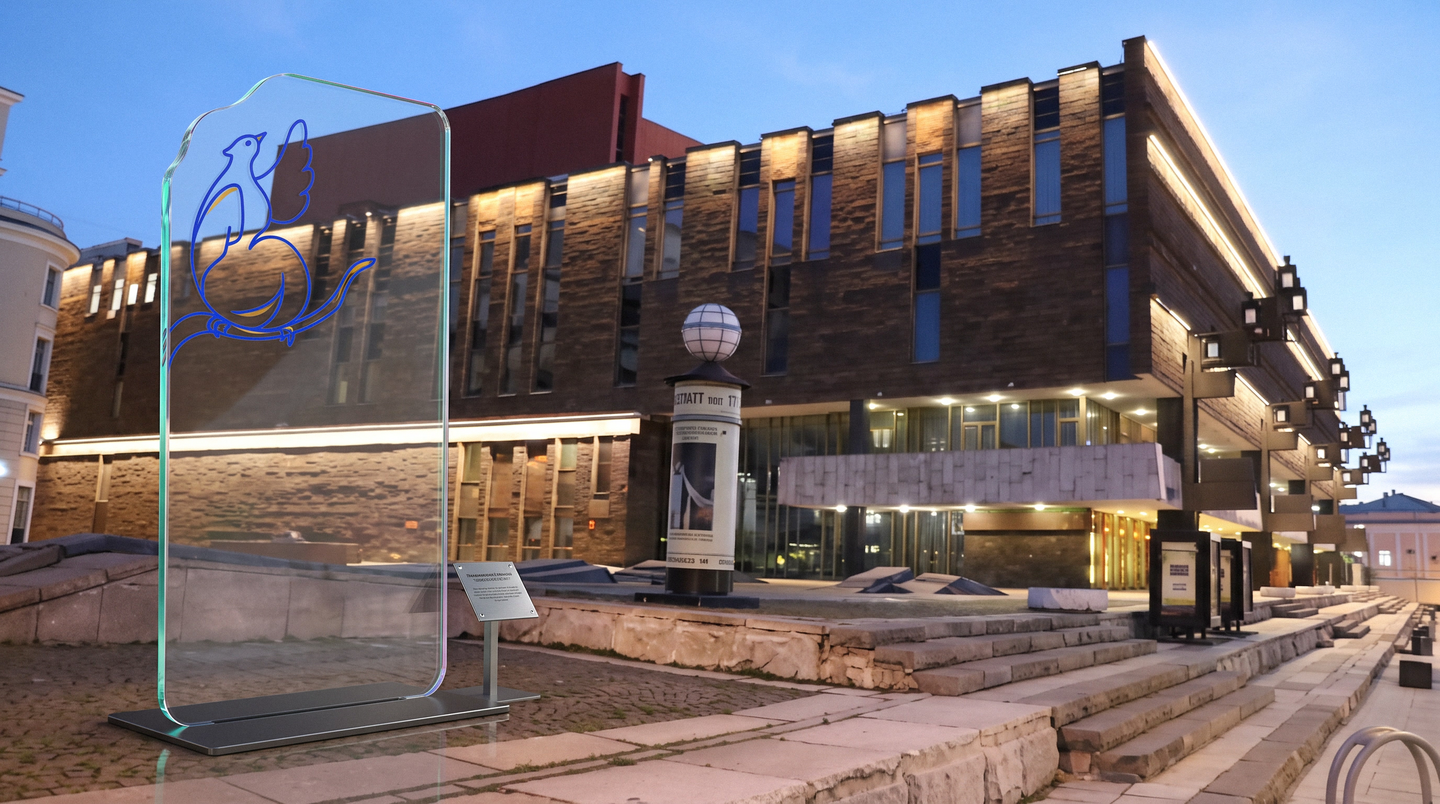
Format. A vertical rectangular panel with a subtle departure from strict geometry—the top edge and one of the side edges are slightly curvilinear (a smooth, organic line). Each character has its own characteristic curve (Fire’s curve is sharper and more jagged; the Blue Bird’s is smooth and «wing-like»), but the panel’s proportions and the frame thickness are consistent across all pieces, ensuring the series reads as a unified set.
Material. Cast transparent acrylic (Plexiglas), 8–10 mm thick, featuring UV printing or laser engraving of a line art design with partial color filling.
Dimensions. Height 150–200 cm (the figure’s height is scaled relative to a human figure so one can stand «beside» it for photos), width 60–70 cm, base—a flat, weighted foundation with a depth of 25–30 cm, without mounting hardware for historical facades.
Installation and Photo Zone. The panel is positioned in a spot calculated so that from a specific vantage point, the character’s line art visually «blends» with the architecture behind it.
The «Hermitage» Garden $\to$ Tiltil and Mitil
It was right here, on the stage of the garden theater, in 1898 that «Tsar Theodore I» premiered—the first performance of what would become the Moscow Art Theatre (MXT). The Hermitage is the birthplace of the entire journey we are now taking with our own two feet. The character Tiltil is the «seeker»: kind, decisive, and ready for action. Mitil is curious and open-minded. Together, they are not merely characters from a fairy tale; they are the audience itself at the beginning of the journey.

Vladimir I. Nemirovich-Danchenko Museum Apartment → Dog
Connection to place. Nemirovich-Danchenko was Stanislavsky’s colleague for half a century; he dedicated his entire life to the theater—yet often remained «in the shadow» of his more celebrated partner. The image of the Dog—loyal, brave, sincere, devoted, and, according to the play’s text, an underappreciated defender.
MXT Building named after A.P. Chekhov $\rightarrow$ Soul of Light
The main troupe building, a creation of Shekhtel, where «the art of Russian psychological theater was affirmed”—art directed toward the inner light of humanity. The figure of Soul of Light in the play—a guide for children, a symbol of daybreak, the revelation of mysteries, and hope—prevents faith from fading.
K.S. Stanislavsky Museum-House → King of Nine Planets
This is where the Stanislavski System was created—a place where «every subject breathes with the history of a system that forever changed theatrical art.» The house is described in the route materials as a «sanctuary for those who seek truth in art.» The image of the King of the Nine Planets symbolizes knowledge, order, and mastery over the universe.
MKHAT M. Gorky Building → Blue Bird
The building whose «walls have witnessed numerous premieres, ” where theatrical life continues today. The Blue Bird—an ever-elusive symbol of happiness that can never be held until the end. The final point of the route is logically given to the Bird itself: it is not a „captured trophy, ” but an open ending.
Series Unity. All six figures are crafted from a single material, utilizing one technique and consistent proportion—this is what makes them a recognizable series rather than a collection of random installations. The only variations are in the contour silhouette and color accents—just enough to maintain each character’s unique personality within the overall visual language of the installation route.