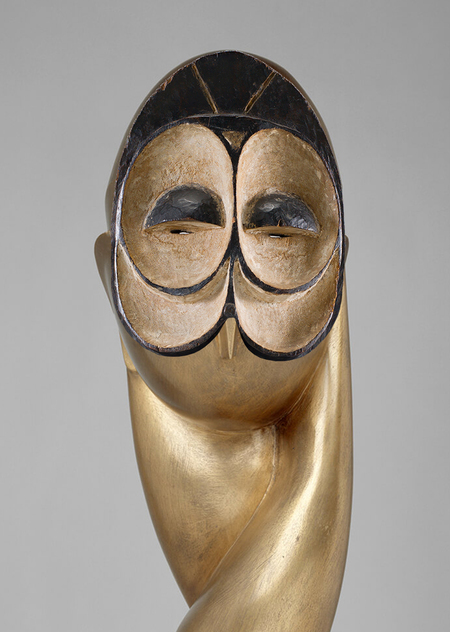
In an era of modernism, many Western and American artists turn to previously closed cultures in search of new visual experience. For example, in the second half of the nineteenth century and early in the twentieth century, European artists are taking over orientism. In contact with numerous exhibitions in the world, which were previously known only from Bible texts, Western society is thrilled with the exoticity, brightness, openness, sensitivity that it reads in the artifacts brought by travelers from the East.
However, this visual study is of interest not to the East, but to the countries of Africa. It is well known that at the end of the 16th century ethnography exhibitions are beginning to take place in London, Munich, Paris, and as a result European and American attention is gradually shifting to the cultures of the peoples of the African continent. Already at the beginning of the next century, Henri Matisse, Andre Deren, Pablo Picasso and other Fowists and Cubists are creating their own collection of «Negro» art. It becomes the key to the original, primitive forms that many modernist figures have begun to find, a charter from the era of realism. It was in the twentieth century that artists and sculptors began to rethink the culture and art of Africa for the first time, rather than making surface pictures of landscapes.
African sculptures serve as a means of communication between the world of the living and those of the outside.
For their authors, initial intuition and emotion, while in Europe at the time, canons and clear rules of reality dominated art. African art is a true art that seeks not beauty but unity with nature, as the author himself feels united with the world in which he lives. Alexander Zdanevich speaks of this in the lecture «Africa and We. Dialogues on the past and the present.»
In addition to artists, Africa inspired sculptors. While the paintings of Picasso and Matisse, created under the impression of «Negro» art, have been thoroughly studied, visual studies on the impact of the cultures of the African continent on the sculpture of America and Europe in the twentieth century are almost non-existent. What was the point of Alberto Giacometti, Konstantin Brankuzi, Alexander Archipenko, Amedeo Modigliani and others in African art? How did those sculptors communicate through the volume? What role did Africa play in the creative way of different sculptors? The answers to these questions will be found through visual research.
It is worth noting that, like any «trand», Africa has not captured all the artists. For example, Roden always looked more toward Greece, and Jean Arpe was inspired by nature and man directly. Thus, the choice of sculptors in the study is justified by written evidence that the culture of Africans has influenced their creativity.
African arts
Royal seat (Lupon): Kariaida, Female, Democratic Republic of the Congo, village of Buli (XIX century)
After visiting an exhibition of African art, Picasso expressed the impression: «These masks were more than just a sculpture. The Negroes are the intercessors, the spellers. Against everything, against unknown, hostile spirits. I get it, I’m against everything, too. Everything unknown is the enemy. I figured out what the negroes needed the sculpture for. All idols performed the same function. They were weapons. To help people become independent, so that people do not obey the spirits. If we shape spirits, we become independent. Spirits, subconscious, emotions are all the same. I understand why I’m an artist. „Avinion chicks“ must have appeared on that very day. It was my first experience of exorcism…» [2].
Male figure with arms raised, Mali, village of Tintam (XIV — 17th century)
Lion and Bird Group, Guinea Coast, Benin, Africa (end of the nineteenth century)
The sculpture is one of the main forms of art in Africa. It does not seek to transmit real human proportions. The author makes some sense by hyperbolicizing certain features. This is the legacy of the ancestors: Paleolitic Venus carries the idea of a healthy woman, fertility, so the primal people stressed the size of the breast.
Sachihongo Mask, Zambia, Africa (XX century)
Mask for the Face (Pwo), Hassenge Region, Angola, Africa (end of the 19th century)
Maska, Congo, Africa (early 20th century)
Mask of the Elephant of the Society of Kuosi, Pastoral Area, West Africa and Coast of Guinea, Cameroon (early 20th century); Schlem Maska (temes bbalmbal), Malampa Province, Melanesia, Vanuatu, Oceania (mid twentieth century)
Masks are an important element of African culture. Most often, they are needed to carry out the rituals. They vary from region to region, but many share common features: faces with thin noses and closed eyes, and materials such as wood, terracotta and paint.
Constantin Brancusi
African art made a great impression on Brancusi. About 10 years from 1910 to 1920, he created works inspired by African artifacts. However, far from Europe, African culture in a sense scared the sculptor: «From the memoirs of Brancusi’s friends, it is well known that the sculptor himself did not acquire African artifacts and even destroyed several of his works, such as the „First Step“, according to artists, created on the basis of a statue of a bambara from the Paris Museum of Man. His friend and colleague, Jacob Epstein, claimed that everything in Africa woke up in Brancusi unexplained fear.» [2].
Mademoiselle Poghani I. C. Brancusi (1912-1913); Mademoiselle Poghani II. K. Brancusi (1920)
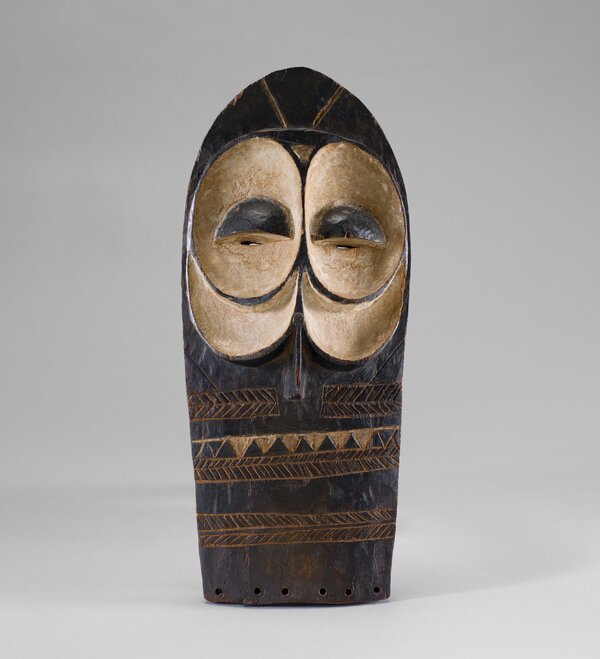
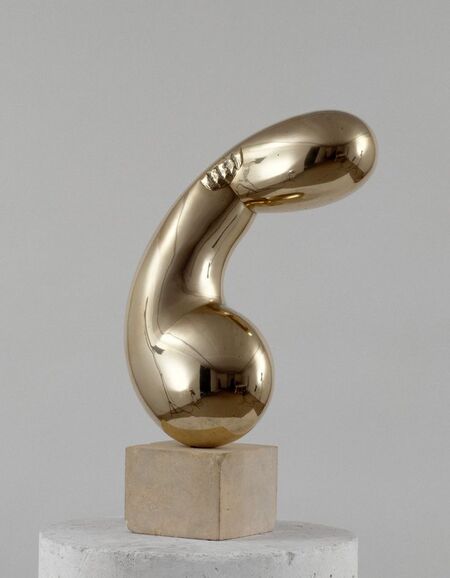
Mask of dedication (emangungu), Congo, Africa (late XIX mid-XXX); Princess X. K. Brancusi (1957)
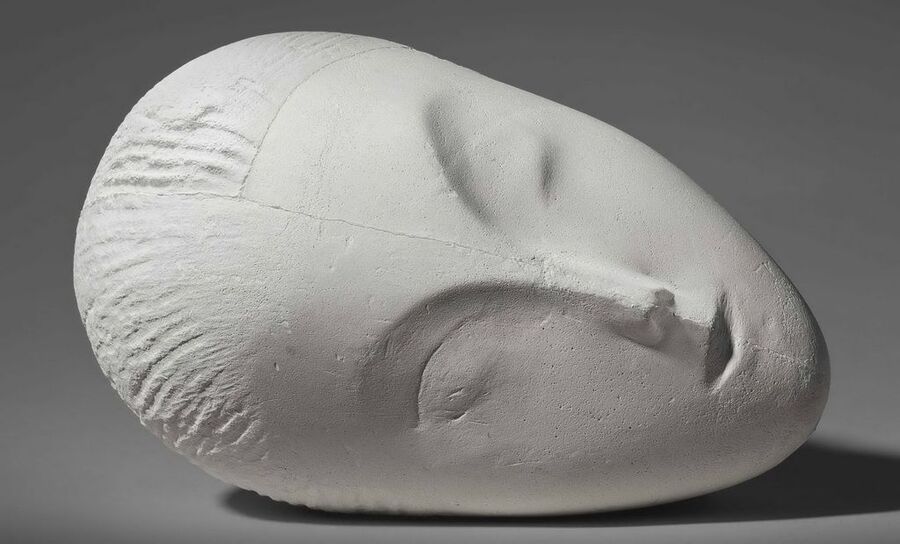
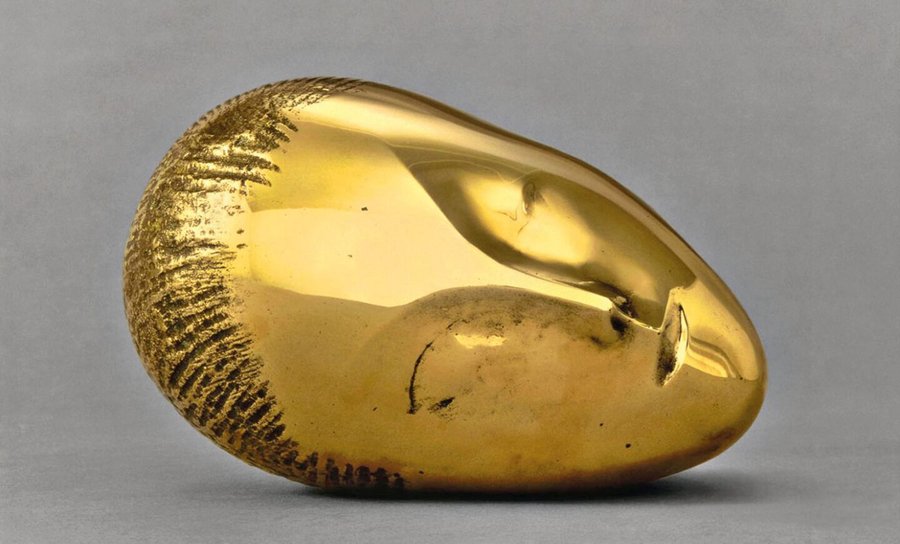
Sleeping muse. K. Brancusi (1910)
Black and white. Man Ray (1926)
Maska, Marahue Region, Côte d’Ivoire, Africa (per half of the twentieth century)
Thors is a young man. K. Brancusi (1923); Memorial: Man (Ngya), Sudan (end of the nineteenth century)
Often, in the sculptures of Brancusi, the image of the hands or other parts of the body is abandoned. The same can be seen in the sculptures of the peoples of Africa. This uniform is still understood as a human idea.
Portrait of Madame L.R. C. Brancusi (1918)
Women ' s figure, Togo (XIX–XX V); Men ' s figure, Congo (XIX–XX V); Male and female pair, Mali, Africa (1640 — 1810)
Alexander Archipenko
«He was amazed to see the barbaric features of the idols of the African tribes on the temples of high quality, and the unusual gestures of black prisoners of war at the great temples in Istanbul inspired him passionately.» [6].