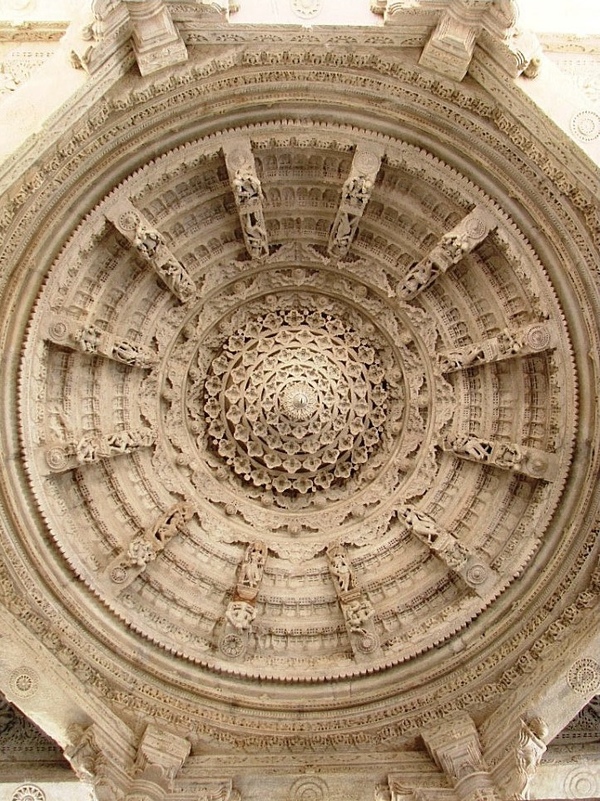

Concept
Research Topic: The architecture of Indian temples—its forms, spatial logic, and symbolic content. Indian art has existed for at least five millennia. Over this time, it has found its most vibrant and complete expression in the numerous temple structures scattered across the country. Ancient Indian temples embody the vast diversity of religious traditions—some succeeding one another, others coexisting for centuries, supporting and complementing each other. The richness of these traditions of Indian civilization continues to impress Europeans to this day. This is a unique architectural tradition where each structure serves not only as a place for religious rites but also as a material embodiment of philosophical schools and artistic canons.
The relevance of this topic is driven by the growing interest in both the material and immaterial heritage of the East. The modern individual, distant from Indian culture, is interested in how architecture can reflect cultural meanings. Indian temples are a multilayered phenomenon that combines artisanal mastery, mythological imagery, and ritual function. Their forms—from Dravidian stepped gopurams (towers above the entrance gates of Hindu temples, a defining feature of medieval Indian architecture) to the plastically adorned shikharas (pyramidal towers rising above the sanctuary where the altar is located)—reveal the evolution of the country’s cultural code and the worldview of an entire people.
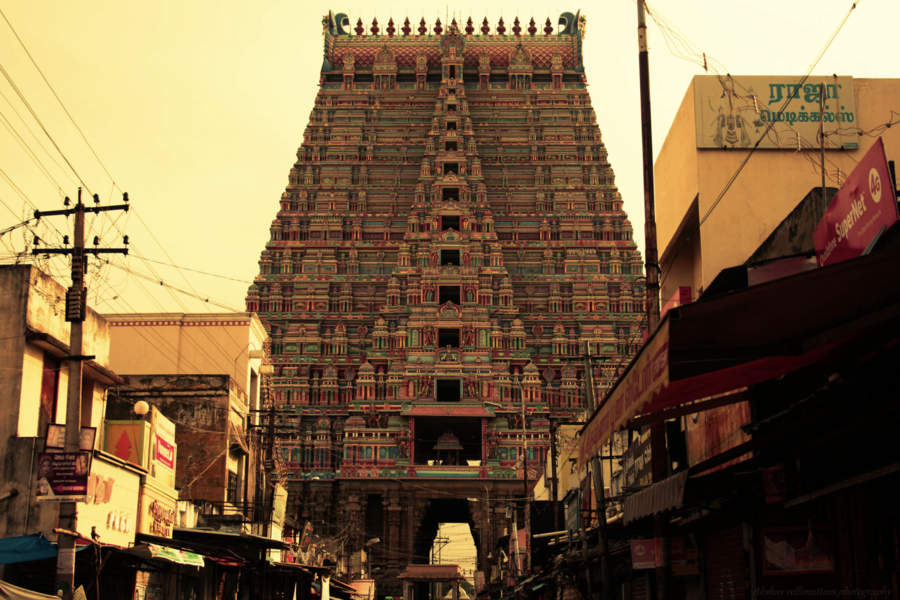
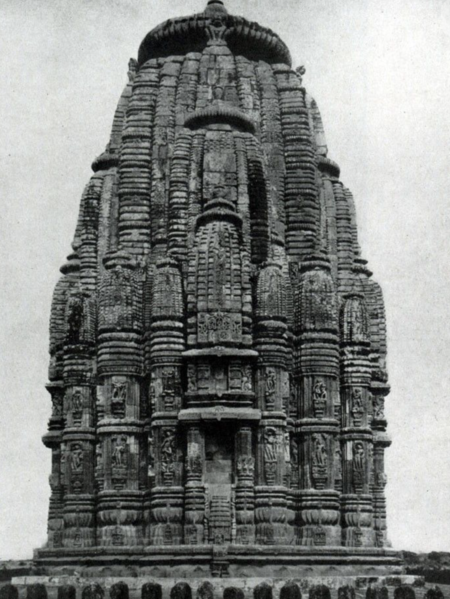
1 — Ranganathaswamy Temple in Srirangam (gopuram), 2 — Parasurameshwara Temple (shikhara)
The architecture of the Indian temple is not a static phenomenon: it reflects the interplay of regions, religions, political power, and artistic schools, making it exceptionally multifaceted.
The research structure is laid out chronologically, which allows us to trace the gradual evolution of temple architecture—from early sanctuaries and formative principles to the establishment of traditions, their maturity, and their subsequent influence on the world. This approach helps reveal the cause-and-effect relationships, the impact of time, history, and technological development on how Indian temples changed up to the 17th century.
The research plan includes a sequential examination of key stages in the development of temple architecture, beginning with the formation of the first sacred spaces and their underlying sacred logic. The visual investigation will analyze the distinctive constructive solutions and artistic principles characteristic of various historical periods. Particular attention is paid to the transition from rock sanctuaries to fully freestanding temples, which represents a crucial milestone in the formation of the Indian architectural tradition. Subsequently, the research moves to mature forms of temple construction, tracking their variations and the mutual influence of styles.
Early Period (3rd–6th Century BCE): Genesis of Key Forms and Spatial Principles
In the 6th century BCE, religious communities in India held gatherings and ceremonies in natural caves or under temporary shelters. After Emperor Ashoka (3rd century BCE) established Buddhism as the state religion, the construction of permanent structures began. Architects relied on existing traditions: the sculptural decoration of temples reflected ancient myths and legends, and Buddhism incorporated much of the Brahmanic pantheon into its cult. It was during this period that the main types of monumental temples—stupas and rock sanctuaries—emerged.
The stupa was erected on a circular base. At the summit of the stupa was placed a «divine house"—a reliquary made of precious metal (gold). Above this rose a central axis with a series of decreasing umbrellas, symbolizing the exalted origin of the Buddha.
The primary function of the stupa was to house sacred relics, and its layout carried profound sacred meaning: the structure’s form mirrored the cosmic order of the world. The central point of the stupa symbolized the locus of divine presence—the source from which the universe is born and to which it returns.
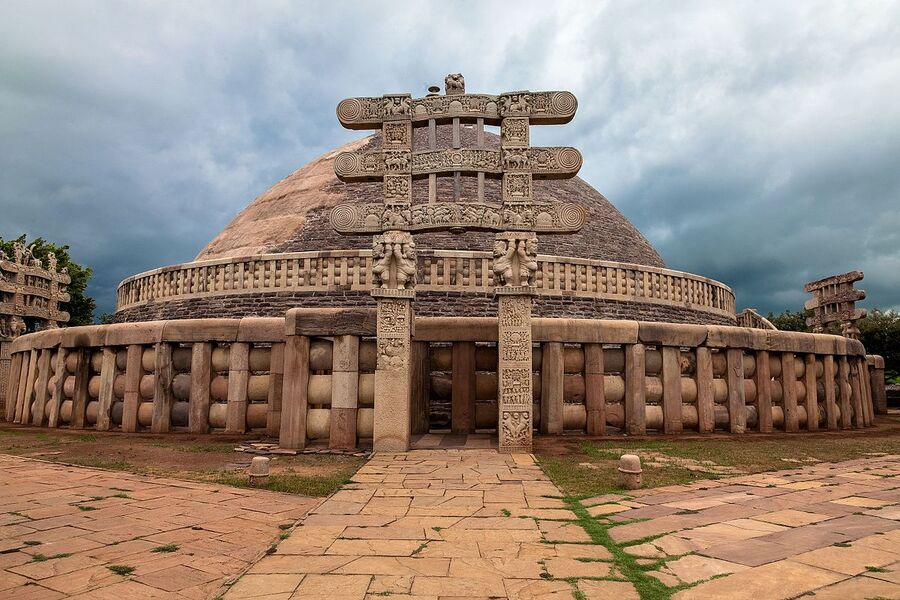
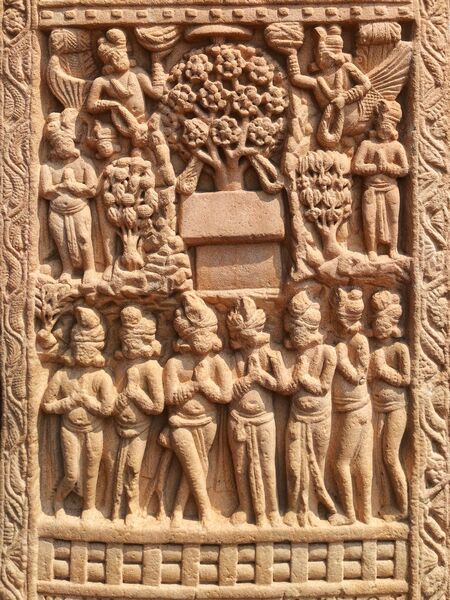
Stupa in Sanchi
The Sanchi Stupa is one of the most significant monuments of early Buddhist architecture and one of India’s oldest structures. It is located in the state of Madhya Pradesh, near Bhopal. It was built of unbaked brick in the 3rd century BCE by order of King Ashoka. The stupa was originally intended to house the relics of the Buddha. It is considered the prototype for subsequent temple structures dedicated to the teacher.
The reliefs adorning the gateway depict the Jatakas—legends from the life of the Buddha.
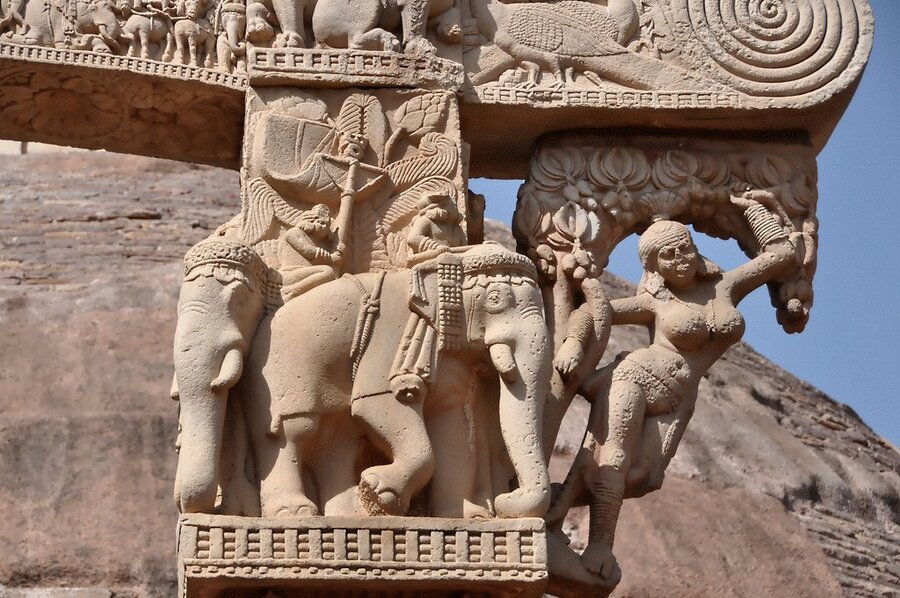
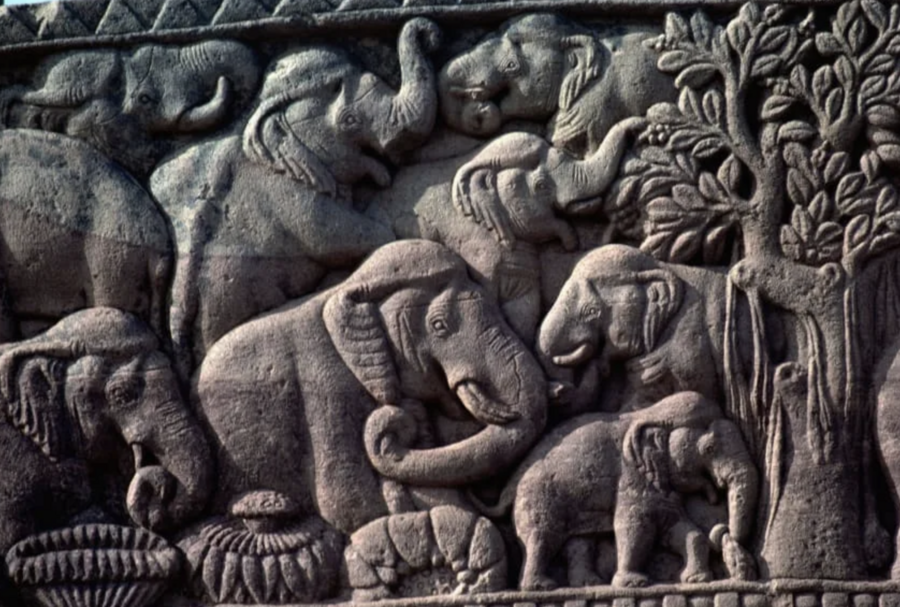
Stupa in Sanchi
At the northern gate, in the upper frieze of sculptures, is depicted a scene of worship toward a sacred tree. Heavy elephant figures slowly approach the tree from both sides. Their trunks appear to sway, twist, and reach toward the tree, creating a smooth, rhythmic motion. The abundance of natural bounty—lush, large flowers, creeping plants, and rich fauna—are all incorporated into the reliefs of the Stupa in Sanchi.
Thanks to the multifaceted nature of the expression and the presence of natural imagery, even in one of the earliest Buddhist artifacts, a sense of celebration for all of existence is created.
The gates (toranas), positioned on the four cardinal directions (north–south, west–east), form a cross. The center of this cross coincides with the central point of the imaginary universe and symbolizes the even dissemination of Buddhist teachings in all directions. These gates are so well-known that they have gained worldwide fame—they can be seen on Indian currency and souvenirs.
Stone temples and sanctuaries
Concurrently with the construction of stupas in India, the art of carving rock temples and sanctuaries was actively developing—another key type of Buddhist architecture.
These structures were carved directly into rock formations, symbolizing the immutability of human faith and the eternal path of knowledge. It is important to understand that stupas were primarily repositories for relics and symbols of cosmic order, whereas rock temples and sanctuaries represented multi-functional religious centers, integrating spaces for prayer, meditation, and monastic life.
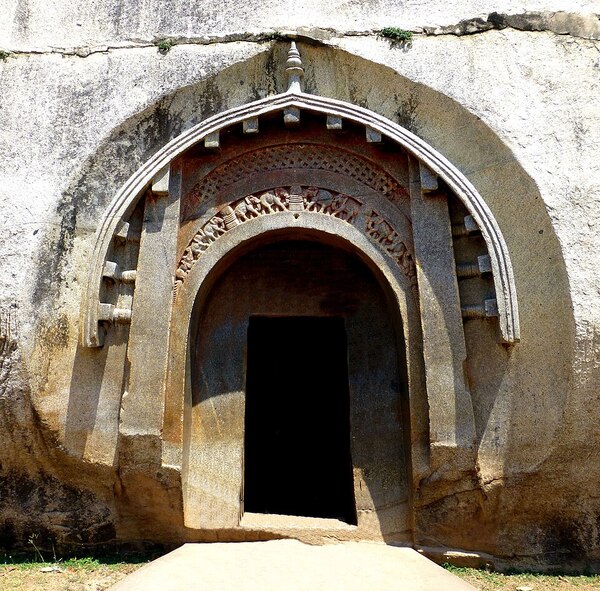
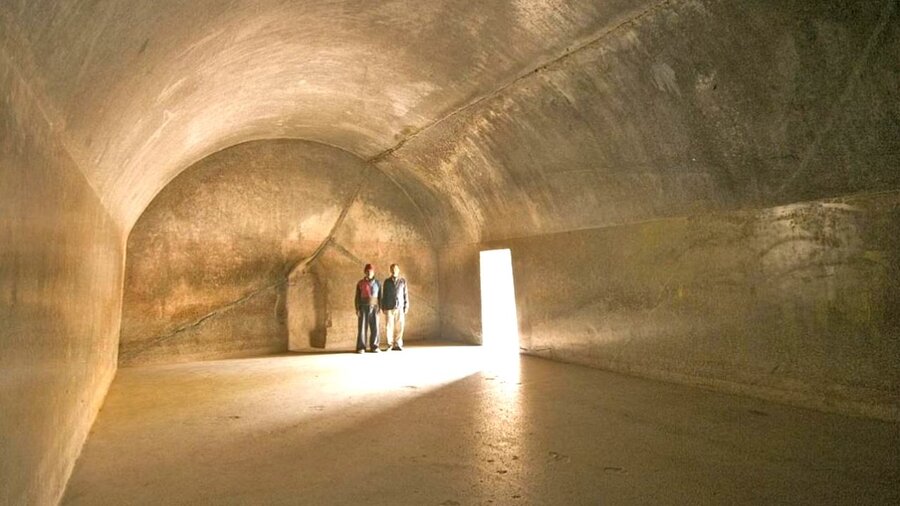
Barbaric Caves
Barabar Caves is a complex of seven man-made rock caves in the state of Bihar. The largest cave measures 13,95 × 5.84 m.
At first glance, the interior of the cave seems simpler and less ornate than the decorative elements of the Stupa in Sanchi. However, upon entering, a person witnesses a phenomenal acoustics, which is the result of the highest level of mastery by ancient builders: the cave walls were polished to a near-mirror finish, allowing sounds to take on new nuances and deepening the state of meditation.
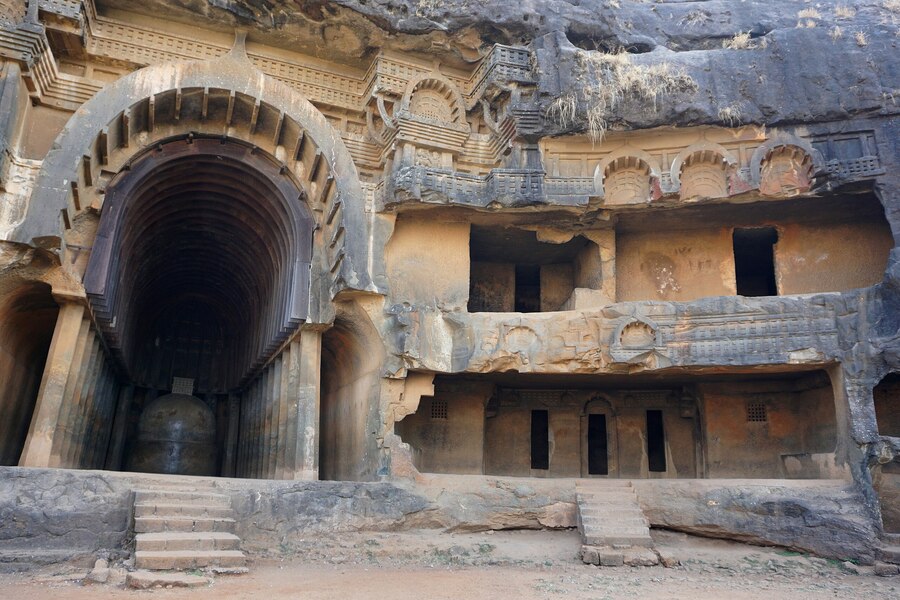
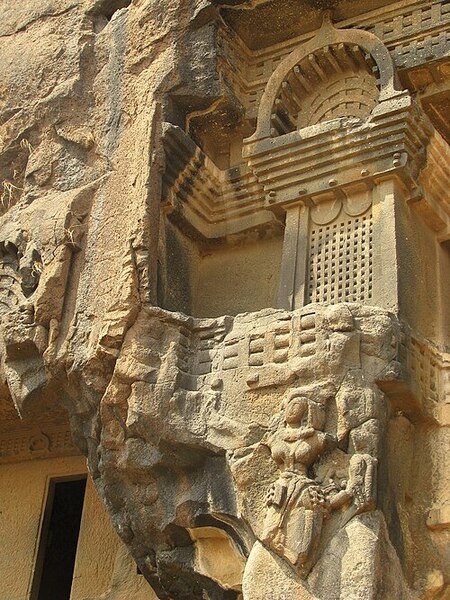
Bhadja Caves
The Bhaja Caves are a complex of 22 rock-cut Buddhist caves located in the state of Maharashtra, built in the second century BCE.
It is noticeable that this monument of Indian temple art is far more decorative. A higher level of façade detail is already present here. The reason is the religious context. The Barabar Caves were created for Ajivika ascetics, whose religion advocated simplicity. This particular example, however, belongs to the Buddhist movement, whose imagery aimed to reflect the state of internal fulfillment as well as the material world.
The most captivating space is Room 12. This is a monks’ meeting hall, measuring 17 m by 8 m, with an 8.8 m ceiling height.
Cave Number 12—the Chaitya Griha (monk assembly hall). Inside, you can find 27 octagonal columns, a ceiling, and a plasticity and rhythm reminiscent of a wooden structure, and most importantly, a stupa. In this case, it served as a reliquary erected in honor of a monarch who attained enlightenment.
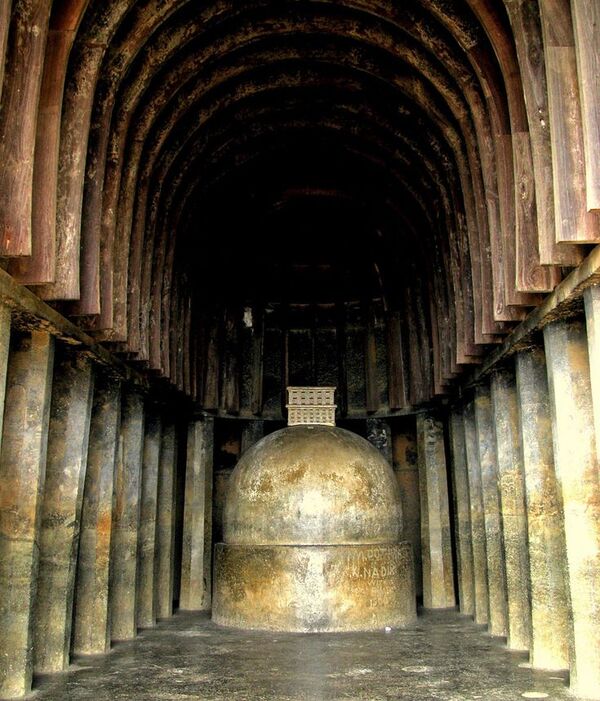
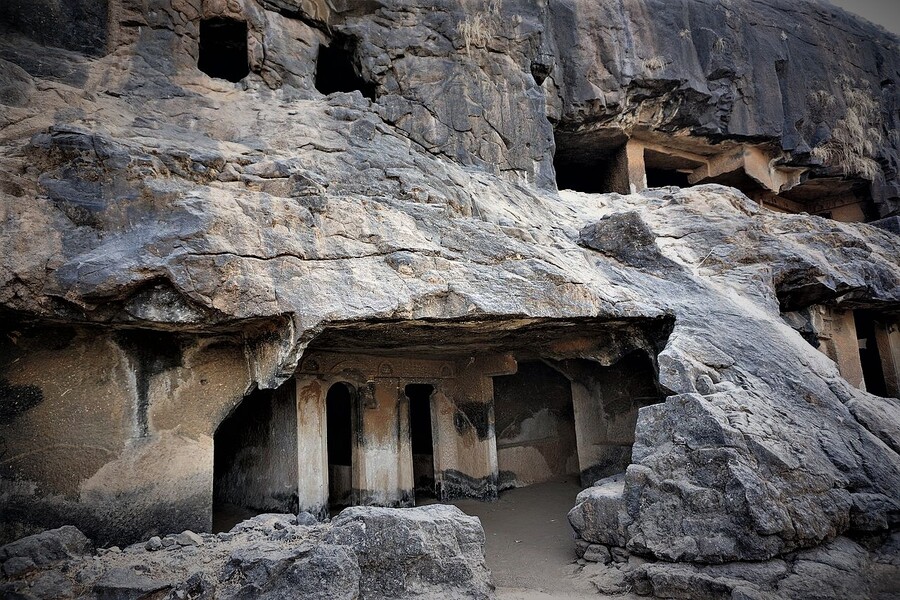
Bhaja Caves
Symbolism in Indian Temple Architecture
In Indian temple architecture, symbolism is one of the primary components—it expresses the cosmology, mythology, and philosophy of ancient peoples. There are many symbols in Indian temple architecture; I will discuss three of the most prominent and widespread.
Mandala
Temple plan—a space designed by accounting for cardinal directions, their connection to deities and constellations. The mandala is fundamental to this. It is important to note that in ancient India, geometry was perceived as a science capable of reproducing the structure of the universe. The mandala is a sacred geometric diagram that symbolizes creation itself. It determines the placement of entryways, altars, shrines, and other elements. The mandala is not only the foundation of the temple but is also present within it—on ceilings and woven hangings.
The temple grounds are viewed as a space through which a person moves from the periphery toward the center—the main sanctuary—symbolizing the journey from diversity toward unity and the attainment of truth.
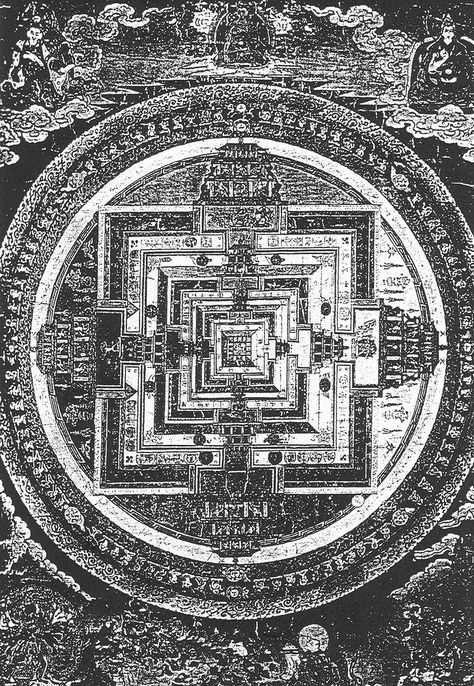

1 — Mandala Kalachakra, 2 — Buddhist Mandala