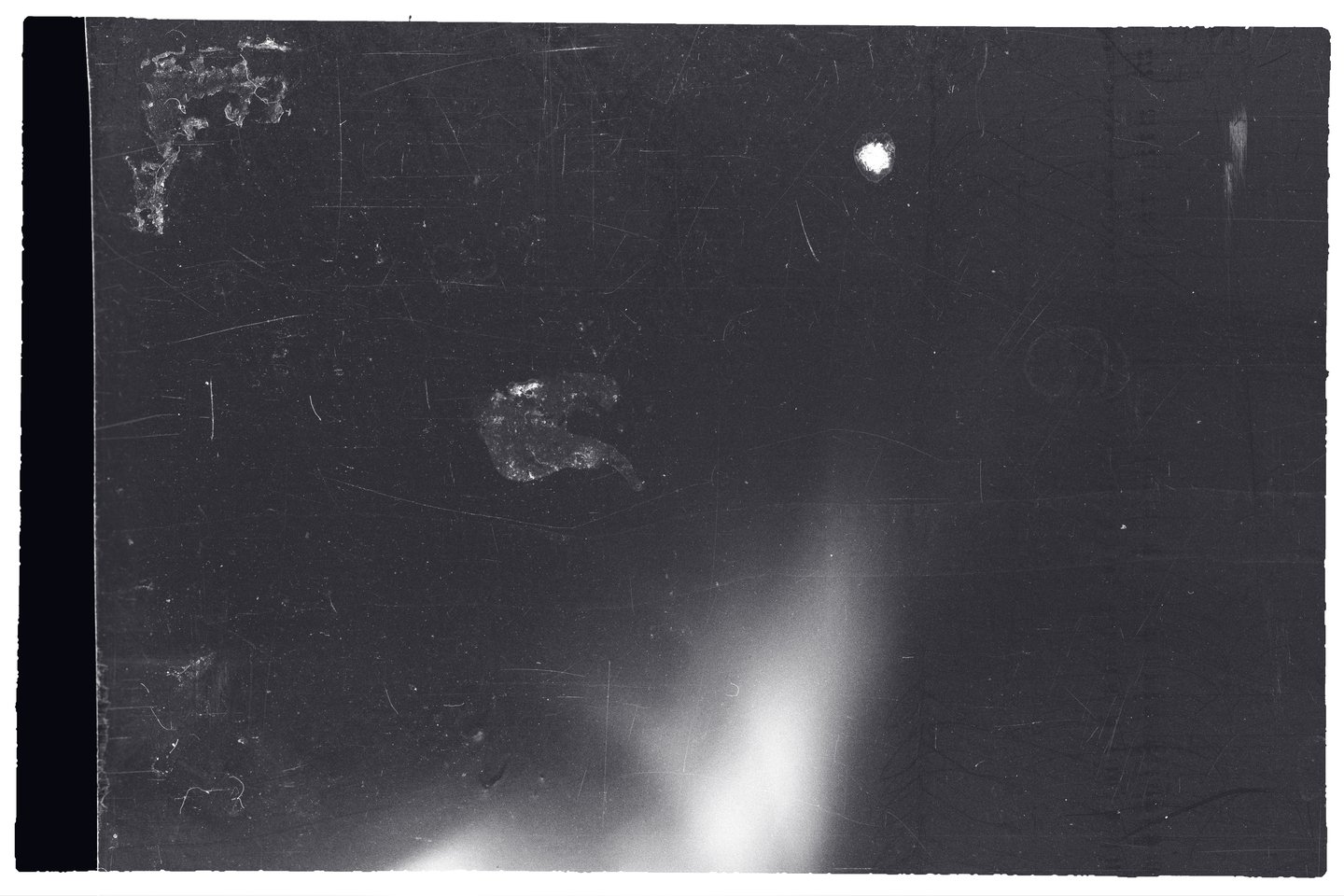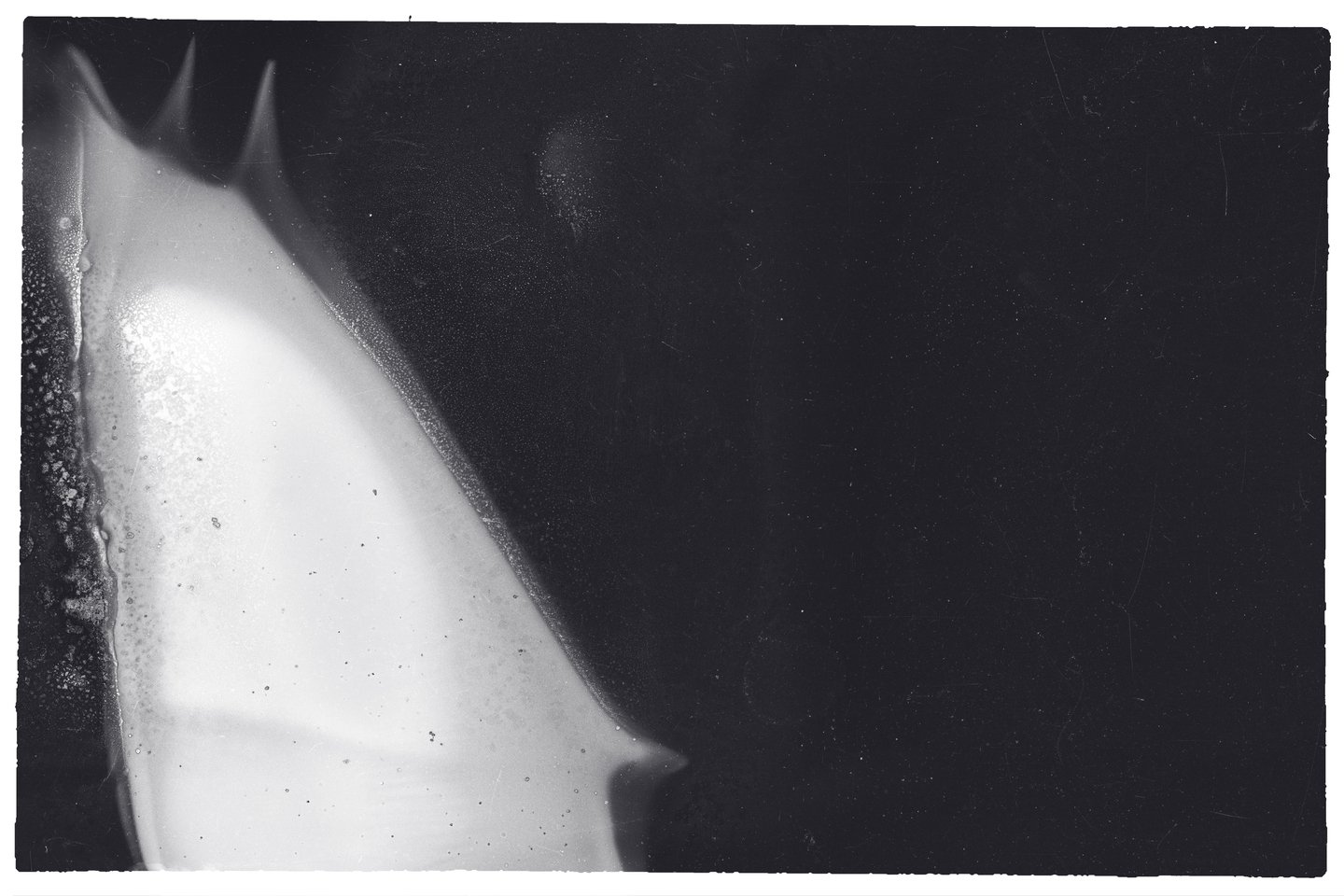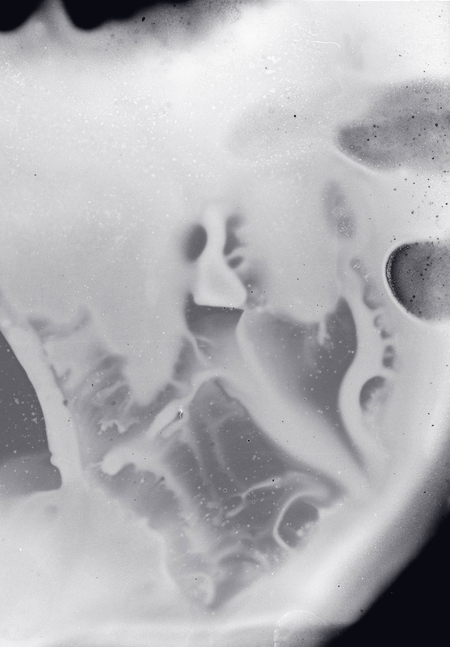
We have already discussed how the artist Shaburov began photographing nature through the lens of photography: the same small field of peas; the wall every half hour; without focusing; in the darkness; and finally—for the sake of the experiment’s ultimate purity—capturing fleeting moments without ever unscrewing the lens cap. It seemed that nothing was recorded on the film, but no—the moments of time that would never repeat themselves remained. But that is only half the story. The artwork is more important than the initial idea and must have an impact on its own merits. Therefore, Shaburov did not develop the film very well so that his black photographic frames visually resembled the night sky with an infinite number of barely discernible details. Later, to complete the project, he intensified this—he shot two more rolls of film, deliberately developing them poorly and scratching them to create abstract photographic canvases. Also: standard photographic film in the USSR originally contained 36 frames. That is why all of Shaburov’s series consisted of 36 prints. However, in this particular case, the film was forensic, purchased by the Regional Bureau of Forensic Medicine where Shaburov worked in large reels via bank transfer, and he wound as much as would fit onto the spool.