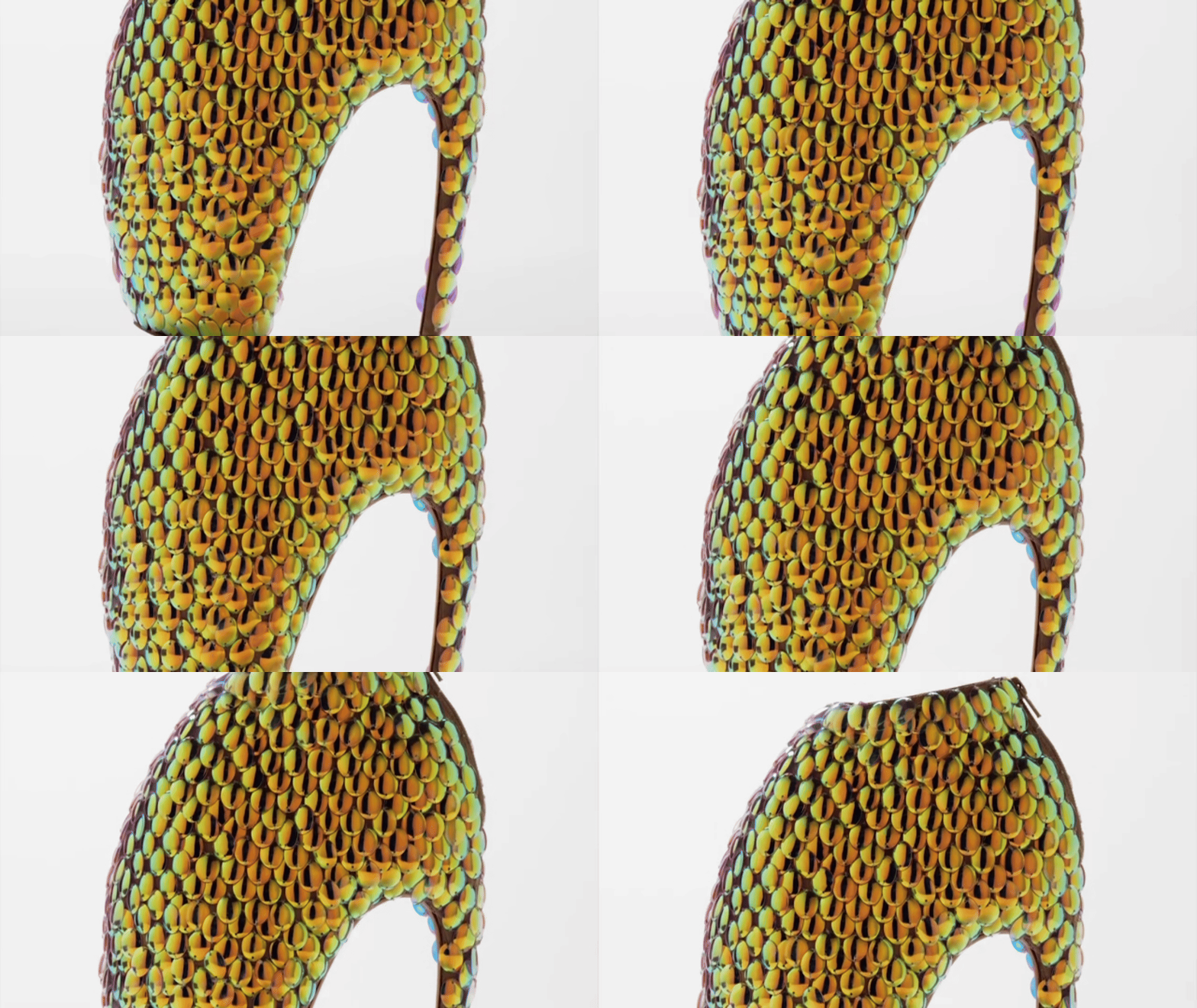
Armadiilo Boot, Plato’s Atlantis
Navigator
- Concept
- Pre-Photography Platform
- 1930–1940: Studio and Movie Star
- 1960–1970: Surrealism and Fetishism
- 1990: Exhibition, Collapse, and Subculture
- 2000–2010: Sculpture and Media
- 2010–2020: Instagram and Street Style
- Conclusion
Extreme platform footwear holds a special place in fashion history. Its practical function (walking) directly conflicts with its visual function (creating a hypertrophied silhouette). The platform alters the body’s proportions, gait, center of gravity, and the figure’s relationship to the frame’s space. Consequently, it serves as a convenient «optical device» for analyzing how photography constructs the body image in fashion. This topic sits at the intersection of costume history, visual culture history, and the theory of representation. Moreover, the photographic representation of the platform has been studied less systematically than the history of the footwear itself.
«Extreme platform» footwear is defined as shoes with a sole height of 10–12 cm, whose design deliberately exceeds utilitarian necessity, making the height itself the primary visual and conceptual statement. This boundary establishes the thematic field: Venetian chopines, 1970s footwear, 1990s platforms, Alexander McQueen’s «Armadillo,» and modern hypertrophied models.
The research includes images where footwear is either the main subject or the semantic center of the composition. This includes editorial magazine shoots, advertising campaigns, studio and street photography, fashion show documentation, and frames from music and media culture. Representative cases are selected for each era. Painting and graphic arts are permitted as contextual material because it is impossible to show the background history of the platform’s photographic image without them. Selection criteria: • Presence of the platform in the frame, corresponding to the working definition; • Belonging of the image to a recognizable photographic «mode» of the era; • Possibility of establishing the author, year, and source.
The research is structured chronologically and thematically. Each section corresponds to a specific «mode of representation”—that is, a persistent way of presenting the platform. The chronology serves as the framework, while the shift between these modes constitutes the structural organizing principle: moving from documenting status through fetish and performance toward the autonomous object and the digital meme. Sources are curated from academic publishers and museum publications. Social media is used only when citing a specific publication. Textual sources serve to verify facts (authorship, dating, context of the shoot) and to build interpretation; they are not used to compile pre-formed conclusions.
How has the photographic strategy of representing footwear on extreme platforms changed: from displaying status and durability to visualizing fragility, grotesque, and bodily transformation?
The representation of the extreme platform in fashion photography proceeds through four phases:
• Platform as a sign of status and restriction. The footwear is displayed through social context and the figure. • Platform as fetish and surreal object. The footwear is detached from everyday life, and the shot is constructed as an isolated fantasy. • Platform as a tool of performance. Height transforms into a method of constructing a public image, and the risk of falling becomes part of the spectacle. • Platform as an autonomous sculpture and digital sign. The footwear «emancipates» from the body, and its image is reproduced and reinterpreted in the online environment.General trend: the more radical the height becomes, the more often the photograph shifts the focus from the functional «truth» of the footwear to its figurative, narrative, and symbolic weight.Platform to Photography
Before the advent of photography, high footwear already possessed an established system of visual meanings. Its height was linked not only to practical necessity but also to the display of wealth, social standing, and the distance between the body and its environment. Platform shoes emerged independently in different cultures, but their construction was often unified by the common idea of artificially elevating the human above the surface.A particularly illustrative example is the Venetian chopines of the 16th–17th centuries. The tall wooden soles allowed clothing to be lifted above the dirty and damp streets of Venice.
However, the height of the shoes could reach considerable dimensions, turning ordinary movement into a difficult process.
The Metropolitan Museum of Art collection features examples from the 16th–17th centuries, including models with soles exceeding thirty centimeters in height.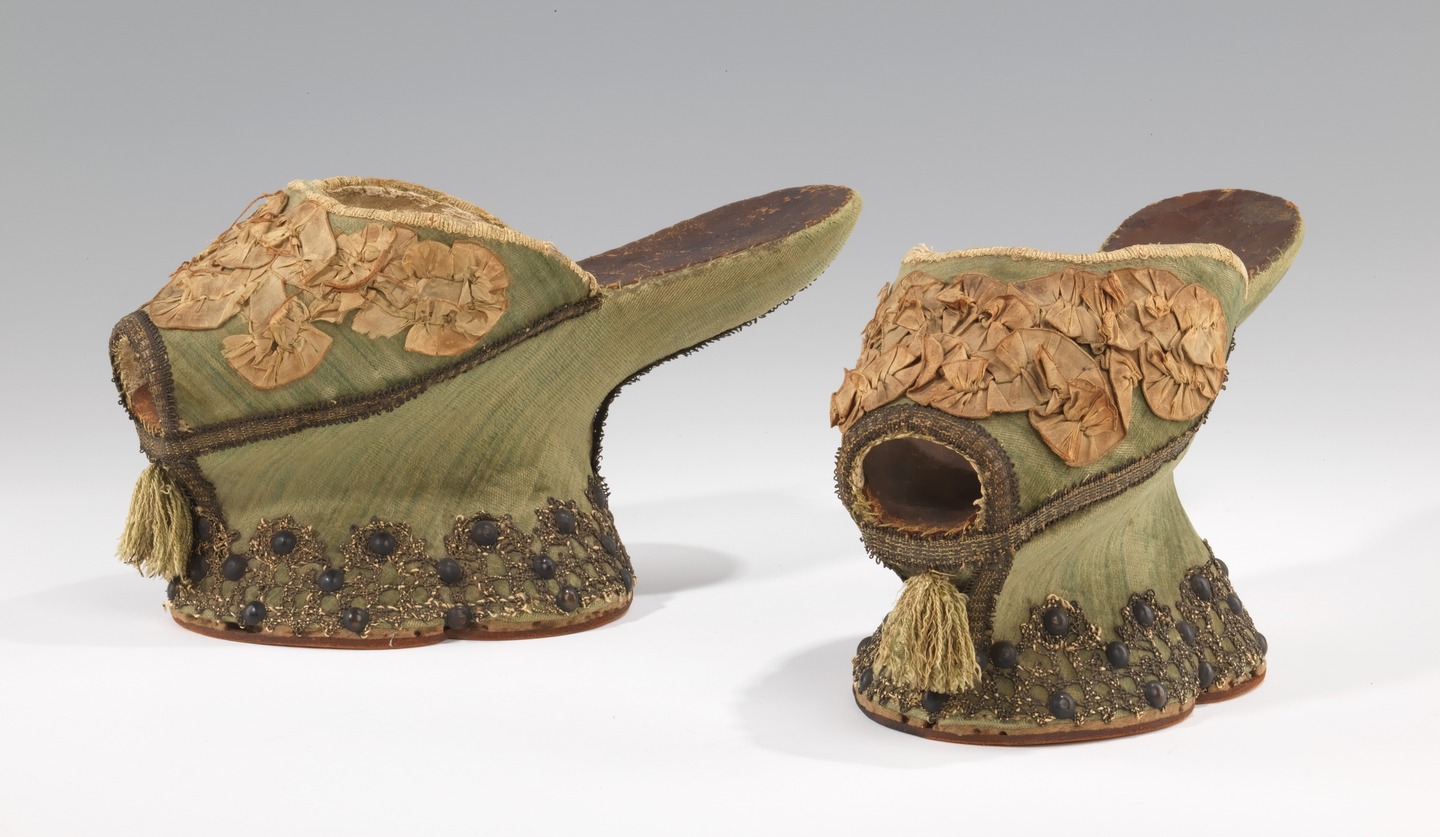
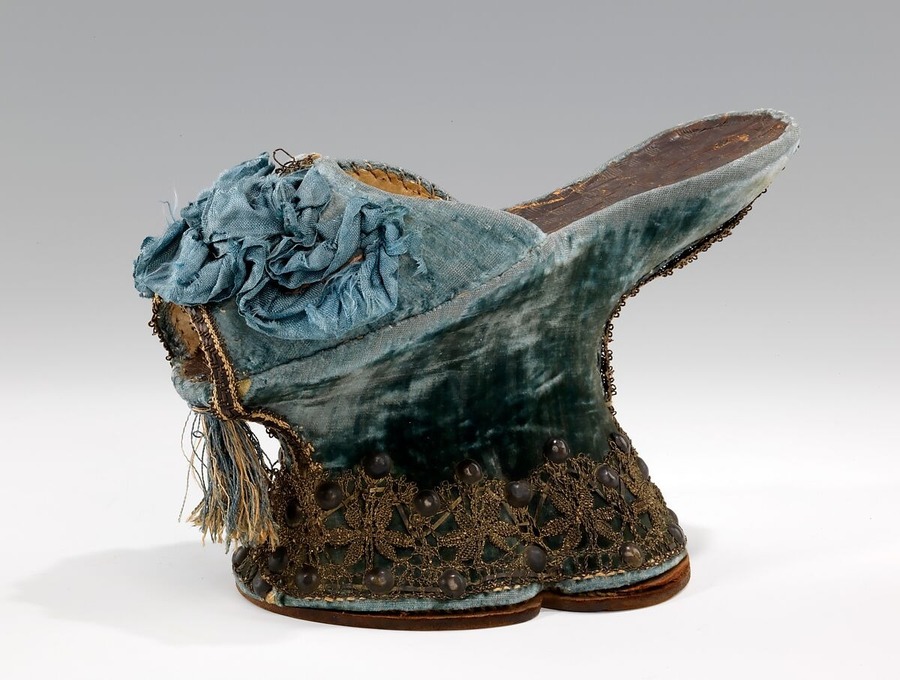
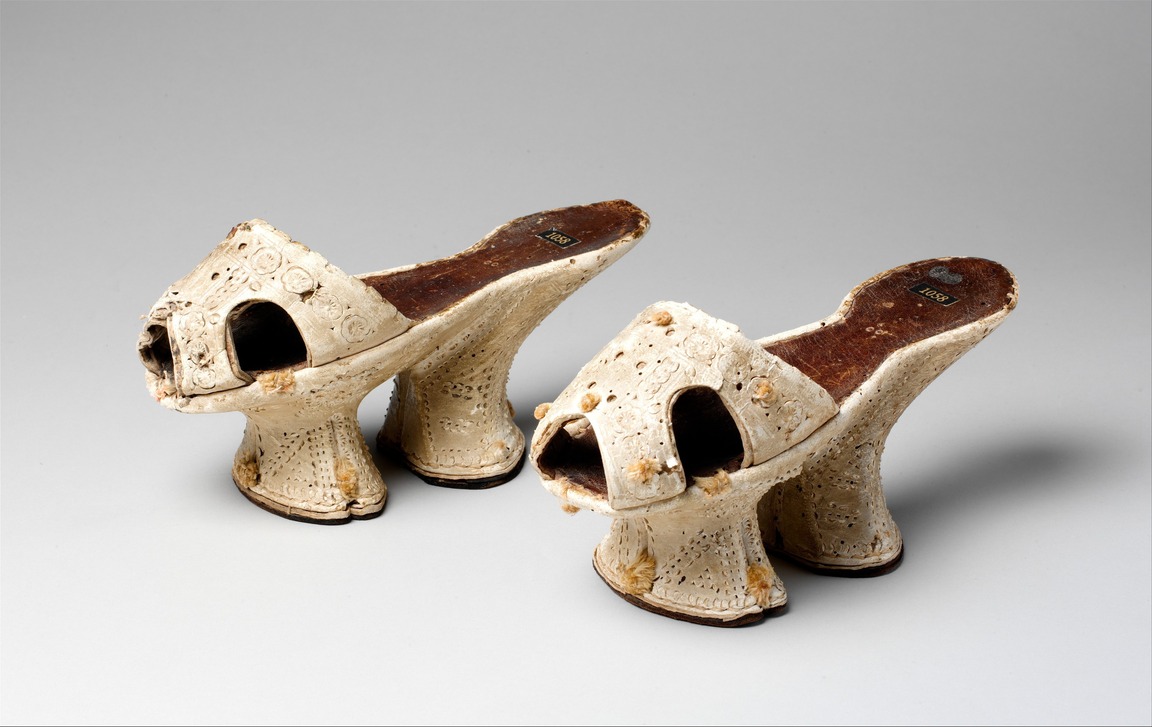
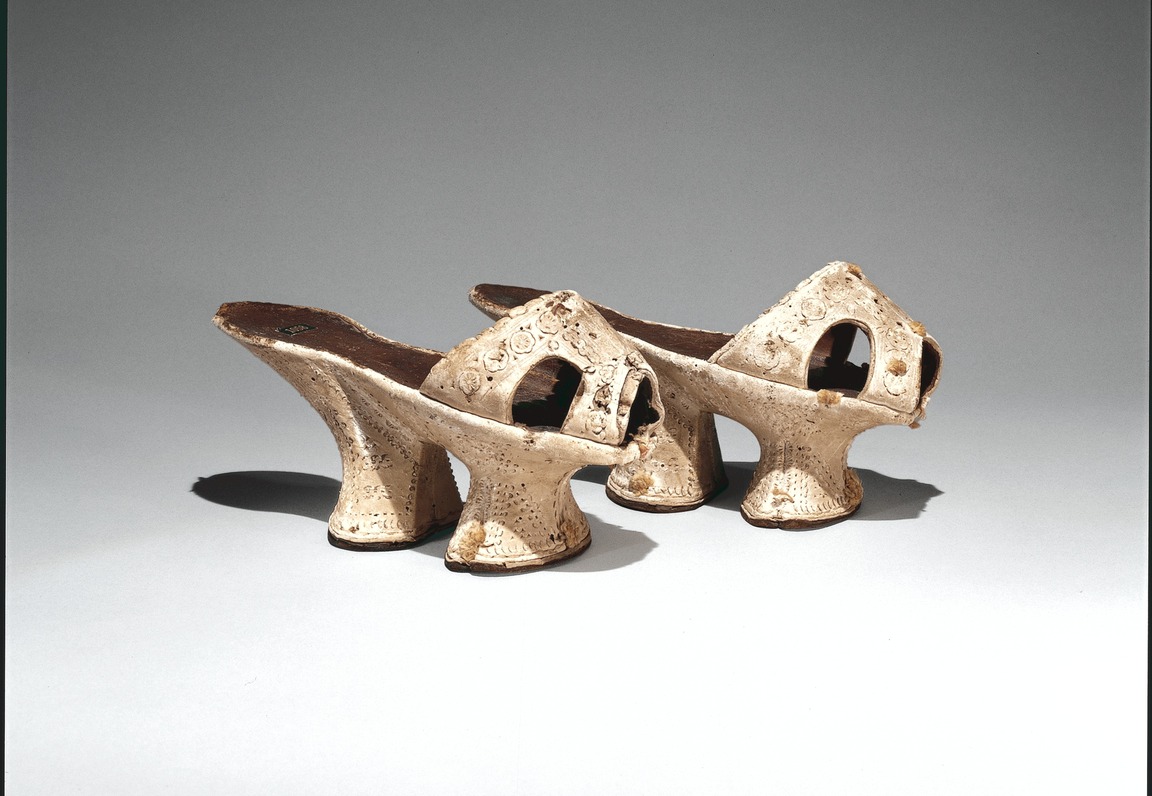
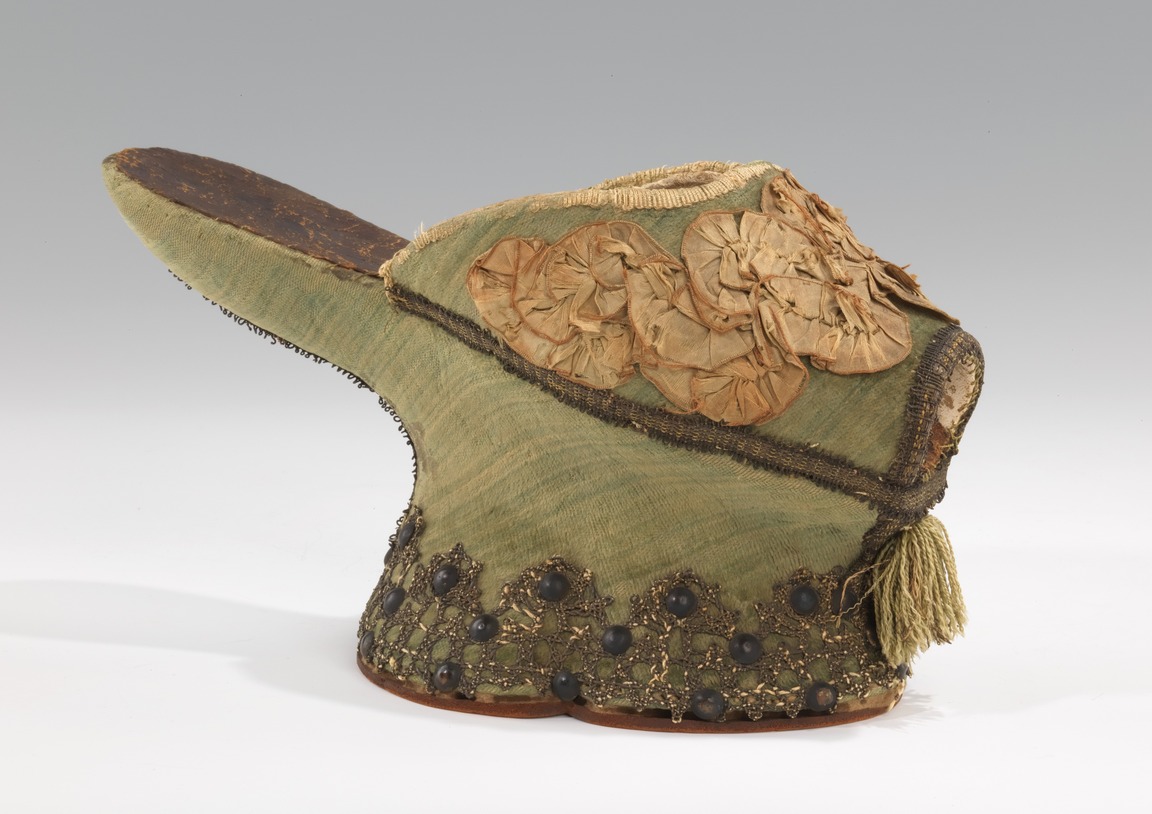
Chopin, Italy, 16th Century
In Vittore Carpaccio’s painting, «Two Venetian Ladies,» high footwear is integrated into the interior scene, becoming a part of the depiction of the characters' social status. In such works, shoes are not isolated from the figure; they are perceived through the overall silhouette, clothing, posture, and surrounding setting. Graphic representations of costume, particularly illustrations from Cesare Vecellio’s book, «Habiti antichi et moderni,» allow us to view high footwear as an element of visual classification of costumes and social types.
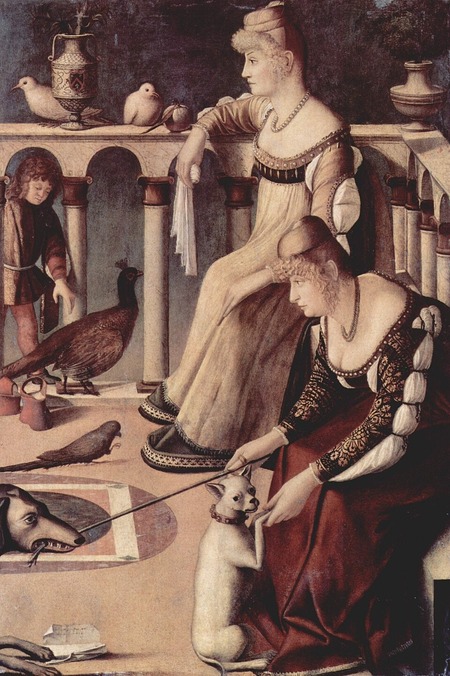
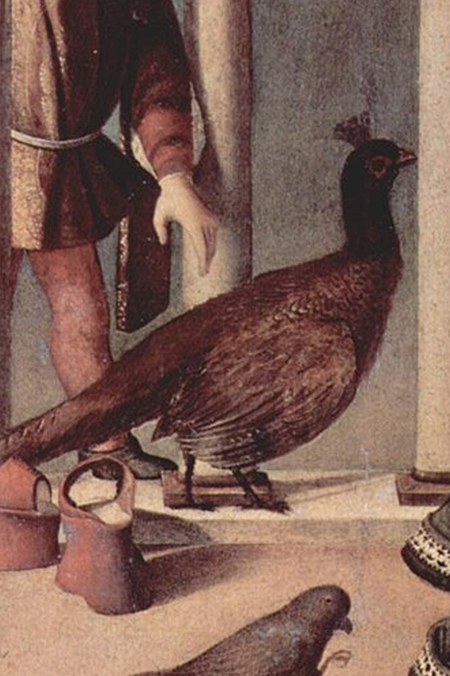
Vittore Carpaccio, «The Two Venetian Ladies, ” 15th Century
Similar functions can be found in Japanese tradition.
Wooden geta and okobo lifted the foot above the ground, protecting clothing from dirt and moisture. Certain varieties of footwear were associated with specific social and professional roles, and the height of the sole influenced gait and the character of movement.
In Ottoman culture, there were *nalins*—wooden slippers worn when visiting hammams.
Their height and decorative embellishment could denote the wearer’s social standing, although the tallest examples did not always offer additional practical protection.
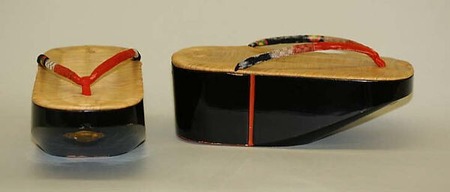
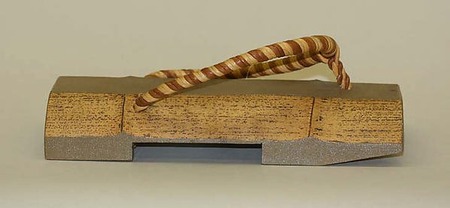
Here, the 19th and 20th centuries
Naliny, 19th Century
The differences between these examples allow us to view the platform not as a universal symbol, but as an object whose meaning is shaped by a specific cultural context. In one case, it emphasizes social distance; in another, it provides protection from the environment; and in the third, it becomes part of a ritualized image.
1930–1940: Studio and Movie Star
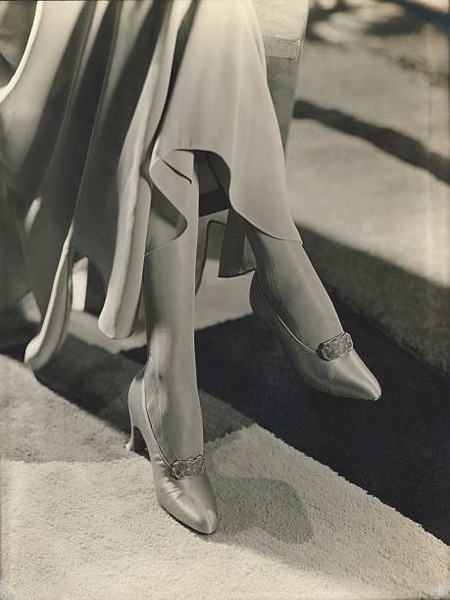
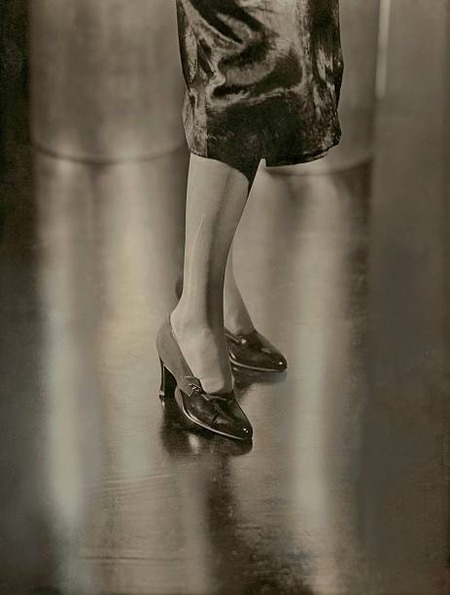
George Hoyningen-Huene, Vogue, 1929
The return of platform footwear to Western fashion in the 1930s was linked to designers' experiments with materials and proportions. Salvatore Ferragamo became one of the central figures in this process, actively using cork, wood, raffia, and other materials to create unconventional constructions. With limited access to traditional materials, the platform allowed not only the creation of new shapes but also the rethinking of footwear architecture itself.
One of the most famous examples is the Rainbow sandals, created by Ferragamo in 1938 for actress Judy Garland. The model was distinguished by its multicolored suede trim and cork construction. Its appearance demonstrated the possibility of uniting technical experimentation, decorative elements, and the Hollywood image. It is also important to note that the heel height of the original Rainbow model is approximately 8.5 centimeters, so it does not fully meet the criterion of an extreme platform used in the study.
It should be used as historical context for the emergence of platform aesthetics, rather than as a primary example of extreme footwear.
Hollywood culture played a crucial role in the spread of platform footwear.
Movie stars were not only consumers of designer footwear but also carriers of a specific visual ideal. The public image of the actresses was shaped through studio photography, advertising portraits, magazine features, and cinematic shots. The footwear in these images conformed to the overall style of the image, accentuating the elongated line of the figure and creating an impression of elegance.
The photographic language of the period is characterized by controlled lighting, posed stances, and carefully constructed composition. The studio portrait aims to create a complete image where clothing, hairstyle, makeup, and shoes function as a unified system. Unlike later experimental shoots, the object rarely becomes an independent semantic focus. Even an unconventional platform design is perceived as part of a harmonious silhouette.
The visual basis of this section should be supplemented with promotional materials from footwear houses and magazine shoots from the 1930s–1940s. Particular interest lies in images where the model displays the footwear in a full-body shot, as well as frames focusing on the feet and the lower silhouette. Comparing these two types of images will help determine how frequently photography emphasized the footwear apart from the overall composition.
The wartime period further altered the relationship with materials and footwear production. Restrictions on leather usage fostered the widespread adoption of alternative materials, including textiles, wood, and cork. The Metropolitan Museum of Art’s collection features Ferragamo models from the late 1930s and 1940s, where the use of raffia and other materials is linked to the economic and technological constraints of production.
Thus, during this period, the platform exists at the intersection of two trends. On one hand, it is an experimental construct driven by the search for new materials and production methods. On the other hand, photography seeks to integrate it into the conventional system of presenting feminine elegance, without emphasizing the shoe’s physical peculiarity.
1960–1970: Surrealism and Fetish
Cover photograph from the photobook White Women by Helmut Newton, 1975
During the 1960s and 1970s, platform footwear returned to mainstream fashion and gained new cultural significance. Its proliferation is linked to shifting perceptions of appearance, gender, and public image. Whereas high heels in previous decades primarily supported a traditional feminine silhouette, they now function as a tool for aesthetic experimentation and a means of demonstrating individuality.