Concept
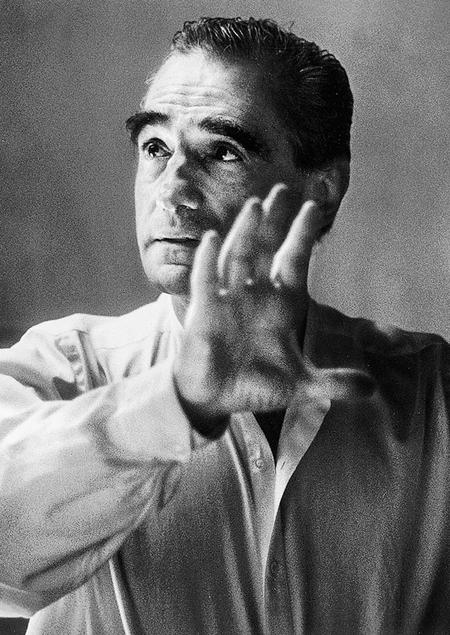
The history of the Hollywood gangster film has undergone several key phases: evolving from pre-Code explicitness through post-war psychological depth to post-classical irony and reflection. However, it is Martin Scorsese, whose work spans nearly five decades, who offers a unique lens to view the genre’s evolution not as a change in style, but as a continuous internal transformation—from the glorification of the criminal world to its complete desacralization. The choice of this topic stems from the necessity to reassess the conventional view of the gangster genre as merely a set of recurring tropes that changes only superficially—through sets, costumes, or editing techniques. Crucially, this study focuses not on the director’s biography or specific film plots, but on how the camera’s position relative to the character changes, how the aesthetics of violence transform, and how the urban space ceases to be a co-conspirator and instead becomes an indifferent witness.
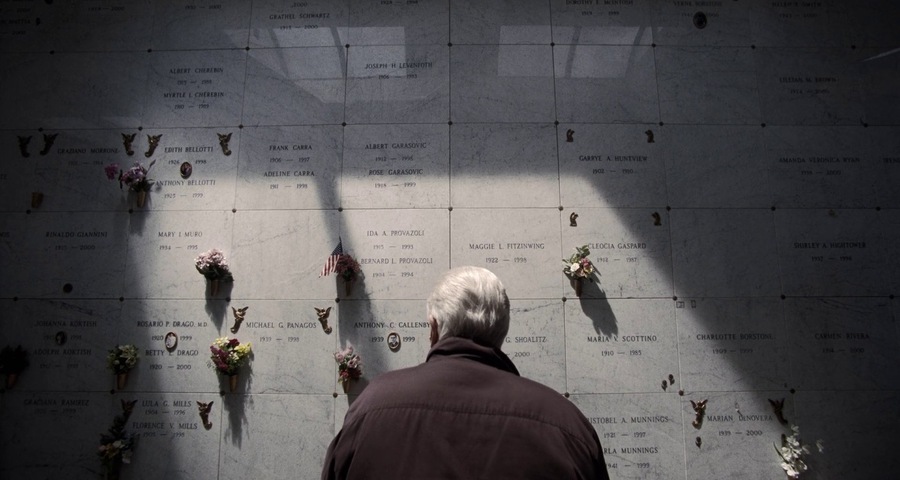
«The Irishman» (dir. Martin Scorsese, 2019)
The principle of material selection is tied to the task of demonstrating an internal logic of evolution: four films were chosen, each representing a specific stage in the director’s genre thinking. «Mean Streets» (1973) offers an early, almost ethnographic view of the criminal milieu, where gangster existence has not yet been separated from daily life. «Goodfellas» (1990) is a mature, canonical example where Scorsese perfects the classic genre formula. «Casino» (1995) is a hypertrophied version, where power and violence become mere set dressing. Finally, «The Irishman» (2019) serves as the culmination, where only weariness remains of the familiar gangster genre, and the polished aesthetic dissolves.
The main hypothesis of this study is that the evolution of the gangster genre in Scorsese’s work is not a linear movement from simple to complex or from classic to post-classic.
Martin Scorsese doesn’t update or modernize the gangster genre; rather, he systematically deconstructs its beautiful myths, reinstating its original brutality while ultimately dismantling the romantic image of the gangster as a tragic hero.
Instead of categorizing films by year or decade, the work is built around five thematic blocks. The first block, «Sinners and Their Streets, ” focuses on early Scorsese films. It examines how the camera first frames the gangster world and how the viewer finds themselves immersed within that space. The second block, „Rituals of Power, ” covers his mature period. It analyzes how the director portrays the characters' success—through long takes, smooth camera movement, lighting, and music. All of this creates a sensation that power is a beautiful and mesmerizing spectacle. The third block, „Anatomy of Violence, ” compares murder scenes from various films. The fourth block, „The City as Accomplice, ” focuses on space. It demonstrates how the city shifts from one film to another. The fifth block, „The Gangster’s Death, ” is dedicated entirely to The Irishman. It analyzes how Scorsese intentionally subverts genre expectations: the slow rhythm, the absence of conventional imagery, and the presence of an old, worn-out protagonist instead of a young, energetic one. This structure allows one to revisit the same films from different angles, without retelling the plots, and to showcase the genre’s evolution holistically rather than merely chronologically.
The principle for selecting and analyzing textual sources is rooted in the demands of scholarly credibility and relevance. Academic and film criticism works are utilized. Key sources include articles dedicated entirely to the creative work of Martin Scorsese. Therefore, this paper will function as an independent analytical discourse, grounded in professional literature.
I. Sinners and Their Streets
«The Bad Street» (1973) is an early Martin Scorsese film that laid the foundation for his signature approach to the gangster genre. Unlike the epic, near-operatic style of Francis Ford Coppola’s The Godfather, Scorsese took a different path: he focused not on metaphors of the Mafia or capitalism, but on «small, unglamorous details of daily life, ” drawn from his personal memories. [5]
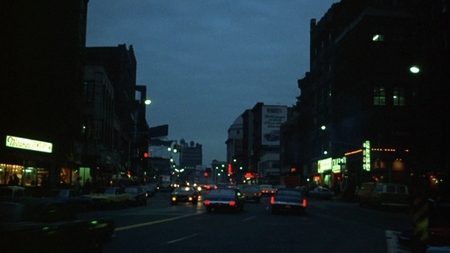
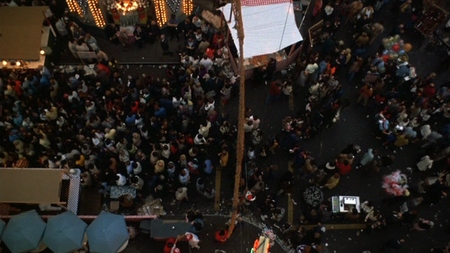
«Mean Streets» (Dir. Martin Scorsese, 1973)
«Bad Streets» is largely based on the director’s personal experience. Scorsese grew up in Little Italy on Manhattan, and this environment—with its rhythms, smells, sounds, and unspoken rules—became not just the setting, but a full character in the film. Scorsese and screenwriter Marwick Martin recreated what they witnessed growing up in that neighborhood: a claustrophobia, a petty existence they aimed to portray realistically, without embellishment. [5]
«Mean Streets» (Directed by Martin Scorsese, 1973)
One of the main innovations of «Angry Streets» was a unique way of operating the camera. The film contains virtually no static shots. The camera is constantly moving—slightly swaying, following the characters, as if breathing along with them. This lends the events a sense of documentary realism.
«Mean Streets» (Dir. M.C. Scorsese, 1973)
The use of reflective surfaces—mirrors and windows—deserves particular attention. Furthermore, only the protagonist, Charlie, passes through these «reflective moments, ” linking him to the archetype of the narcissist—a character who gazes at themselves and cannot detach from their own reflection. This is a vital visual metaphor: the gangster is perpetually in a state of self-reflection, but this reflection does not lead to salvation; it only pulls him deeper into sin.
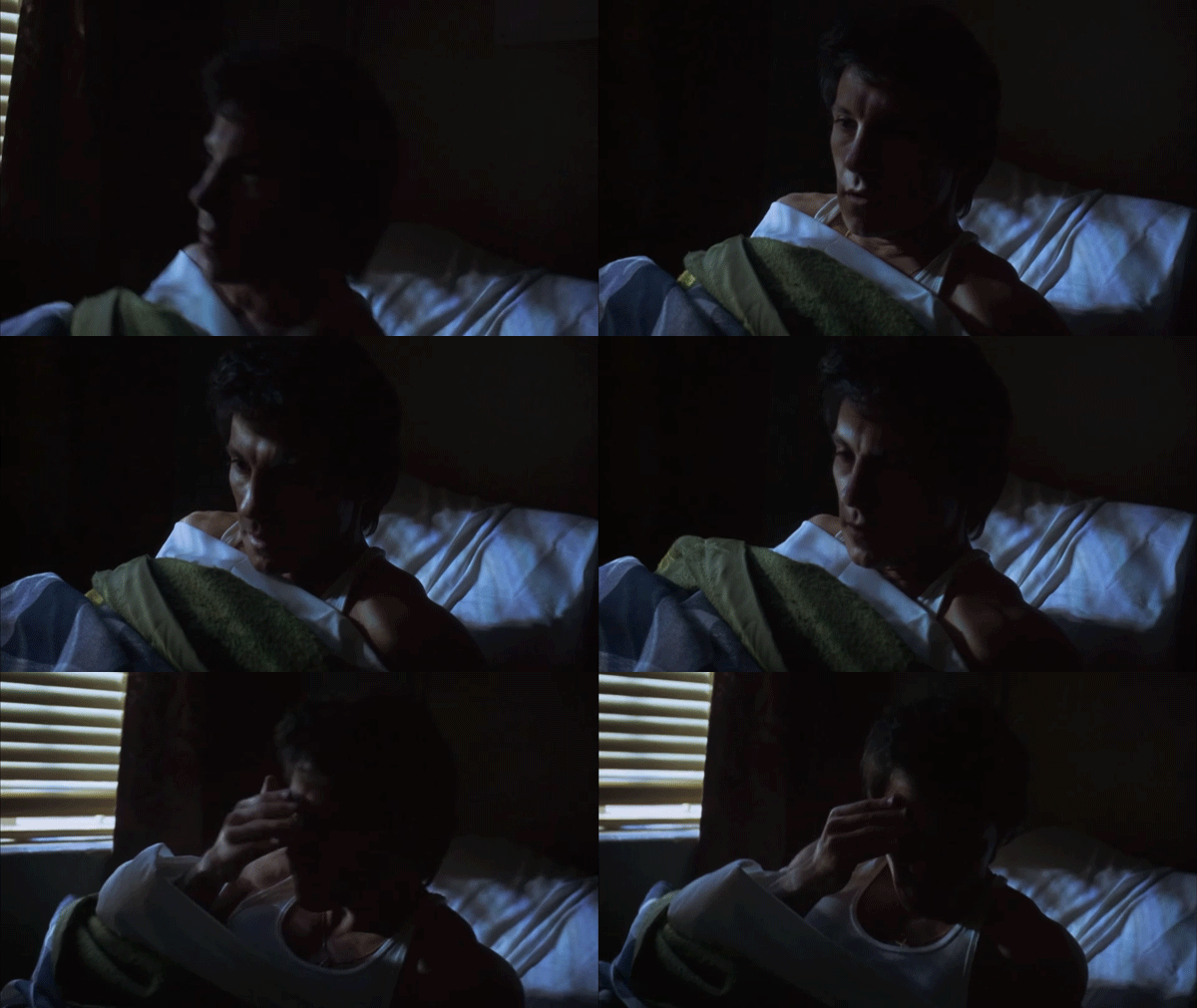
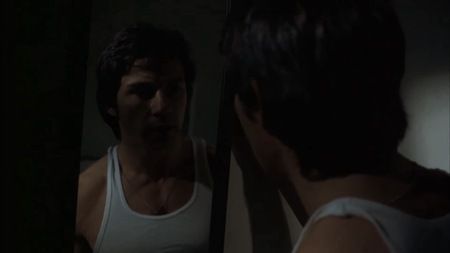
«Mean Streets» (dir. Martin Scorsese, 1973)
«Mean Streets» opens with a scene that became legendary in film history. To the sweet, almost saccharine song «Be My Baby» by The Ronettes, we see Charlie waking up in his bed. Rolling Stone magazine called this moment the greatest rock-and-roll moment in cinema, noting: «It is the soundtrack to his memories, all his dreams and fears, all his Catholic guilt, all his New York mood. The song describes his world in three minutes, but we can already tell that this world is about to explode.»
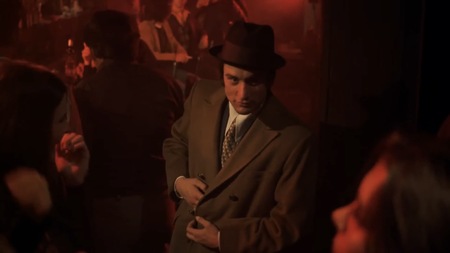
«Mean Streets» (Directed by M. C. Scorsese, 1973)
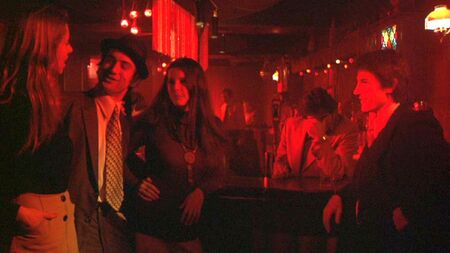
One of the most pivotal scenes in the film is the initial appearance of the character Robert De Niro, Johnny Boy. He emerges from the devilish glow of the bar lamps. This scene establishes the entire framework of the movie: Charlie is a sinner attempting to redeem his sins by caring for Johnny Boy, who becomes his personal penance—a burden that does not save the protagonist, but destroys him.
«Mean Streets» (Directed by Martin Scorsese, 1973)
«Mean Streets» (directed by Martin Scorsese, 1973)
In «Goodfellas, ” violence is never portrayed as beautiful or heroic. In classic gangster films of the past, the criminal was often presented as a tragic figure—intelligent, ambitious, yet doomed. Their demise evoked sadness and even sympathy from the audience. Scorseses shatters this tradition. He does not want the viewer to see the killers as romantic heroes. In his films, violence does not elevate the criminal or elicit pity; instead, the director forces the viewer to feel disgust and amusement.
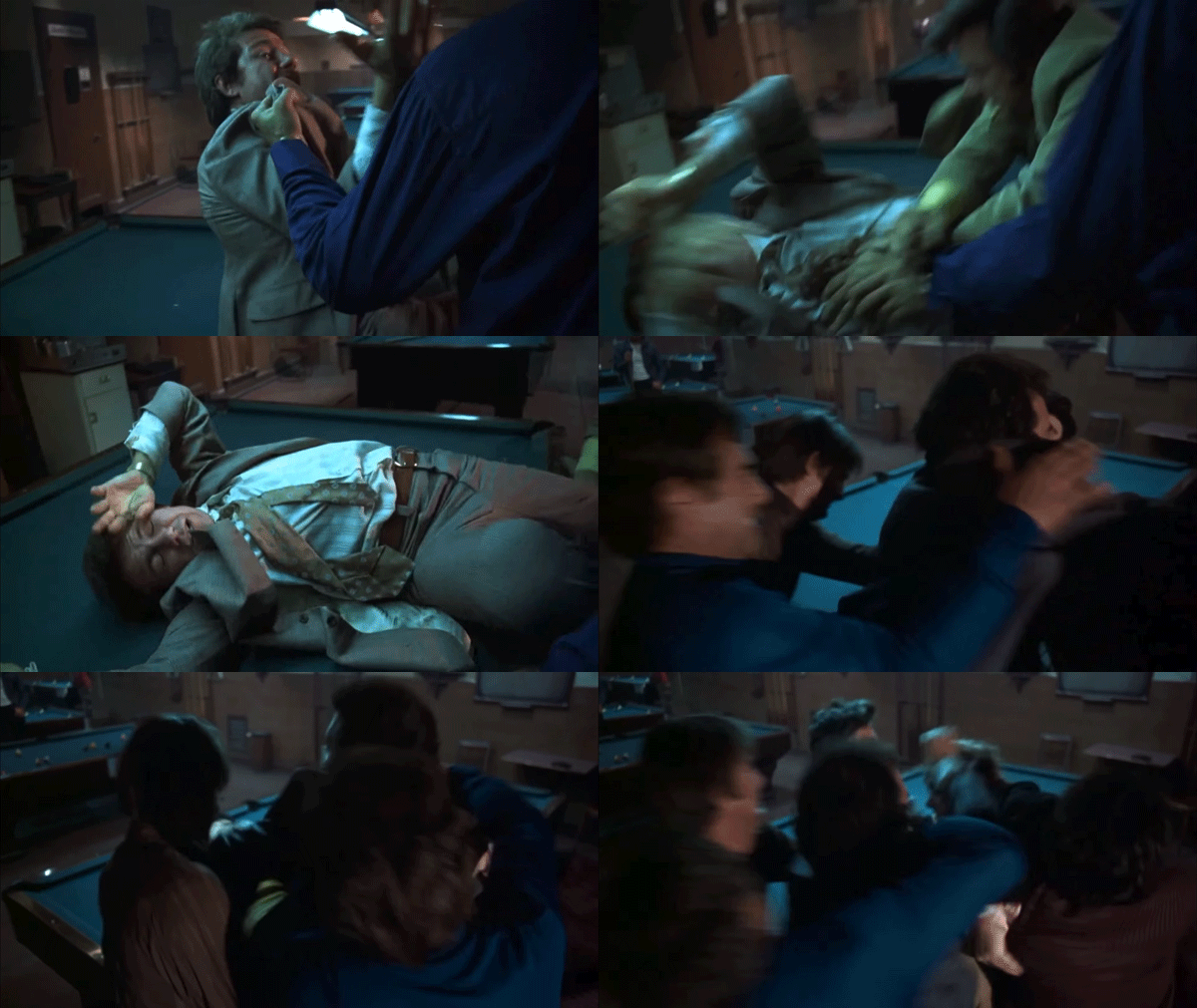
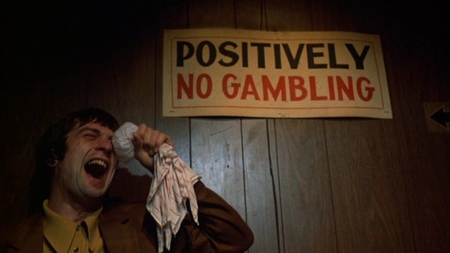
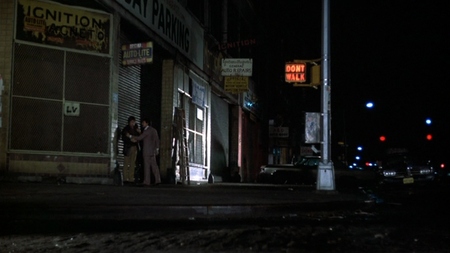
The irony is especially sharp in the music during the billiards room fight scene. The conflict begins with Johnny Boy asking the volume to be turned down, and at that moment, „Please Mr Postman“ by The Marvelettes begins playing—an immaculately polished pop song. Scorsese overlays this saccharine melody onto a chaotic, clumsy fight, where instead of kisses with cheerleaders, there are fists and broken faces. This creates a jarring contrast between the „official“ image of American youth and the reality of life on the streets of Little Italy. [7]
«Mean Streets» (directed by Martin Scorsese, 1973)
The film became a turning point in cinema history. Prior to 1973, no movie featured such intensive editing and filming style. The film lacks a traditional plot in the Hollywood sense—it is more akin to a cinematic impressionist painting.
«Mean Streets, ” along with films by other directors, helped establish a unique „New York cinematic language.“ Sidney Lumet, Woody Allen, Spike Lee, and Jim Jarmusch created their own depictions of the city, but it was Scorsese who demonstrated that cinema could be shot not in studios, but on real streets—with their noise, grime, and genuine life. This example proved infectious and largely defined the evolution of independent cinema in New York.
II. Rituals of Power
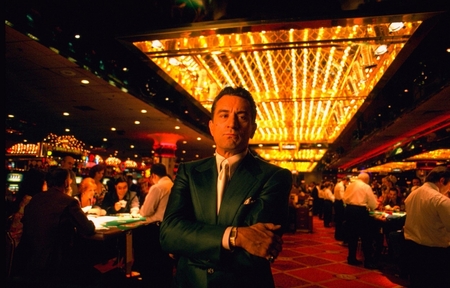
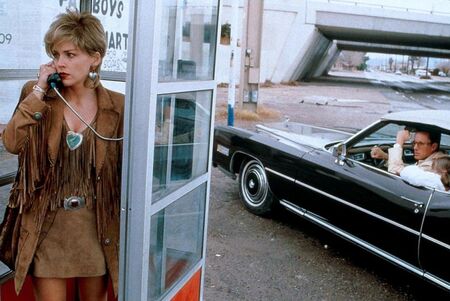
The following two films by Martin Scorsese are considered pinnacles of his work in the gangster genre: Goodfellas (1990) and Casino (1995). Both were co-written with novelist Nicholas Pileggi, both are based on real events, and both showcase the director’s mature, polished authorial style. However, there is a significant difference between them: while Goodfellas is the story of an ordinary mob soldier’s life, Casino looks much higher, depicting how the mob controlled Las Vegas and how its decline reflected the arrival of even more greedy and soulless forces—the large corporations.
«Goodfellas» (Directed by Martin Scorsese, 1990)
One of Scorsese’s defining stylistic traits is the mobile camera, particularly in long takes. The most famous example of this is in Goodfellas: Ray Liotta’s character leads his girlfriend through a back corridor and the nightclub kitchen directly to a table in the main room. The purpose of this shot is that over the course of this sequence, the viewer learns a great deal about the characters and their relationship. An entire world unfolds before them—vibrant, bustling, and rich with minute details. The camera moves so smoothly and naturally that the viewer barely notices the technical complexity of the scene, simply immersing themselves in what is happening.
«Casino» (Dir. Martin Scorsese, 1995)
«Casino» (directed by Martin Scorsese, 1995)