Navigation
Research Concept
1. Main characters and their facial expression characteristics 2. Characters' negative emotions 3. Characters' positive emotions 4. Emotion and character through text 5. Conclusion
Bibliography Image Sources
Research Concept
With the development of digital technologies and the popularization of comics and manga, bookstores and websites have become filled with diverse authors and their work, with each striving to find their unique style and techniques to capture the reader’s attention and stand out from the rest. I noticed this comic and chose it for analysis not by chance; it is distinguished from other similar works by its unusually interesting and unconventional drawing style, as well as the way the author skillfully utilizes this unconventionality to convey the characters' emotions and thoughts through the page.
The comic can be called satirical; the author plays on the contrast between something familiar and appropriate, and something strange and surreal, presenting it all in a relatively minimalistic style. What distinguishes this comic is that it lacks the lengthy setup that one usually has to simply «endure» before the interesting plot begins—it hooks the reader from the very first chapter through a very simple narrative and precisely framed panels, in which there is no need to get distracted by superfluous details or spatial descriptions of the characters. The author introduces each character as the plot develops; the names are easy to remember, and the interesting events and plot twists happen so quickly that the reader never has a chance to get bored.
In the title «A Love Advisory from the Grand Duke of Hell, ” the creator employs seemingly simple yet highly effective techniques to convey character emotions:
1. Exaggerated pauses in dialogue and facial expressions that allow the reader to „read everything.“ 2. Significant simplification or complication of the drawing style during moments when a strong emotion needs to be displayed. 3. Concise, short text accompanying large facial images for emphasis, and varying blocks of text in different weights and distortions, depending on the character.
Another subtle but crucial technique is the use of the color palette—the comic avoids bright, saturated colors that might distract the reader, instead cultivating a calm atmosphere. Because of this, during extended reading, the eyes do not get caught by the backgrounds of the frames or the characters’ vibrant clothing; thus, only the characters’ emotions stand out distinctly.
I will analyze these three most frequent techniques, as well as additional ones that appear less often but enhance the impression and help the reader truly „feel“ a humorous or sad moment.
The goal of this study is to analyze what techniques the author employed to convey the characters' emotions with such precision and to discover how they managed to «enliven» these figures for the reader.
For research material, I will be using excerpts from the comic «A Love Advice from the Great Duke of Hell» by Unfins, which are available in the public domain.
1. Main characters and their facial expressions
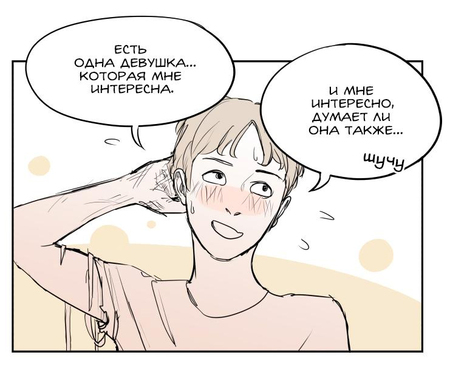
The main character is a guy named Paul. He is a rather kind and simple-hearted character at the beginning; his sole desire and goal is to impress a girl he knows and gain her affection. His emotions in the comic are quite varied—he often jokes and responds calmly to problems, remaining positive in any situation.
«A Love Advice from the Great Duke of Hell, ” Volume 1, Author: Unfins
Because he is too inexperienced in such matters, to solve his problem, he calls upon the ancient demon Astaroth using a spell he read in a strange book from the bookstore near his home.
«The Devil’s Guide to Love, ” Vol. 1, Author: Unfins
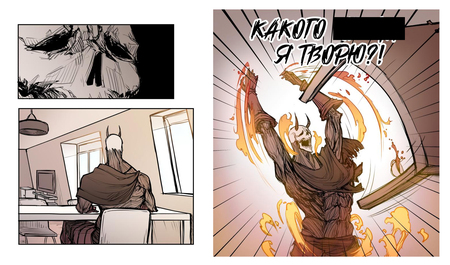
Astoroth’s face is mostly a skull, making it difficult to convey any emotion, but the artist addresses this challenge by choosing expressive angles or employing shadow. Most often, a static shot is used for dramatic pacing, where the character seems to contemplate the events before reacting dynamically.
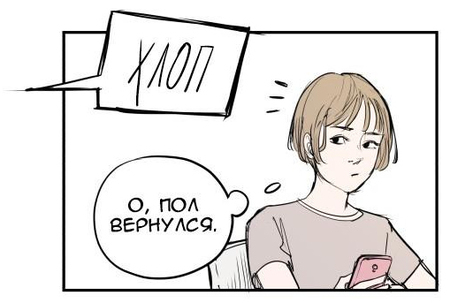
The third character, who has a separate subplot, is Paul’s younger sister, Julietta. She is more pessimistic and serious; her emotions are rarely positive, and her character is built around the «perpetually exhausted» archetype, suggested by the bags under her eyes and a constant, judgmental gaze toward those around her.
Julietta catches her brother summoning a demon, but in contrast to him, she decides to banish Astaroth because of this psychological trauma—eventually gaining superpowers and joining an organization dedicated to protecting humanity from all demonic entities.
«A Love Council from the Grand Duke of Hell, ” Vol. 1, Author: Unfins
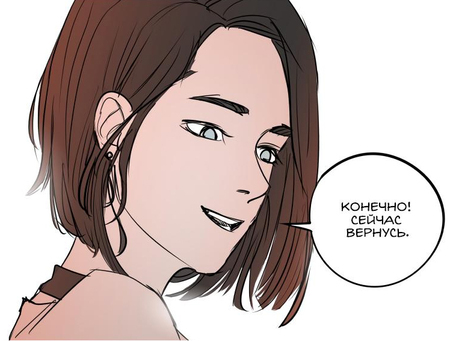
Another main character is Elena—the girl Paul is in love with. At the beginning of the series, she works at a café and portrays a kind and incredibly calm character. She always has a perfect hairstyle and a gentle, inviting smile; she reacts to all of Paul’s awkwardness and mistakes with tolerance, encouraging him.
But it soon becomes clear that she is actually an agent within the same organization combating evil that Juliet joined. She is tasked with eliminating evil, but it is not that simple, because the real Elena no longer exists—her personality and life were taken in a bargain by the Grand Duchess and the demon Dantalion, who is playing the convenient role of a sweet waitress for a while.
«A Love Advice from the Grand Duke of Hell, ” Vol. 1, Author: Unfins
For Dantalion in his demonic guise, the author renders his emotions in the same manner as for Astaroth—through the interplay of shadow, perspective, and detail. However, it is more interesting to discuss the Duchess’s emotions before she assumes Elena’s identity.
The author establishes a very fine line between Dantalion in character and outside of character through his facial expressions. While Elena’s persona primarily reflects positive and often relaxed emotions, outside of character, bewilderment and detachment frequently appear. The Duchess is alien to our world; she feels out of place next to such a hyperactive Paul.
«A Love Counselor from the Grand Duke of Hell, ” Vol. 1, Author: Unfins, Dantalian as Elena
«A Love Advice from the Grand Duke of Hell,» Vol. 2, Author: Unfins, Dantalian outside of Elena’s image
The other characters are secondary—they appear and disappear intermittently. They do not have major personal storylines or distinct character traits; instead, they function as devices to develop the primary characters, allowing the author to infuse situations with comedic elements and to create a «society» around the main figures.
1. Vin, Paul’s classmate 2. Astaroth’s assistant and owner of the Sushi bar 3. Astaroth’s servants 4. Tadeusz, Julietta’s colleague «Love Advice from the Grand Duke of Hell, ” Vol. 1–2, Author: Unfins
Several other characters appear throughout the narrative, but their roles are even more episodic and brief; consequently, they will only be mentioned briefly in the research.
2. Negative Character Emotions
The predominant emotion that appears most frequently in the work is a silent condemnation</b/>, bordering on incomprehension. The author uses «stone-like» faces to convey the absurdity of the situation into which the characters fall.
«A Love Counselor from the Grand Duke of Hell, ” Volumes 1–2, Author: Unfins
Sometimes these are individual frames, and other times they resemble a sequence of frame-by-frame animation of events.</b/> In these instances, it looks most like social media memes, which only adds an extra layer of absurdity to the situation and allows the characters and their confusion to be felt particularly strongly.