Экспериментальная анимация и гибридные техники
A practical laboratory where students blend analog and digital techniques to discover their unique visual language.
What is this course about?
This course is a thematic continuation of the «Five Inventions of Animation» lab and constitutes a practical investigation into experimental animation. In class, participants will explore mixed animation creation techniques: collage from found footage, transformative rotoscoping, glitch, hybrid stop-motion and digital effects, and object movement through code. Participants will learn how classic techniques can be transformed into material for deconstruction, mastering methods of working with error, randomness, and structure. By analyzing the work of experimental animators, students will learn to see in any technique not just a tool, but an environment for inquiry.
The course culminates in a short video where the student combines at least two learned techniques into a single statement.
Who is this course for?
— Animators and motion designers with foundational experience who want to move beyond client-driven formats and explore animation as an authorial statement;— Artists and illustrators who are already working with animation and are seeking their own visual language through technical experimentation.
Course duration: 6 weeks.
Contact hours:
18 academic hours.
Classes are held in an offline format.
Course Prerequisites.— Foundational understanding of composition principles, color theory, contrast, and rhythm;
— Experience using a raster graphics editor (Photoshop, Krita, Procreate);
— Basic proficiency in After Effects.All tools, materials, and equipment are provided.
What will students learn in this course?
— Analyze references: deconstruct other artists' work in terms of technique, rhythm, and visual language; — Locate and process source footage to create collage animation; — Integrate analog and digital techniques into a unified workflow; — Utilize glitch, rotoscoping, and collage as expressive tools; — Work with algorithmic animation; — Create animation based on rhythm, repetition, and transformation.
What practical assignments will students complete for the course?
— Assembling collage animation from found footage; — Tracing motion frame-by-frame, then importing into After Effects to warp the outlines; — Deconstructing digital imagery using native After Effects tools; — Combining stop-motion with digital effects in After Effects; — Creating masks, applying color correction, and effects; — Generating algorithmic animation solely through expressions in After Effects.
Curriculum Outline
Session 1. Collage Animation from Found Footage
— Stan Vanderbeek, Bruce Conner, found material from cinematic archives
— What is found footage and how to work with it;
— Searching, selecting, and appropriating existing material;
— Splicing, cutting, and looping;
— Fundamentals of editing for found material: cutting rhythm, frame transitions, repetition, and variation.
Practical Exercise: Assembling the first experimental segment from archival footage in After EffectsSession 2. Rotoscoping with Transformation
— Norman McLaren, Richard Linklater. Experiments in rotoscoping
— Rotoscoping as a source of motion distortion;
— Distorting proportions, phasing shifts, and using the line as a character.
Practical Exercise: Tracing video footage in Photoshop, followed by deformation and transformation in After Effects.
Session 3. Glitch Aesthetics
— Jun Pike’s «Magnet TV» (1965), Cory Archangel’s «Super Mario Clouds» (2002);
— Destruction of digital imagery: video and image compression, file manipulation.
— When an error becomes a statement.
Workshop: Assembling a glitch fragment from personal or found footage in After Effects.Session 4.Hybrid: Stop-Motion and Digital Effects
— Jan Schwenkmaier, The Quay Brothers;
— Filming analog material and its subsequent processing in After Effects.
— Overlaying, masking, and applying effects to stop-motion.
Workshop: Frame-by-frame capture and editing of a stop-motion fragment in After Effects.
Lesson 5. Algorithmic Animation
— John Whitney, Stan Van Der Beek
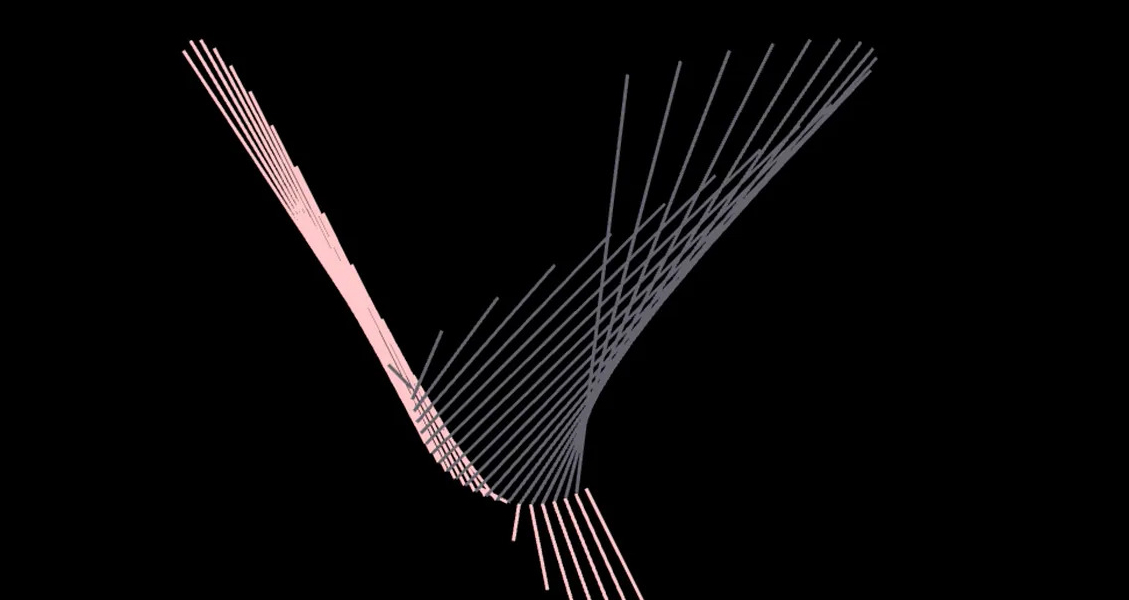
— Procedural animation using expressions in After Effects;
— Noise, sinusoids, code.
Practical Exercise: creating a procedural fragment using expressions in After EffectsLesson 6. Editing as a Method. Final Assembly: Personal Film
— The Soviet school of montage, Jean-Luc Godard, Peter Черкасски;
— Integrating two or more techniques into a cohesive film;
— Working with pacing, rhythm, and editing structure;
— Presentation and discussion of work. Formulating a personal visual language.