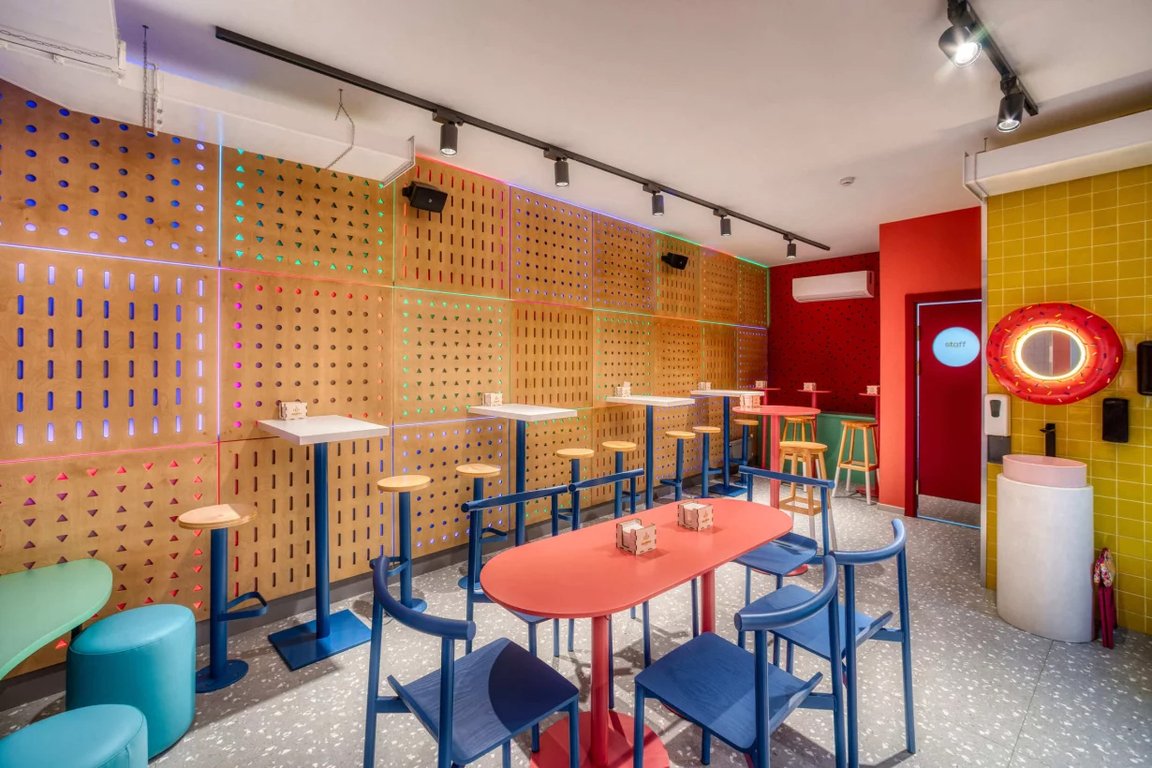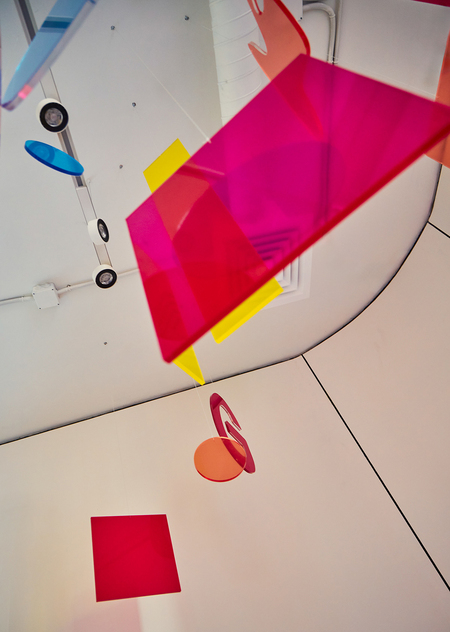
Eggsellent — a breakfast café in St. Petersburg selected for analysis among dozens of other establishments. Foremost, its interior stands out with a rich color palette, but is the vibrancy enough to capture attention from the very first second? Or could, conversely, such a palette alienate some patrons?
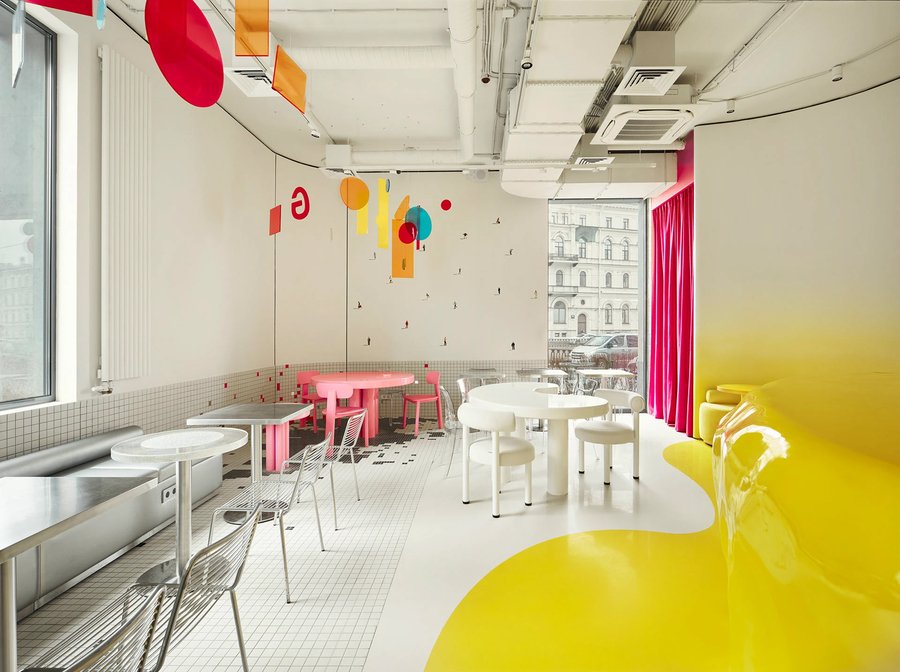
Interior of the «Eggsellent» cafe in St. Petersburg. Photographer Dmitry Suvorov
1. Color as the Primary Selection Criterion
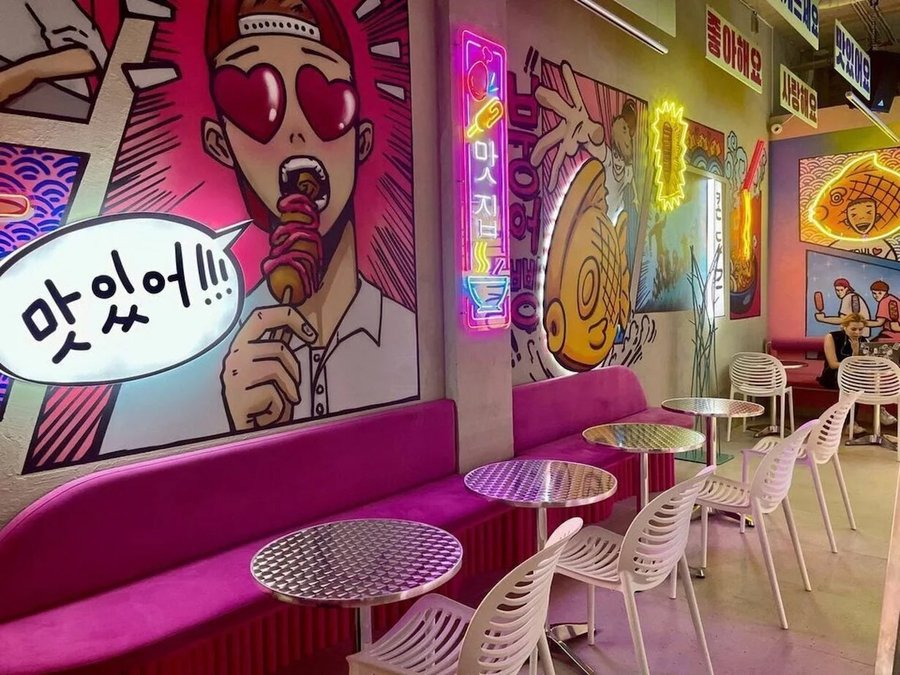
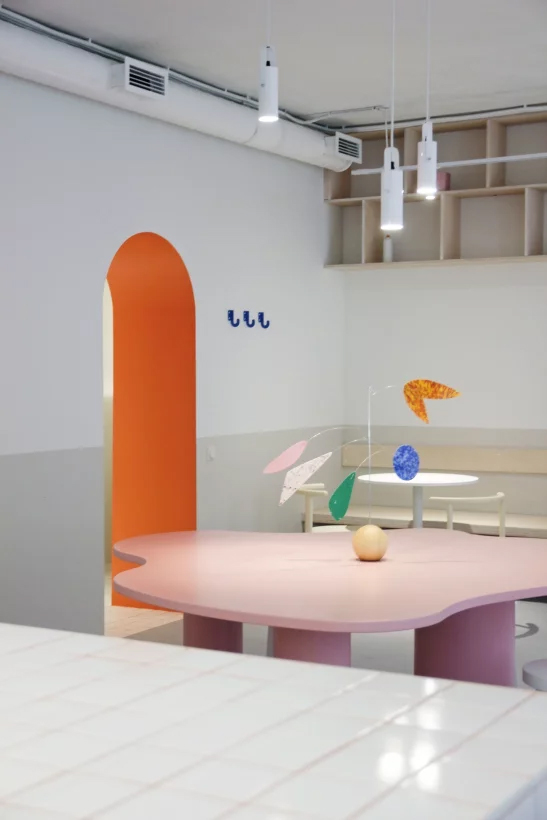
Choosing a cafe, restaurant, or bar for research in St. Petersburg is not an easy task. 2GIS offers several thousand options within the city limits, and even more if you consider the Leningrad region. You can narrow your search by focusing on interiors designed by professional designers. You can find such venues, for example, by consulting the results of interior design awards—Restaurant & Bar Design Awards or ADD AWARDS. The first selection yielded the following visual results (images are presented in the order returned by the search engine):
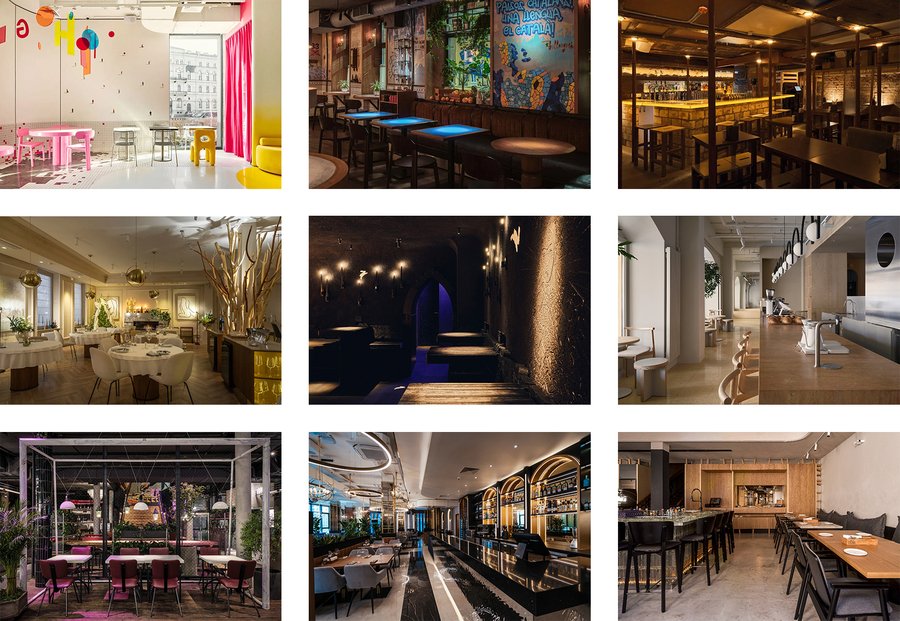
Object for Research Search. Collection of Designer Interiors in St. Petersburg
Color is one of the first characteristics of an object that we perceive, even before we recognize its shape in detail.
However, some colors are more frequently associated with positive emotions (for example, yellow), while others are associated with negative ones (for example, black).
In interior design, the emotional impact of color can be more potent than in a poster or a painting because an interior is a three-dimensional object that directly surrounds a person. In this specific case, color was the decisive factor in selecting the object, triggering shifts and focusing attention. Interestingly, when encountering the exterior of «Eggcellent,» a similar situation emerged with the contrast of the color palette.
The exterior of the «Eggsellent» café and its surroundings
Eggsellent—a vivid example of a dopamine interior, filled with saturated colors, unconventional forms, and delightful details. The peak popularity for this trend occurred in 2023–2024 (with an Eggsellent location opening in St. Petersburg in 2024), yet the style remains relevant today. Perhaps in Russia, the interest in dopamine interiors will endure for a long time—serving as a distinct reaction to the accumulated fatigue and emotional strain associated with the political and economic situation in 2026.