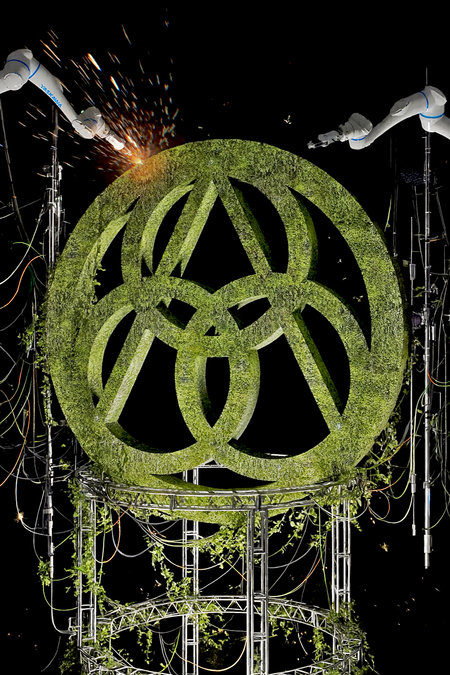
EDEN is an exhibition project by artist Suzanne Anker.
Throughout history, humanity has sought Eden — in sacred texts, in the structure of nature, and in formulas and technologies. This search continues to this day, even as it becomes increasingly unclear whether the place we so persistently seek truly exists.
The EDEN Doctrine
Suzanne Anker

Suzanne Anker is an American visual artist and theorist, born on August 6, 1946, in Brooklyn, New York. She earned a Bachelor of Arts degree from Brooklyn College and received her MFA from the University of Colorado Boulder in 1976. Her work operates at the intersection of art and the biological sciences. Anker is considered one of the pioneers of bioart; in her artistic practice she employs genetic imagery, botanical specimens, laboratory equipment, and microscopic images. Anker has taught and continues to speak publicly, giving lectures and participating in symposia at universities and scientific institutions. She is affiliated with the Bio Art program at the School of Visual Arts (SVA) in New York. Her works are held in museum and gallery collections and have been widely exhibited. She has participated in numerous international projects, conferences, and laboratory–art symposia.
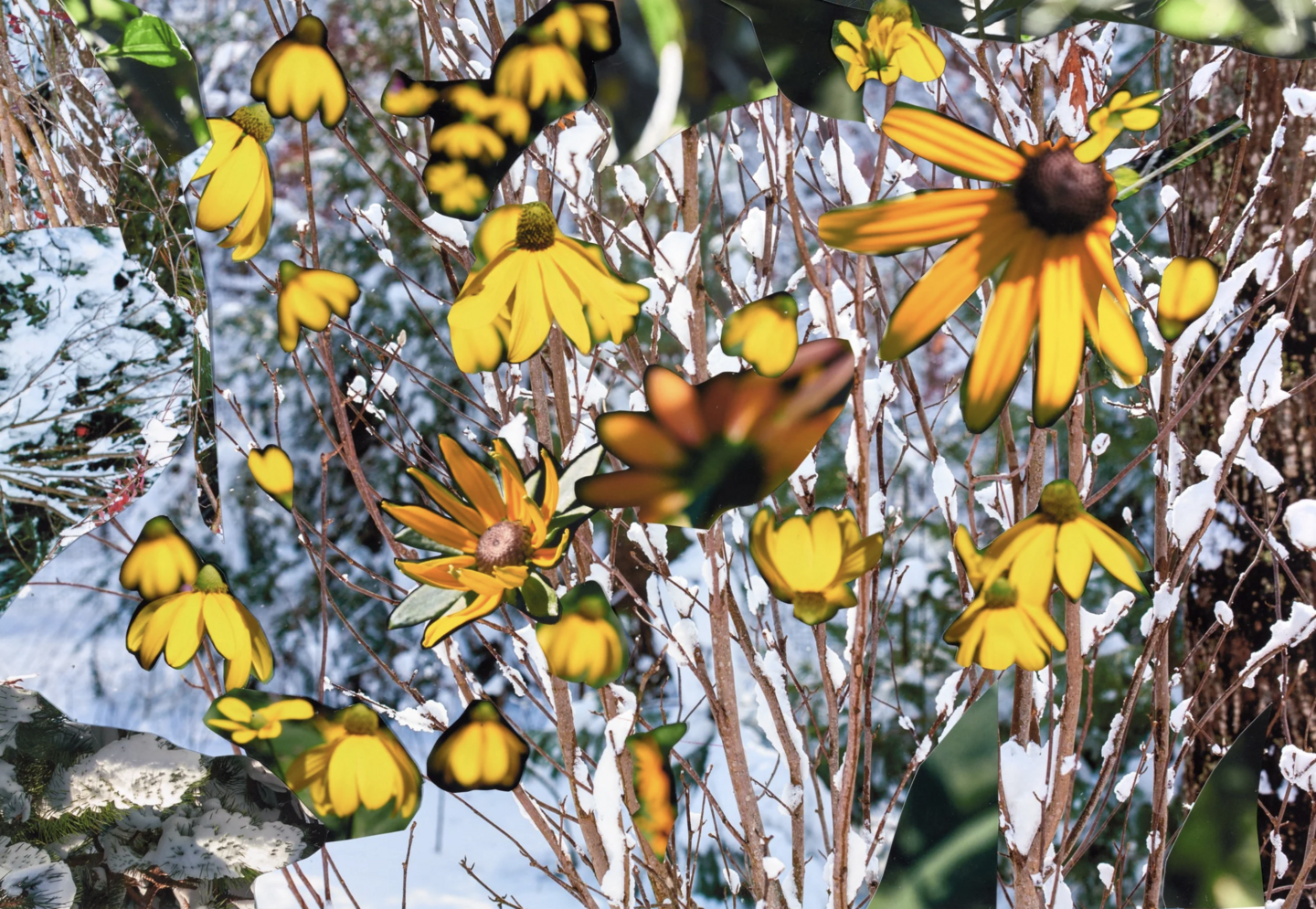
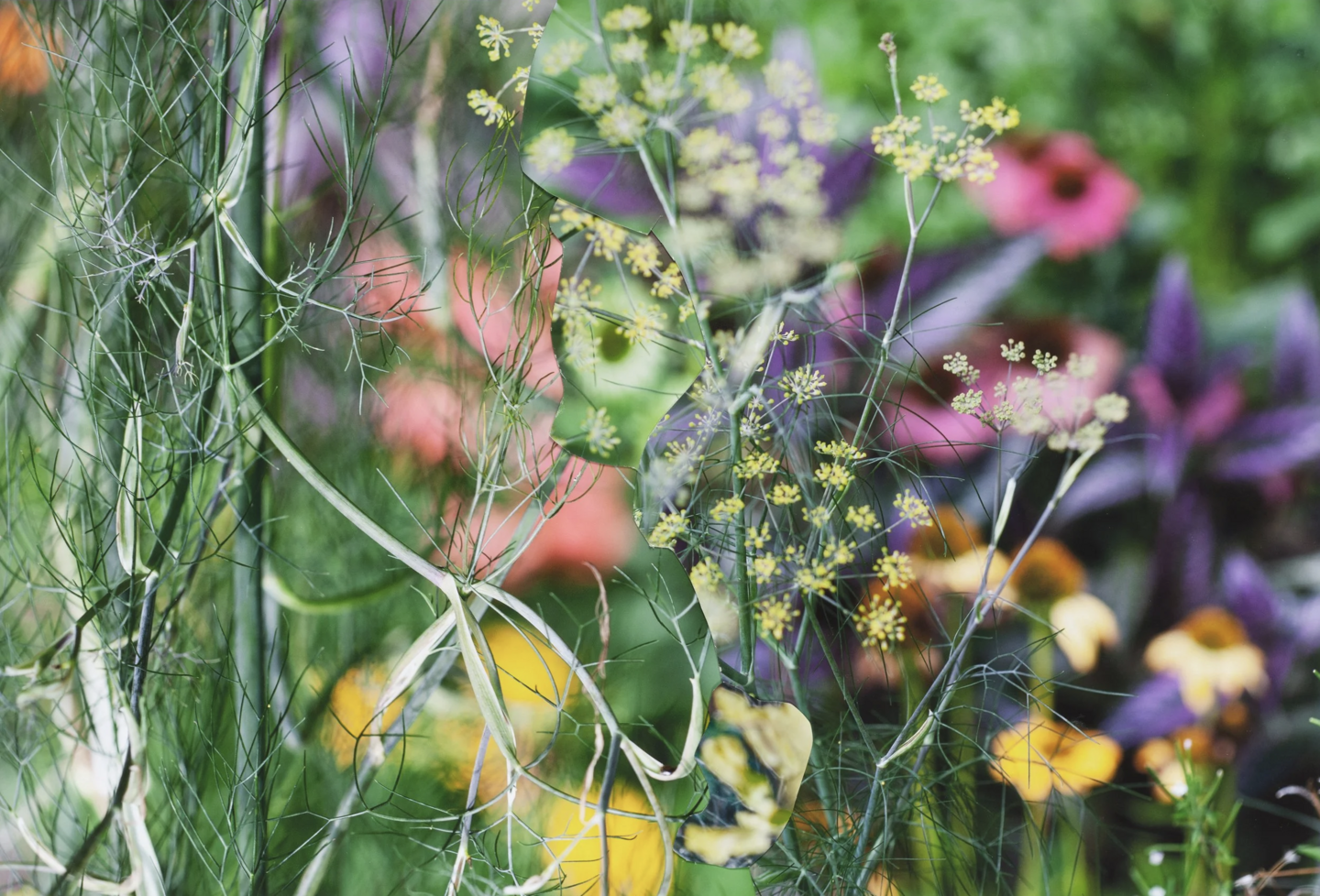
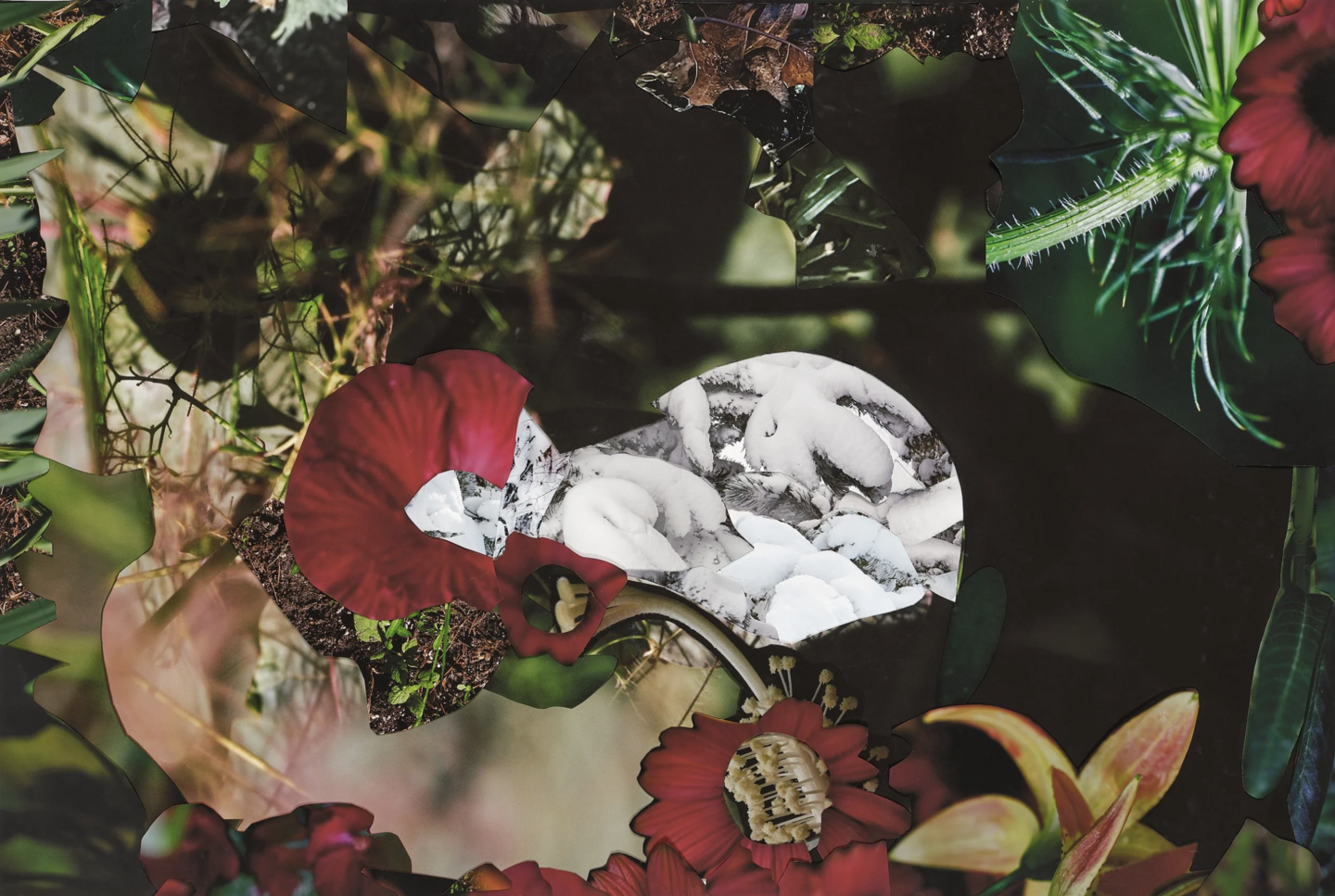
Suzanne Anker, After Eden series
Anker consistently explores how biological processes — such as genetics, growth, extinction, and ecological degradation — are visually represented and culturally interpreted. She does not merely use scientific imagery as a «texture» but raises questions about the social, ethical, and aesthetic dimensions of biotechnology: who transforms nature, for what purpose, and how these interventions reshape our perception of life.
Her artistic repertoire includes living plants (sometimes cultivated under laboratory conditions using LED lighting), herbarium and medical specimens, microscopic photography, laboratory glassware, large-scale photography, installation, and video. These combinations allow her work to simultaneously present the material «factuality» of science while producing a strong aesthetic impact.
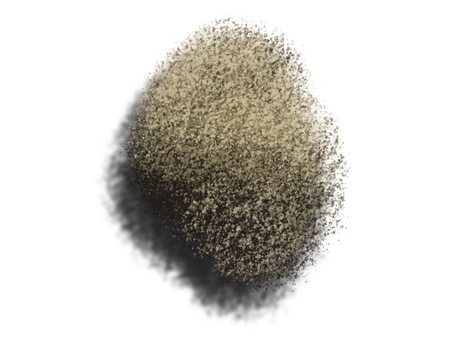
Suzanne Anker, Vanitas (in a Petri Dish) series
Suzanne Anker occupies a significant place in the history of contemporary practices related to the life sciences. Her contribution extends beyond the visual language of bioart to the establishment of professional and educational connections between artists, biologists, and the public. Her works make visible both emerging and ongoing transformations of life, and are therefore important not only as artistic experiences, but also as forms of social reflection.
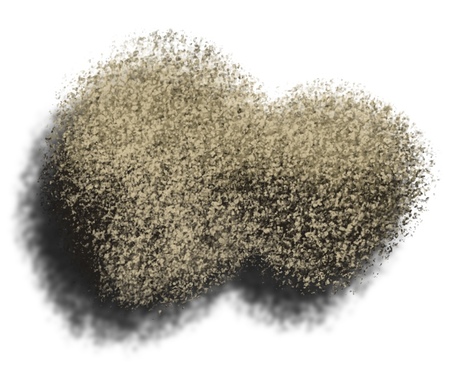
Suzanne Anker, installation The Value of Food: Sustaining a Green Planet
Concept
Within the EDEN project, Eden is understood not as a biblical garden, but as an idealized model of nature constructed by the human imagination. For the artist, technology becomes a contemporary form of a sacred gesture — a means of approaching the mystery of the origin of life and of reconstructing its principles anew.
The laboratory is transformed into a new temple, where biology acquires mythological power and scientific instruments assume the role of ritual objects. The technological and the natural are not opposed; one grows out of the other, producing a hybrid reality.
Thus, EDEN emerges as a space in which the «natural» and the «artificial» coexist as a single, reimagined organism.
Suzanne Anker, The Glass Veil series
Spatial Framework
Ground Floor
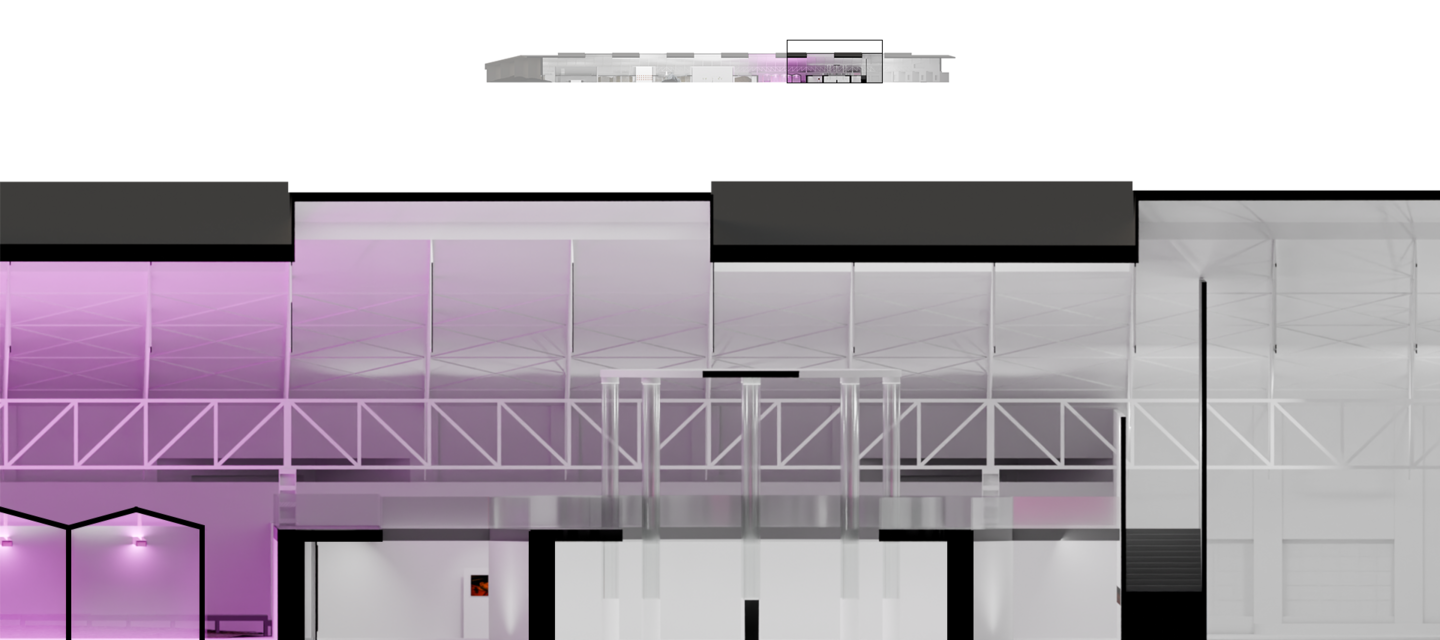
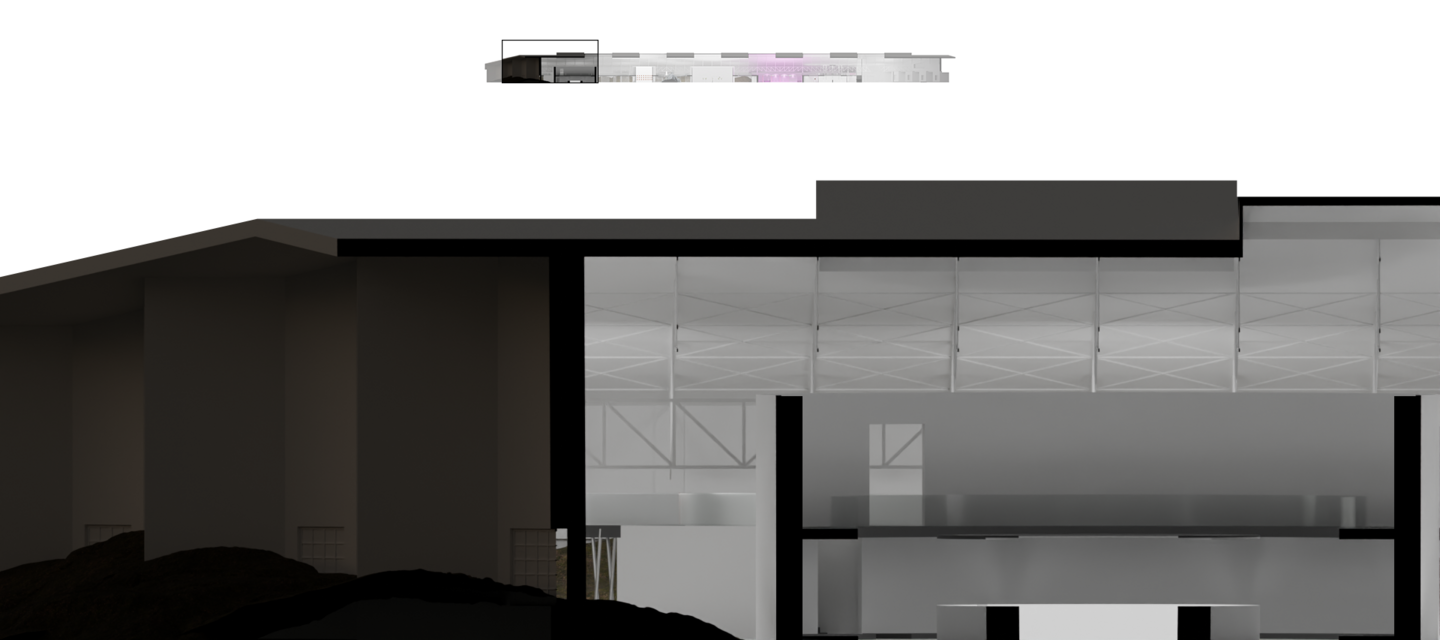
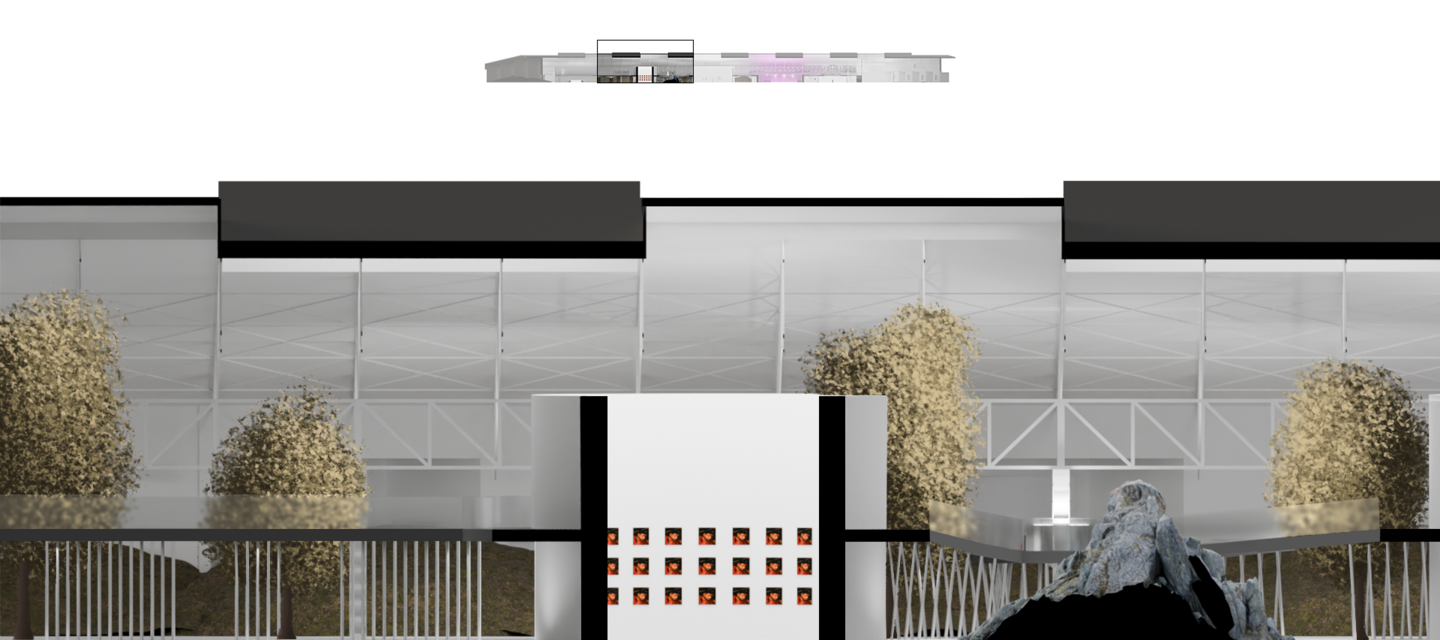
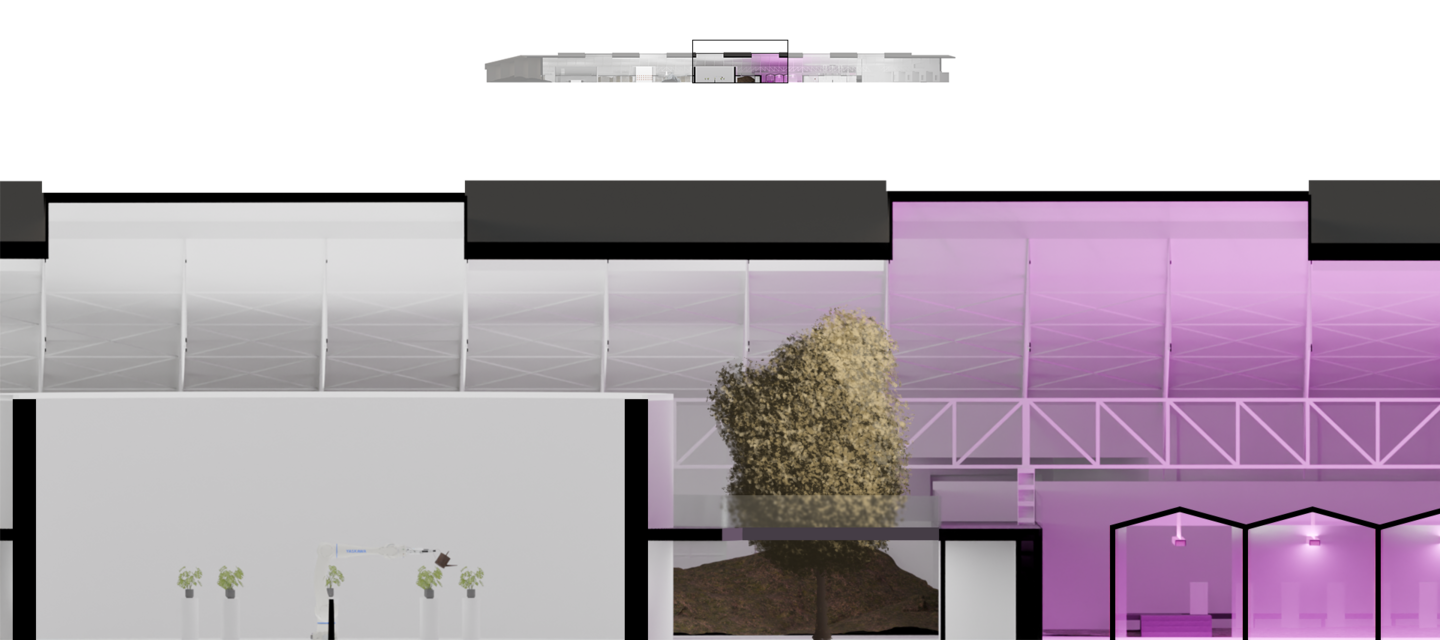
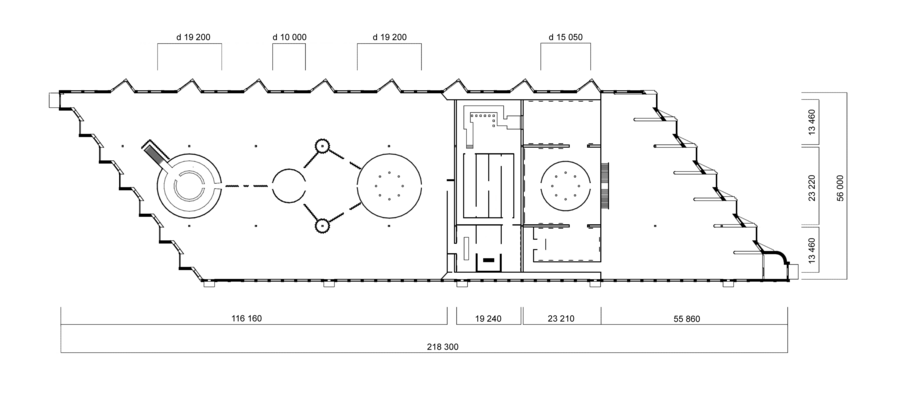
All exhibition spaces of the project are located on the ground floor. It is conventionally divided into two parts: the first functions as a prologue, introducing the viewer to the conceptual context, while the second presents a direct interpretation of the Garden of Eden.
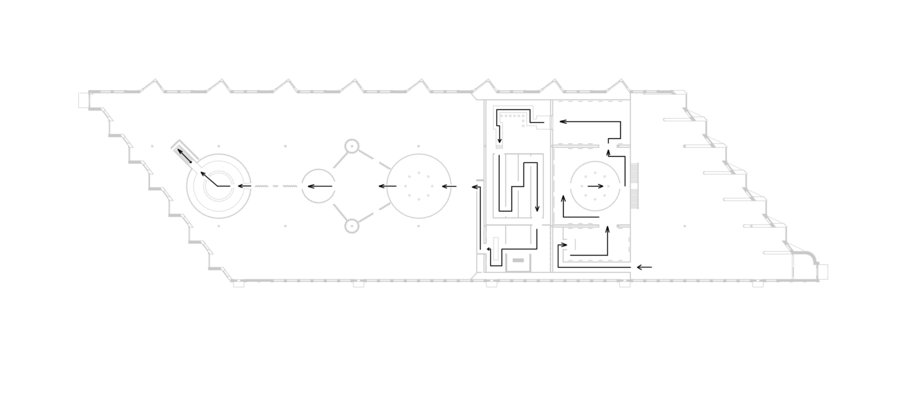
Second Floor

The second floor assumes an exclusively constructive role, becoming a retrospective of a unique experience. Through a system of elevated walkways, visitors are given the opportunity to view the exhibition from above and to reconsider what they have previously encountered.
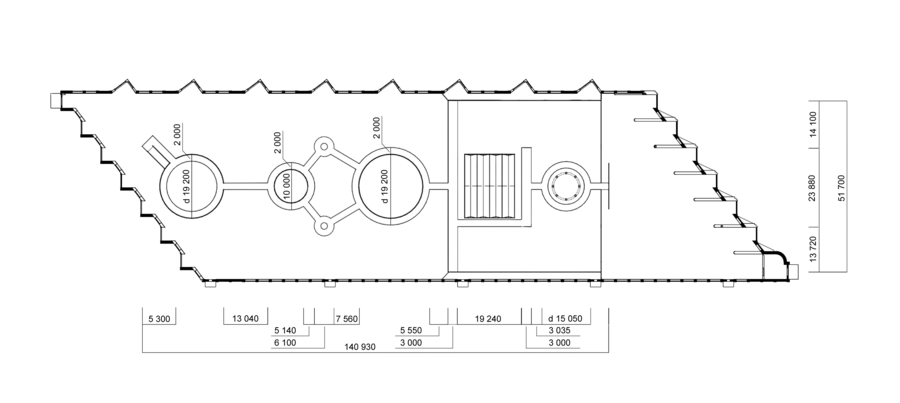
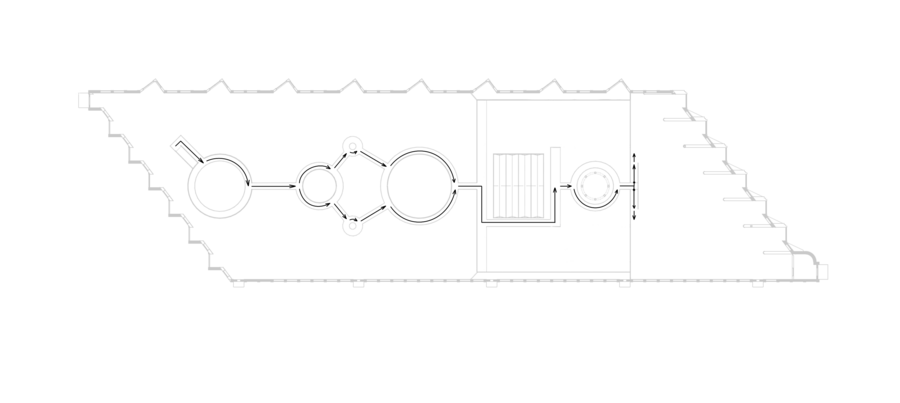
Zoning
Planning Concept
The planning solution is based on a contrast of volumes. The previously mentioned first section of the exhibition is composed of a sequence of relatively enclosed spaces that «compress» the visitor and evoke the structure of a laboratory.
However, after passing through this initial labyrinth, the viewer enters the second section — an expansive space that appears wild and autonomous, the very image of the Garden of Eden. This radical shift in spatial scale emphasizes the vulnerability of the human subject in the face of technology and progress as a whole.