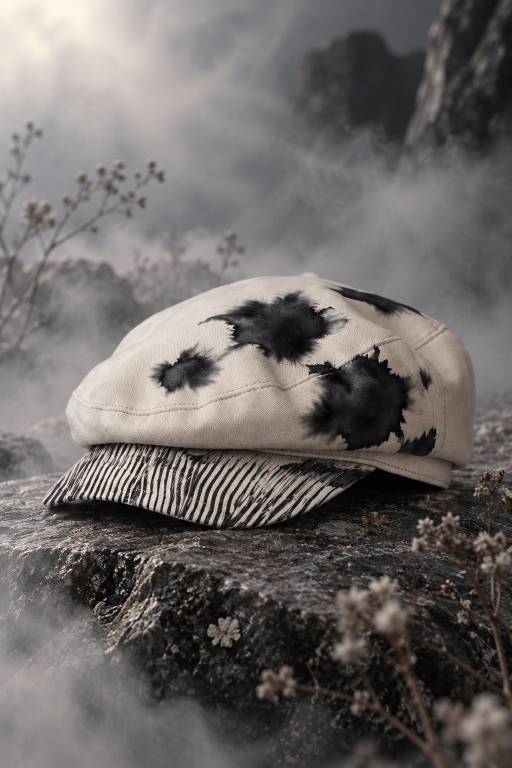
As an accessory, I chose a headwear piece—a kepi. The collection’s theme centers on a foggy morning, before anyone has woken up, when the city is enveloped in tranquility, silence, and a light mist. This theme reflects the mystery and calm that people so cherish.
The main decorative element of the cap is its design as a piece of artistic abstraction. The «brushstrokes» and «blots» resemble the breath of mist: the textured relief recalls dense, damp strokes, as if someone hastily applied them with a brush at dawn. The ink bleeds are a direct visual manifestation of swirling fog and morning haze, while the striped texture suggests the indistinct shadows of objects emerging through the veil.
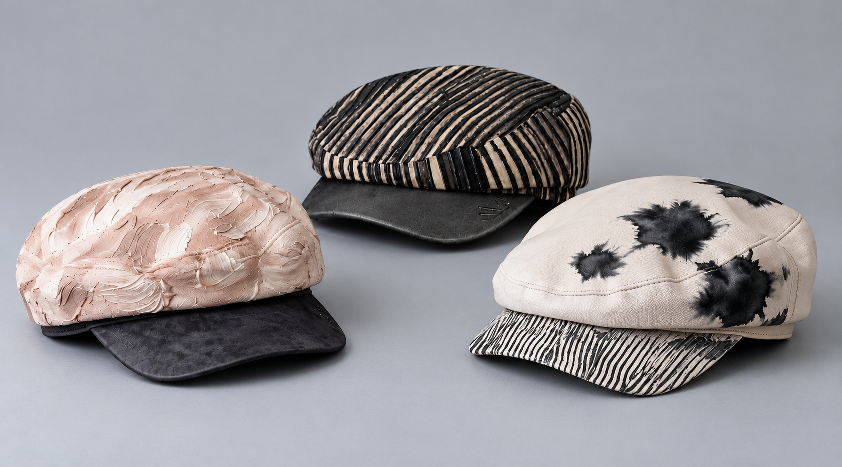
The concept behind the piece is that this headwear will not only complement any look but also transform a routine walk through the city into a leisurely stroll through one’s own thoughts, where every step is filled with harmony.
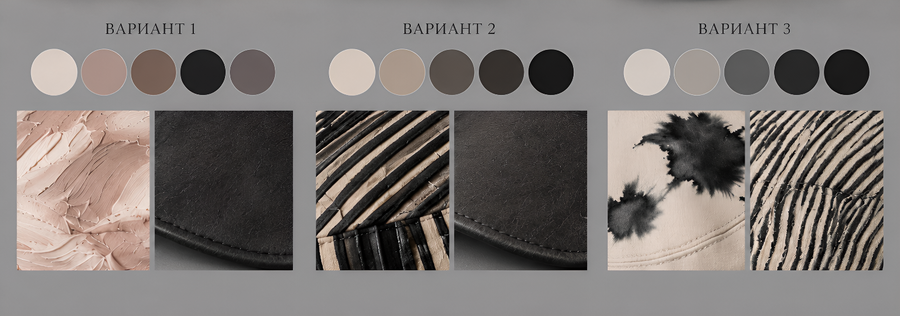
If a foggy morning could be painted, I would use precisely these colors. This palette is a study of light and shadow before the world became sharp. The powder hues are the damp air settling on the shoulders. The graphite and black tones are the silhouettes of sleeping buildings and trees. Each option is a distinct note of silence that you wear.
«Morning Negativity» Cap
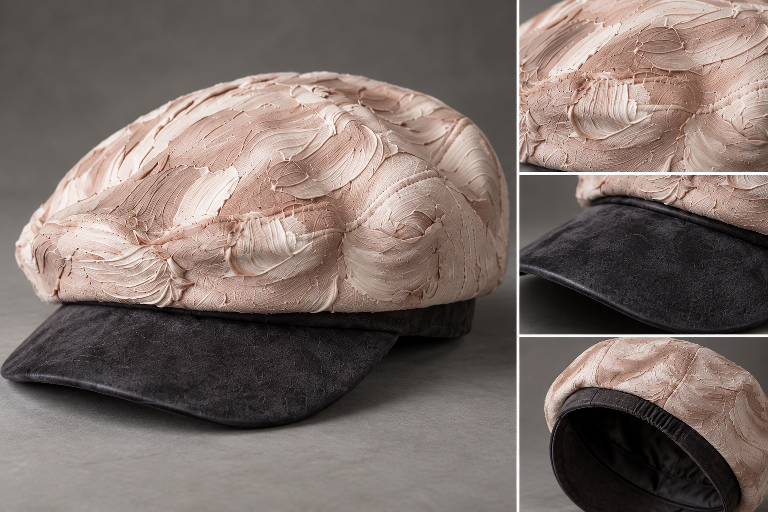
The materials used included heavy-weight, highly drapable textiles, silicone paste, suede, dublerine, and polyester.
How it was made: The «oil painting» imitation was created by applying silicone paste. Felt was sewn inside the visor for rigidity. Then, the bill (with the relief already formed) and the visor were hand-stitched using a blind seam for a perfect fit.
Cap «Wet Asphalt»
The materials used included canvas fabric, eco-leather, wax, buckram, and polyester.
How it was made: The black stripes were separate pieces of leather, cut using laser cutting. The leather strips on the machine were set up for a textile base. To provide stiffness, a buckram backing was sewn inside the visor. The visor itself was treated with wax to prevent cracks. Then, the body (already finished with its relief) and the visor were attached by hand using a blind stitch for a perfect fit.
Cap «White Noise»
The materials used included heavy fabric, aniline dye, reserving compound, thickener, eco-leather, dublering, and polyester.
How It Was Created: To achieve the splashed, torn-edge effect, the cold batik technique was used: a thick resist compound was applied along the contours of the intended spots, preventing the dye from spreading. A thickener was added to the dye to create the fuzzy texture effect. For rigidity, interfacing was sewn inside the visor. The fabric for the visor was created using sublimated printing. Finally, the crown (with its pre-formed relief) and the visor were hand-stitched together using a blind stitch for a perfect fit.