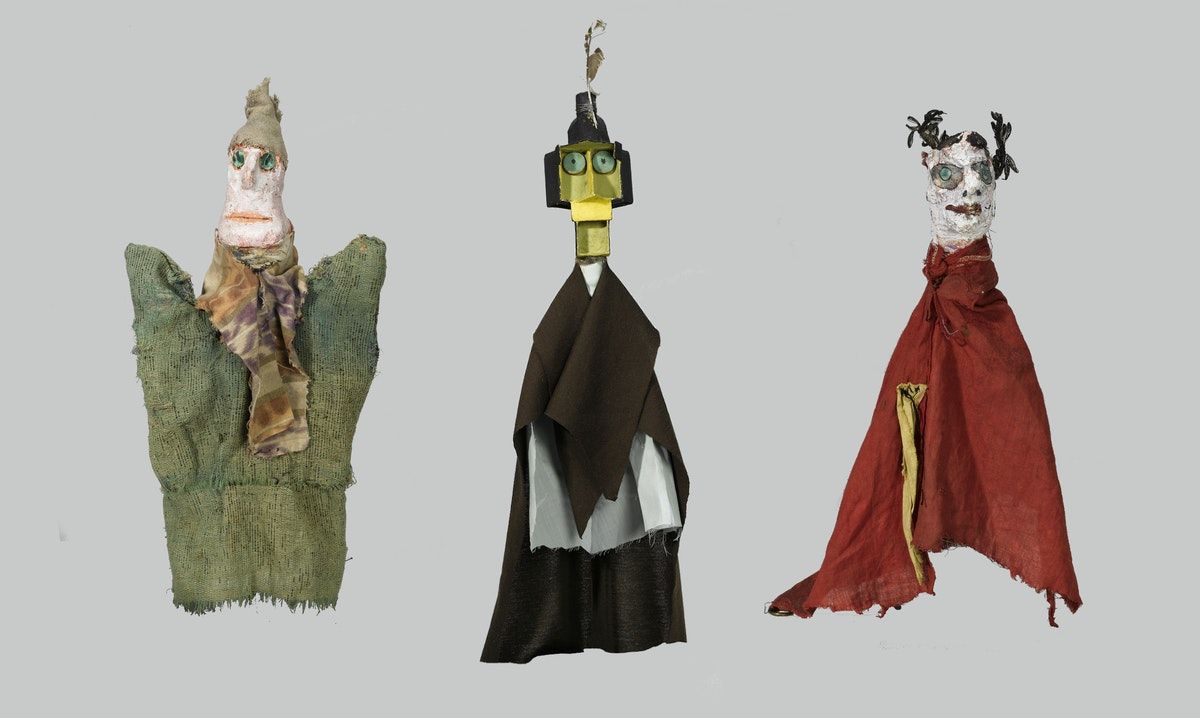
ДОМАШНИЙ ТЕАТР: КУКЛЫ
Короткий курс
Practical Course in Creating a Home Puppet Show: From History and Characters to Staging and Performance.
Puppet theater allows for the creation of a performance in a small space, using simple materials and the expressive capabilities of the puppet itself. Character is formed here through form, material, movement, voice, and the method of manipulation. This course introduces the fundamentals of puppet theater through practice: the student selects a story, creates the characters, designs the stage space, and assembles a short performance.
What do we study?
The core of the course is the creation of a puppet performance, from initial concept through to the final staging. Students will study various types of puppets, methods of their construction and manipulation, working with materials, stage space, lighting, sound, and movement. Special attention is given to the dramaturgy of the short production: how to adapt a story for a small format, distribute the action across scenes, structure character interactions, and integrate the puppet’s movement with the script, music, and sound. Throughout the course, the student will sequentially develop the characters, the setting, the set design, and individual scenes, eventually unifying them into a complete performance lasting 5–10 minutes.
Who is this course for?
— For parents who want to create plays at home with their children;
— For educators and facilitators of creative activities;
— For artists and designers interested in puppet and object theater;
— For beginner puppeteers and performers;
leading creative workshops;
— For anyone who wants to master the fundamentals of theatrical practice through working with materials and objects.The course does not require specific prior knowledge to take.
Online course with practical assignments.
Duration: 8 weeks.
Upon completing this course, students will be able to:
— Adapt a short story for a home performance;
— Select the appropriate theatrical form based on the plot and the audience’s age;
— Create a character through form, material, and movement quality;
— Construct simple glove, flat, finger, and other types of puppets;
— Choose materials considering the puppet’s plasticity and method of control;
— Create simple set designs and stage space;
— Operate a puppet and choreograph its movement on stage;
— Work with objects as theatrical characters and props;
— Develop a storyboard for a short performance;
— Integrate movement, text, music, and sound effects;
— Use lighting to structure the stage environment;
— Adapt the production for different home venues;
— Independently assemble and record a short performance.
Course Program
The History and Form of Performance
What We Study
The specifics of puppet and object theater. Major theatrical forms: glove, finger, flat, rod, and object puppets. How the choice of form relates to history, character, audience age, and performance conditions.
Practice
Analysis of theatrical history and selection of the performance form.
Outcome
The script foundation and chosen theatrical form.Character and Puppet Persona
What We Study
How to create a character through silhouette, proportion, color, texture, and material. The connection between a puppet’s appearance and its character and behavior.
Fundamentals of puppet expressiveness: gesture, pose, gaze direction, scale, and movement rhythm.
Practice
Developing several character variations.
Outcome
Character concepts and puppet sketches.Materials and Puppet Construction
What We Study
Paper, cardboard, fabric, wood, wire, thread, plastics, and other available materials. Their properties and potential in puppet creation.
Simple methods for joining parts, creating movable sections, and choosing a construction based on the method of manipulation.
Practice
Creating a character using selected materials.
Outcome
The finished puppet or persona.Manipulation and Movement
What We Study
The basics of puppet manipulation. The movement of the arm, torso, head, and individual parts. Tempo, pause, gesture, and direction of movement.
How to make movement clear to the audience and connect the physical action to the character’s personality.
Practice
A series of exercises in character manipulation.
Outcome
A repertoire of movements and scenic actions for the puppet.Stage and Space
What We Study
How to organize a small home stage. Background, backdrop, performance surface, character entrances and exits, levels, and points of focus.
How to account for the distance to the audience, room size, and audience capacity.
Practice
Developing a miniature stage setting for the performance.
Outcome
A diagram of the stage space and scenery.
Short Scene Dramaturgy
What we study
The structure of a short performance. Scene, action, conflict, pause, climax, and finale. How to tell a story through movement and character interaction.
Storyboarding as a directing tool.
Practice
Developing a sequence of scenes.
Outcome
Performance storyboard.Light, Sound, and Atmosphere
What we study
Fundamentals of stage lighting for a home production. Light source direction, shadow, color, and changing the scene’s mood.
The role of music, voice, ambient noise, and sound effects in creating atmosphere and supporting the action.
Practice
Developing a lighting and sound design solution for the performance.
Outcome
Lighting and sound script.Rehearsal and Staging
What we study
How to unify script, movement, light, sound, and puppetry. Performance tempo, transitions between scenes, and interaction between multiple characters.
Camera operation during the recording of a home production.
Practice
Rehearsing the performance and refining individual scenes.
Outcome
A completed production lasting 5–10 minutes.Final Performance
What we study
Preparing the performance for an audience. Pre-show sequence, spatial organization, checking light and sound, and camera work.
Practice
Final performance and video recording.
Outcome
A finished video play.