Домашнее задание № 2 / Из игры в жизнь
Media Concept
«From Game to Life”—a media outlet focused on live-action role-playing games.
Media Goals: To study and popularize live-action role-playing games (LARP).
Segment: An educational and entertainment media platform covering live-action role-playing games and the elements that constitute them. Niche Topic: Reviews of LARPs, event digests, articles, and tips useful for creating such games.
Number of Competitors: Low. Direct Competitors: „More Than a Master and Other Lies”—a resource dedicated to live-action role-playing games. It features articles with advice, reviews, lectures, and complete game documentation. Promotion is managed through a VK community. Indirect Competitors: „ConCon”—a Moscow festival for LARP. It popularizes role-playing games and shares useful materials from every event. Promotion is managed through a VK community. „Live Action Game Developer Handbook”—an accessible, editable online library of models and mechanics for LARP. Promotion is managed via its website. Potential Competitors: „WhenGame”—a LARP digest sorted by geographical location, which also includes links to various helpful resources. Promotion is managed via its website.
Distribution Channel: A VK community. This platform allows for the creation of articles, photo albums, and video uploads that are easily locatable in the relevant section without scrolling through a general feed.
- Target Audience Description: Broadly speaking, this includes people interested in TTRPGs (Tabletop Role-Playing Games) as creators and/or participants.
Persona 1. «Curious Explorers.» Young people, mostly aged 16–22, who have learned about TTRPGs but don’t know how to jump into this new hobby. Need: To overcome the fear of the unknown and find accessible ways to play. Media Solution: Digests of various-cost events, segmented by venue, along with content documenting the games' progress, including supportive material.
Persona 2. «Beginner Creators.» People who are familiar with the concept of different TTRPGs but do not know where to start writing their own game. Need: The opportunity to build upon the experience of others and learn from others' mistakes. Media Solution: A library of finished game materials and educational content replete with concrete examples.
Persona 3. «Experienced Roleplayers.» People who have been playing or writing games for a long time but feel like they are operating within the same set boundaries. Need: To play or write without relying on old patterns. Media Solution: A library of ideas, exercises focused on spontaneity, and roleplaying experiments.
- Unique Selling Propositions (USPs)
6.1. Deep Dive Analysis. Many reviews or critiques of various creative content, including TTRPGs, are limited to a general concept overview. «From Game to Life» dissects games and their sessions into specific components, right down to individual decisions made during roleplay.
6.2. Relevance. Some resources do not revisit their older publications or perform moderation. «From Game to Life» is a constantly updated media platform that revisits past content.
6.3. Connectivity. Most resources maintain narrow specializations. «From Game to Life» connects advice with specific games whose materials can be freely adopted for a session.
Semester Thematic Plan
Weekly features by day of the week:Monday. Game digest for the next two weeksTuesday. From Game to Life: a review of a recently held game (personal or through an interview)Wednesday. Digest of lectures and thematic events for the next two weeks; if none are scheduled—a memeThursday. How It Works: a deep dive into a specific game mechanicFriday. What else can you make into a game? A collection of 3 ideas for inspirationSaturday. I Want This in the Game… — a case study article on the experience of adding a specific element to a gameSunday. How do you spend your weekend? A short, vertical-format comedy sketch video
Thematic Content by Month:November
11/01. Monthly digest of announced large-scale (50+ people) offsite games for the upcoming month
11/15. Theme of the Month: Working with Voice
11/30. Collection of the most popular posts from AutumnDecember
12/01. Monthly digest of announced large-scale (50+ people) offsite games for the upcoming month
12/01–12/31. Roleplaying Advent Calendar: small tasks to collect memories from the games played throughout the year
12/15. Theme of the Month: When Nights Are Long: A collection of ideas for atmospheric lighting during a game
12/31. New Year’s Greeting and the media’s main achievements of the yearJanuary
01/01. Monthly digest of announced large-scale (50+ people) offsite games for the upcoming month
01/15. Theme of the Month: How to prepare game materials for creators
01/30. Thematic selection of the Month: Five tips for beginner creatorsFebruary
02/01. Monthly digest of announced large-scale (50+ people) offsite games for the upcoming month
02/15. Theme of the Month: Romance Arc: What to agree upon before the game
02/28. Collection of the most popular posts from WinterMarch
03/01. Monthly digest of announced large-scale (50+ people) offsite games for the upcoming month
03/15. Theme of the Month: Ready for Anything: Red flags and how to deal with them
03/31. Thematic selection of the Month: Five of the loudest «nos» from playersApril
04/01. Monthly digest of announced large-scale (50+ people) offsite games for the upcoming month
04/15. Theme of the Month: How to start and escalate conflicts
04/30. Thematic selection of the Month: Ideas for interpersonal conflicts for your characters
10 content samples
Game Digest for the Next Two Weeks!
Saturday, 10/24: «Learning is light; ignorance…» — A small-group tabletop role-playing game for 6–8 people exploring the relationship between instructors and students. City: Moscow Fee: 400 RUB
Sunday, 10/25: «Function and Functionality» — A small-group tabletop role-playing game for 6 people about solitary robots in a post-apocalyptic world. City: Samara Fee: 600 RUB
Friday, 10/30: «In the Pages of Diaries» — A tabletop role-playing game for 15 people about the fact that it is never too late to correct your mistakes. City: Moscow Fee: Free, registration required
What else can be made into a game?A selection of ideas for cyberpunk settings:1. Escaping virtual reality! A game focused on changing game locations, each of which sets its own rules within the game.2. The most aggressive marketing: the world of the future allows advertising to be broadcast directly into consumers' minds. You must devise the cruelest strategies possible just to make them buy a subscription to the ad-free service—and face the consequences.3. Cloning ethics. All of your players are clones of the same person. Will they be able to find their place in the world and become more than just a backup option?
How It Works: Altering the Backstory During GameplayRecovering lost memories, modifying behavior, or completely changing a role are frequent elements of live-action role-playing games. In previous articles, we discussed how to organically and with minimal means reveal additional details about a player’s character.Last Saturday in Moscow, the tabletop role-playing game «Imago Transformation» from MG was held—this is a working title—and it featured a reverse mechanic: all player characters were under the influence of a spell that gradually stole their memories. The Game Masters used a simple model and operated on the principle of escalation: first, specific actions, encounters, and names were struck out from the backstory with a black marker. Then, entire paragraphs or pages were cut out. For those who couldn’t break the spell, only a single word remained from the entire backstory.The most intriguing application of this approach was that the final word was sometimes the name of another character. This created interesting scenarios during the game: for some, the enemy’s name was the last thread of hope, while for others, a friend’s name became the reason for accusations of losing all other memory.We would like to note that this mechanic would also look fantastic for individual characters in your game!
What else can we use to create a game?
Today, we’re looking at the world of Harry Potter from a new perspective!
The Fate of House-Elves. What happens if a unified family of house-elves is torn between several magical families—and does their voice even matter in court?
Visions of the Future. A story about how centaurs learned prophecy—and how the surrounding world reacted to their warnings.
In the end, your heroes will die, and the world will plunge into darkness. The final moments of the Azkaban prisoners, desperately trying to hold onto hope.
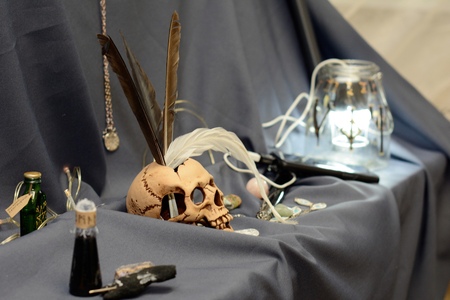
When the Nights Are Long: A Collection of Ideas for Atmospheric Lighting in Game Design
Winter offers us the opportunity to create atmospheric settings regardless of whether the game takes place indoors or out. We analyzed dozens of games and selected examples of fascinating glowing props for your designs. We will start with general props, move on to smaller in-game items, and conclude with large environmental elements.
1. Candles as a Tool. Electric candles have long been used in games for decoration, but they can be made interactive. If any part of the game takes place in complete darkness, candles can become the only means of navigation—or even the only way to read books, notes, and similar textual materials placed exclusively in dark areas of your game.
<…>
Game in a Box: How to Prepare Game Materials for Facilitators
If you plan to distribute your game materials or simply ask a friend to run your game for you, you should consider the convenience of other facilitators. Below, we present a method for organizing your materials point by point.
1. Brief Game Description. This should be purely informational text, free from artistic embellishments, that helps others quickly understand what your game is about and what kind of play experience it offers. For example: «A comedic game about robots who continue to take care of their long-deceased owner in a sealed bunker.»
…
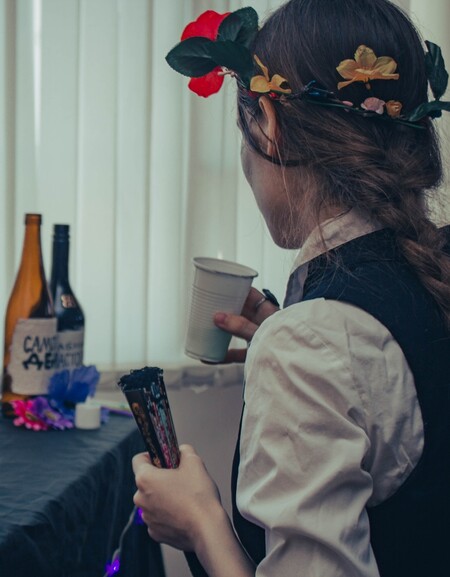
Five Tips for Beginning Facilitators
1. Familiarize yourself with the game materials beforehand. Dedicate a day for playing and even a day prior to playing simply to review what you’ve learned.
2. You can modify the game. Don’t worry if things don’t go according to plan; role-playing games are built on co-creation. You can always introduce new events or guide others with your input.
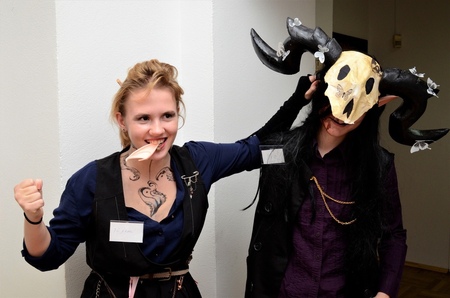
Conflict Escalation: Tips and Exercises
Modern people prefer negotiations and peaceful resolutions to conflict. This is certainly something to be pleased about, yet conflict is what makes history rich with events, action, and emotion.
In this article, we have compiled several ice-breaking exercises for you to use before a game, as well as some tips on how to create conflict within the game, even if it wasn’t planned for you in advance.
Play, Not Win: Considerations When Designing Play-to-Lose Roles
The notion of «winning a roleplay» has long been treated by the roleplaying community as a joke—how can you win a game whose primary enjoyment is the process itself? Roles predetermined to have a tragic fate can tell the most compelling story and make the entire gaming experience exceptional. Nevertheless, when designing the game, it is crucial to account for several details that will help you balance the role of «playing to lose» against the role fixated on its own powerlessness and inaction.
What else can you make a game out of?
Three ideas for a real-world game.
It’s great that we all share one idea… A game about some collective, for example, working on a magazine that experiences various extraordinary moments and tries to develop its work—but what if everyone sees the purpose of the common project a little differently?
A courtyard is a small life. Many people want to play in carefree childhood, but what if a child’s world is full of challenges and difficulties? What will your characters do if there is no snow to fight over the playground, and they only have a couple of hours before Mom calls them home?
When encountering difficulties, some people seek advice, others seek support, and for some, the measure of suffering becomes a way to assert themselves. We suggest writing a comedic game where everyone strives to prove to others that their life is the hardest and their need for compassion is the most acute!