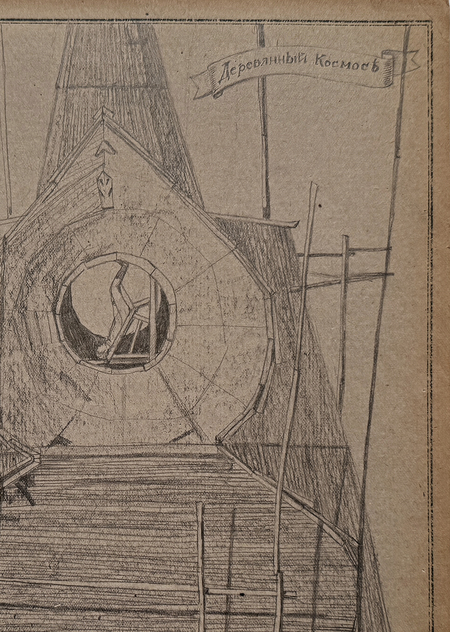
Graphic series, 2021–2022
It is hypothesized that in the late 15th or early 16th centuries, a culture existed in the Russian North that left virtually no traces. This culture was presumed to have revolved around the creation of wooden spacecraft. The eloquent evidence and rudimentary legacy of this culture and its activities is Old Russian wooden architecture, particularly the tent-roofed churches, whose shape bears an incredible resemblance to rockets, and the so-called launch pad where a rocket is positioned prior to launch when these structures are found in forests during restoration. It is not surprising that the culture left virtually no trace—it is likely that the construction of wooden space rockets was successful, and all of them left Earth.
The author finds evidence of this civilization in folklore, in the etymology of certain place names—such as Kosmozero or Vospari-pole—and reconstructs its main monuments: wooden spacecraft and spaceports.
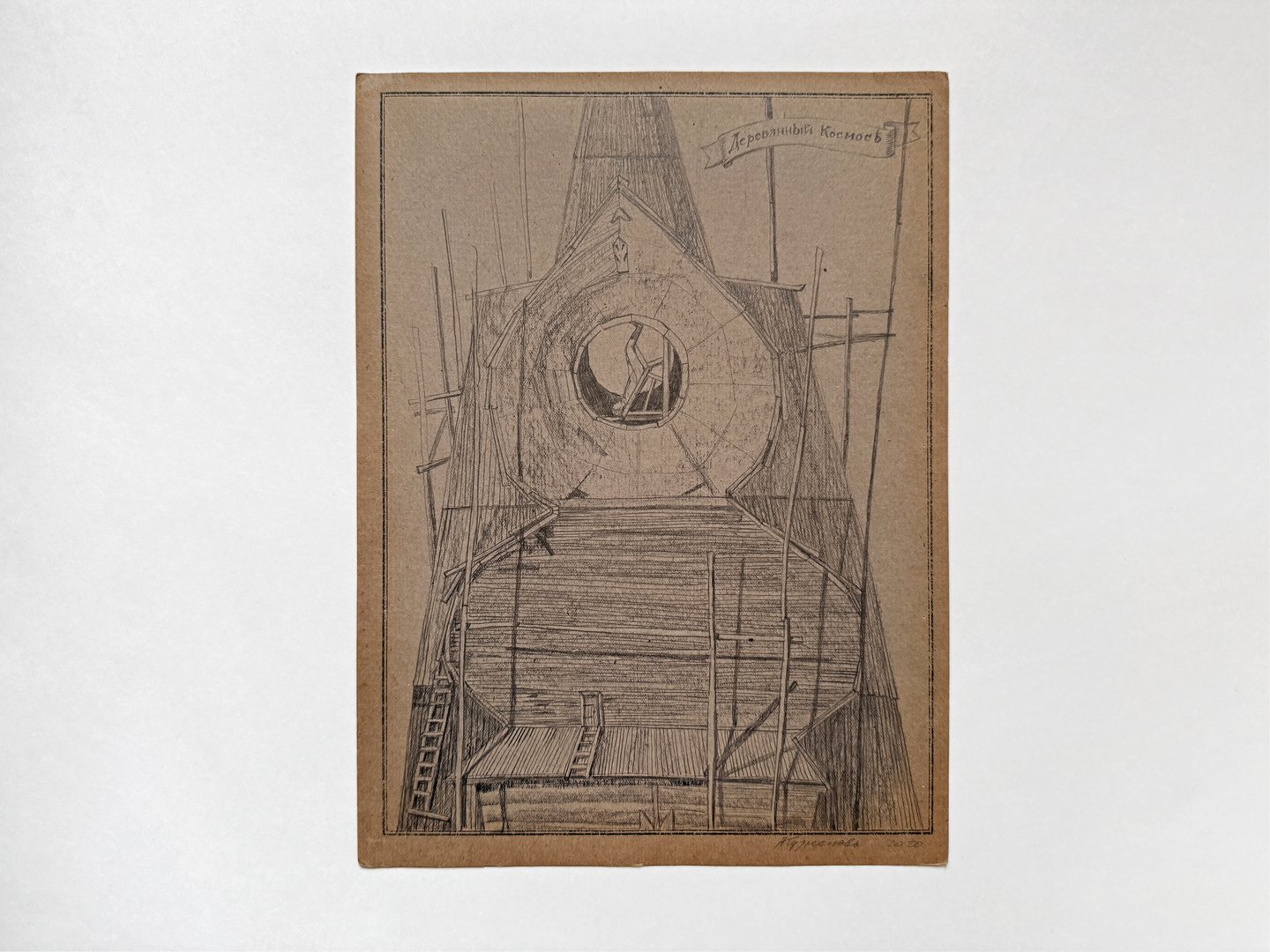
Wooden Cosmonaut Paper, graphite pencil, 24,5×32.5 cm
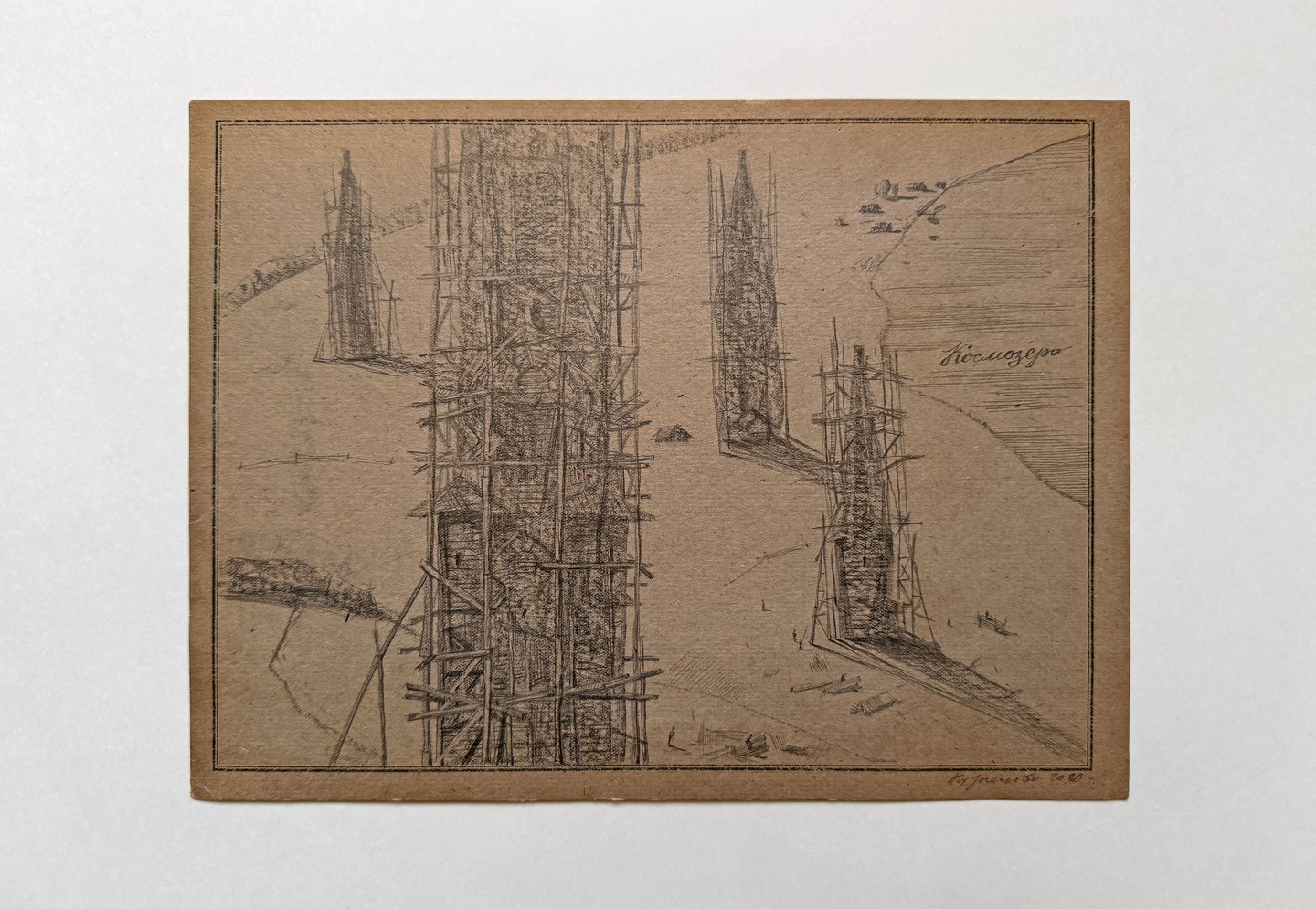
Wooden spacecraft. Cosmos Lake. Paper, graphite pencil, 32,5×24.5 cm
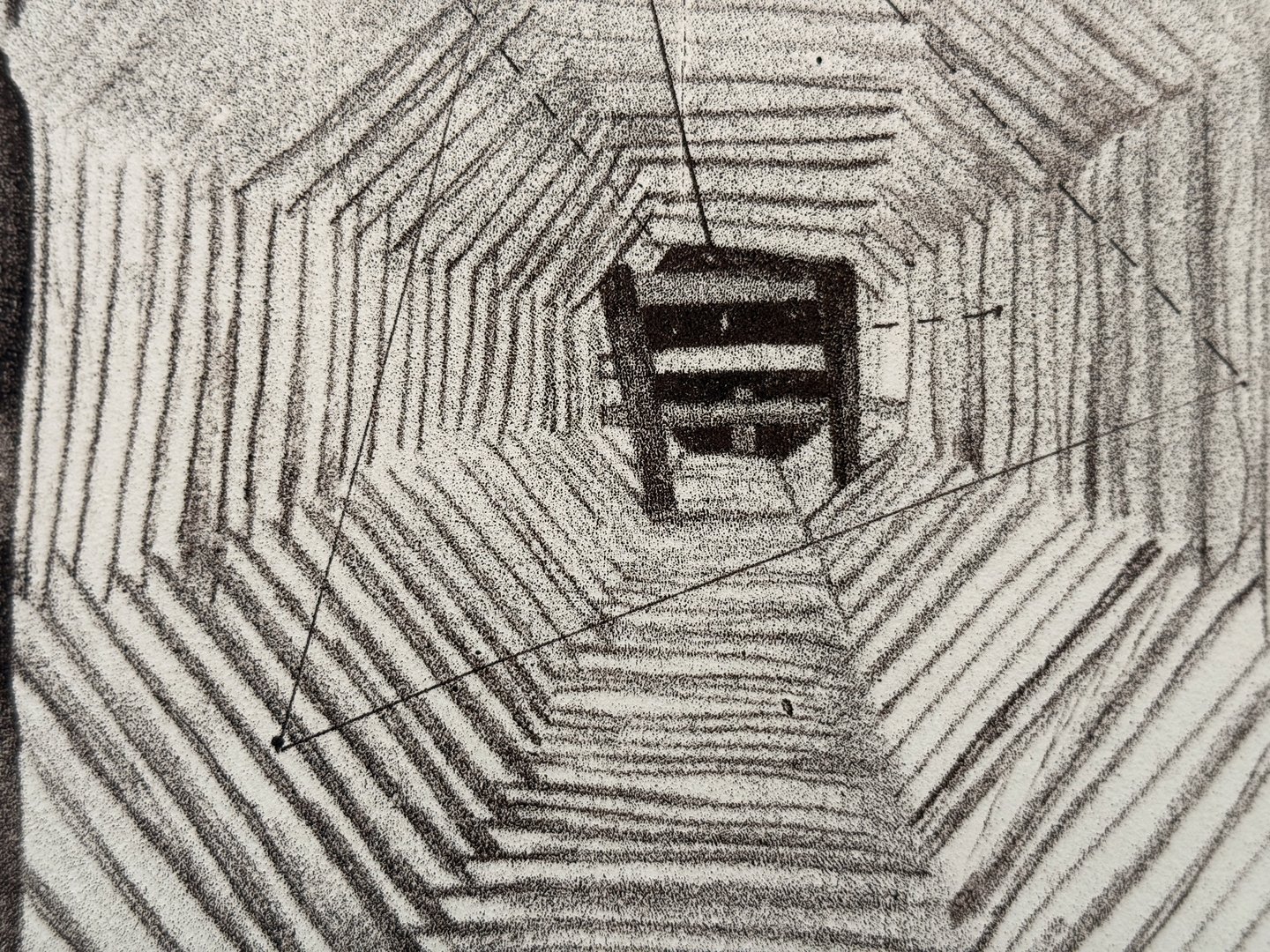
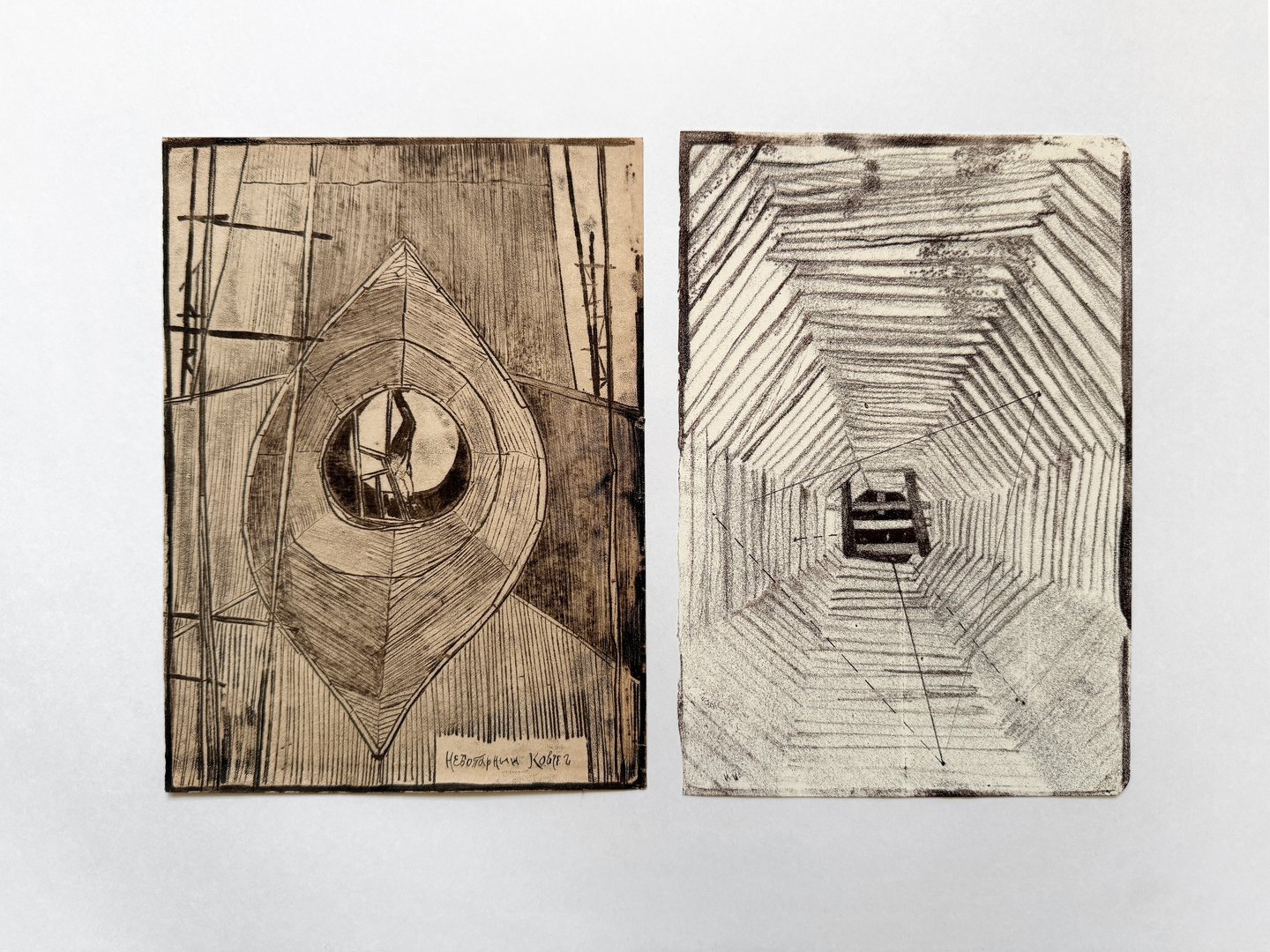
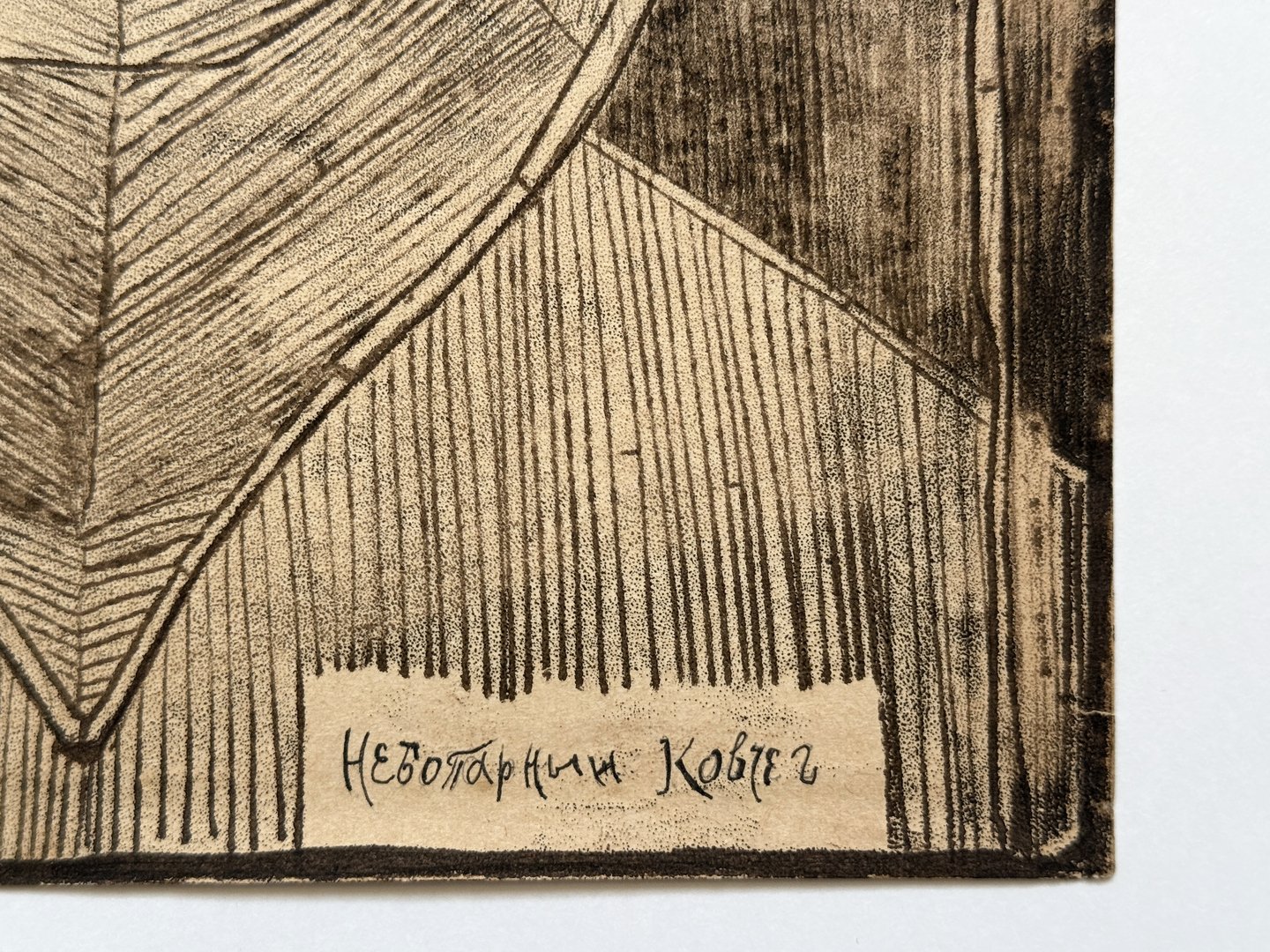
Wooden Cosmonaut. Celestial Ark and Heavens. Paper, dichromate print, 24,5×18.3 cm and 25×15.5 cm
Wooden Cosmonaut. Volcanic Field. Paper, diaphanotype, 25,5×36 cm
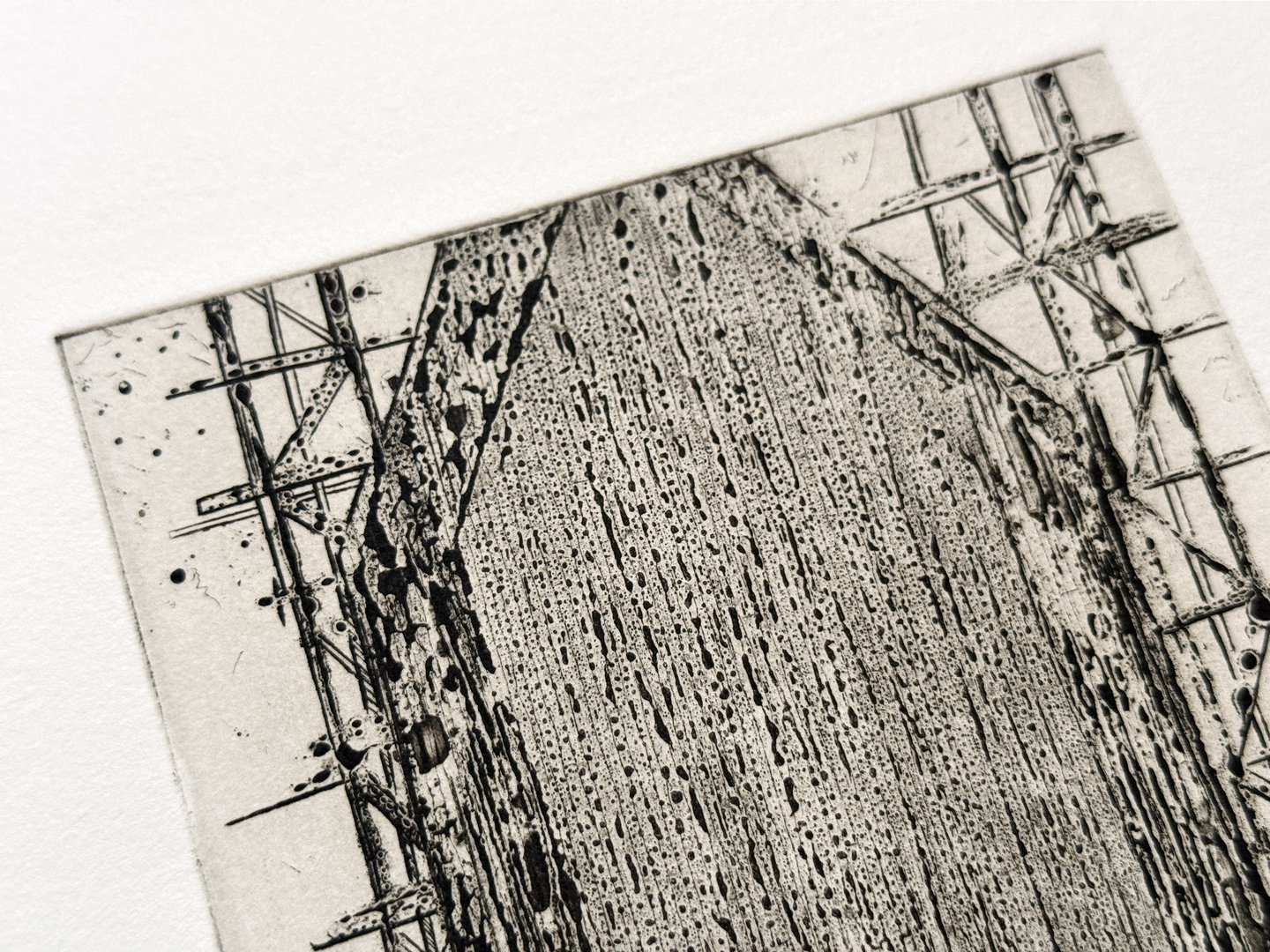
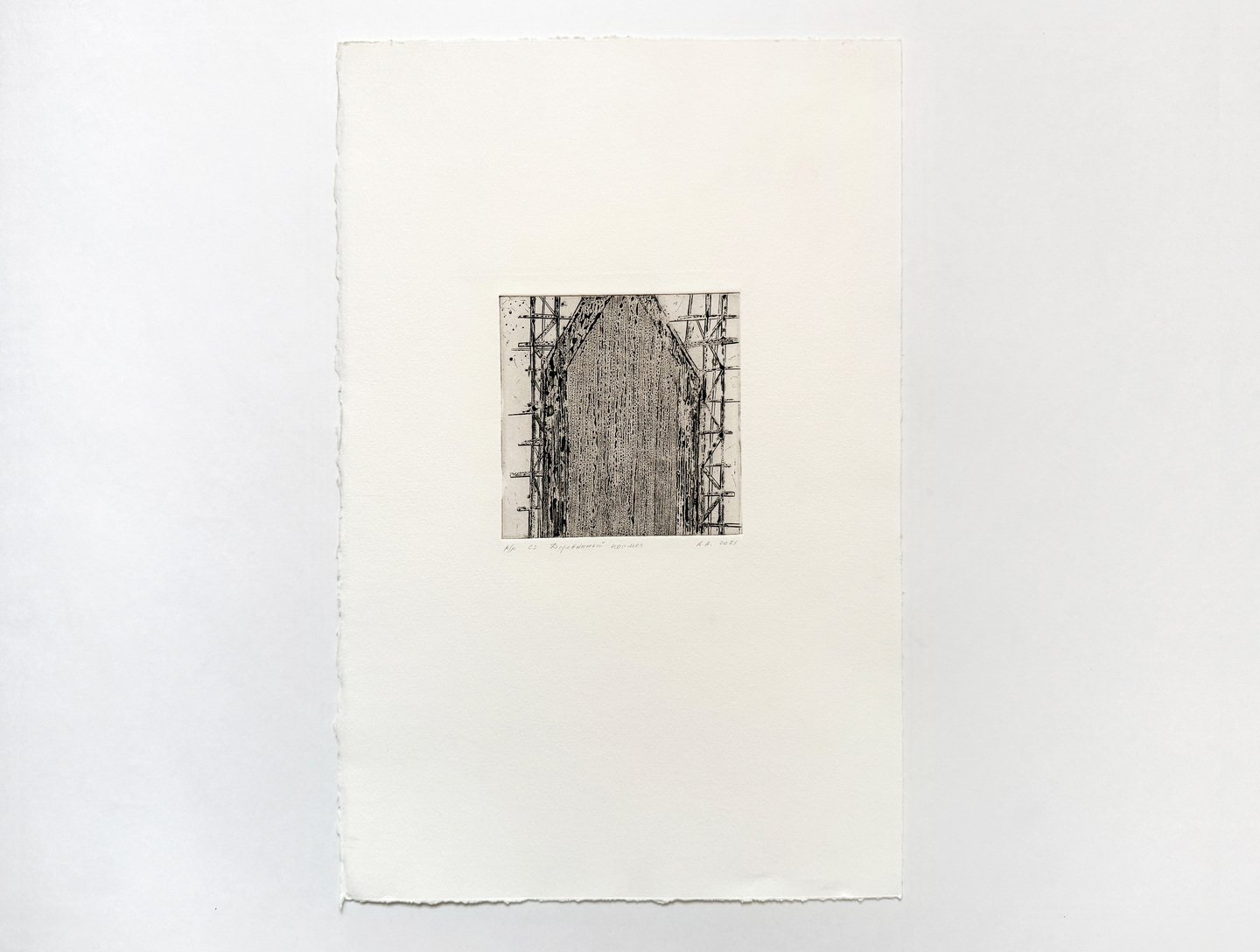
Wooden Cosmonaut Paper, etching, 42×27.5 cm
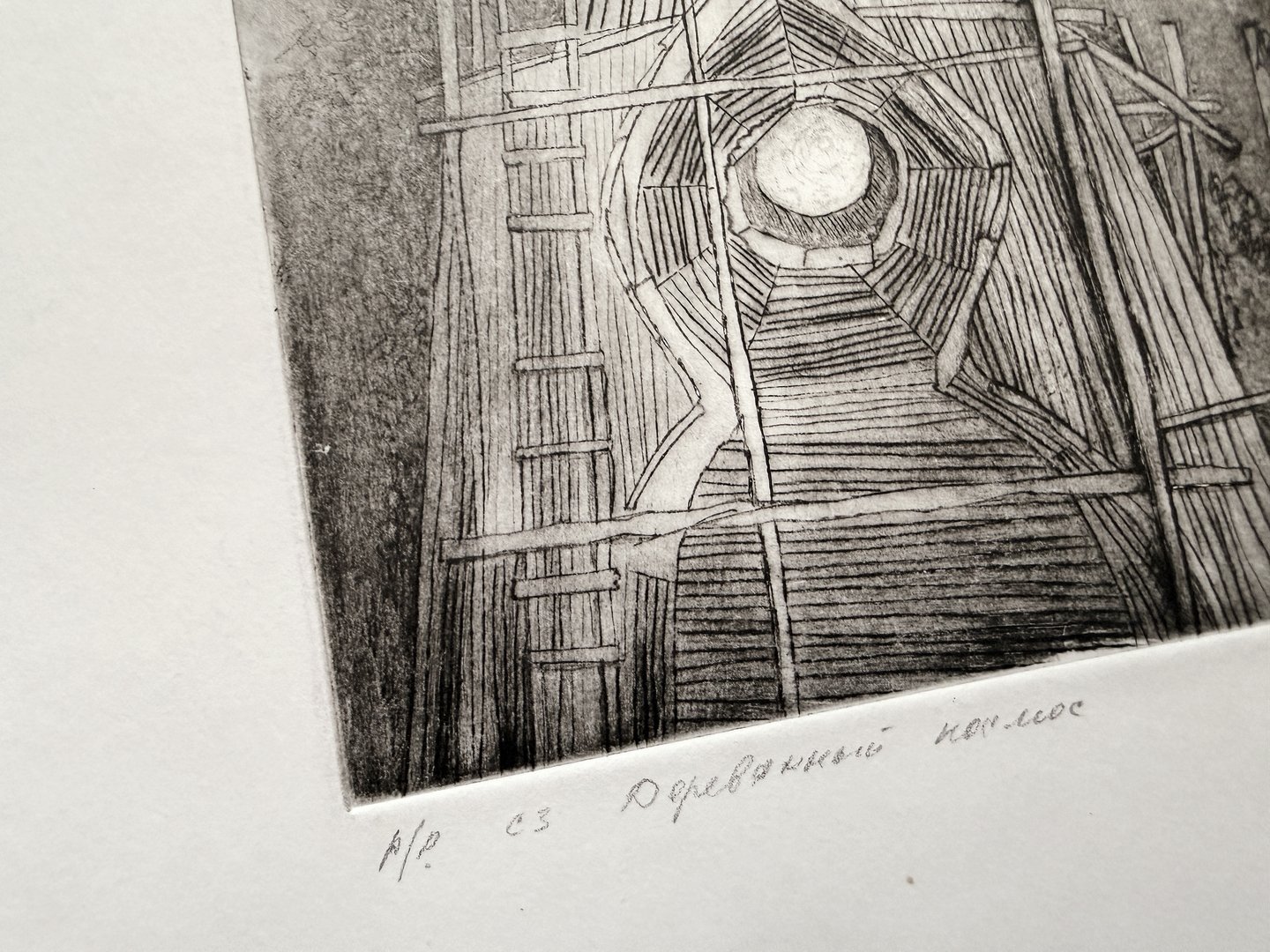
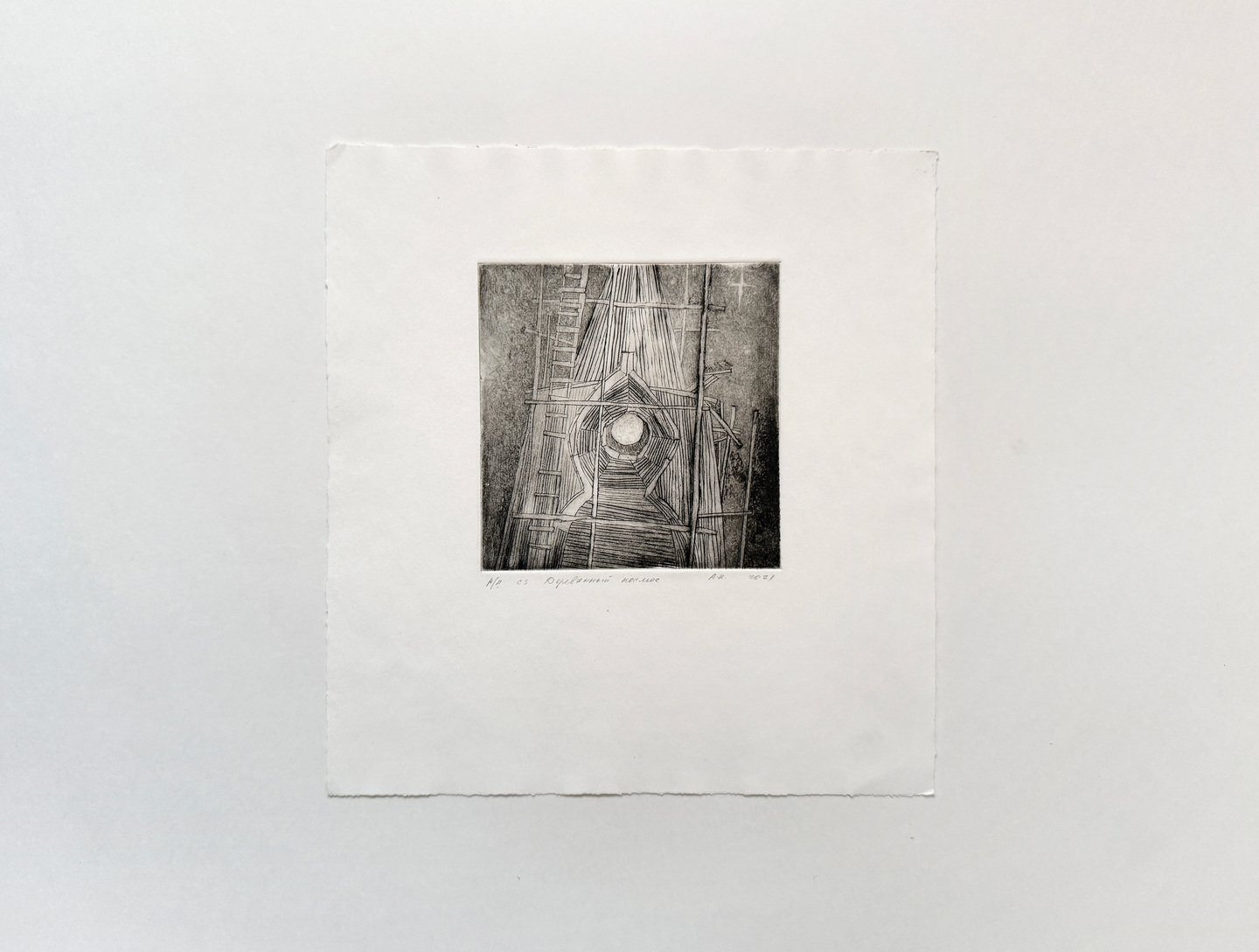
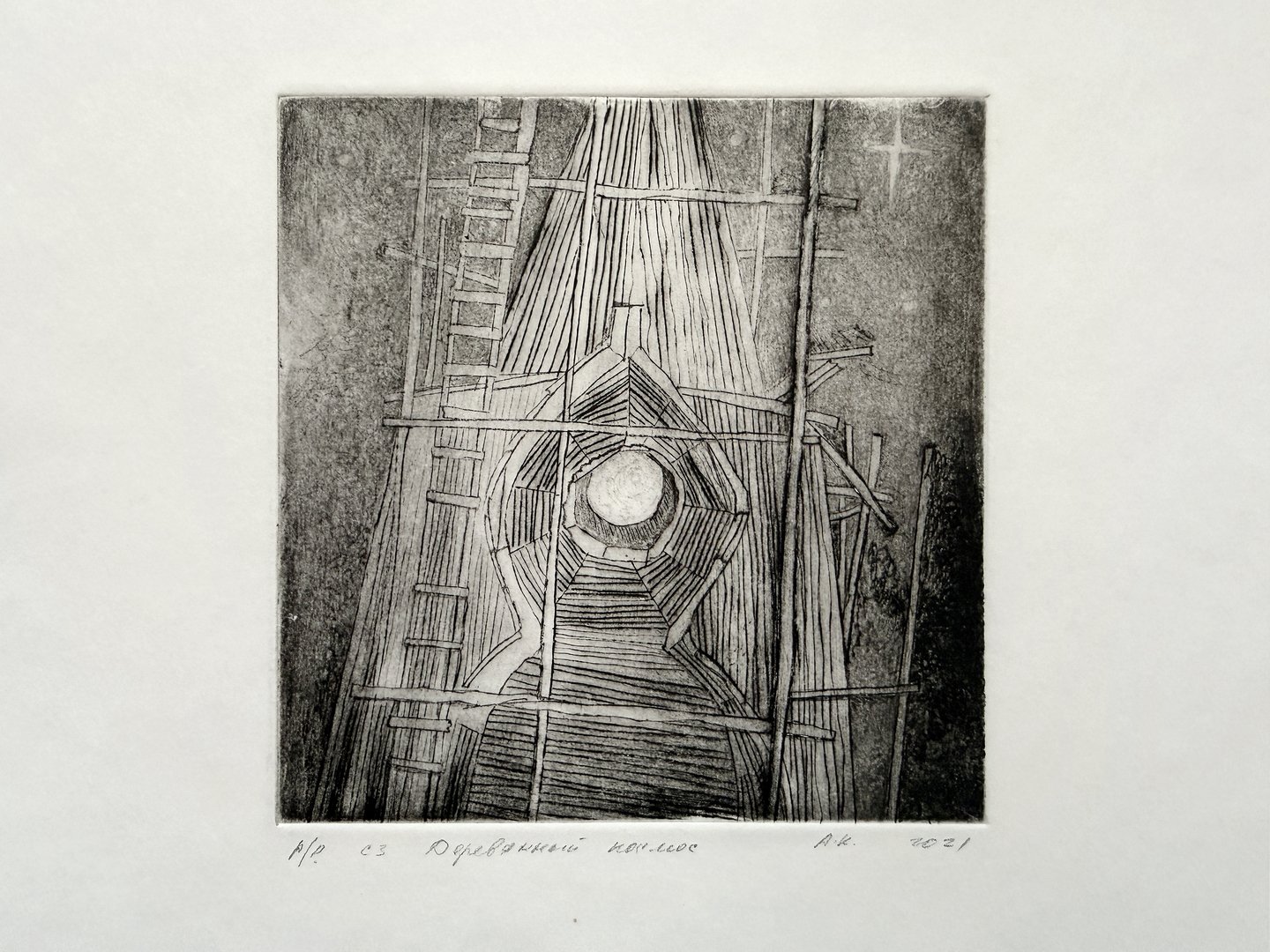
Wooden Cosmonaut Paper, etching, 25×23.5 cm
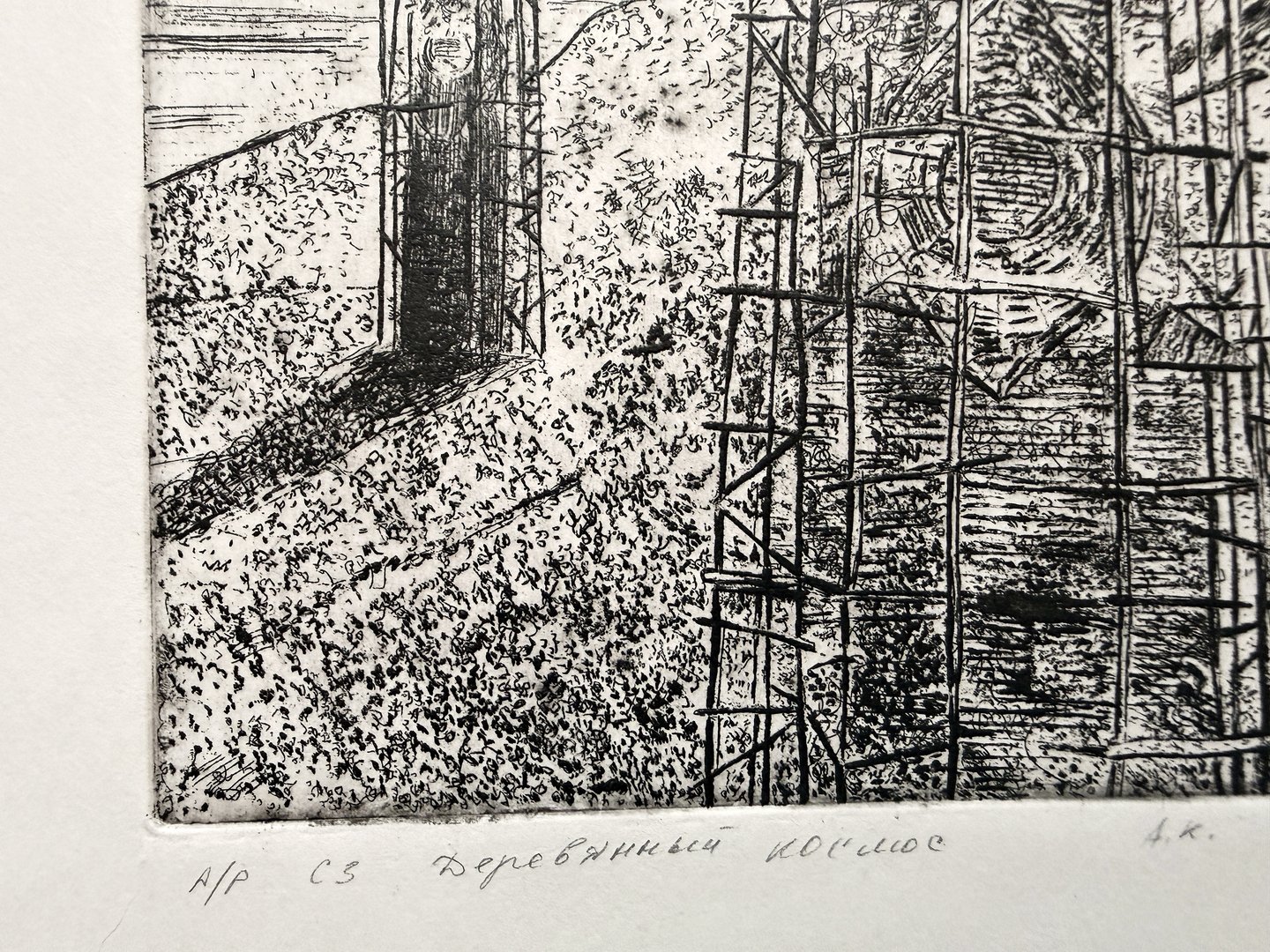
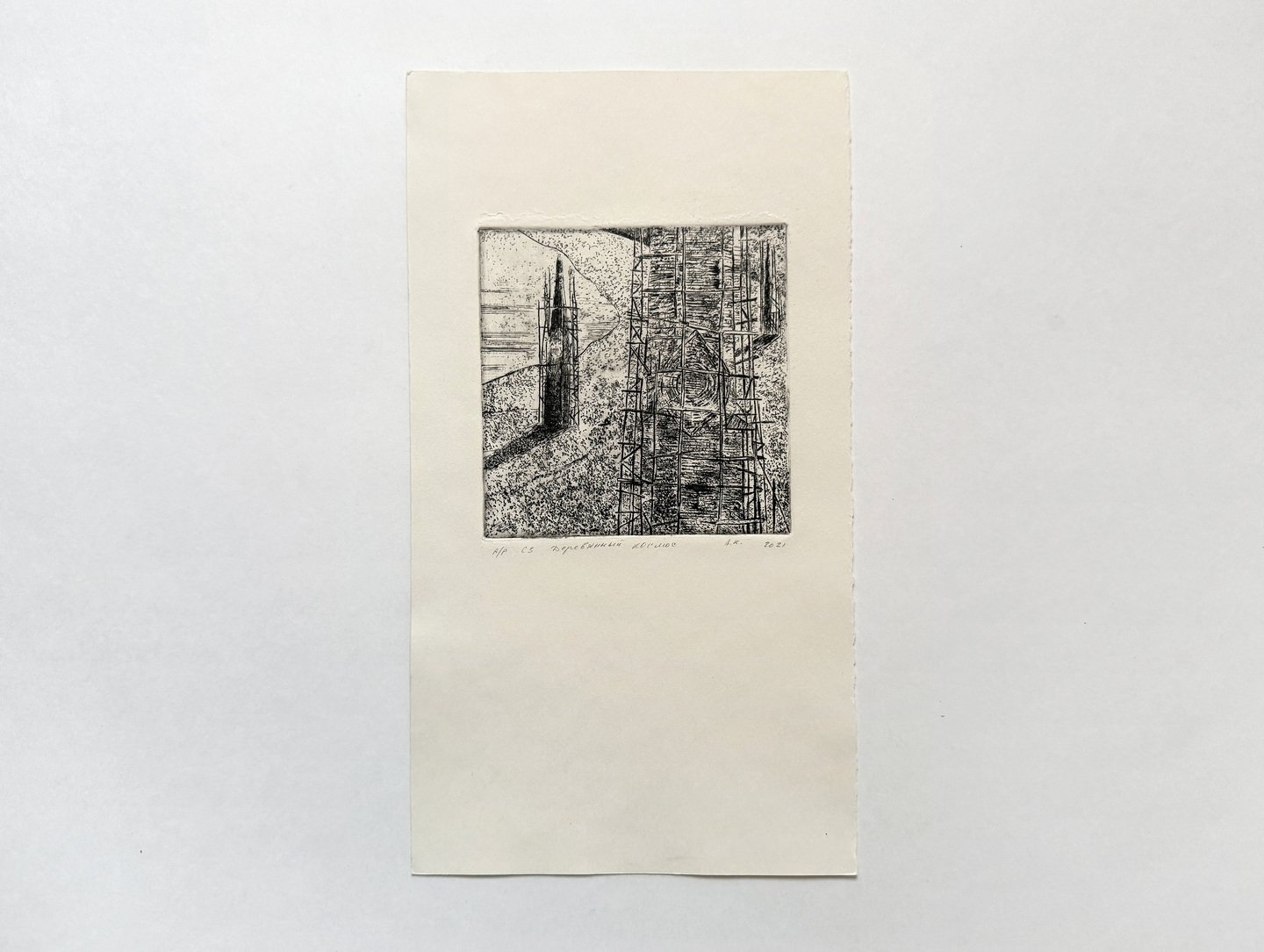
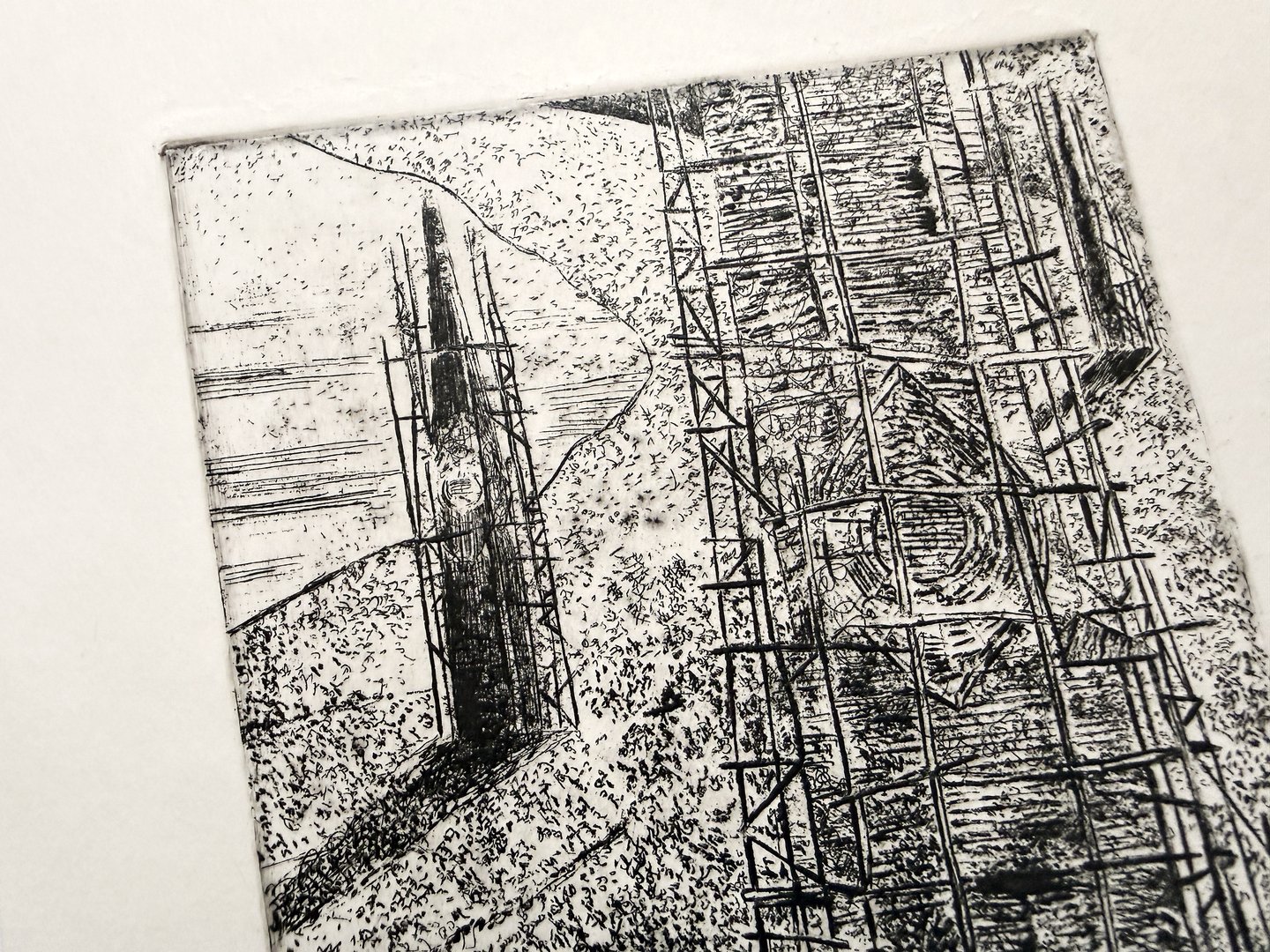
Wooden Cosmonaut Paper, etching, 31×17 cm
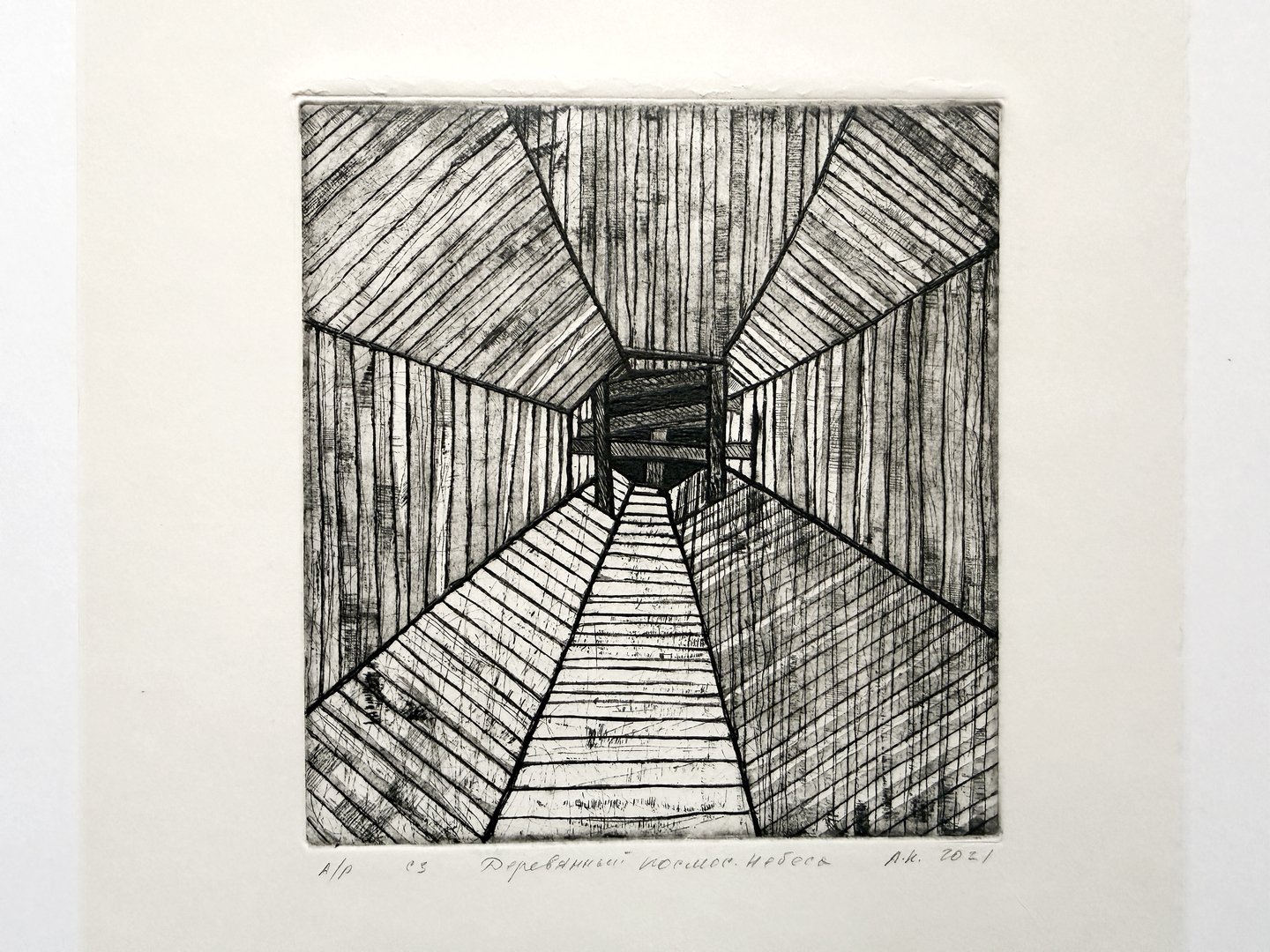
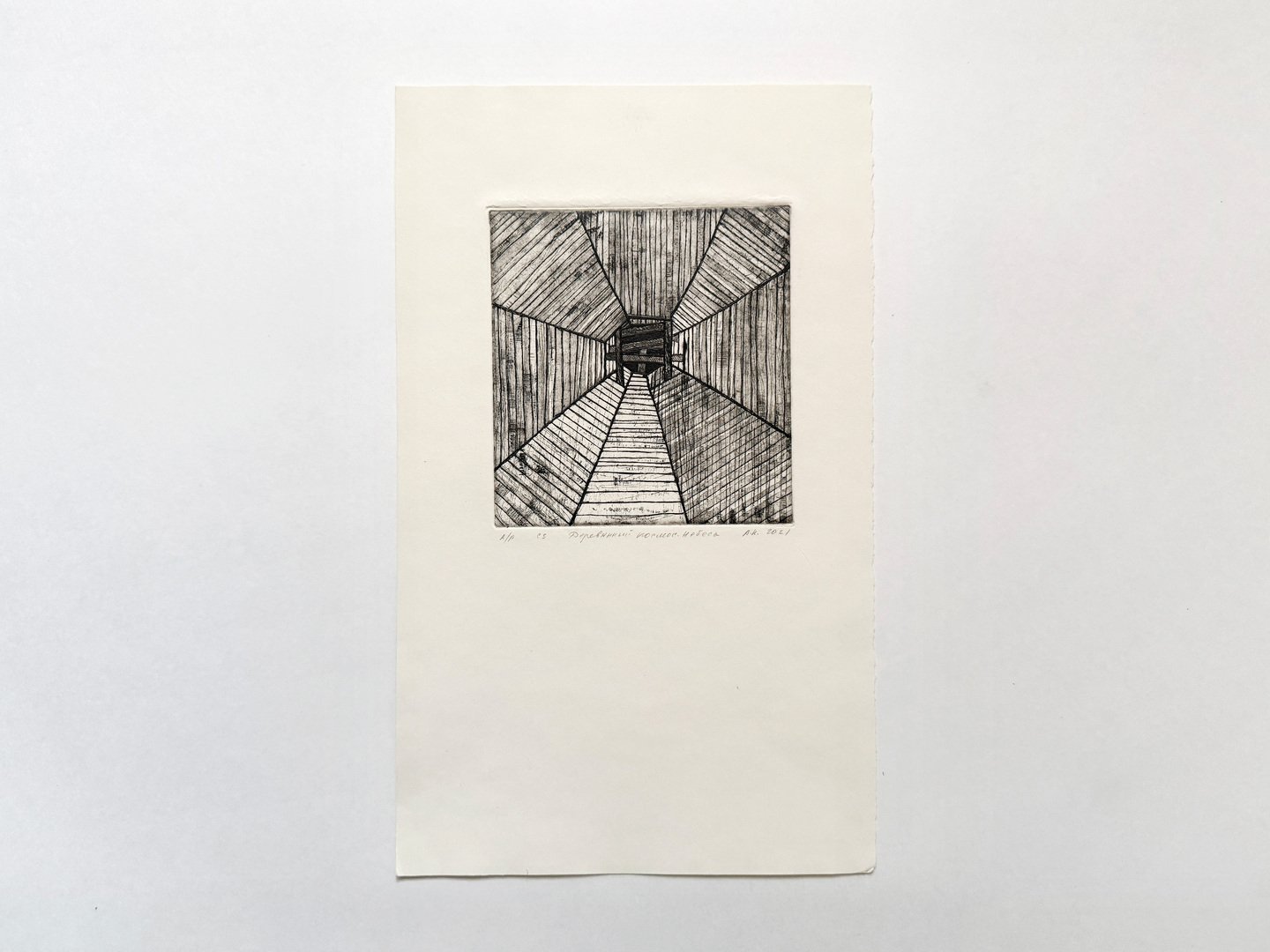
Wooden Cosmonaut Paper, etching, 31×18.7 cm
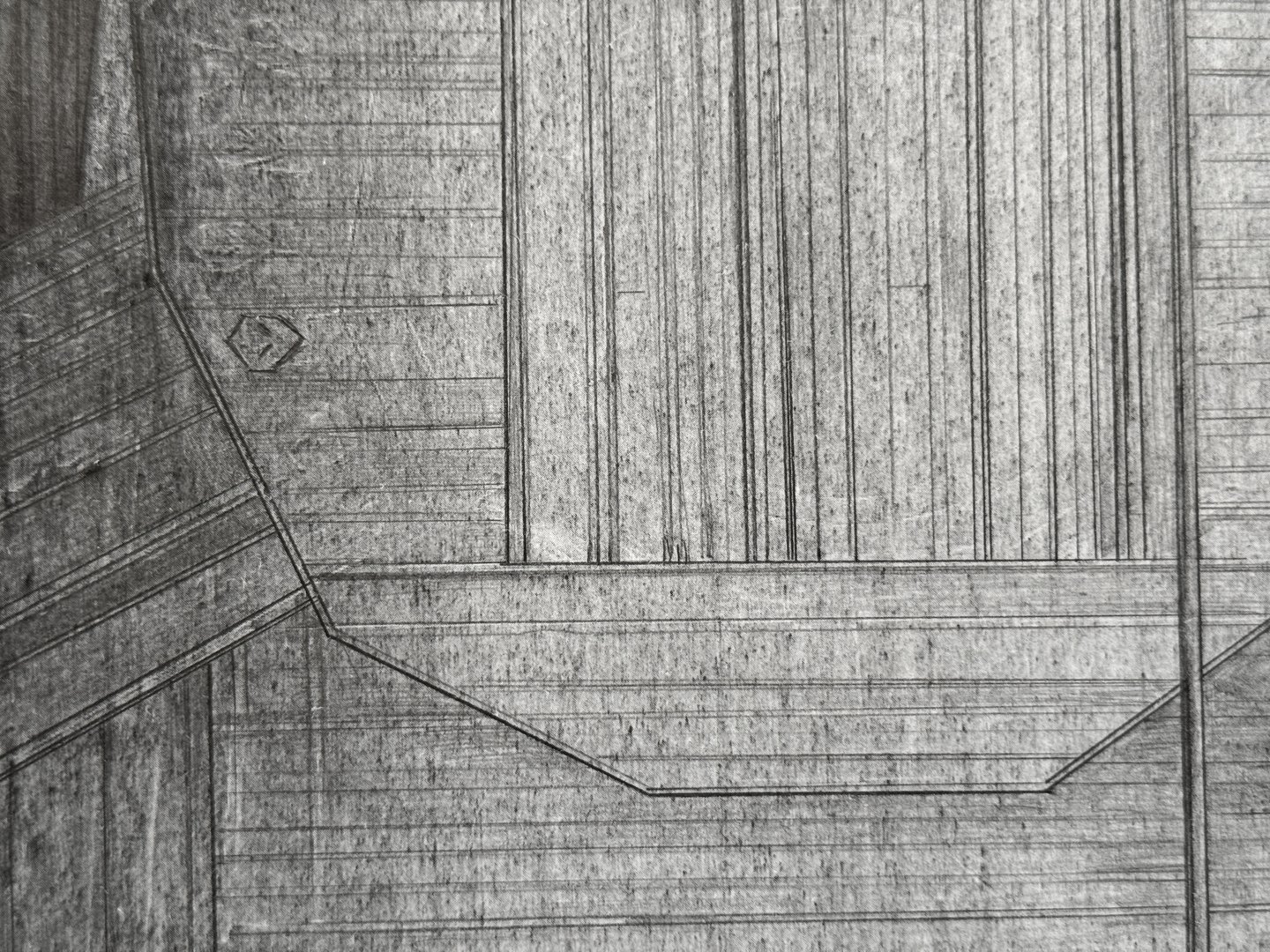
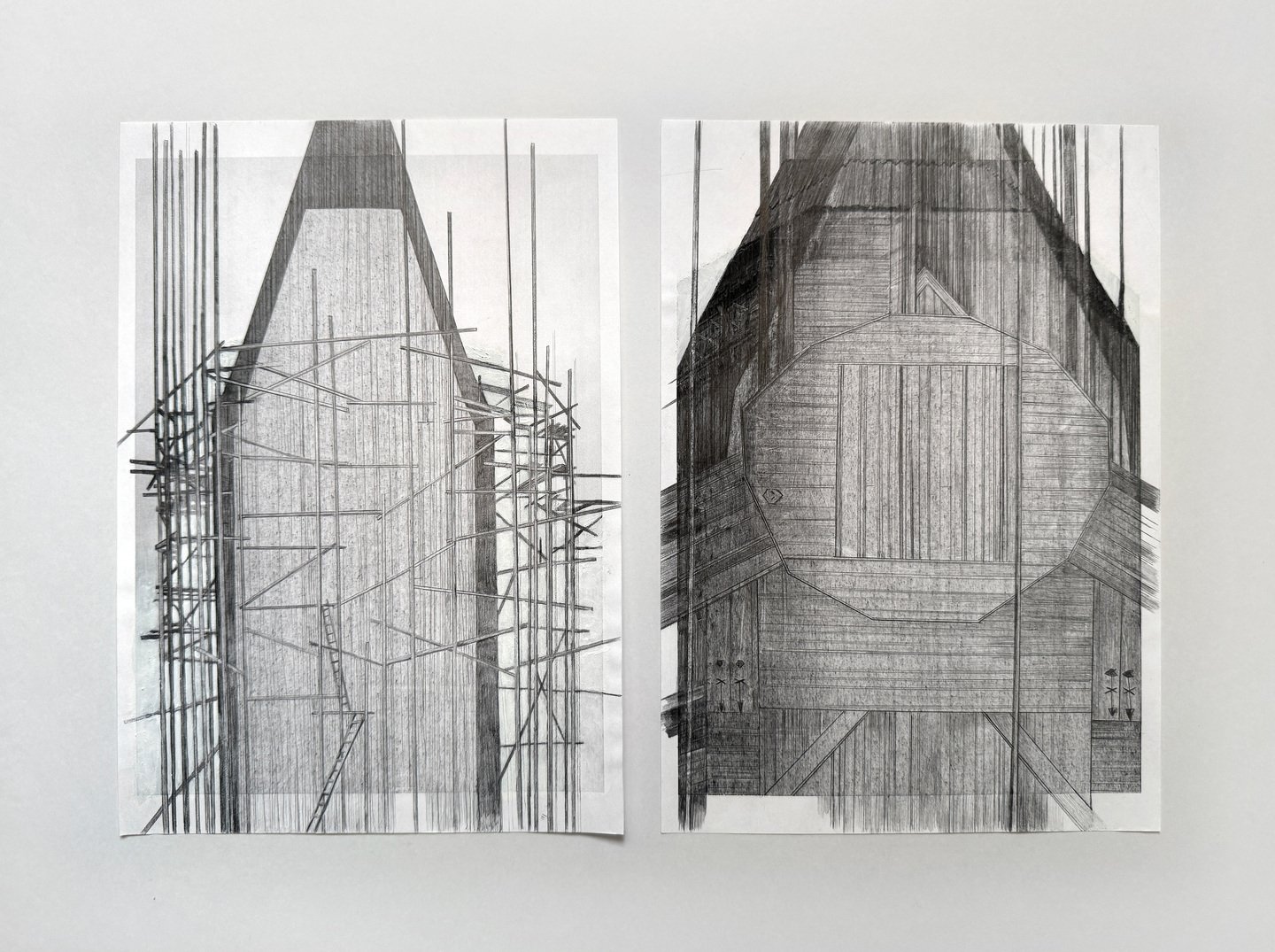
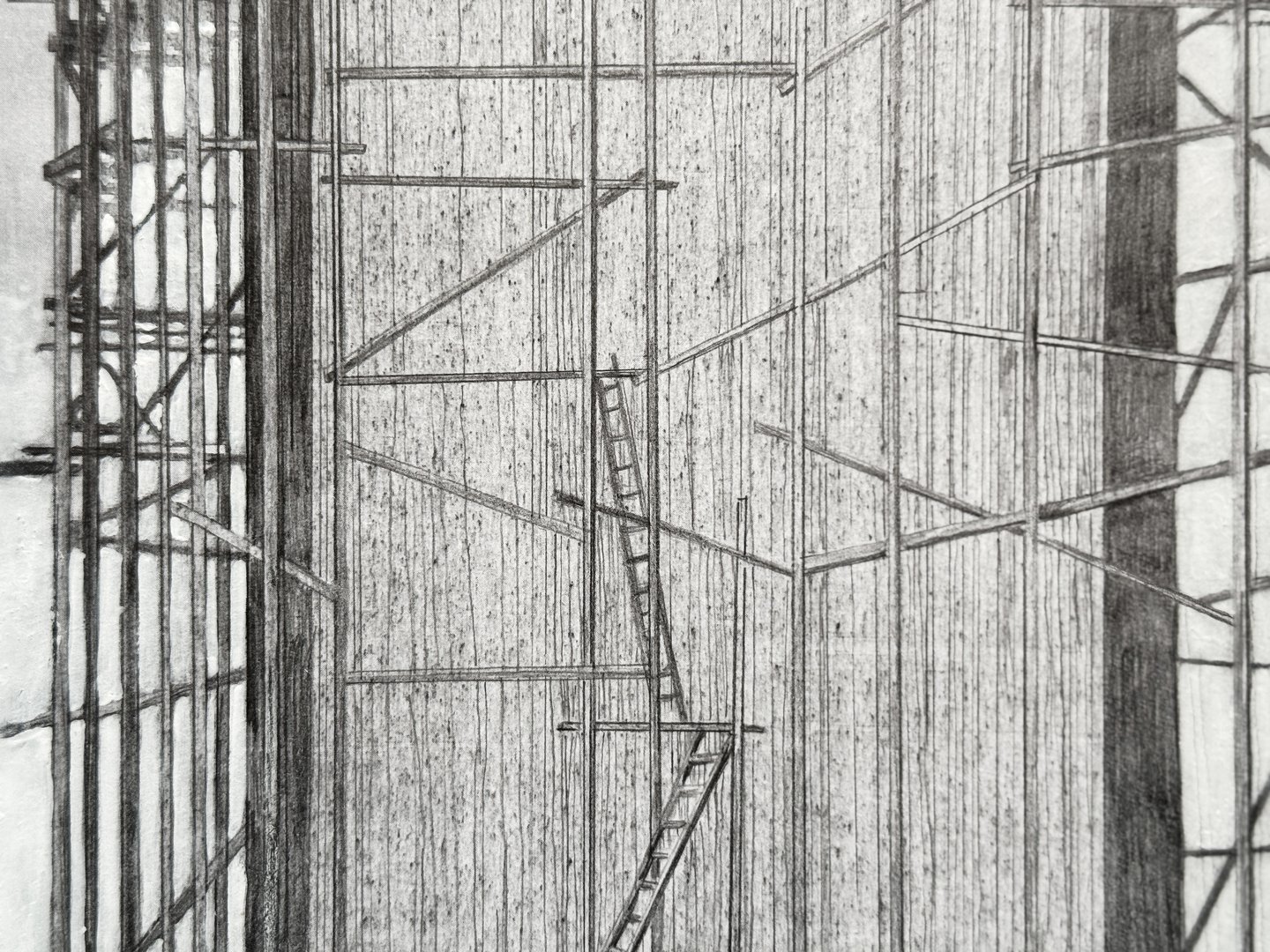
Wooden Cosmos Paper, digital print, graphite pencil, acrylic, 29,7×21 cm