INDEX:
- Concept of Visual Research
- Luxury in Peasant Culture — Notions of Prosperity and Beauty — Festive Attire as an Indicator of Well-being — Material Value and Visual Expressiveness of Clothing
- Occasions for Adornment — Weddings and Bridal Looks — Royal Holidays and Folk Gatherings — Fairs, Social Visits, and Festive Outings — Adornment as a Public Display of Beauty
- The Art of Embellishment — Pearls, Necklaces, and Beaded Jewelry — Earrings, Bracelets, and Rings — Kokoshniks, Ribbons, and Head Ornaments — Embroidery, Lace, and Decorative Trimmings — Abundance of Adornments as a Visual Language of Wealth
- Peasant Flair — The Image of the Adorned Peasant Woman — The Drive to Stand Out and Accentuate Individuality — Fashionable Trends in the Rural Setting — Competition in Adornment and Imitation
- European Accessories in Peasant Wardrobes — Umbrellas and Parasols — Lace Gloves and Mitts — Hats and Fans — Lacy Accessories — European Details Combined with Traditional Peasant Costume
- The Essence of Rural Luxury — The Distinctive Aesthetic of Peasant Adornment — Tradition and Evolving Concepts of Beauty — Rural Flair as a Form of Self-Expression — Concluding Findings of the Research
- Bibliography
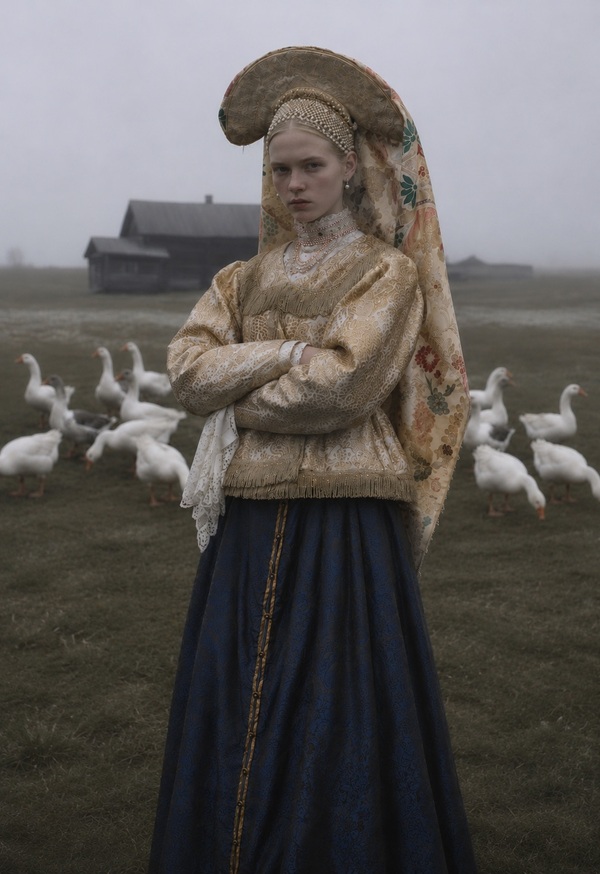
This visual study is dedicated to the culture of adornment among Russian peasant women from the late 19th to early 20th centuries. The topic was chosen due to an interest in an understudied aspect of rural culture—women’s aspiration toward beauty, elegance, and the display of prosperity through clothing and accessories. While peasant costume is often perceived solely as a carrier of folk traditions, the festive looks of rural women were far more diverse. The rich fabrics, abundance of ornamentation, and unusual accessories reveal a unique aesthetic of peasant luxury.
The core of the visual material will consist of historical photographs, museum artifacts, and ethnographic imagery related to the chosen period. Priority will be given to photographs of Russian peasant women in festive attire, as well as individual details of their wardrobes: ornaments, headwear, lace, gloves, parasols, and other accessories. Special attention will be paid to items of European origin used in rural settings. When selecting images, their dating, region, provenance, and authenticity will be considered to distinguish genuine historical depictions from staged photographs and later stylizations.
The structure of the research moves from a general overview of luxury within peasant culture to specific manifestations of rural elegance. Initially, the concepts of affluence and the circumstances under which finery was displayed are examined. Next, the focus shifts to the jewelry and overall look of the elegantly dressed peasant woman. A dedicated section is devoted to European accessories in the peasant wardrobe. The research concludes with a synthesis of the characteristics of rural luxury as a distinct aesthetic phenomenon.
The textual foundation will be based on scholarly research in the history of the Russian peasantry, ethnography, costume history, as well as publications from historical descriptions and archival materials. Testimonies from contemporaries of the studied era and materials from ethnographic expeditions will be of particular importance. Textual sources will be selected based on their relevance to the topic, historical accuracy, and potential for comparison with the visual materials. This analysis will allow for the determination of the origin of the objects, the specifics of their use, regional variations, and the social significance of ornamentation.
The core research question is: how did Russian peasant women of the late 19th and early 20th centuries display affluence and construct an image of beauty through traditional costumes, ornamentation, and European accessories?
Research Hypothesis: Peasant luxury represented a distinct culture of ornamentation, where the desire to display affluence and individuality combined with the preservation of traditional peasant attire and the selective incorporation of European accessories. Thus, the peasant fashionista was not merely a follower of external trends but an active participant in shaping her own aesthetic of beauty and extravagance.
Fights