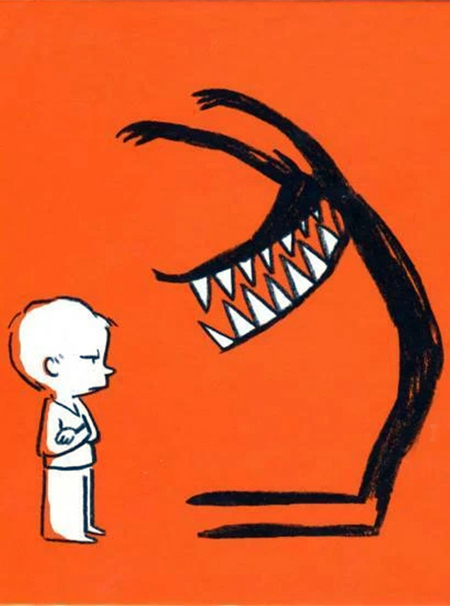
In her books, the French storyteller and artist, Delphine Perre, tells the story of a boy named Louis who encounters a lost and tormented wolf in the stairwell, takes him home, keeps him in the linen closet, feeds him cookies, and teaches him how to be scary.
Delphine de Vigan
«Me, the Wolf, and the Chocolates»
«Me, the Wolf, and Summer Vacation with Grandpa»
Translated from French by Marina Rasskazova
Moscow, KompasGuide, 2010–2011
For Younger School Age

Picture books represent a unique world for children. Adults often view them with a patronizing smile, bordering on disdain, though beneath that may lie a secret envy: they don’t have such books; they have catalogs of expensive watches, books about fine spirits, cookbooks, and fashion guides—or perhaps luxurious gift editions that gather dust on shelves for years. Recently, some coloring books have been created for adults, and this partially brings them closer to children, but even in that context, they require explanations, psychological motivation, and the guidance of life wisdom experts. Picture books, however, are simply picture books that tell stories. And there are people who still know how to do it vividly, intelligently, paradoxically, with incredible love. This is because they have managed to retain the fresh perception characteristic of children.

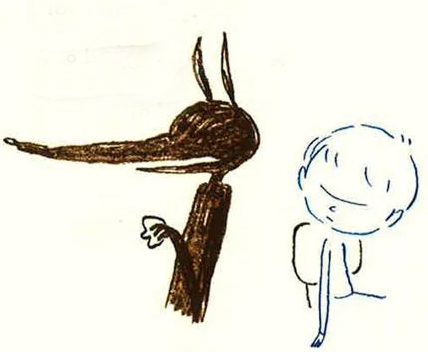
In the books by Delfine Perre, a French writer and artist, you can find a paraphrase of traditional tales about a boy walking home from school, finding a stray dog, and taking it home. But here, everything is different: the boy, Louis, encounters a lost and exhausted wolf in the apartment building entrance. And the wolf, as adults might put it, is going through a serious identity crisis: «No one believes in me anymore. No one is scared of me. This is the end.» What does Louis do? He takes the wolf home, houses it in a closet, and teaches it how to be scary. On this journey, both participants in the process of reclaiming the wolf’s essence must endure much: first, the wolf is not easy to hide, even in a large closet; second, gnawing on cookies and glazed cheese curds is not typical wolf behavior—and many other things. However, the wolf, renamed Bernard, happily becomes a vegetarian, and even after regaining the ability to growl and frighten, he refuses to use those skills—he has already truly befriended Louis, and this friendship means more to him than self-affirmation through devouring little girls.
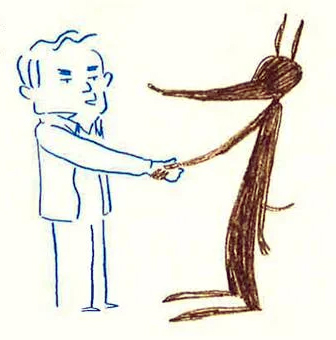
The story continues in the second book: Louis’s grandfather, an ironic and jovial man, arrives by car to drive the boy to the seaside for vacation. The grandson, naturally unwilling to part with his best friend, takes Bernard along. Essentially, the second part of Delphine Perre’s quasi-comic is a fun road movie, translated into comic form, detailing the adventures of three companions—a child, an elderly man, and a wolf—and this combination is utterly delightful. The grandfather, maintaining his adult irony, speaks to his wards in a way they understand, and Louis and the wolf gladly welcome him into their boyish-animal brotherhood because he deserves it. Although the book ends with their arrival by the sea, the reader understands: spectacular holidays await the company.
Both of Delphine Perre’s books are concise, talented, captivating, and extremely useful. Not only because the wolf, who loves chocolate and grated carrots, serves as an excellent antidote to childhood fears, but also because they clearly show—including to adults—that anyone who seems large and scary is also entitled to disappointment and fatigue, and they too, like some adults, sometimes need serious help.