Concept
This visual study analyzes how the deformation of the human body in 20th-century art served as a mirror to the identity crisis and the transformation of perceptions of humanity driven by the conditions of modernity. While the body previously served as the embodiment of an ideal, 20th-century artists, conversely, used distorted form, fragmentation, and the disruption of anatomical integrity to express new realities.
In 20th-century art, the human body ceases to be merely an object of anatomical reproduction. It transforms into a potent instrument for visualizing an individual’s existential experiences—their internal struggles, fragility, and the precariousness of being. Moving away from the canons of idealized and static form leads to the emergence of distorted, fragmented imagery, symbolizing a profound crisis in established worldviews and conceptions of human nature.
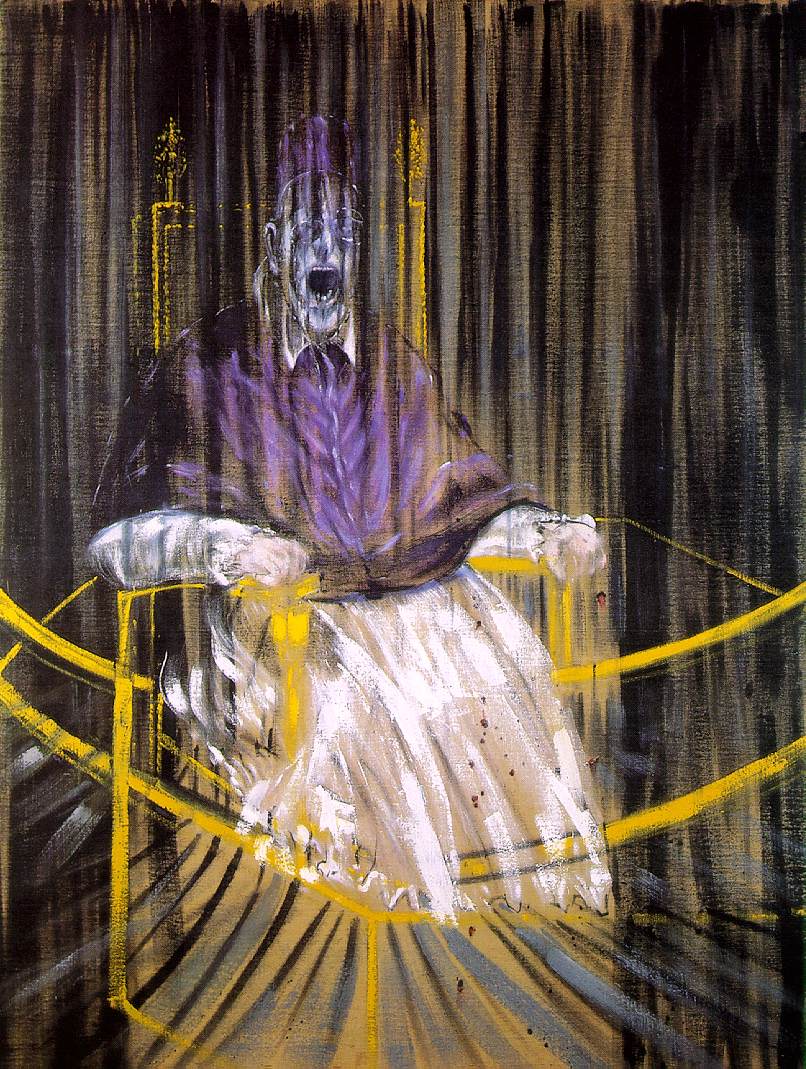
Francis Bacon, «Study for the Portrait of Pope Innocent X» (1953)
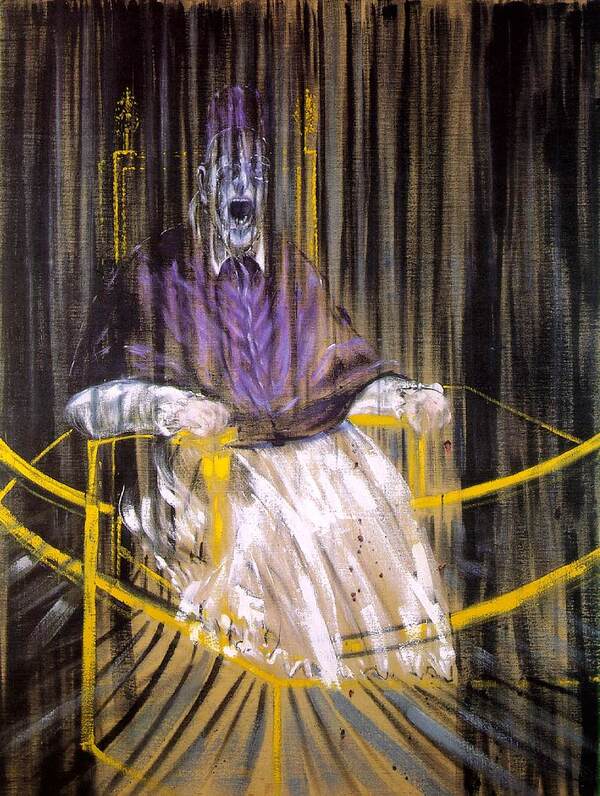
The portrait image is characterized by an expressive scream and pronounced deformation. The artist’s face literally disintegrates under the onslaught of rough brushstrokes, and the surrounding environment evokes a feeling of a closed space, like a cage. Thus, Bacon undermines the traditional perception of power, depicting humanity as a being subject to profound internal vulnerability.
Deconstruction of the Classic Body
In the early 20th century, artists began to reject the academic view of the body as a perfect, harmonious form. The human figure ceased to be an immutable ideal and instead became a canvas for artistic experimentation. Distortion was employed to demonstrate how human perception shifts within a new industrial and urban reality.
Cubism is not a reality that can be seen with the eyes; it is a reality created by the mind.
Pablo Picasso, «Les Demoiselles d’Avignon» (1907)
The depictions of women in this work reject classical plasticity. Facial features are stylized after African masks, bodily forms are deconstructed into sharp geometric planes, and the spatial organization is presented as fragmented and unstable. Pablo Picasso deliberately dismantles the traditional representation of the human body, disregarding the principles of perspective and anatomical accuracy.
Pablo Picasso, «Woman Before the Mirror» (1932)
The depiction of the young woman reflects a dissonance between her outward appearance and her inner state. Her physical form appears fractured, her facial features are distorted, and the sharp color contrasts symbolize internal tension. Thus, the artist explores the theme of unstable self-perception and the complexity of holistically understanding an individual.
Egon Schiele, «Self-Portrait with Physalis» (1912)
Sharp lines and visceral anatomical detail intensify the sense of emotional tension. Schiele depicts the human not as an ideal, but as a fragile, unstable being.
In the age of modernism, artists abandoned the search for a single, universally accepted ideal. Instead, they utilized deformation as a tool to undermine established academic norms and showcase the individual nature of human perception.
The Body as a Reflection of Anxiety
The 20th century brought a new interpretation of the human body to art: its distortion became a way to express the inner world. Artists were less concerned with proportions and more interested in conveying fear, loneliness, and emotional upheaval.
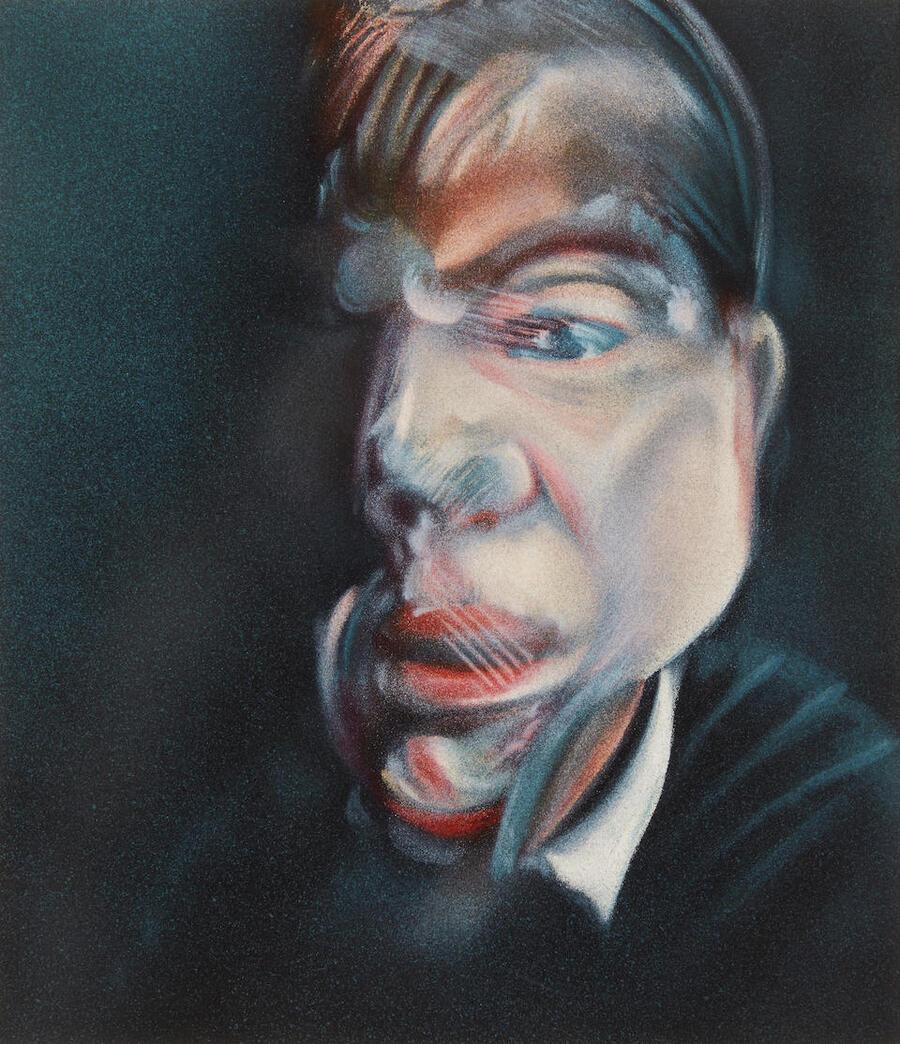
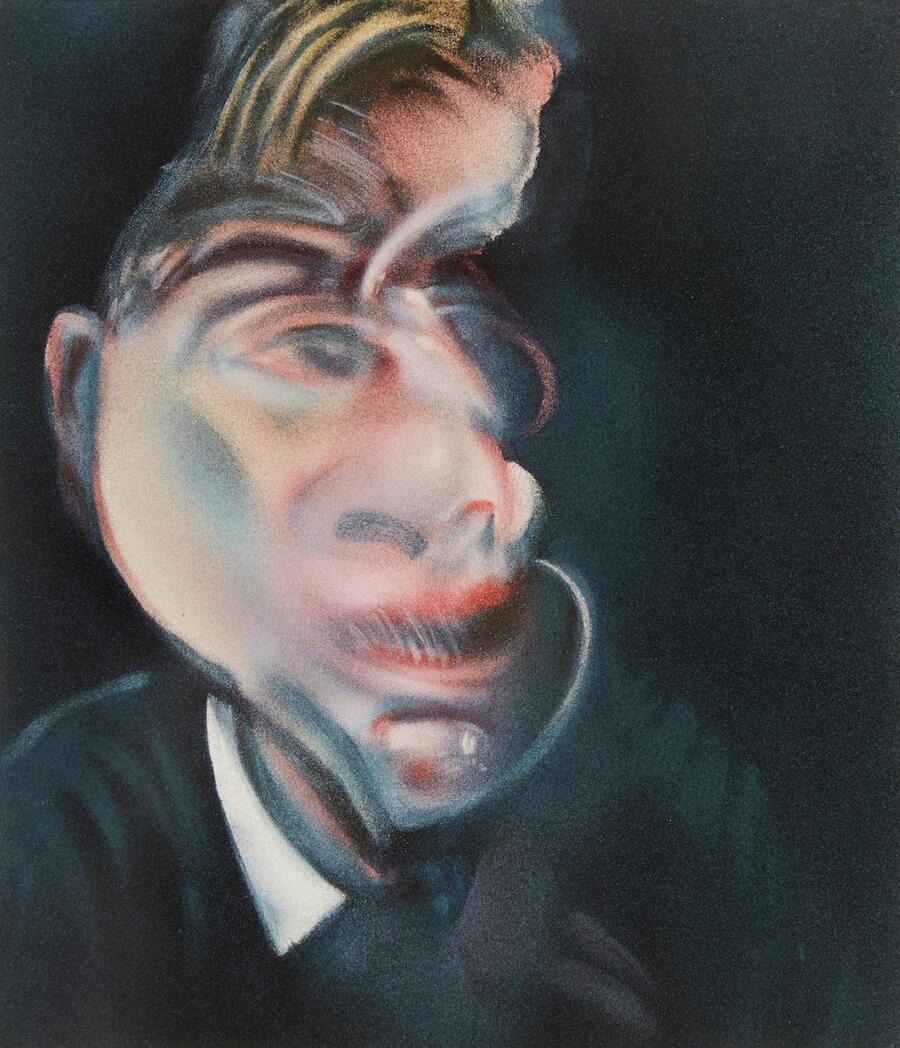
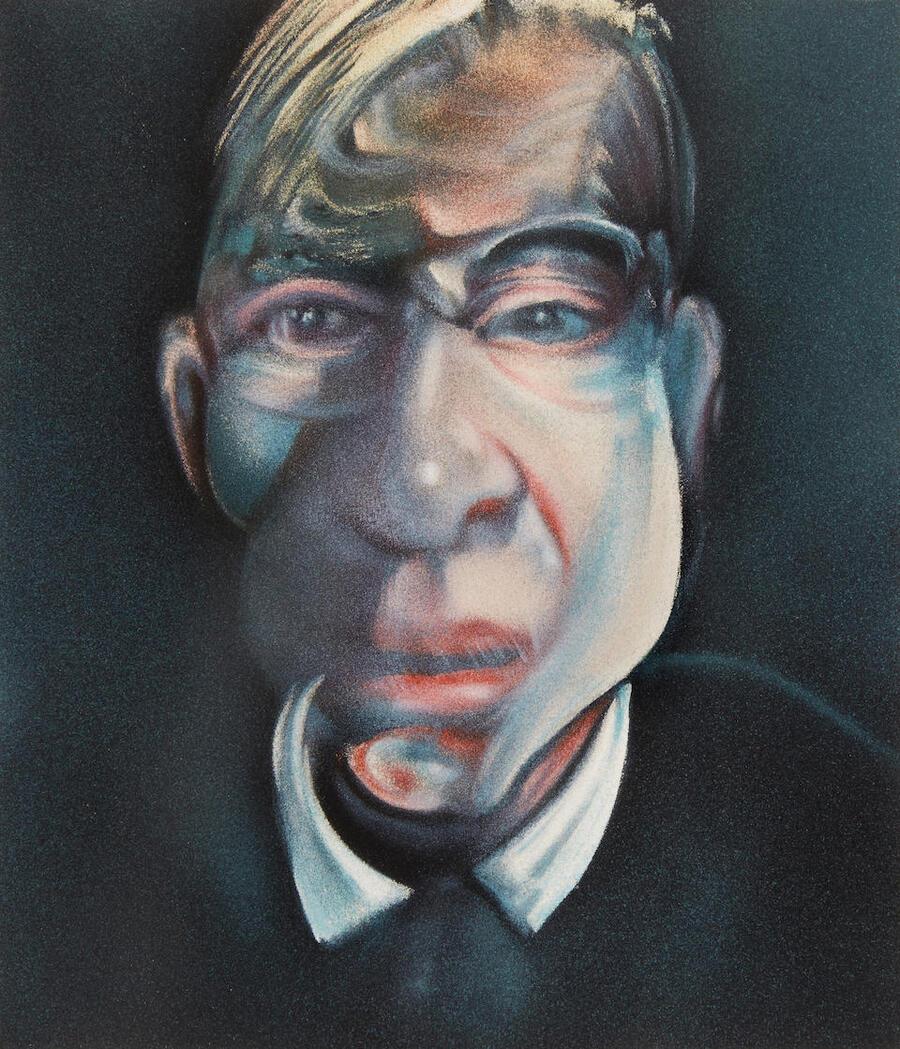
Francis Bacon, «Three Studies for a Self-Portrait» (1979)
The deformation of facial features and the loss of clarity, combined with dynamic brushwork, evokes a sense of internal personal disintegration. Thus, the self-portrait transcends a mere depiction of appearance, becoming an exploration of human instability.
At the beginning of the twentieth century, there is a shift in focus within art: the individual’s inner world comes to the forefront. Artistic creation begins to explore not so much objective reality as the subjective experiences of the self, including existential fears, anxiety, and psychological vulnerability.
Man finds himself not in control of his own home.
Francis Bacon, «Portrait of George Dyer in the Mirror» (1968)
The claustrophobia and anxiety inherent in the painting’s space, combined with the partial dissolution of the character’s face into the texture of the brushstrokes, serve as the artist’s means of expressing the individual’s inability to achieve a cohesive self-perception.
Francis Bacon, «Portrait of a Speaking George Dyer» (1966)
In Bacon’s work, corporeality acquires instability, becoming a metaphor for the existential disarray inherent to the modern age.
War and the Ruin of the Body
To write poetry after Auschwitz is barbaric
World wars fundamentally altered the artistic perception of the human body. Following the upheavals of the first half of the 20th century, artists began depicting the human form as fragmented, mutilated, and lacking integrity. Distortion became a visual symbol of violence and historical trauma.
Pablo Picasso, «Guernica» (1937)
One of the most significant anti-war works of the 20th century is Pablo Picasso’s «Guernica, ” which depicts the bombing of an Spanish city in 1937. The artist portrays distorted, fragmented bodies, while the sharp forms, chaos, and deformed faces convey an atmosphere of panic and destruction.