DeadLands: Seeking a Development Partner
DeadLands
Start with a knife. Build your own magic. Face the next wave.
A first-person wave-survival game concept for solo play and up to four-player co-op.We are seeking development partners to help turn a flexible spell-combat system into a focused, playable prototype.JHM Studio · Game design case study · Development collaboration
From your first kill to a battlefield of magic
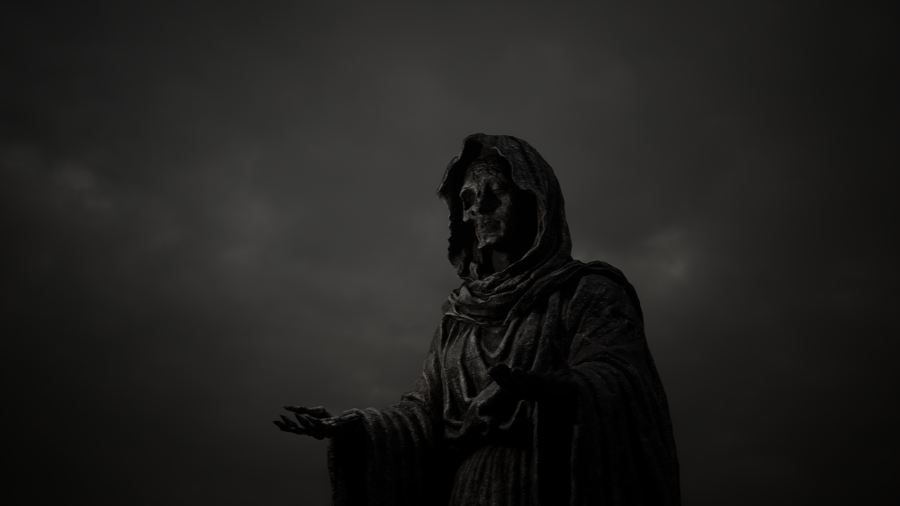
You enter the match without a single spell. A knife is enough to begin, but each wave brings more skeletons, more pressure and harder decisions.Earn currency, find spell altars and build a loadout across Fire, Electricity, Darkness and Light. Spend on your own strength or open a new area for the entire team.Keep pushing for a higher wave, or pursue a quest chain that leads to a boss and a way to win.The intended experience is a steady transformation: from vulnerable survivor to powerful spellcaster, without losing the pressure to move, plan and cooperate.
Make magic a combat system, not just a visual theme
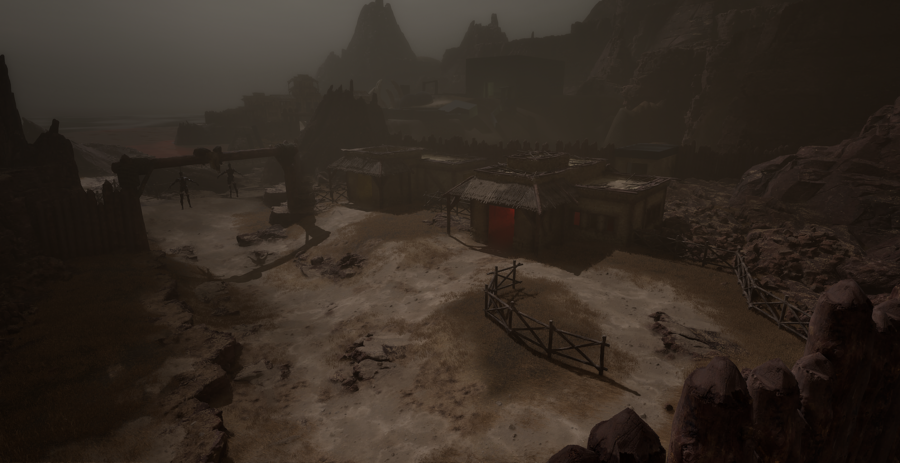
Our starting point is the wave-based survival loop of Call of Duty Zombies. The design challenge is to translate its escalating pressure and spending decisions into a game built around magic.Our approach combines three connected systems: independently chosen spell slots, different resource limits for each attack type, and progression tied to locations on the map.The goal is to make the next decision matter as much as the next kill.
Four schools. Three slots. Your combination
Each loadout has a primary attack, a secondary ability and an ultimate. Players choose the school for each slot independently.Use homing fireballs as your primary attack, a stunning chain-lightning orb as your secondary ability, and a black hole as your ultimate.The initial design contains twelve attacks: three per school. Its central promise is freedom to combine tools across schools instead of committing every slot to one element.Replacing an attack discards its accumulated upgrades. Experimentation therefore comes with a decision: keep investing in a familiar tool, or rebuild around a new one.
Power needs timing
Primary attacks consume ammunition and build heat. At full overheat, a well-timed cooling input can restore access to the attack immediately, provided ammunition remains.Secondary abilities use cooldowns. Ultimates charge through the player’s own non-ultimate kills. Both remain available during primary-attack overheating when their own conditions are met.This creates the intended combat rhythm: attack, reposition, switch tools and choose when to commit your strongest ability. Sprinting provides mobility, but magic cannot be used while sprinting.
Every purchase changes your next decision
Currency connects combat to progression. Players buy attacks, acquire perks and unlock new areas, balancing immediate survival against future options.Altar positions change between matches, while the starting area always contains at least one primary-attack altar.Primary attacks can receive purchased upgrades and numerical bonuses from gems. Gold gems are planned to add unique, attack-specific upgrades across all three slots.These systems are designed to encourage different routes and loadout decisions between runs. Their balance and replay value still need to be tested in play.
Personal builds. Shared survival
Each player holds their own currency, but a purchased area opens for everyone. Every player who damages an enemy receives the full currency reward when it dies.Ultimate charge and gem drops remain tied to personal kills. This distinction gives us a specific playtest question: does the economy support cooperation without making players compete too strongly for finishing blows?Rescuing a fallen teammate preserves their spells and gem upgrades, although purchased perks are lost. Missing the rescue means a much harder recovery on the next wave.The intended tension is simple: how much danger will you accept to keep your team in the fight?
A defined concept. A prototype to prove it
The current design document defines the survival loop, twelve attack concepts, loadout rules, progression systems and the main solo and cooperative failure states.It also records open questions, including enemy scaling, ability timings, the boss encounter and the scope of the first prototype.Our proposed next milestone is a compact combat prototype built to test three questions:Do mixed-school loadouts feel meaningfully different?Do heat, cooldowns and ultimate charge create a readable combat rhythm?Does the economy support both individual progression and team decisions?The result we want from this milestone is playtest evidence that can guide the next production decisions.
One year of development. A clear funding scope
The prototype is the first milestone within our planned twelve-month development cycle.We estimate $12,240 in direct development costs for a three-person team. Our approach is to validate the core gameplay early, then expand the content and refine the experience through playtesting.Ready-made assets: $3,000
Development software ($600/month for the team): $7,200
Contingency reserve (20%): $2,040Total direct development costs: $12,240 per year
A year built around playable milestones
Months 1–3 — Validate the coreBuild and test the core combat loop with a representative selection of spells and basic cooperative play.Months 4–6 — Connect the systemsDevelop progression, the altar economy, area unlocking and the remaining planned attacks. Test how these systems work together.Months 7–9 — Build the full experienceExpand the agreed content scope and integrate the quest chain and boss encounter. Run repeated playtests to identify problems with pacing, balance and cooperation.Months 10–12 — Refine and evaluateFocus on optimisation, bug fixing, combat readability and balancing. Prepare a playable build for partner review and agree on the next release milestone.This is a proposed development sequence. The final scope and delivery commitments will be confirmed after early prototype testing.
Help us put the combat loop to the test
The first step is a conversation about prototype scope, responsibilities and what each side can contribute.We see this first milestone as the beginning of a twelve-month collaboration, with an estimated direct-cost funding requirement of $12,240. We are seeking support for assets and software, alongside a discussion of development responsibilities and measurable milestones.Let’s discuss the prototype.