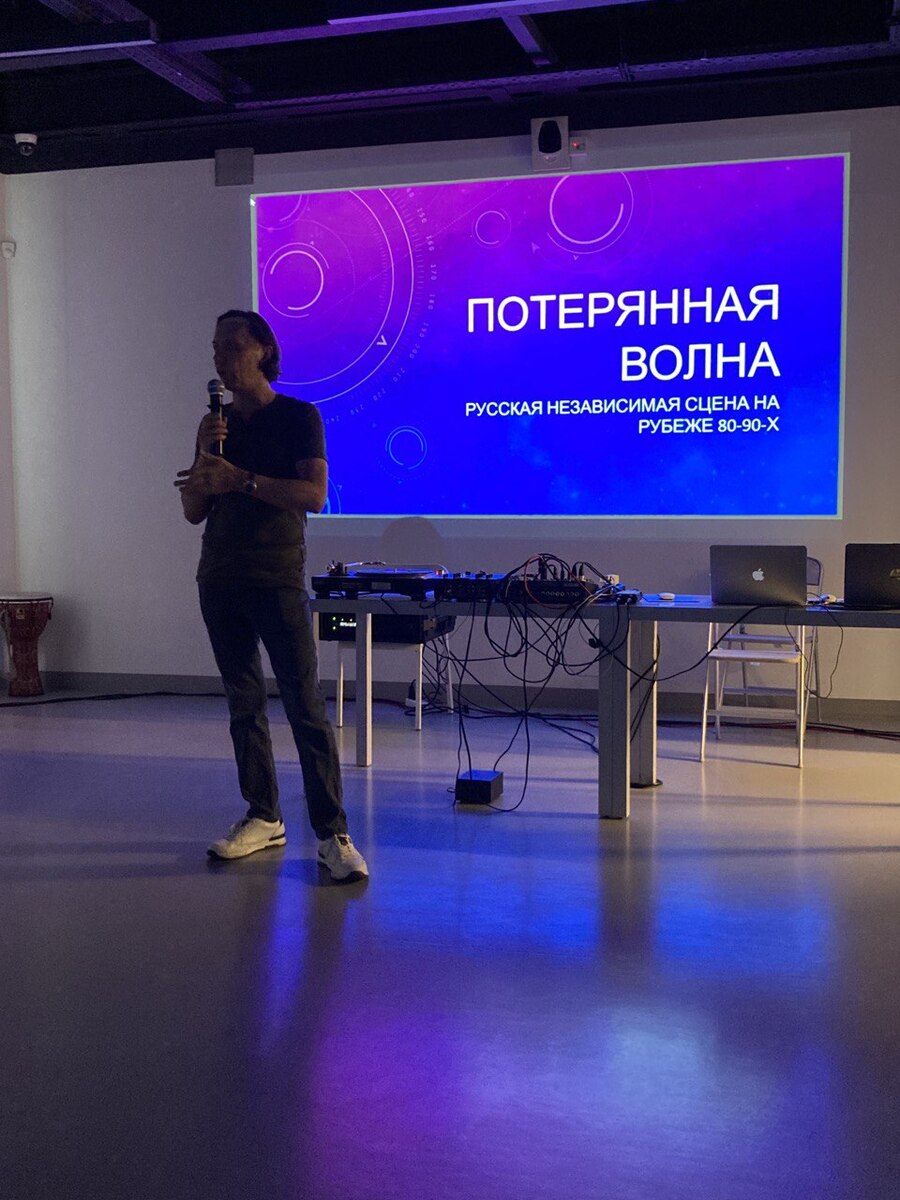
The lecture «LOST WAVE: The Russian Independent Scene at the Turn of the 1980s and 1990s» was first presented to the public on August 12, 2023, at the MMOMA Educational Center, concluding with a performance by one of its featured groups—the band «Bratya po razumu.»
This lecture is dedicated to an entire generation of independent domestic bands that were unable to fully realize their potential, caught in the massive temporal, geopolitical, cultural, and economic divide between the Perestroika Soviet Union and the new capitalist Russia—between the flourishing of Soviet rock and the total triumph of new pop and semi-criminal chanson, and between the fading vinyl records and the nascent CD format.
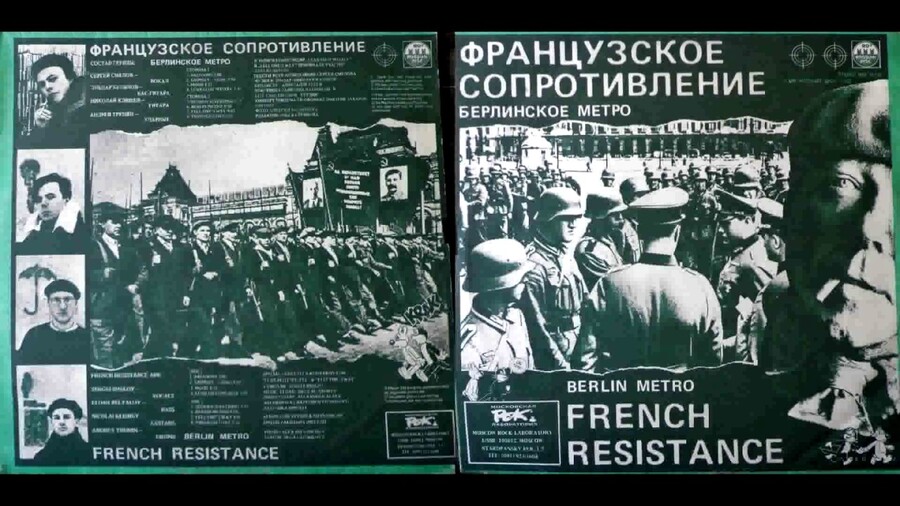
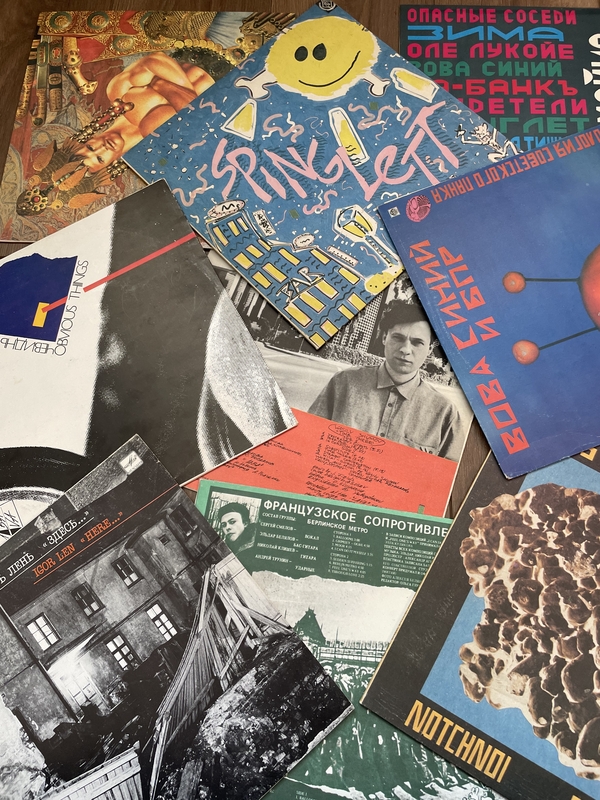
«French Resistance,» «Encounter on the Elbe,» Spinglett, Mess Age, «Sailor’s Silence,» «Bad Influence,» «Cosmetics Research Institute,» The Fantom, Alien Pat. Holman, «Types of Fish,» «Brothers in Mind,» and others—they played in various styles, yet all produced interesting, timely, and cutting-edge music for their time. Not many of these groups remain. Only a handful of recordings on physical media, which have since become costly rarities. There are eyewitness memories of rare concerts. Some of the members emigrated; others have passed away. On streaming platforms, only individual pieces of their music can be found. So, it is unsurprising that few people today know or remember these names.
The destiny of this generation was more clearly reflected in the tragic fate of the Rostov native German Dizhechko and the Moscow group «Matrosskaya Tishina» he led—a group that fully drank the cup of post-punk self-destruction. German himself died in 2008 after falling from the roof of a high-rise building in Rostov. «Matrosskaya Tishina» remained an underground cult all these years, and today, Rostov enthusiasts are seriously engaged in reissuing the entire collective’s legacy. Currently, five albums by «Matrosskaya Tishina» are officially available on streaming platforms.
«New Composers» (Piter). The electronic duo of Valery Alakhov and Igor Verichev—pioneers of Russian rave who organized the first dance parties at St. Petersburg’s «Planetarium,» recorded with Brian Eno, and released the acid-house anthem «Sputnik Of Life» in London in 1990.
Yury Orlov and «Nikolai Copernicus.» The new romantic and one of the main authorities of the Moscow «New Wave» in the 1990s moved away from vocal genres to exclusively record the most avant-garde, wordless electronic music. Only in the early 2010s, thanks to Ilya and Sergey Mazayeev (yes, from «Moral Code»), Yury returned to the microphone and recorded new versions of «Nikolai Copernicus”’s underground hits in high studio quality.
In the lecture, the author touches upon the careers of many of the heroes mentioned above, but pays special attention to the pioneers of Soviet sampling, the «Bratya po Razumu» (Brothers of Reason). This innovative collective was founded by Igor Shaposhnikov and Vova Sinin (Vladimir Emelev) in the late 1980s in Chelyabinsk-70 (now Snezhinsk)—a closed scientific-military town lost in the taiga between Yekaterinburg and Chelyabinsk. Here, the «Bratya» were engaged in sampling even before samplers existed—cutting and splicing magnetic tape to create their own songs from others' recordings, which magically circulated in the 1980s from Vladivostok, where young Ilya Lagutenko listened to them, to London, where the legendary radio host Seva Novogorodtsev played them on BBC waves.
In the 1990s, part of the group was in Amsterdam, Igor Shaposhnikov continued the «Brothers by Reason» venture in Moscow, and Vova Siniy remained in Snezhinsk, where he still records unique albums on the edge of chanson and punk.