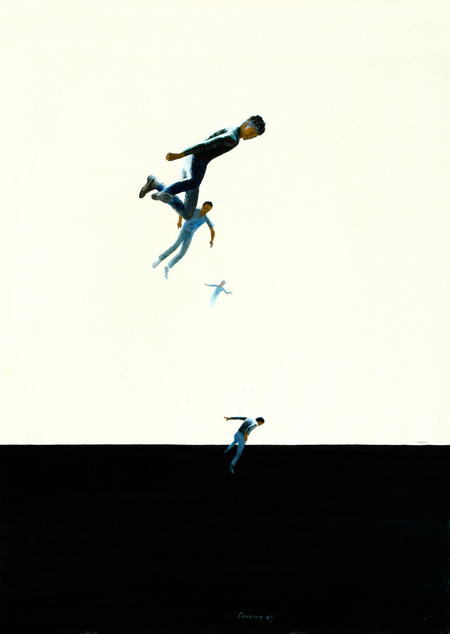

In 1964, following the removal of Nikita Khrushchev from the helm of the nation, Leonid Brezhnev took power. During the first period of his leadership, the eighth, or «Golden,» Five-Year Plan (1966–1970), took place—a period whose successes were linked to economic reforms—but development rates slowed in the 1970s. The final stage of this period (1981–1985) is referred to as the «Era of Pompous Funerals»: Brezhnev died in 1982, and the following two General Secretaries, Yuri Andropov and Konstantin Chernenko, held the post briefly before stepping down due to their deaths. The official designation of this period, the «era of developed socialism,» was replaced by the label «era of stagnation» after Mikhail Gorbachev, the last General Secretary of the CPSU, declared «stagnation phenomena» in society at the 27th Congress of the CPSU in 1986.
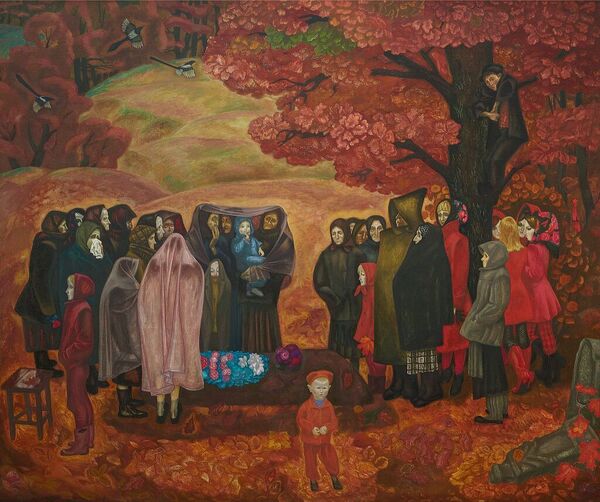
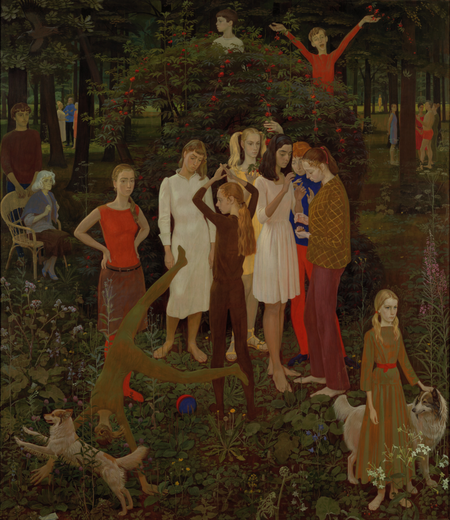
Viktor Popkov | «A Kind Woman Was Granny Anisya» | 1971–1973 | State Tretyakov Gallery [1] | Dmitry Zhilinsky | «Sunday Day» | 1973 | State Tretyakov Gallery [2]
Nevertheless, these decades can be perceived as a period of stability: collective farm members are granted pensions and passports (rural residents were excluded from passportization in the 1930s, thereby depriving them of the registration necessary to move to a city), a minimum wage is introduced, and benefits and allowances are provided; Saturday officially becomes a day off. Housing construction continues, and «Brezhnevka» apartment blocks prove to be more spacious and comfortable than «Khrushchevka» blocks. The problem of commodity shortages is resolved through black marketeers or acquaintances who have access to scarce goods. Relative domestic comfort is juxtaposed with a sense of perpetuity and immutability of the events occurring in the country—a recent optimistic outlook for the future gives way to a feeling of frozen time.
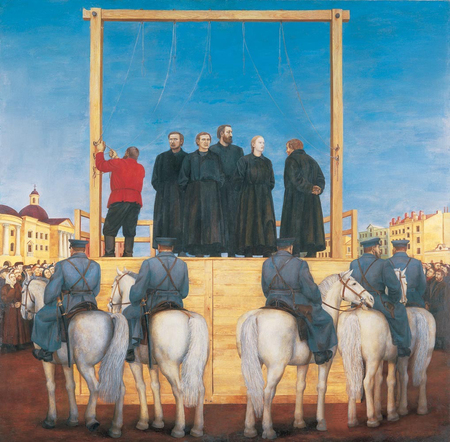
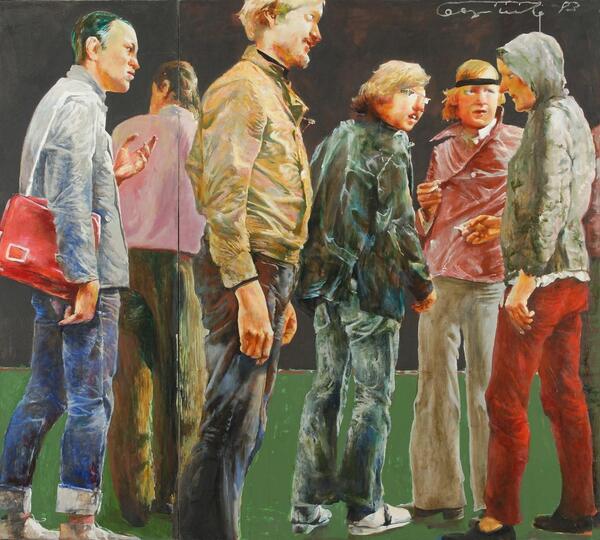
Tatiana Nazarenko | «Execution of Narodnaya Volya Members» | 1969–1972 | State Tretyakov Gallery [3] | Sergei Bazilev | «Once on the Road» | 1983 | State Tretyakov Gallery [4]
The authority continues its fight against dissent. Compared to the Stalinist era of the 1930s–1950s, this period is relatively «vegetarian,» but people are still tried and sentenced to labor camps, stripped of citizenship, deported from the country, or sent for forced psychiatric treatment. In response to this policy, protests and demonstrations emerge—initially rare and small in number, but they ignite the dissident movement. In 1968, a protest against the Soviet troop deployment in Czechoslovakia takes place in Red Square; its participants are arrested, convicted, or sent to psychiatric clinics. Human rights organizations and associations are established, such as the «Initiative Group for the Defense of Human Rights in the USSR» and the «Moscow Helsinki Group.» The emigration of Jews to Israel, which began in 1965, becomes widespread in the 1970s: 250,000 people leave the USSR, including artists, writers, and others. Essentially, the creative intelligentsia faces crucial questions: leave or stay, make certain compromises with the authorities, or create within the underground.
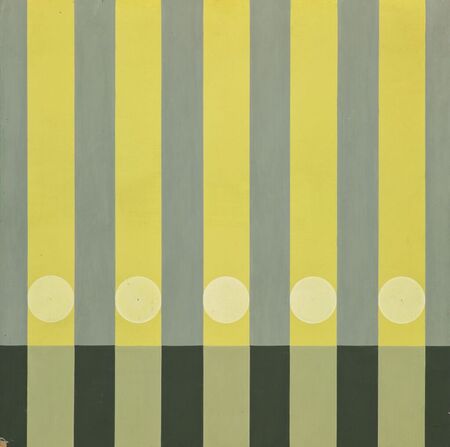
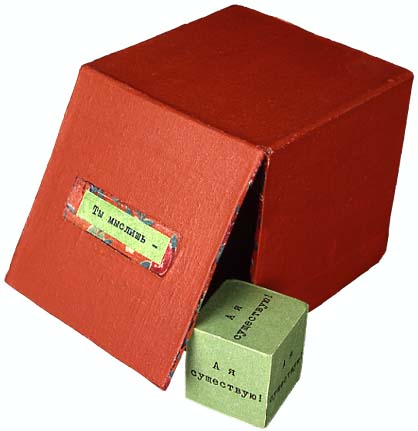
Rimma Zanevskaya | «Abstract Composition» | 1964–1965 | State Tretyakov Gallery [5] | Rimma Zanevskaya | «You Think — I Exist!» | 1975 | State Tretyakov Gallery [6]
In the visual arts, Socialist Realism remained the only official program until the dissolution of the USSR, but its canon, formulated in the 1920s, is becoming diluted, and eclecticism has become the general characteristic of the artistic scene. Artists working in the «Severe Style» continue, but the imagery of pioneers conquering the steppes and the North yields to other themes—the contemplation of military history and the emptying and dying Russian countryside. In the late 1960s, a new generation of artists emerges, associated with the concept of the «Left Moskh.» Their language becomes retrospective: they imbue their work with metaphors and allusions to the canvases of past artists. In the 1970s, Hyperrealism enters the Soviet art scene, in which the imitation of photography using painterly means becomes a way to precisely fix reality, but simultaneously a detachment from it. Retrospection and Hyperrealism become a compromise option—an «approved art"—a way to reconcile creativity with participation in the Soviet professional infrastructure.
Ilya Kabakov | «All About Him» (Answers from the Experimental Group) | 1970–1971 | State Tretyakov Gallery [7]
In the art of nonconformism during the period of stagnation, its main directions were articulated: in 1966, the group «Movement» released the «Manifesto of Russian Kinetics»; in 1972, Vitaly Komar and Alexander Melamid wrote the «Social Art Manifesto, ” and conceptual projects emerged from the painting of Erik Bulatov, the albums and installations of Ilya Kabakov, the visual poetry of Dmitry Prigov, and the objects of Rimma and Valery Gerlovin. Non-objective painting, which had found a new lease on life during the thaw, manifested as post-painterly abstraction in Mikhail Chernyshov and Leonid Borisov—or as Neo-Expressionism in Boris Koshelokhov. Many artists remained outside of organized groups and movements, creating their own programs, such as Mikhail Schwartzman’s hieraticism and Grisha Bruskin’s „Soviet Project.“
Viktor Pivovarov | «Moscow Party» | 1971 | The State Tretyakov Gallery [8]
One of the most crucial developments in 1970s unofficial art was the struggle of artists to gain the opportunity to publicly exhibit their work. In 1974, in Belyevo, Moscow, an unauthorized «First Autumn Outdoor Picture Viewing» took place. Authorities suppressed the event by sending bulldozers, irrigation machines, and dump trucks to the exhibition under the guise of a community cleanup day. Despite its intimate scale, the event gained media attention; the international buzz surrounding the «bulldozer» exhibition prompted the authorities to soften their prohibitive policies toward underground artists.
Vladimir Sychev | First Autumn Outdoor Viewing («Bulldozer» Exhibition) | September 15, 1974 | Collection of Nonconformist Art from the Soviet Union by Norton and Nancy Dodge [9]
In 1974–1975, exhibitions took place in Leningrad at the I.I. Gaz Culture Palace and the «Nevsky» Culture Palace, and in Moscow at the Second Autumn Painting Review in Izmailovo, as well as in the «Beekeeping» and «House of Culture» pavilions at VDNKh. Starting in 1977, works by members of the painting section of the Gorstokom graphic artists' union were exhibited on Malaya Gruzinskaya Street, giving many unofficial artists the opportunity to legitimize their art. The exhibitions generated great excitement—for the first time, viewers had the chance to see such a wide range of «other art, ” including artists from the Lianozovskaya Group or those associated with it (Vladimir Nemukhin, Nikolay Vechtov, Eduard Steinberg, Anatoly Zverev), the „20 Moscow Artists“ group (Sergey Bleze, Petr Belenok, Vitaly Linitsky, Konstantin Khudyakov, and others), and Moscow Conceptualists (Ilya Kabakov, Eric Bulatov, Ivan Chuikov).
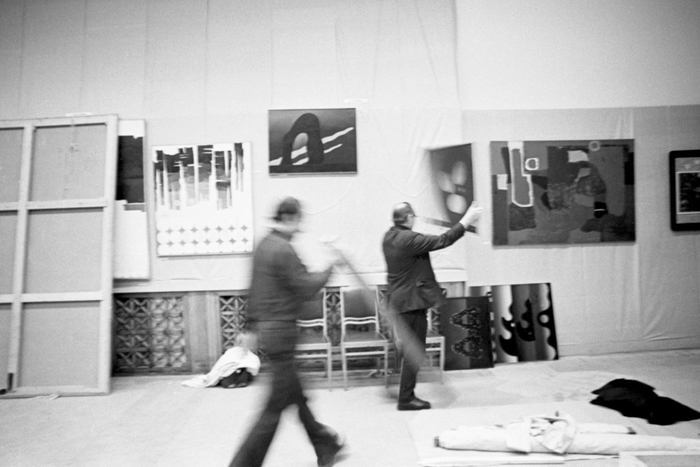
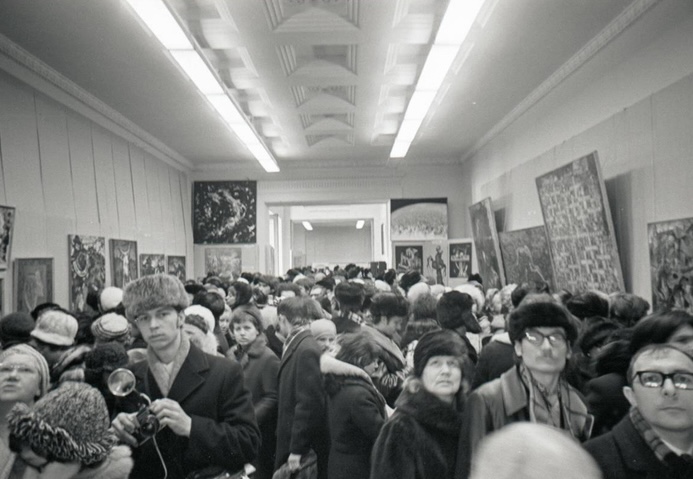
Igor Palmin | Opening [10] and Dismantling [11] of the Painting Exhibition in the «Beekeeping» Pavilion at VDNKh | February 19, 1975 | Museum of Contemporary Art «Garage» Archive
Apartment shows take place in studios and private residences—without official permits—and attendees learn about the venue and time through word-of-mouth. The «Art-Part» movement was born in Moscow in 1982 at Nikita Alekseev’s apartment, while in Leningrad, Timur Novikov took over a communal apartment on Voynova Street and established the «ASSA» gallery there. However, while some artists prefer displaying their work in private spaces, others choose open landscapes and public areas. The «Trips Outside the City» organized by the «Collective Actions» group occur, and the «Mushroom» group hosts the «Metro» event.
Collective Action | «Logos» | 1977 | Photo documentation of the action | Archive of Andrey Monastyrsky [12]
The legacy of the stagnation era continues to be a subject of heated debate: the right of the artist to participate in the state professional system during an era of totalitarianism, the artistic quality, and the question of which artists deserved to be chosen for the future. It can definitively be said that this period revealed a great diversity of strategies for creating and presenting art to the public and presented an interesting option of postmodern culture.
Text Author: Yulia Vorotyntseva
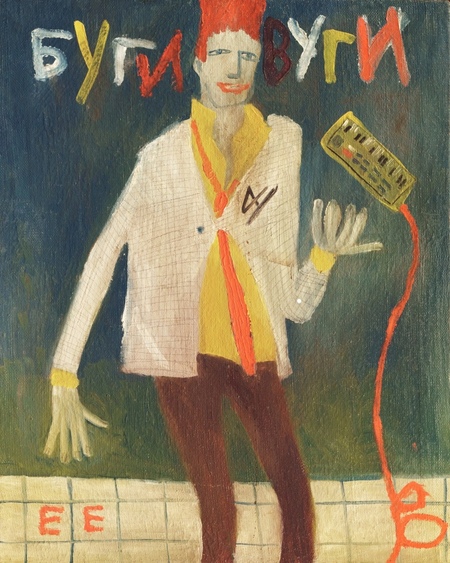
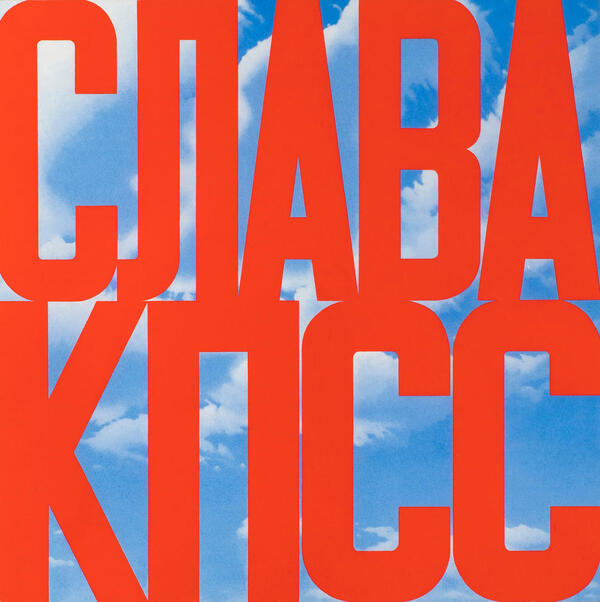
Oleg Kotelnikov | «Boogie-Boogie E-E» | 1985 | MMSI [13] | Eric Bulatov | «Glory to the CPSU» | 1975 [14]
Image Sources
1. My Tretyakov Gallery website [electronic resource]. Access link: https://my.tretyakov.ru/app/masterpiece/136613 (accessed February 11, 2025) 2. My Tretyakov Gallery website [electronic resource]. Access link: https://my.tretyakov.ru/app/masterpiece/8539 (accessed February 11, 2025) 3. Tretyakov Gallery Journal website [electronic resource]. Access link: http://www.tg-m.ru/catalog/picture/9578 (accessed February 11, 2025) 4. Vladey website [electronic resource]. Access link: https://vladey.net/ru/lot/4246 (accessed February 11, 2025) 5. My Tretyakov Gallery website [electronic resource]. Access link: https://my.tretyakov.ru/app/masterpiece/47782 (accessed February 11, 2025) 6. Rimma Gerlovina, Valeriy Gerlovin website [electronic resource]. Access link: http://www.gerlovin.com/writing_visual_poetry3.htm (accessed February 11, 2025) 7. Cultobzor website [electronic resource]. Access link: http://cultobzor.ru/2018/08/ilya-i-emiliya-kabakovy-v-buduschee-vozmut-ne-vseh/ (accessed February 11, 2025) 8. Museum.ru website [electronic resource]. Access link: http://www.museum.ru/alb/image.asp?119872 (accessed February 11, 2025)
9. «Discourse» website [electronic resource]. Access mode: https://discours.io/articles/culture/bulldozer-exhibition (accessed February 11, 2025) 10. «Artguide» website [electronic resource]. Access mode: https://artguide.com/posts/2436 (accessed February 11, 2025) 11. «Artguide» website [electronic resource]. Access mode: https://artguide.com/posts/2436 (accessed February 11, 2025) 12. «Spectate» website [electronic resource]. Access mode: https://spectate.ru/atlas-kd/ (accessed February 11, 2025) 13. «VKontakte» website [electronic resource]. Access mode: https://m.vk.com/wall-93382941_35742 (accessed February 11, 2025) 14. «Vladey» website [electronic resource]. Access mode: https://vladey.net/ru/artwork/9574 (accessed February 11, 2025)
Cover art: Petr Belenok, «Flight,» 1983. «Vladey» website [electronic resource]. Access mode: https://vladey.net/ru/artwork/2297 (date of access 02/11/2025)