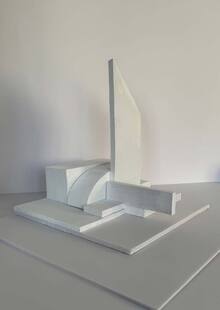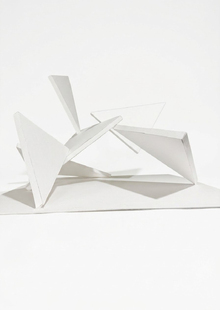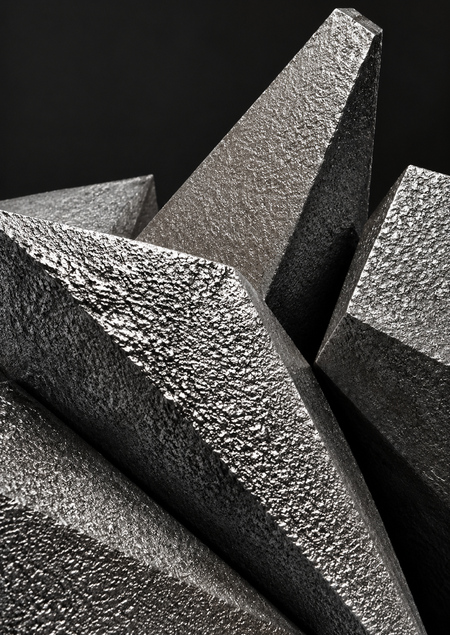
The cube was fine.
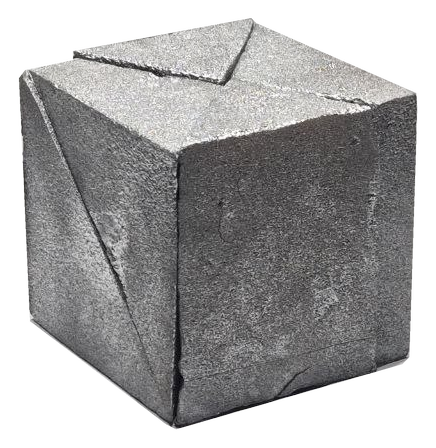
Why deconstruct a form when there’s nothing left to add? I take a cube—a hypothetical architectural unit—and break it down into a series of fragments. A project begins with order, and then it tests whether that order is necessary.
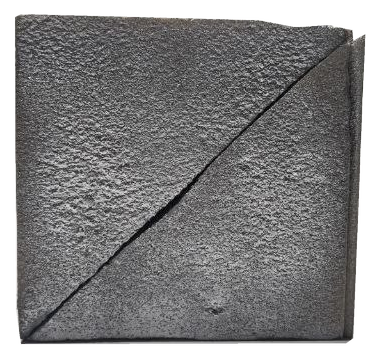
Something about Deconstructivism
The starting point is my analysis of Frank Gehry’s house in Santa Monica: the original volume is preserved, but the added elements violate its unity. I transfer this conflict into the object. Instead of additions, there are now sections, and instead of adding, there is a displacement of existing parts.
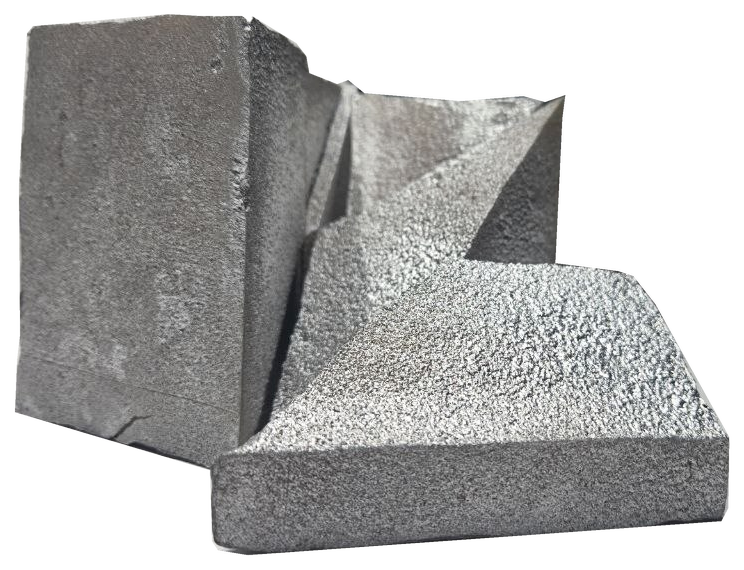
A question with no single correct answer
What does the decomposition of a simple form yield: new expressiveness or complication for the sake of the gesture itself? My working hypothesis is that when the parts of a cube are shifted, the feeling of stability weakens, and attention shifts from the overall shell to the planes and the voids between them. I am testing this by comparing the assembled and deconstructed states.
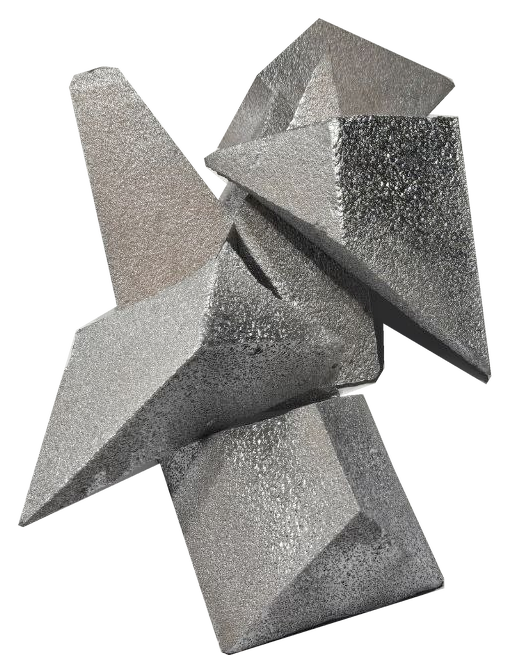
Cube without instructions
The object is structured as a spatial game. Unlike the Rubik’s Cube, reaching a single correct state is not required here. You can assemble the cube, or you can stop at an intermediate composition. The most precise version is not necessarily the most interesting one.
Nothing is broken
The cuts are pre-set. The parts are not brittle—they are moved and rotated. The model allows this to be done manually; in the full-scale realization, the curatorial team changes the composition. The viewer sees a selected state, while the photographs illustrate the transformation.
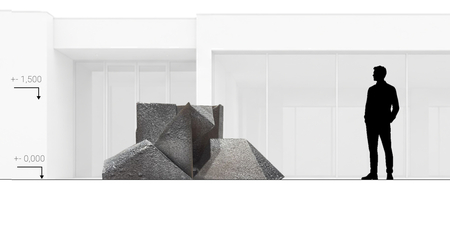
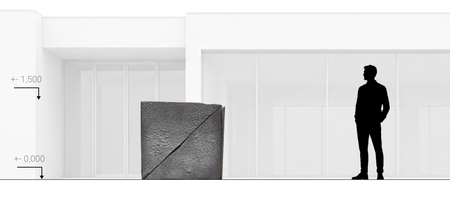
The form made a gesture
The cube does not lose its utilitarian function—it never had one. Its plastic role changes: a closed volume transforms into an open composition. That is how I interpret the deconstructivist approach, while simultaneously posing the question: when does the transformation of form become its own end?