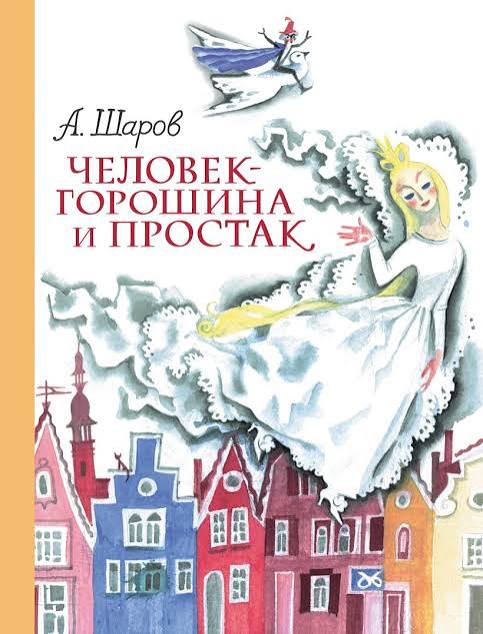
A tale of an orphan boy who, by helping a former blacksmith—now a gnome—rescue a beautiful Princess from the clutches of the villain Turroputo, learns what it means to be free.
Alexander Sharov
«The Pea-Man and the Simpleton»
Illustrations by Nika Goltz
Moscow, Soviet Russia, 1973
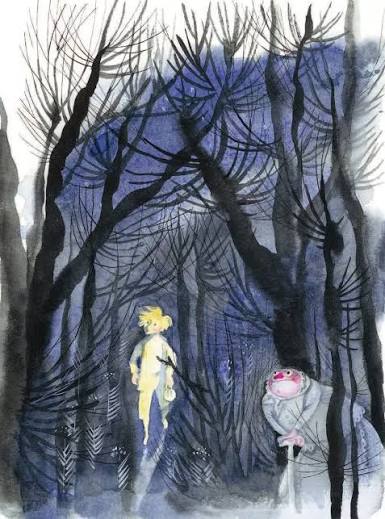
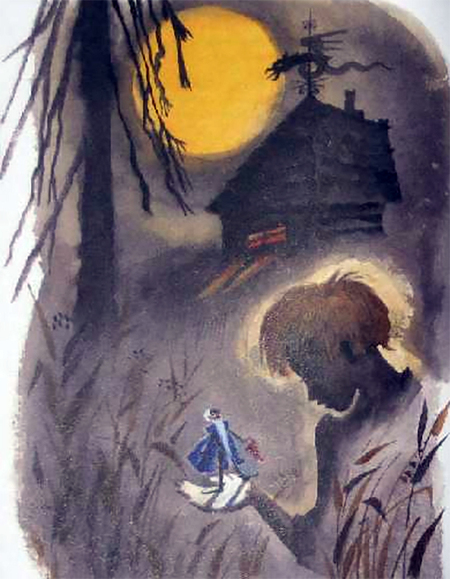
It seems we will have to re-examine our understanding of how and why certain events unfolded during the Soviet era many times over. When I first encountered this fairy tale during my childhood, it fell into the tapestry of ancient myths, literary fables, and adventure novels with absolute naturalness. But when I bought it for my younger son—in a new edition, but with the same illustrations by Niki Goltz—I don’t really understand how it was printed back in 1973.
However, our perspectives at that time are somewhat mythical. On one hand, we perceived the «Soviet system» as something totalitarian and omnipotent, which is largely accurate. On the other hand, we remember the intricate network of anti-Soviet anecdotes—each of which theoretically warranted an arrest—yet they formed the everyday backdrop of life for the Soviet person, not just the intellectual—you could hear them in a store line, and quite loudly. What about the censors in children’s publishing houses! A fairy tale is a fairy tale; it’s harmless—good fights against evil… Furthermore, the book was published not in «Detlite,» but in «Soviet Russia,» a publishing house that specialized in adult literature but had a quota for children’s books, and the reviewers’ attention was occupied with hunting for fleas, not in children’s tales.
Regardless, the book was published—and it remains in the minds of thousands of children who have read it. It was later called a «textbook of freedom for children»… No, of course, it’s not a textbook; it’s a beautiful poetic book into which the son of two people who died during the Great Terror poured in his ideas about how one should live, and most importantly—why.
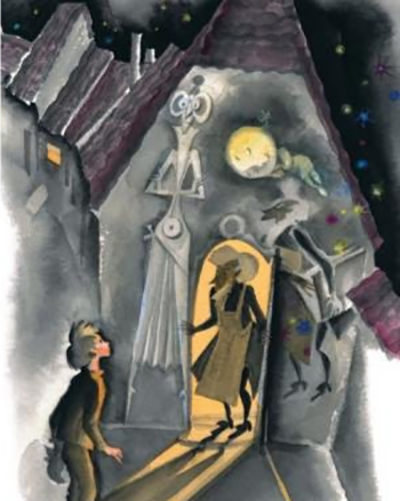
A thirteen-year-old boy steps onto the road leading to the big city. He is an orphan; all he owns is a key, an unextinguished ember, and a copper penny, but these items are, as is fitting, magical. Already on the journey, he begins to notice the unwavering attention of the same creature, which adopts various guises, but due to a series of coincidences (coincidences, as we know, do not exist!) he manages to shake off this attention, and subsequently becomes a student of the master Ganzelius—once a blacksmith and a strongman, but now a gnome—who teaches him, characteristically, how to be a storyteller. This is Ganzelius—the very «pea-person"—and the simpleton, accordingly, is the hero.
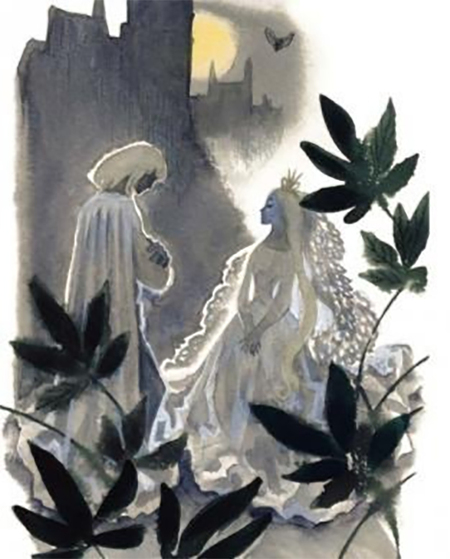
What is important here is that he is taught by the storyteller. And not just arbitrarily—Ganselius is preparing Prostak to fight against the sorcerer Turroputo, but interestingly, not for the sake of «the common good,» but for the happiness of one very specific petrified youth and an eight-hundred-year-old enchanted Princess. What kind of struggle ultimately takes place—and a victory is achieved in it. However—here is another crucial point—this victory is not absolute; Turroputo is not defeated, but merely humiliated and banished; second: the Princess and the Youth benefit from the victory, not Prostak. This also changes things somewhat: a hero not motivated by personal gain is far more interesting. And third: Turroputo has many allies; and even if some of them are just identical cutouts made of paper, others are the wicked and jealous Scissors who cut out these figures, so you can hardly call Prostak’s fight easy.
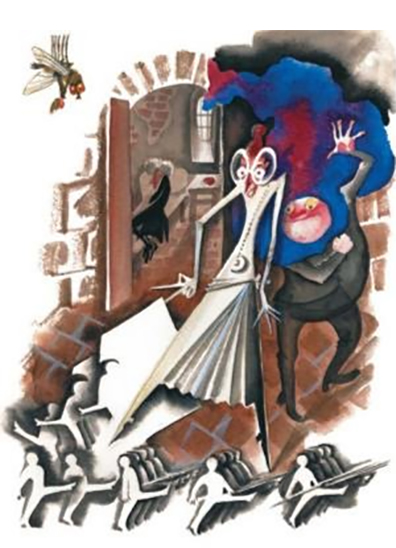
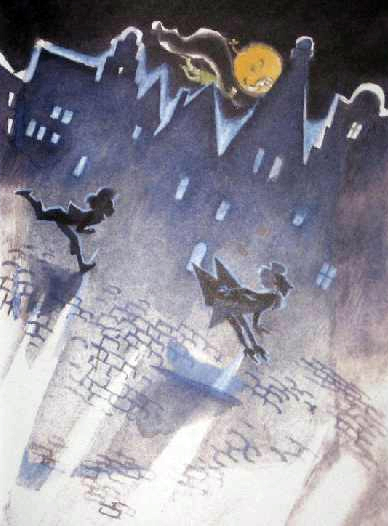
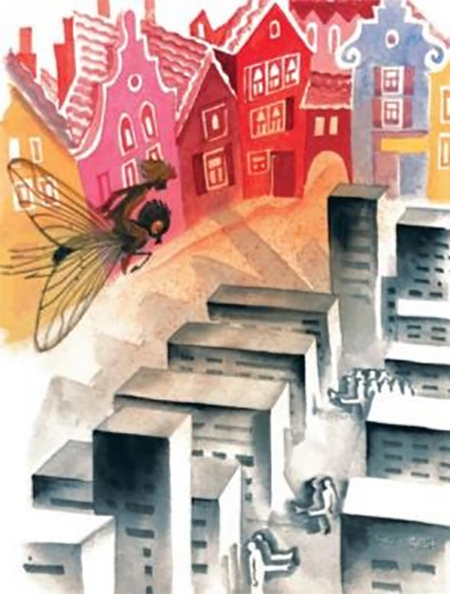
Sharov renders the figures of the heroes with incredible skill using light strokes. In some places they are schematic, in others they are blurred, but the central figures are highly layered and voluminous, including the mounted fly, the apothecary, and Turroputo himself—he is not an abstract evil, but a very concrete, bearded, and red-nosed one.
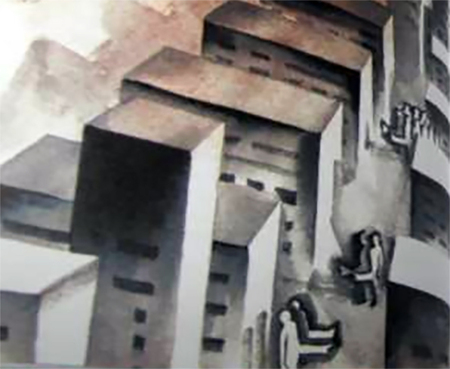
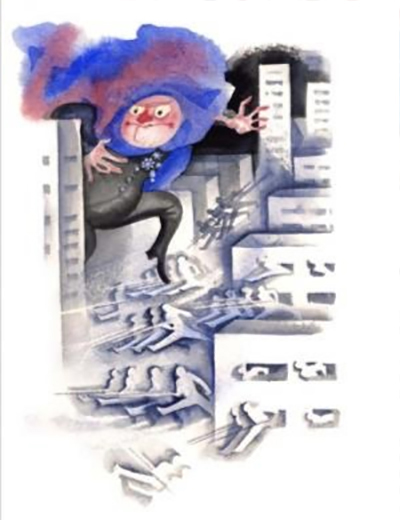
The future belongs to storytellers, I am certain of that. And here we must once again recall why I doubted that the book «The Pea Man and the Rustic» could have been published in 1973—because in the magnificent illustrations by Nina Goltz, Turroputo’s paper army is situated precisely in the Soviet new buildings that were emerging in Belyevo and Chertanovo in the early 1970s, contrasting with the beautiful, colorful world of stylized old European cottages on the cover… «Beware of the identical little people!» master Ganzelius told his student; and where do identical little people live? In identical houses. The censors overlooked it too. But we noticed.
Freedom cannot be taught. Freedom either exists within a person or it does not. Sharov’s books—which include children’s books («The Dandelion Boy and Three Keys, ” „Little Arrow—Conqueror of the Oceans“) and adult works (satirical, science-fiction dystopias like „Pyrrho’s Island“)—were not textbooks on freedom; rather, they helped cultivate it internally. And this internal freedom is more significant than the freedom that is proclaimed or called for. Most importantly—it is not something that needs to be spoken aloud. No one debates the air that is essential for life? It is the same here.