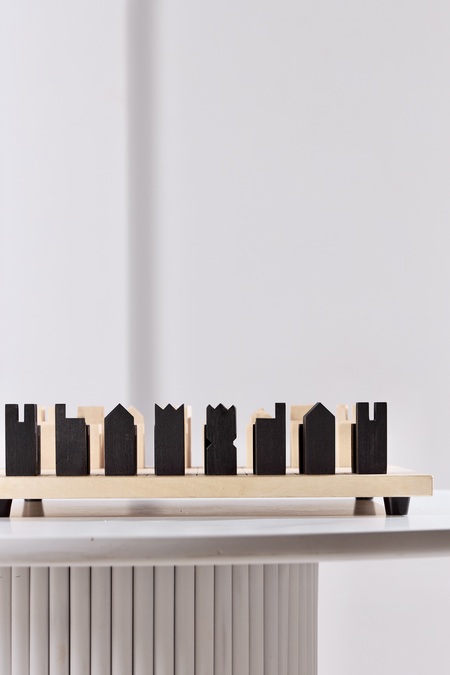
The design of tim: chess 2.0 is inspired by the philosophy and aesthetics of constructivism, in particular by such figures as V. Tatlin, A. Rodchenko and M. Ginzburg.
As they once sought to simplify forms and make them more practical, so we tried to achieve conciseness and functionality in the process of creating the game, highlighting the main things and consciously eliminating unnecessary ones, while trying to maintain the recognizable appearance of the objects.
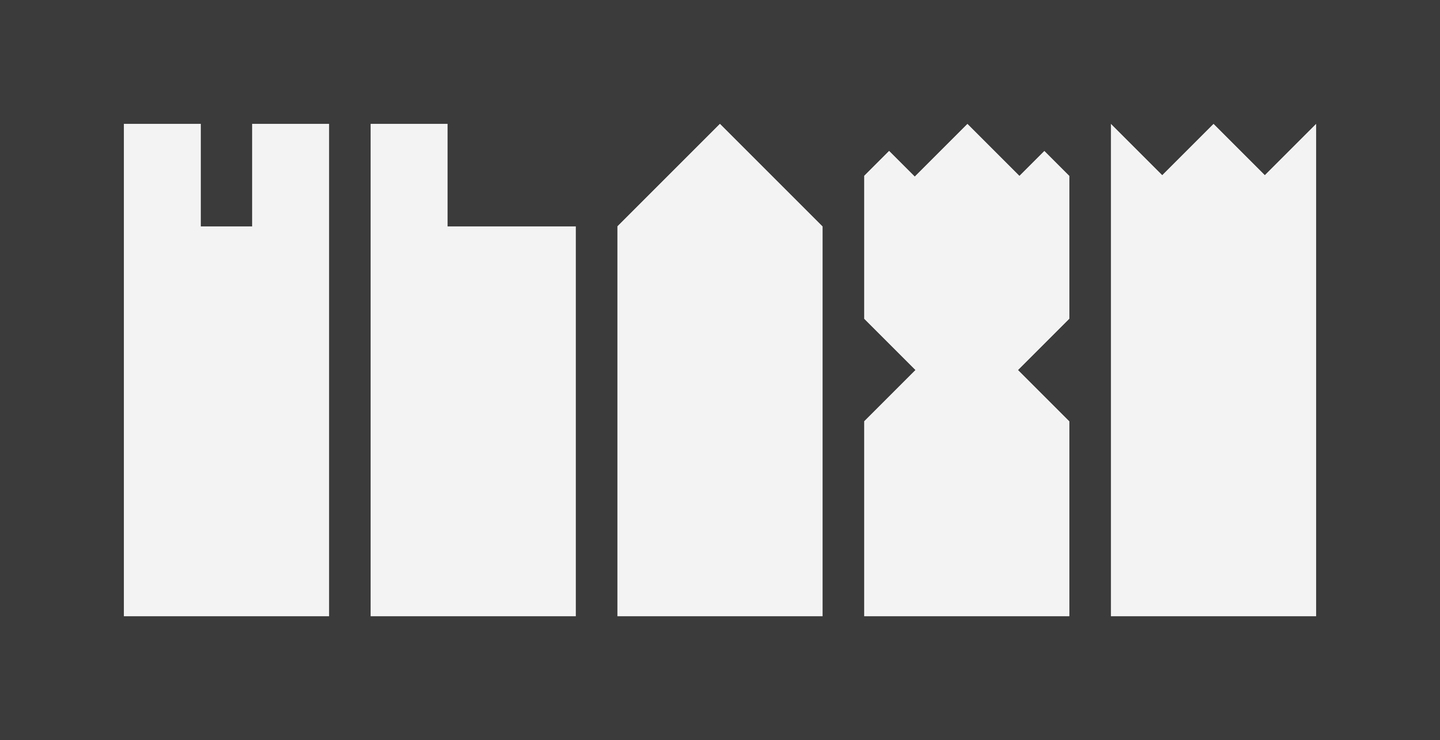
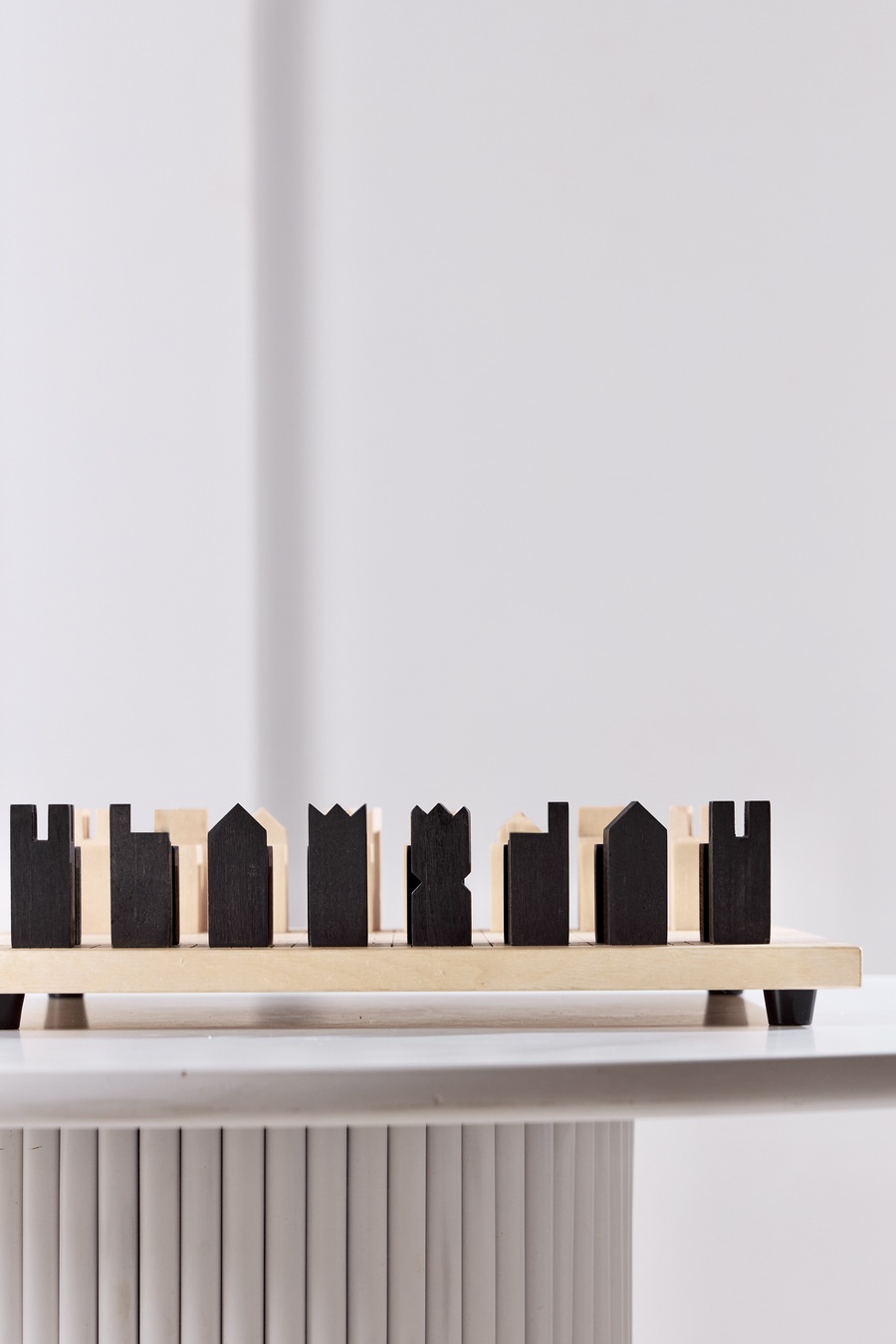
The shape of each piece is dictated by its movement across the board.
The cross-shaped course of the rook is reflected in the location of its towers. A knight with its characteristic L-shaped move has a symbolic configuration. The bishop’s diagonal move is expressed in the level of the upper platform at an angle of 45 degrees. And the ability of the king and queen to move in all directions is represented by the zigzag pattern of their crowns.
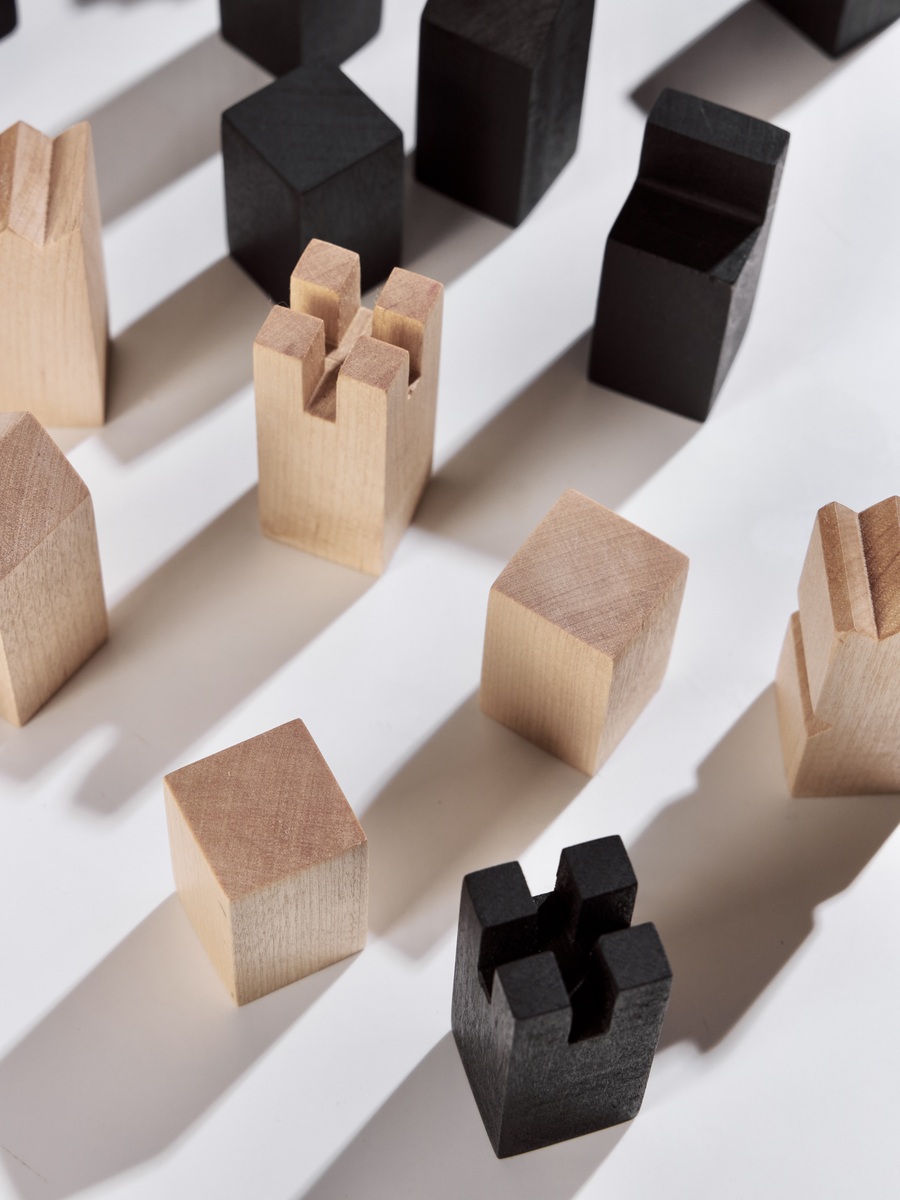
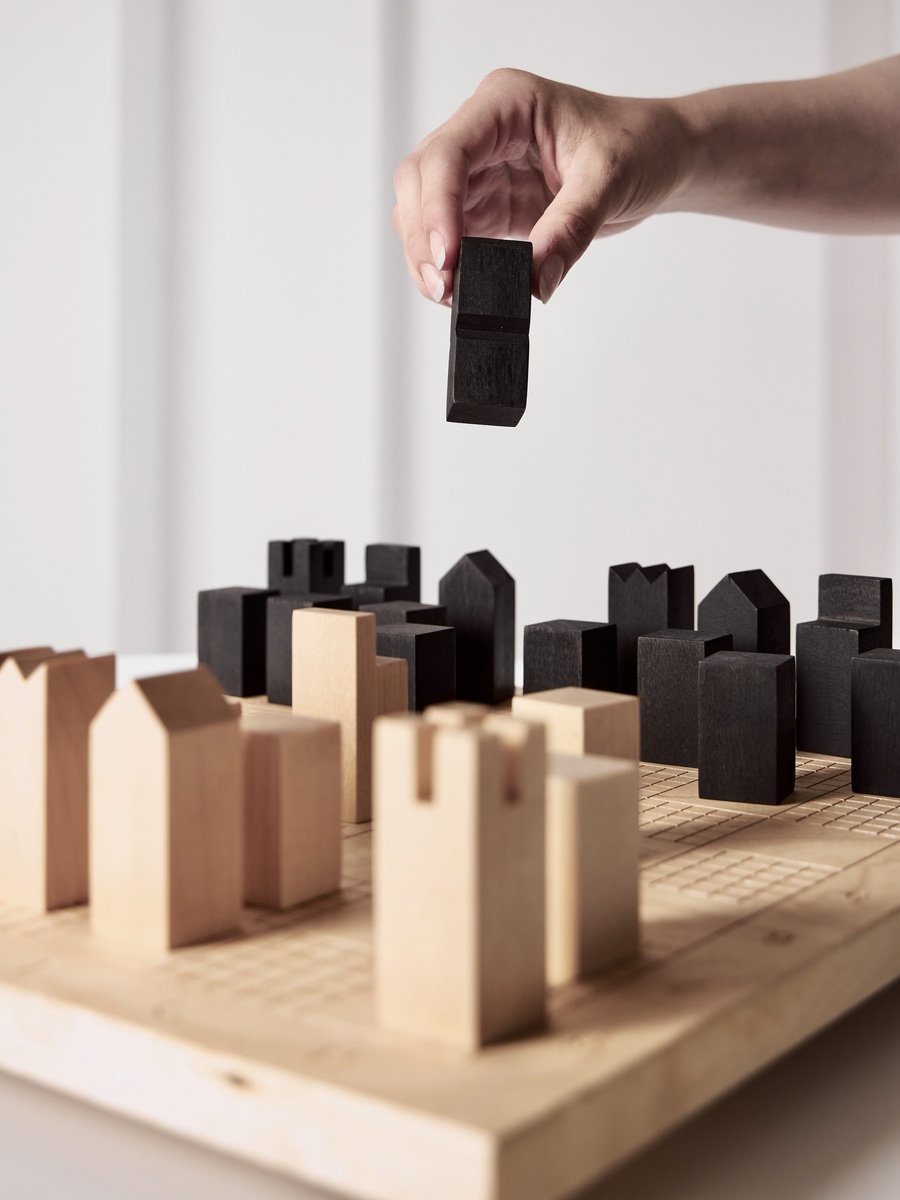
In order to emphasize the minimalist nature of chess and reflect the spirit of Russia, birch was chosen as a material with its poorly expressed texture.
By using bars left over from the production of other products, we reduce waste. We cover them with an eco-friendly, tactile, pleasant, transparent, black matte varnish that has safety protocols and is suitable for use by children.
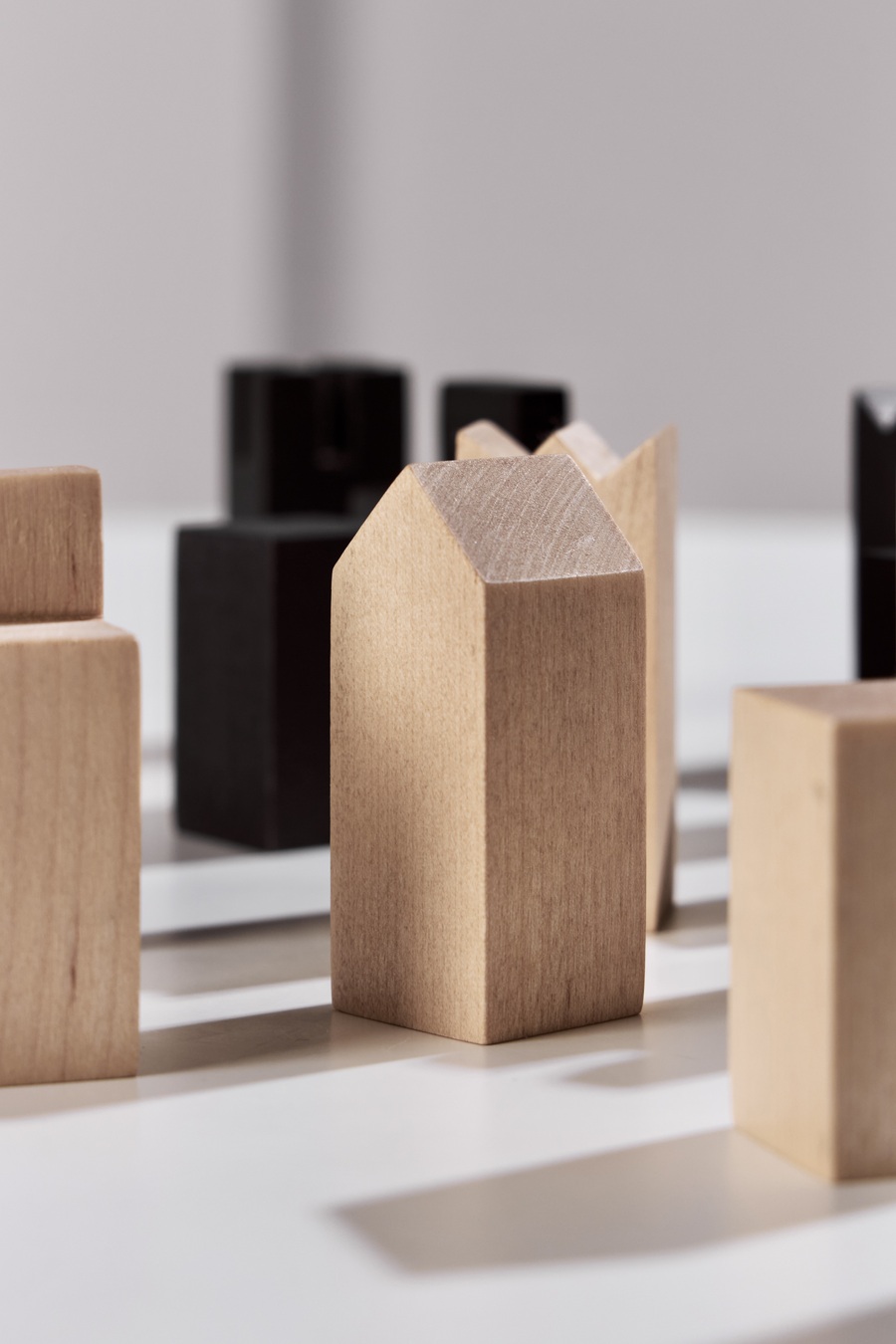
All proportions are verified with architectural precision and are derived based on the key formula for the aspect ratio, both relative to each other and to the lines and diagonals of the chessboard.
The principles of the Golden Ratio can be traced in the ratios of the width of the board’s edge and the cage’s width — 26:42, and the heights of the pawns and board correspond to the Fibonacci Sequence –… 10 16 26 42 …
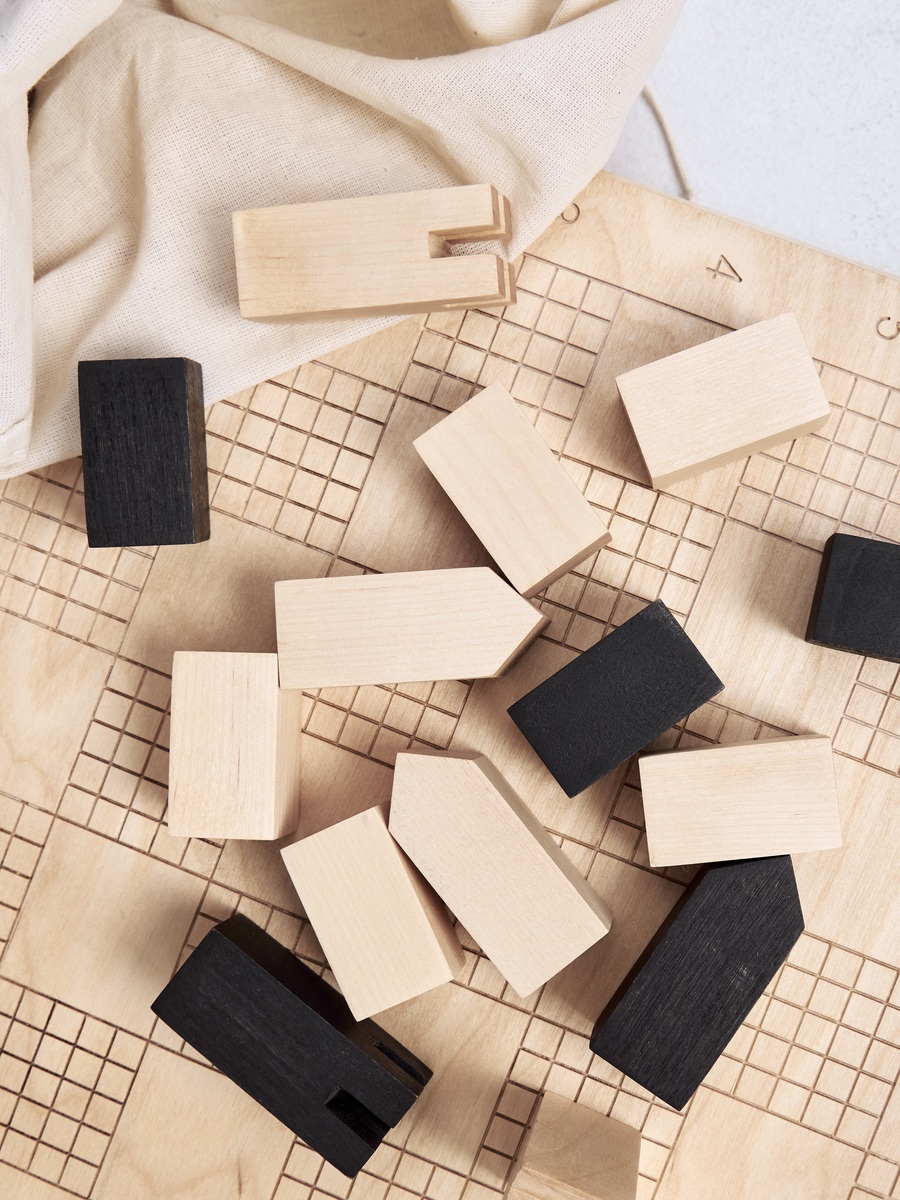
The width of the shapes are calculated so that there is perfect matching along the contours with the lines of smaller cells within the larger ones.
Thanks to the unification of the shapes of the figures, the use of bars with the same height and cross-section as well as angles only 45 degrees and 90, it becomes possible to produce chess in mass with minimal manual labor.
Each figure undergoes several technological operations — cutting bars to required length, milling, bevel, grinding, and coating. Creating the cut edges, milling engraving, grinding, and varnishing is used on the board.
We pay special attention to details and user interaction with chess, from the moment of purchase to use.
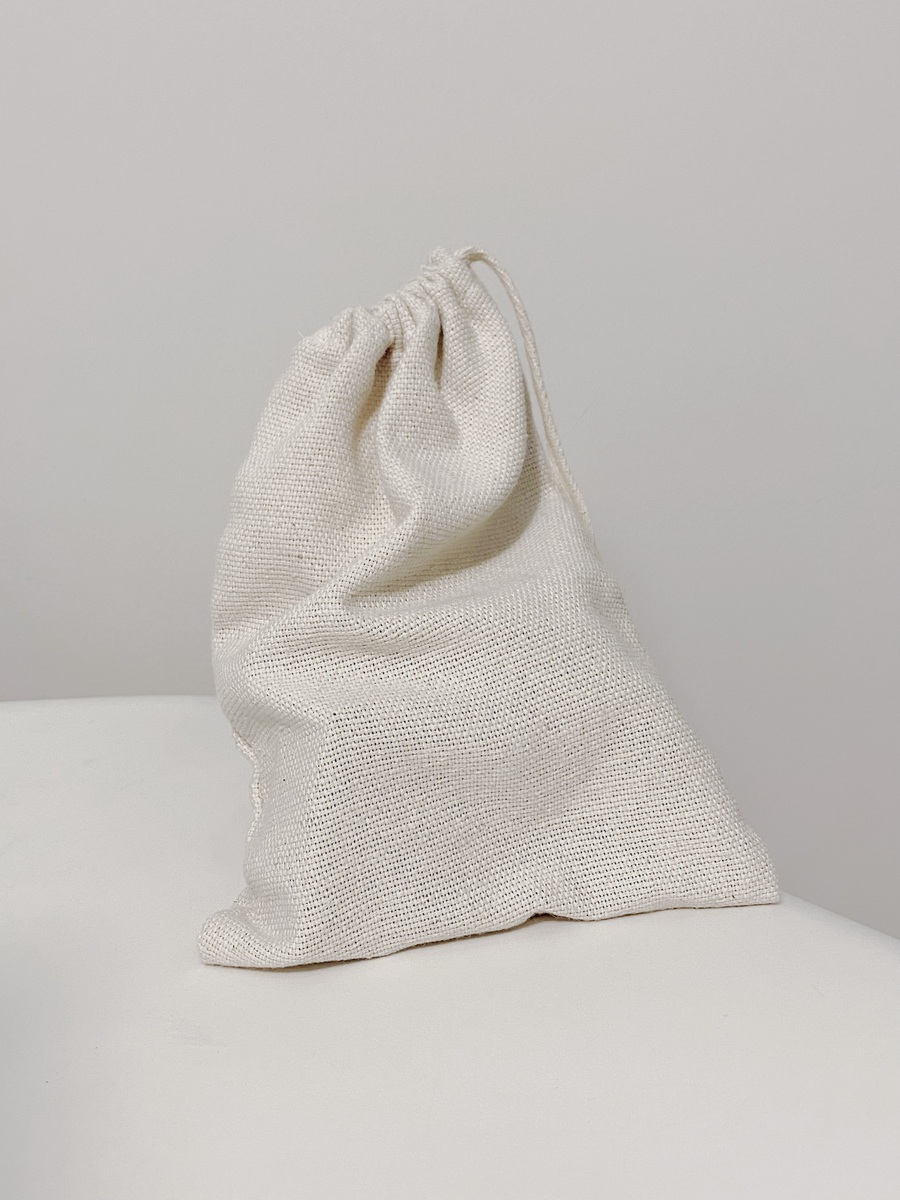
We came up with a naming that refers to our company and the essence of the product. We thought through the packaging — from emotions to tactile sensations. There is a craft box made of thick cardboard, a personalized postcard, bags made from cotton and recycled materials, wrapped in slightly rustling tracing paper, where the pieces are stored, and a bag made from the same fabric with a wide handle for easy transport and storage of the board.
Due to the small weight of the set, which is comparable to that of a laptop, it’s convenient to take it with you in your bag to play both outdoors and anywhere else.
Chess is designed for a wide target audience — from fans of minimalism to lovers of unusual shapes. As well as designers, architects, artists, and just enthusiasts who enjoy strategy games.
tim: chess 2.0 is a story about timeless synthesis of art and industrial design, sustainable approach, and the principle «form follows function».