Concept
From classical still lifes to social media posts—humanity has always loved to capture and showcase what sustains it. After all, food accompanies us daily and everywhere, becoming more than just fuel: it is a marker of status, a performance, a statement, and sometimes a way to cope with anxiety or loneliness. Through a camera lens, food can transform into an art object, a portrait, or an allegory for social and cultural phenomena. Photography has the power to endow food with symbolic weight that it lacks in everyday life.
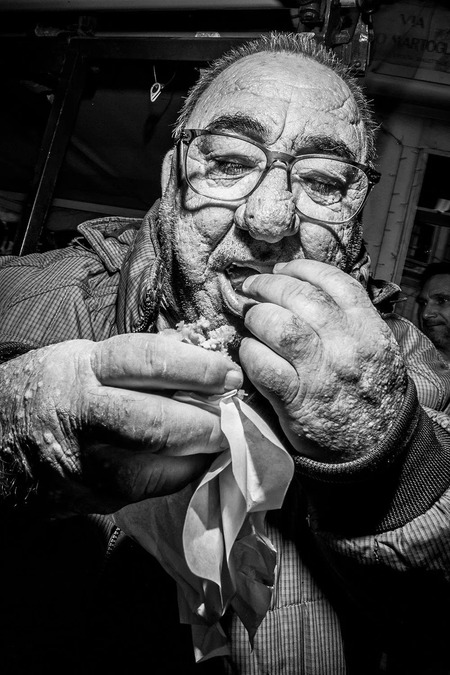
In the contemporary era, the culture of posting food on social media—and the emergence of «food porn"—creates a hyper-aestheticized, yet often hollow, image. Real, living food, along with the messy process of consuming it—with all its disorder, traces, and leftovers—remains off-camera. However, photographs of food are not always a marketing gimmick or a meaningless, flashy image. They can speak less about the food itself and more about the person, the culture, and the time. Through the lens, one can reveal the entire spectrum of relationships between a person and food: from admiration to indifference and oblivion.
The key question is how the function of the food image changes in photography—from an aesthetic object to a commentary on consumption, society, and existential issues—and what techniques photographers use to achieve the desired effect?
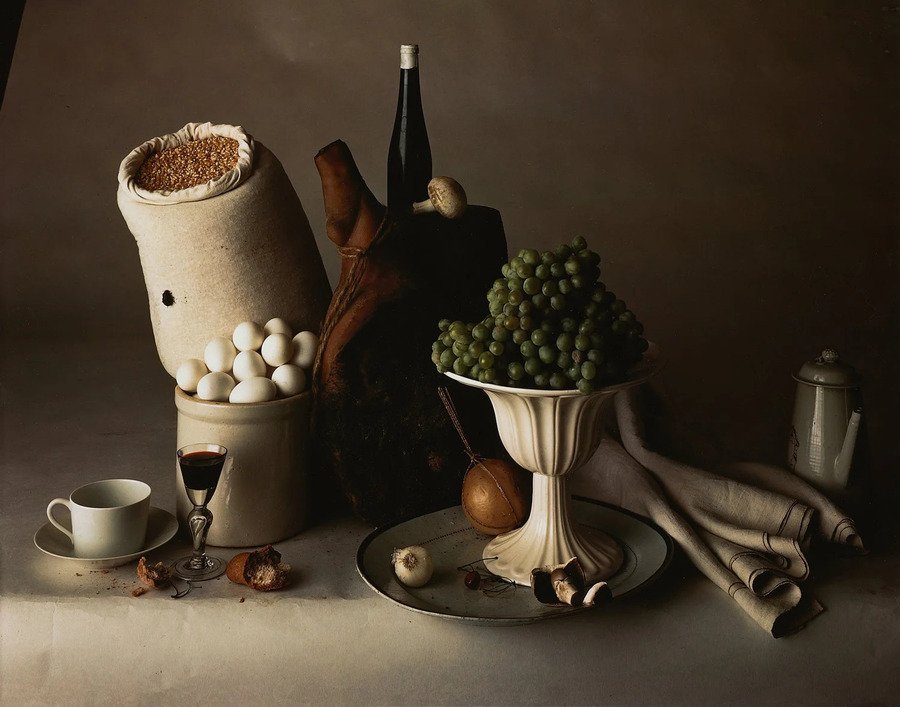
Irving Penn, Still Life with Food, New York, 1947
I hypothesize that there is a hidden narrative of decay within food photography: the closer it gets to modernity and oversaturation of glossy imagery, the more photographers move away from idealization and turn toward «unbeautiful, ” residual food—leftovers, empty refrigerators, traces of a meal—while also shifting the focus to people. After all, the phrase „you are what you eat“ is partly true. Meanwhile, early, aestheticized food photography does not vanish; it coexists with the new, creating a dialogue between ideal and reality.
The principle for material selection was built on contrast: I deliberately sought photographs that either push the visual beauty of food to perfection or, conversely, depict food as something unappetizing, ironic, or even repulsive. Works were selected from the archives of renowned photographers, as well as from documentary projects and contests that capture the social reality of the present and the past.
The research is structured around the role of food in photographers' work—from representing its external perfection to investigating its social context and ultimately deconstructing the subject. In each section, I analyze the visual techniques photographers employ and the emotion they aim to evoke in the viewer, exploring what they are telling and why.
When selecting textual sources, I drew upon theoretical articles regarding food photography and its social role, as well as catalogs and competition reviews to gauge the contemporary state of the genre. I also incorporated interviews and commentary from the photographers themselves about their series to grasp the authorial intention.
Categories
a. The Object of Aesthetics b. Reflection of Society c. Reflection of the Individual d. Leftovers e. Conclusion
a. Object of Aesthetics
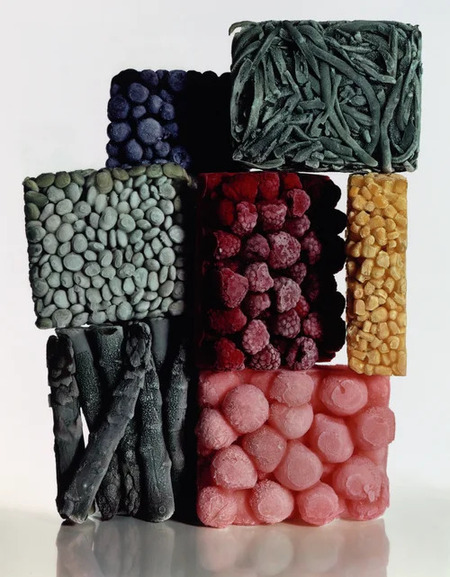
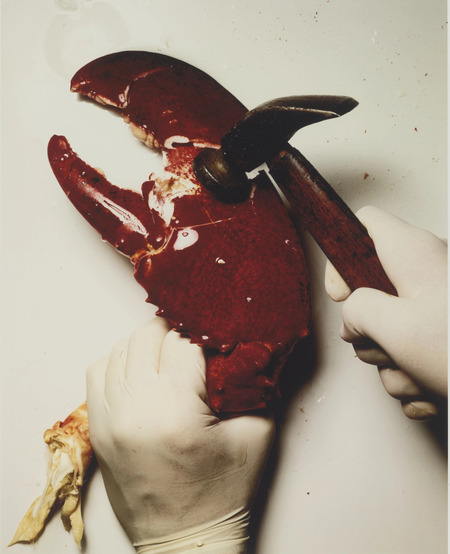
Left: Irving Penn, Frozen Foods, New York, 1977; Right: Irving Penn, Lobster Claw Fracture, New York, 1999
Irving Penn, Ikra, New York, 2001
In the pursuit of aesthetic appeal in food, photographers refer to classic still lifes, where beauty is born from a harmonious composition, visual freshness, purity, and the attractiveness of the ingredients—as well as their combination. Early food photography sought to prove its «artistry» by imitating painting. In the frame, it appears as a perfect form, outside of time, context, and human influence.
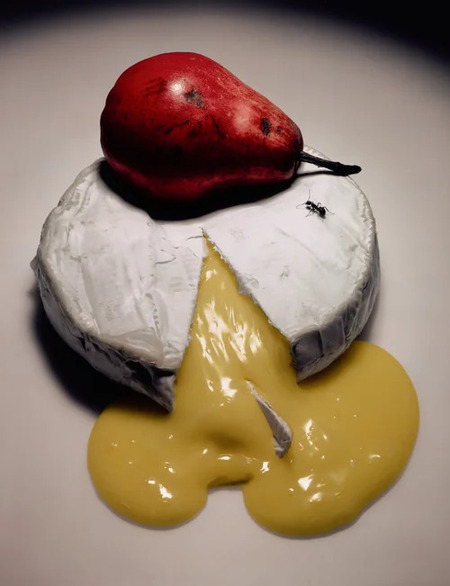
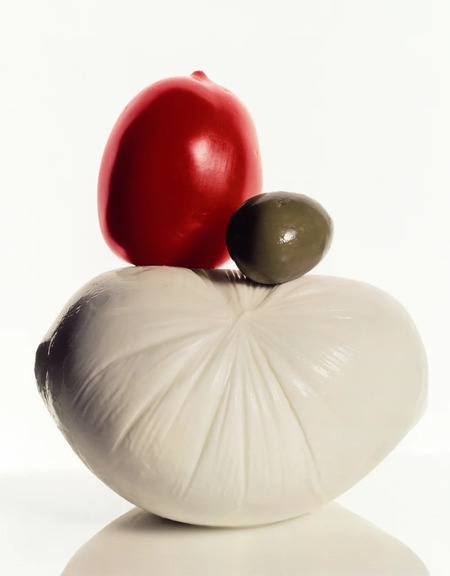
Left: Irving Penn, Still Life with Food, New York, 1981; Right: Irving Penn, Still Life with Food, New York, 1992
Edward Weston, Cabbage Leaf, 1931
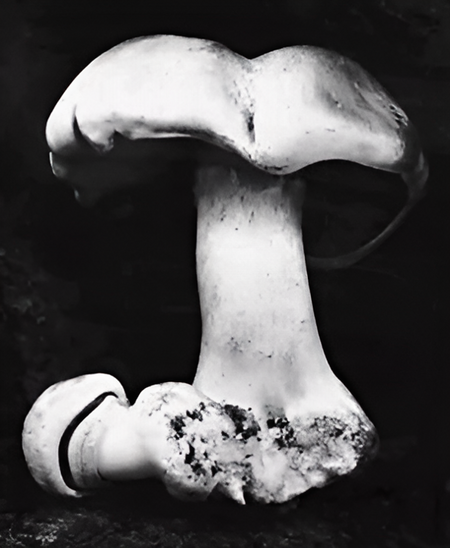
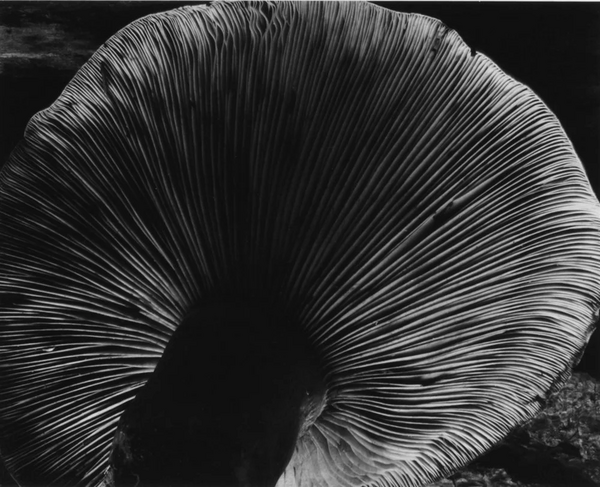
Left: Edward Weston, Podocarpus, 1930s; Right: Edward Weston, Mushroom from Below, 1930s
The focus is often placed on the distinct properties of food objects—whether it is the form or texture, the physicality of the object, and the interplay of light and shadow on its curves, as seen in Irving Penn’s work, or the color palette and vibrancy of the food, as exemplified by Sophie Calle, who aestheticizes food through a strict monochrome concept. Food serves as a tool for formal analysis, where the biological essence of the object yields to its geometry and plasticity.
Sophie Calle, Chromatic Diet, 1997
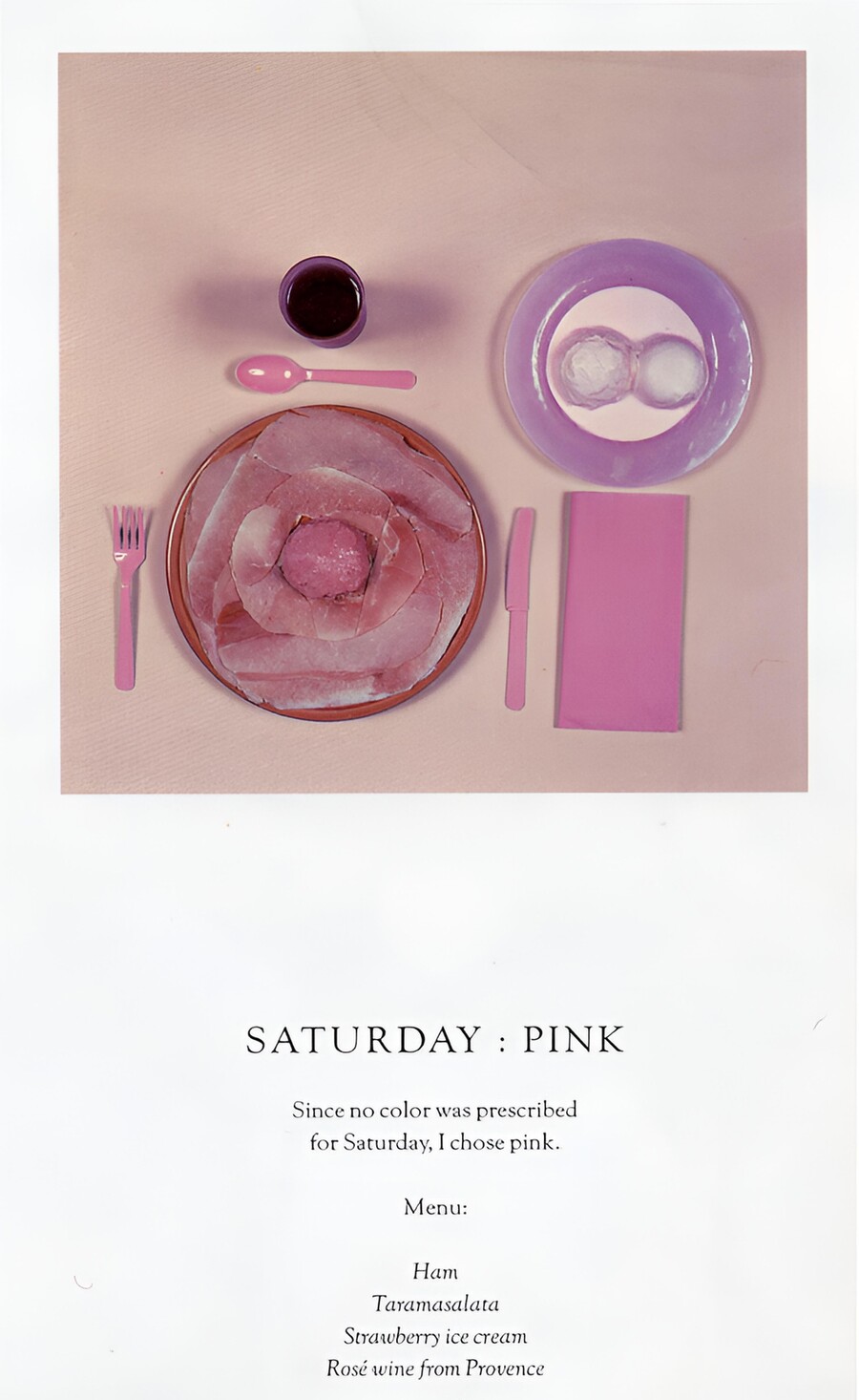
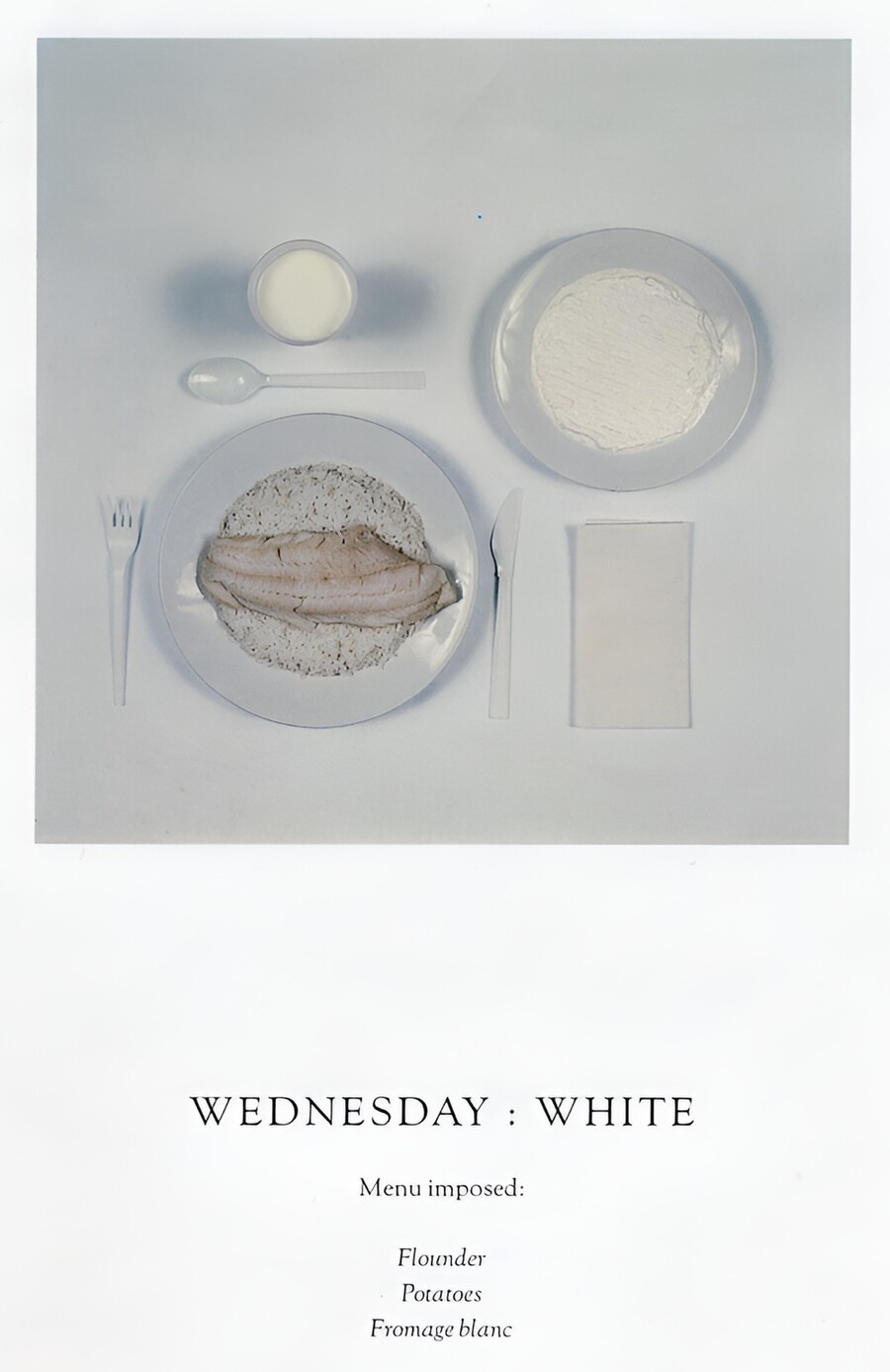
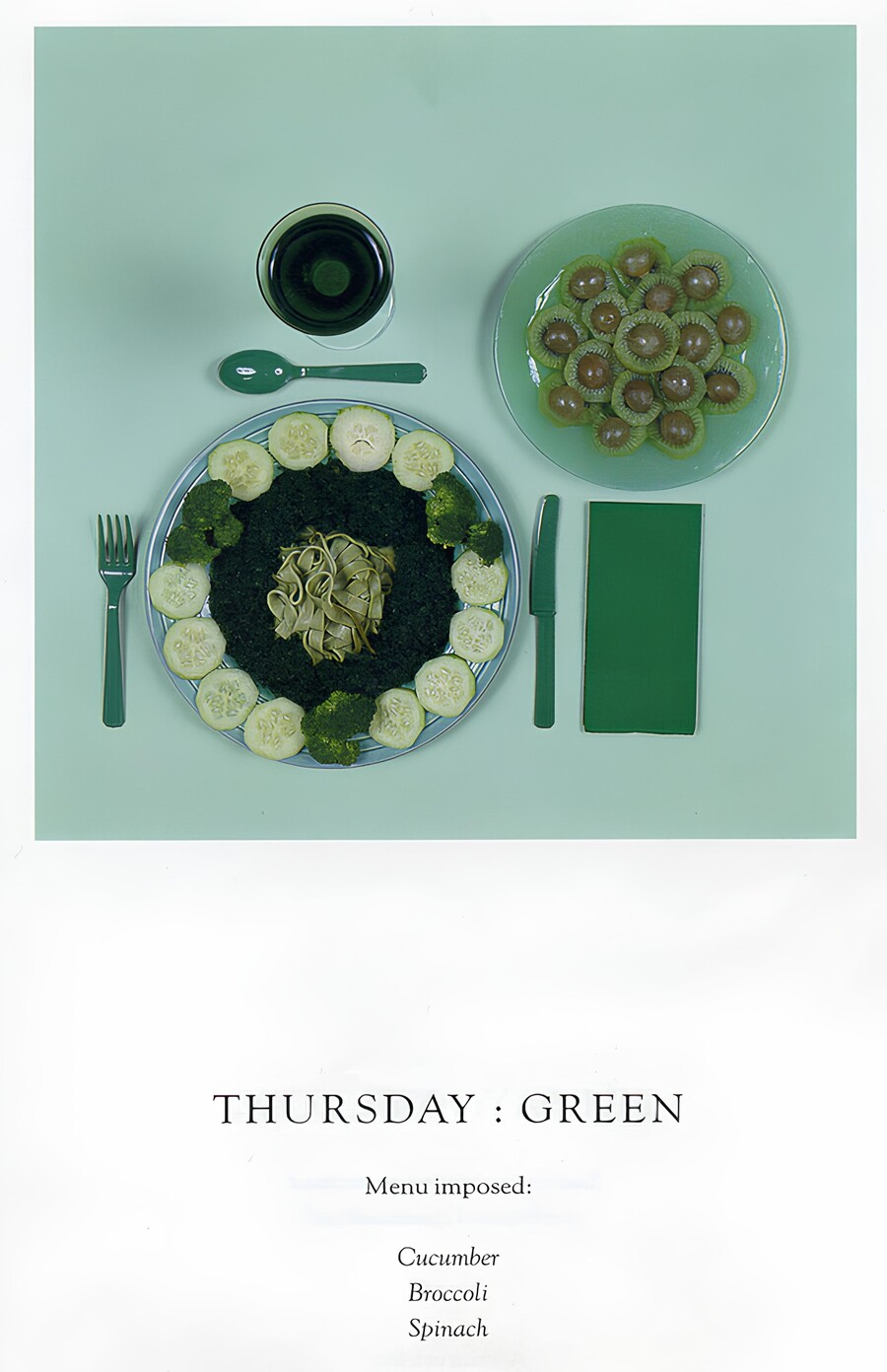
Sophie Calle, Chromatic Diet: Wednesday, Thursday, Saturday (in that order), 1997
Ralph Steiner, Scrambled Eggs with Ham, 1929
Naturally, photographers expertly use appetizing food, arranging it into a work of art. Here, the visual appeal of the objects—formed by shape, color, and brightness—combines in the viewer’s mind with the desire to immediately eat and taste the dish.
Neil Slavin, Sausages in Parade Formation, 1978
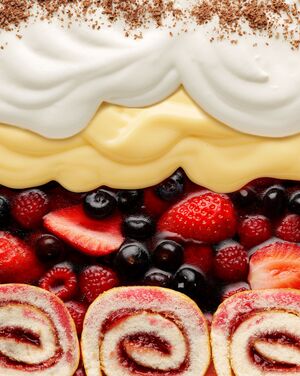
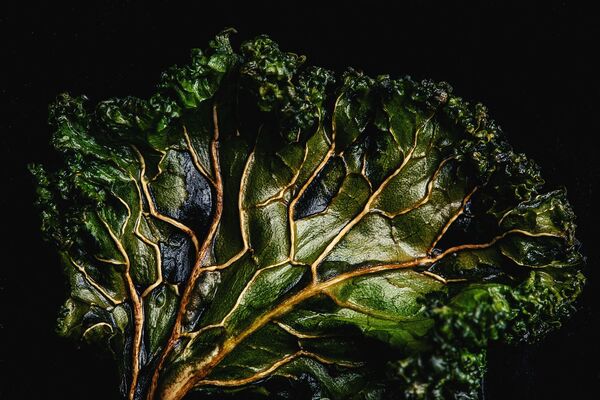
Works of «World Food Photography Awards» finalists: Left: Hillary Moore, Great British Trifle; Right: Simon Detraz, Crispy Cabbage
Modern commercial food photographers and stylists are also borrowing techniques from painting and the pioneers of photography. However, achieving classical still-life harmony is often difficult: the ingredients in the shots end up competing for attention. They are no longer trivial—not just a simple vegetable or fruit—but a complex gathering of refined components that are sometimes over-emphasized and heavily treated. They look somewhat artificial, even if they are aesthetically pleasing—the food begins to border on simulation.
Finalist Work from the «World Food Photography Awards» Ben Cole, Sticky Taste
b. Reflection of Society
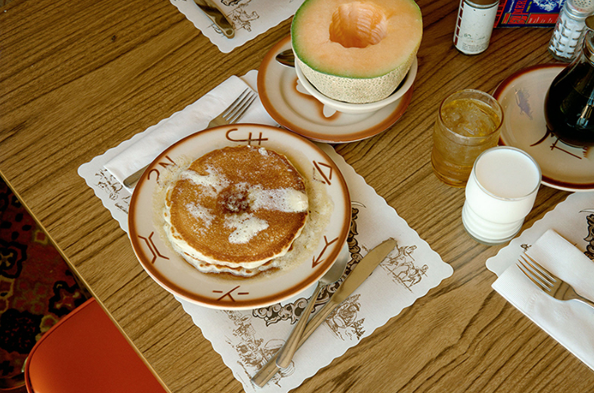
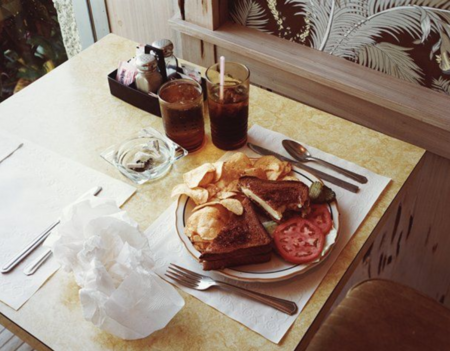
Left: Stephen Shore, breakfast at Trail’s End Restaurant, Canaan, Utah, 1973 Right: Stephen Shore, Motel «Palm Beach Heart,» Palm Beach, Florida, 1977
The food in the photograph becomes a mirror of the social structure. This is particularly evident in documentary series capturing the culture of fast-food chains and classic American diners. Quick snacks on the go, plastic plates, and paper cups—these are the consequences of a post-industrial consumer society, where leisurely and thoughtful savoring of a dish is impossible.
Stefan Shor, Untitled