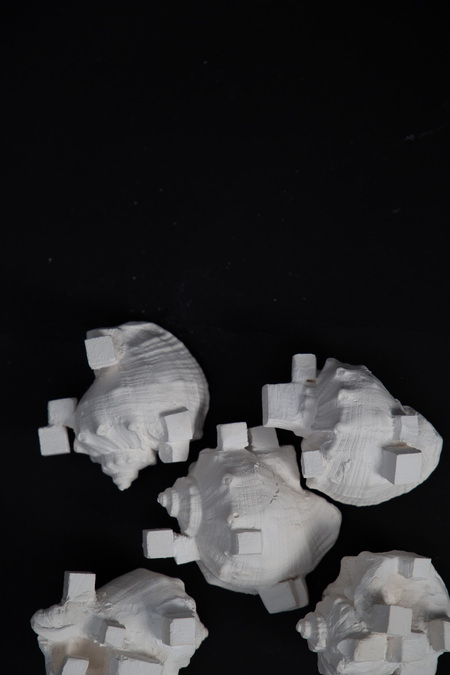
If you put two sinks together—a human one and a marine one—the sound of the «sea» appears. Humans often need to feel connected to something larger; an embodiment of an element like the ocean is one possibility. There is a phantom sensation that the shells no longer hold the sea, but rather television static—an analogy for the silence before a brewing storm. Alternatively, perhaps everything has already happened, and these are the sounds of a post-apocalypse. It is difficult to understand and process a catastrophe you have never witnessed; the pain is dull and unspoken, because one cannot openly mourn even something yet unlived.
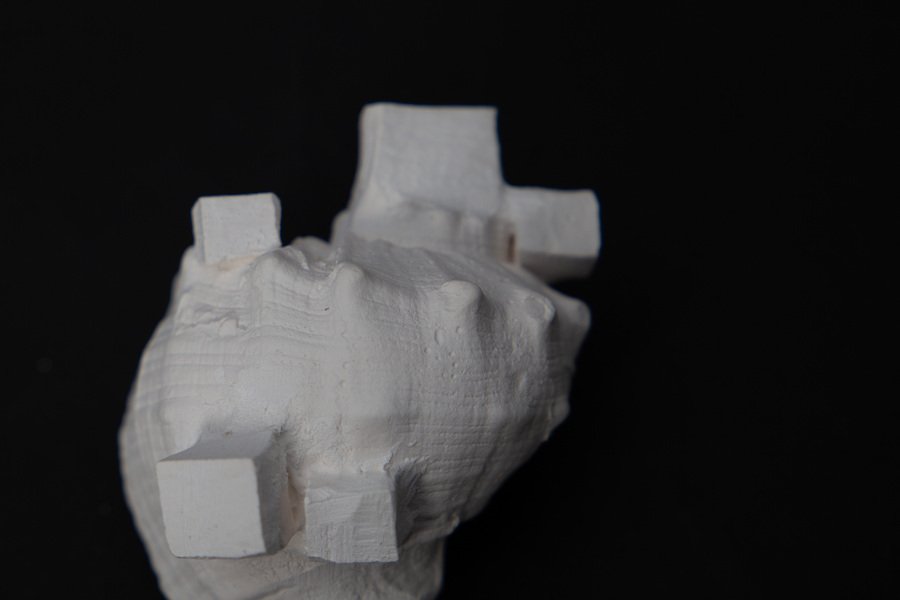
During the storm, shells shatter against the shore indiscriminately; the wave reaches almost everyone. Your head is filled with a bothersome noise, as if the shells are always with you, striking not your shell, but your ear canals. They cling to the walls, turning the dwelling into a shell-mottled seaside cottage, forcefully imposing an alien context. There can be no sea within broken shells—they convey a distorted sound. In the apocalypse, there can be no sea; it is composed of the remnants of human existence.
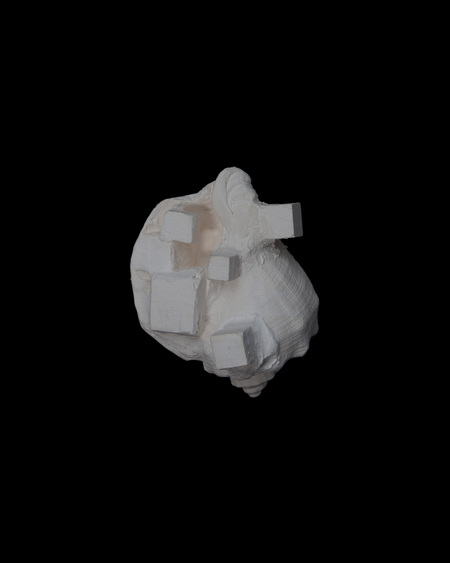
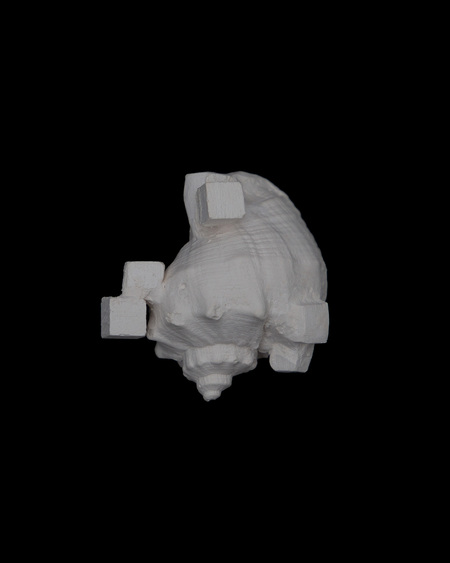
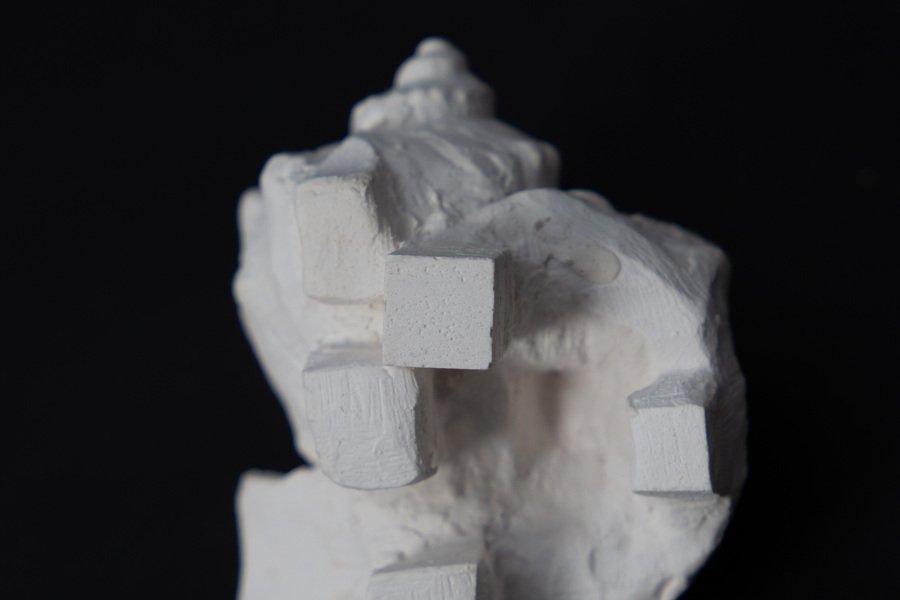
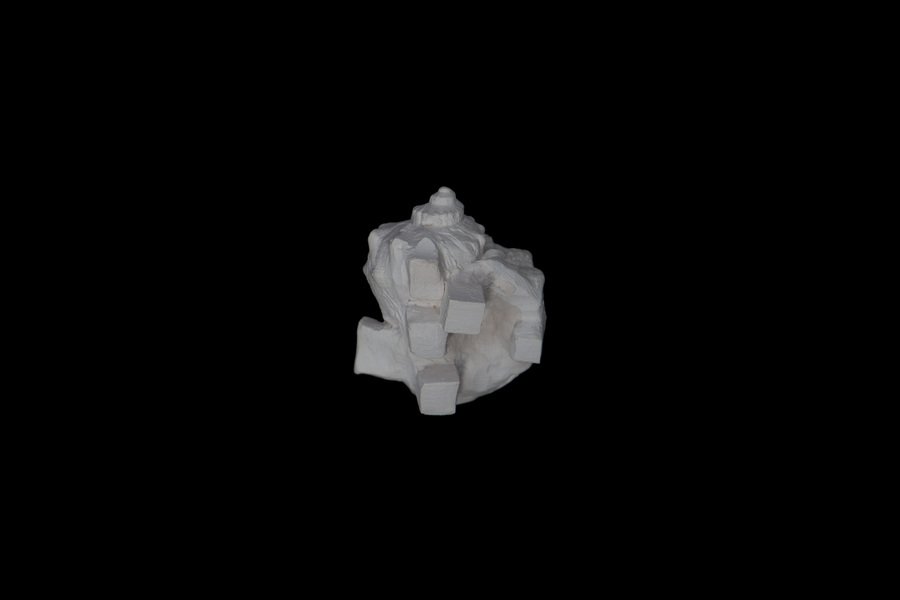
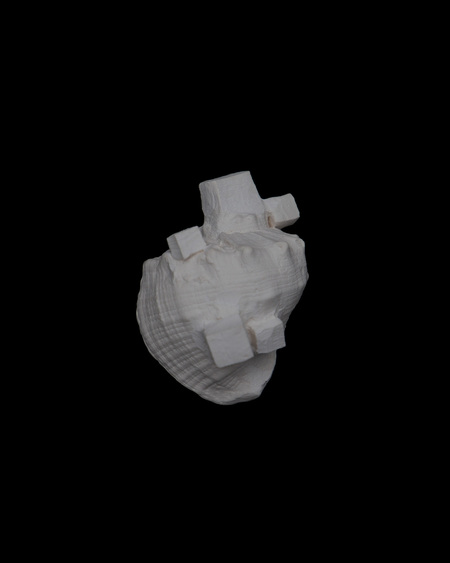
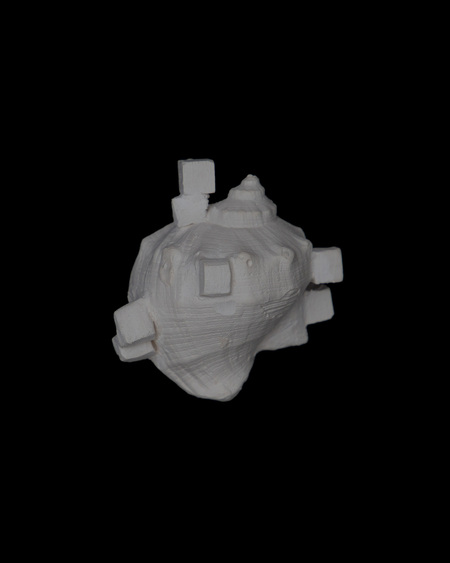
«Broken Shells» Series; plaster, wire; 7 × 9 cm; 2026