We’ve all bought a book «to match the interior design» at least once. Confess! But have you ever wondered who decides what it will look like and how? We spoke with Evgeny Korneev, a designer and instructor at the HSE Art and Design School, and uncovered some of the most fascinating insights into the world of books.
Will the physical book disappear because of electronic formats?
Korneev believes that physical books will not die, just as the theater has not. It is simply that the audience will become more reflective. He himself, incidentally, is not a fan of e-books and even canceled a course on web-longreads in his Master’s program—the students weren’t interested.
Sometimes, it is the design that makes a book a bestseller. According to the expert, about 30% of Ad Marginem’s sales is due to the visuals. The reverse is also true: brilliant text can fail because of an unattractive cover.
The path from concept to mockup is fraught with compromises. The client may dictate their terms (including gold foiling on a Hemingway volume, which the professional considers a sign of bad taste), while in other cases, they may entrust the designer completely, even if that designer is a novice.
Do you use AI in your work?
I haven’t matured past this point yet. I should probably focus on this, but I’m not sure where to start. Sometimes I polish texts using AI—for student work, exhibits, and publishing proposals. After I write the text, I ask the AI to check for errors. That’s where my interaction with the AI ends.
It would be fascinating to create an AI program that accounts for all the nuances of book design. For example, giving the AI the task of designing a tool that generates a book based on how it will reach the reader: whether it will be gifted, whether it will gather dust on shelves, whether it will be purchased through a marketplace, or whether it will be passed from hand to hand. A user sits down with a new book, runs the source data through the program, and receives an optimal solution, after which they can develop their own creative ideas while considering these parameters.
It’s possible that AI will eventually replace designers—that development scenario is quite realistic. However, we constantly face new challenges and find solutions for various situations. In that case, I think truly idiosyncratic, unconventional ideas—the kind only a human can conceive—will be valued.
What is the exhibition «The Art of the Book: From Sign to Media» about?
Colleagues from the HSE Art and Design School devised the exhibition concept, «The Art of the Book: From Sign to Media.» They decided to examine complexity through simplification—by dissection. I found the project incredibly engaging to work on. While I haven’t seen the exhibition yet, I plan to study it in detail soon. The project is dedicated to contemporary design and new principles of visual communication. It explores the book as an integrated visual structure, where typography, composition, the sequence of spreads, and material characteristics shape its identity.The exhibition features projects by current students and alumni of the HSE Art and Design School. It introduces visitors to the fundamental elements of the book: «Sign, ” „Strip, ” „Spread, ” „Block, ” „Object, ” and „Media.“
Do you remember your students and stay connected with them after they graduate?
I recently graduated another wonderful cohort. This was the fifth class. It’s surprising how little room there is for a universal approach. Because every group of students who comes into the course brings their own unique identity. They are a distinct ensemble of individuals. Sometimes, a group includes people with wide variations in skill level, taste, or cultural background.
Overall, every cohort was interesting in its own way, but the last group was particularly close in terms of development. They became a cohesive community, and it was harder for me to say goodbye to them. I hope we won’t lose touch and will continue to work together to preserve and advance the profession.
The full interview can be read on the «Tsekh» website.
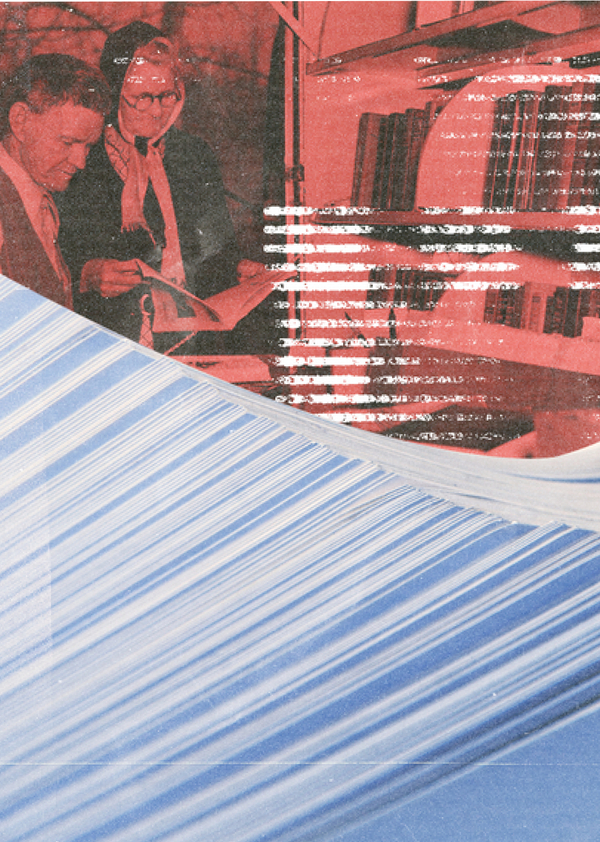
Cover: collage «The Workshop.» Photo: © Sooa, Everett Collection, ArtMari / Shutterstock / Fotodom