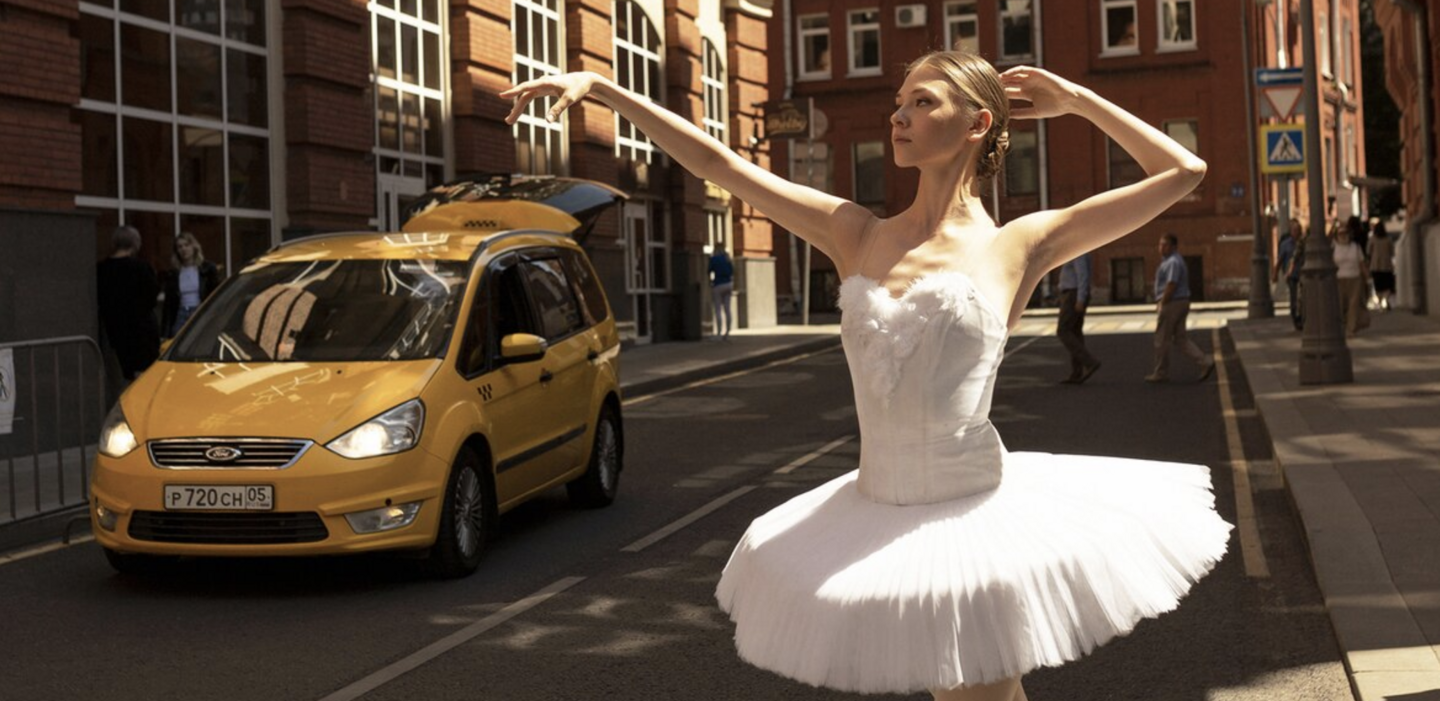
Балет на тротуаре
Медиа о хореографии городского хаоса
«Ballet on the Pavement» is a media exploration of how to integrate into the city’s dynamic rhythm.
We approach urban chaos not as a problem to endure, but as a dance to participate in. Our project is for those who walk the same streets daily, sit in traffic jams, struggle for breath on the subway, and feel that the city takes more than it gives. We are not criticizing the city, nor are we delivering dry urban planning lectures. We are providing language, rhythm, and navigation. We help you discern the choreography in the morning rush, hear the district’s score, and find your part in the collective movement. Here, you will learn not just how to survive in the city, but how to move through it consciously and beautifully.
The Goal of «Ballet on the Sidewalk»
To help the city dweller transform urban chaos from a source of stress into a source of rhythm, meaning, and aesthetics. To give the audience the language to describe what they feel in the city but cannot articulate. To teach them to move within the urban flow rather than against it. To show the city as a living choreography, where everyone has their own part. The city pressures with pace, noise, and speed—people burn out, become irritated, or stop noticing the life around them. «Ballet on the Sidewalk» restores their perspective: the city is not a problem to endure, but a dance in which one can participate. The reader stops merely surviving in the city—they begin to move consciously and beautifully within it.
Future Media Themes
Segment: Urban residents aged 20–45 who feel the pressure of the city’s pace and want to learn how to navigate itNiche Topic: Choreography of urban daily life—how the rhythm, movement, and dynamism of a megapolis affect people, and how individuals can integrate into this rhythm without losing their sense of self
We will be publishing
1 Observing the urban rhythm—how the flow shifts in the morning, day, and evening; how the «score» of the city center differs from a residential area; why some streets accelerate while others slow down.
2. Practical, non-touristic routes—not designed for sightseeing, but for «rhythm»: where to walk to breathe, where to pick up pace, and where to simply stop and observe.
3. Analyzing urban habits—why we run even when we aren’t late, why we become irritable on the subway, and how to stop just surviving rush hour.
4. The psychology of urban pace—burnout, acceleration, the need for a pause, and seeking balance between speed and tranquility.
5. The aesthetics of movement—photography, short videos, motion sketches: light on the asphalt, crowds at a crosswalk, the rhythm of an escalator, the dance of shadows.
6. Personal narratives—in the first person: how I learned to walk through the city again, what I noticed when I stopped rushing.Formats:
Observational text posts (Telegram, Yandex Zen)
Short videos and clips (VK, TikTok, Shorts)
Carousels and collections (VK)
Audience polls and questions (Telegram, VK)
Saved guides and routes (Telegram)
Competitors
Медиа и блоги, которые говорят об урбанистике, городской среде и повседневности города.
Direct Competitors:
«City for People»
«Urbanism as a Way of Life»
«Architectural Excesses»
«Greka Rides the Avenue»
«Urbanoise» — «Urban Noise»
«Mommy Urbanists»Indirect Competitors:
General city media: «Strelka» (city magazine), «Urban Data» (data on urban processes), «Transponder» (transportation).
City lifestyle media: blogs about «life in a big city, ” urban tourism, the aesthetics of urban daily life (without urbanistic expertise).
Short-form video platforms: TikTok accounts about the city, „urban exploring, ” urban decay aesthetics. They capture attention but do not provide the „meaning framework“ of urbanism.Potential Competitors
„Alphabet of Urban Text“ — media focused on reading urban space through literature and art. It potentially moves toward the concept of „the city as text.“
„Ciudad Pentágono“ — an urban divulgation platform on Instagram/TikTok. If it enters the Russian-speaking market or Telegram, it becomes a direct competitor.
Major media outlets: „Strelka“ or DOM.RF could launch a „dynamic“ format about the city’s rhythm.
Niche authors: urban photographers and videographers who currently do not write text but could start a media project.
«Ballet on the Sidewalk» Competition Criteria
Publishing Platforms — where competitors post content (Telegram, Instagram, TikTok, podcasts)Content Adaptation — do they duplicate or rebuild content for each platformVisual Style — photography, video, motion graphics, infographics, typographyTone of Voice — expert / ironic / academic / poeticAudience Reaction — what resonates, what irritates, what users save and comment onTools — stories, reels, carousels, saved posts, polls, Q&A
Distribution Channels for «Ballet»
Telegram — primary platform: texts, ideas, and dialogue with the audienceVK — reach through Clips and algorithms, engagementZen — sustained organic traffic, adapted articlesTikTok / YouTube Shorts — short videos: the rhythm of the streets, motion sketchesEmail newsletter — retaining a loyal audience, digestsPodcasts — audio journeys (optional, for future development)
Target audience for «Ballet»
Type: B2C — media for individuals, not corporations
- Urban Observer — Ages 25–40, creative/office sectors. Seeks words to express their feelings about the city. We provide: metaphors, language, and aesthetics.
- Young Professional in the Rush — Ages 22–32, burning out from the pace. Wants to regain control over their rhythm. We provide: navigation and a guide on «how to dance instead of just survive.»
- City-Weary Resident — Ages 30–45, irritated by noise and bustle. Wishes to reconcile with the city. We provide: a shift in perspective and a therapeutic lens.
- Amateur Urbanist — Ages 20–35, reads publications like «Strelka» and «City for People.» Seeks emotion, not just facts. We provide: poetry of the city and a new language for the familiar.
Characters
- City Observer
Name: Anya, 31
Where: Moscow, Creative Producer
Day: Office, coffee shops, evening walks through Patriarshy
Pain Point: Notices the city’s beauty but cannot articulate it
What She Seeks: Language for her feelings
Project Value: Metaphors, aesthetics, «words for what I feel»2. Young Professional in Motion
Name: Dima, 26
Where: St. Petersburg, IT Analyst
Day: Subway, deadlines, calls, heading home past midnight
Pain Point: City = work and exhaustion; burnout
What He Seeks: A way to move with the rhythm without losing yourself
Project Value: Navigation, «how to dance instead of just survive»3. City-Weary
Name: Marina, 38
Where: Yekaterinburg, Department Head
Day: Traffic jams, noise, the desire to leave the city
Pain Point: The city is irritating, but she can’t leave yet
What She Seeks: Reconciling with the city
Project Value: A shift in perspective, a therapeutic lens4. Amateur Urbanist
Name: Kirill, 24
Where: Kazan, Sociology Student
Day: Lectures, «Strelka, ” „City for People, ” walks with a camera
Pain Point: Knows the facts about the city but doesn’t feel it
What He Seeks: Emotion and poetry in urbanism
Project Value: A new language for the familiar, connecting knowledge and feeling
Unique Selling Proposition
The city as a dance, not a problem—a metaphor of movement over criticism: «ballet, ” „score, ” „choreography.“
„How to follow, ” not „how to critique”—each material provides a navigation tool, rather than a description of a problem.
One meaning—different stages—the content is adapted for each platform, rather than being duplicated.
Step 6. Final
Закрепите ключевую пользу и оставить опорную мысль