Персонаж
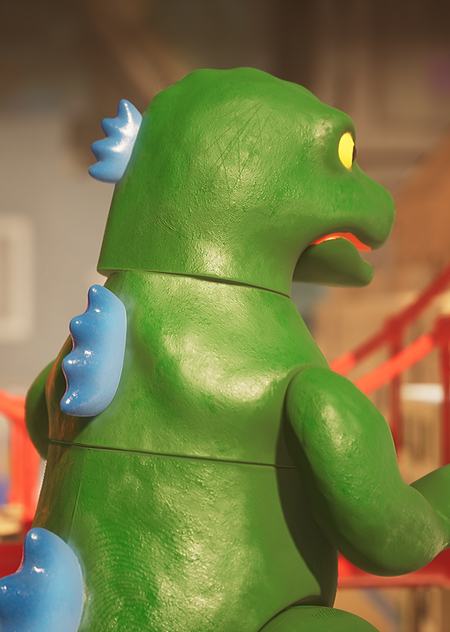
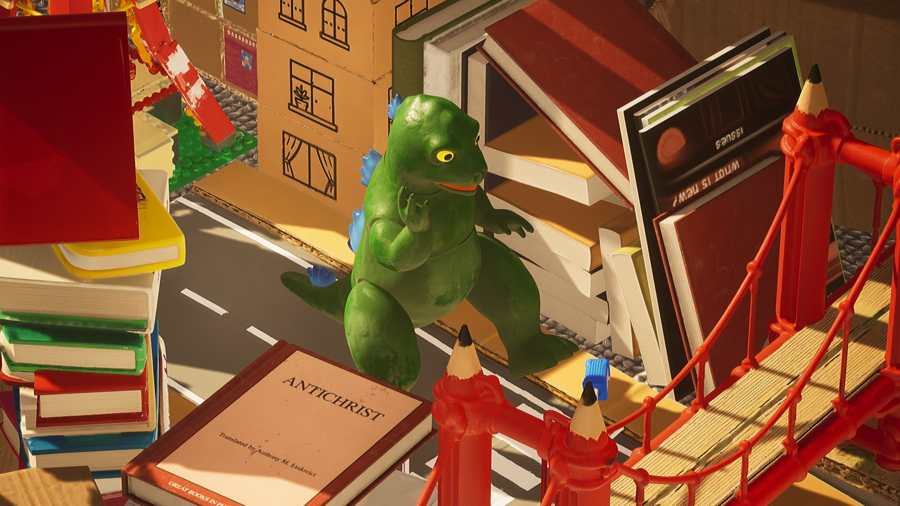
At the core of the project is the image of Godzilla—one of the most recognizable characters in Japanese popular culture. The model is executed as an action figure with a realistic style, yet it retains the essential qualities of a toy: plasticity, modularity, and the sense of an object meant to be interacted with by hand.
Референсы и поиски
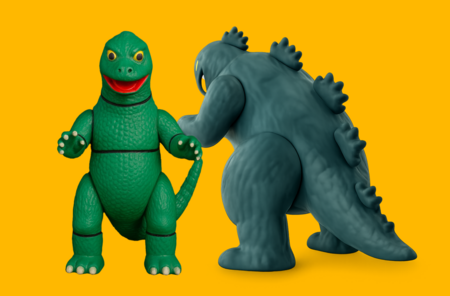
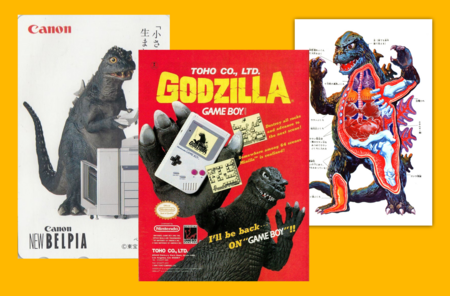
The visual foundation of the character draws from the aesthetic of Japanese sofubi toys: vinyl collectible figures characterized by their expressive silhouettes, noticeable modularity, and stylized plasticity. Initially, the model was conceived in a more retro style, closer to older Japanese toys, but the design was modernized somewhat during the development process.
The final Godzilla retains the playfulness, movable elements, and connection to the sofubi culture, yet it has been given a more detailed form and texture to perform convincingly in 3D animation and close-ups.
Техническая составляющая
For the technical demonstration block, we prepared Wireframe Previews, UV Checkers, Gray Scale renders, along with highly detailed texture renders of the model. These materials illustrate the mesh structure, the quality of the UV unwrapping, the light and shadow distribution, and the final surface detailing of the character.
The model’s mesh is quite dense, and in a standard pipeline, such geometry is typically optimized. However, within the context of this project, this decision is acceptable: the character rarely interacts with many objects, possesses a unified texture, and frequently appears in close-ups—therefore, the high level of detail enhances the model’s final visual impact.
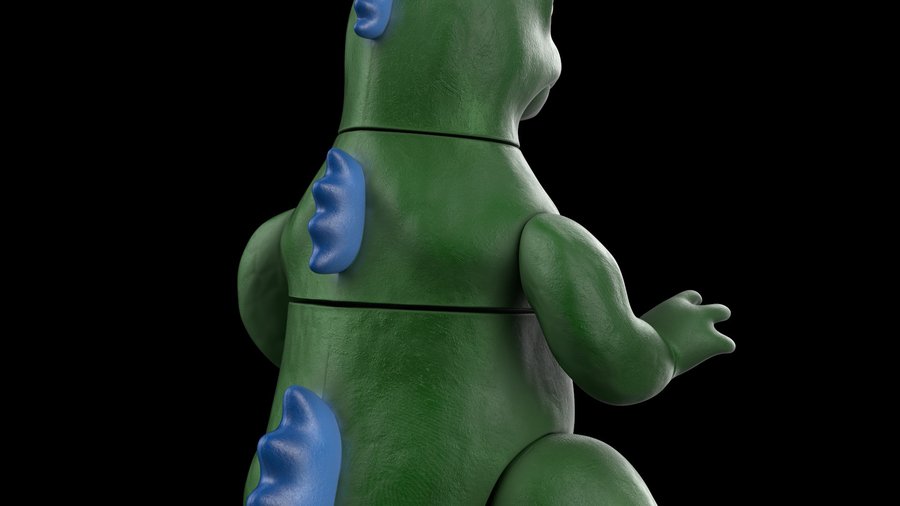
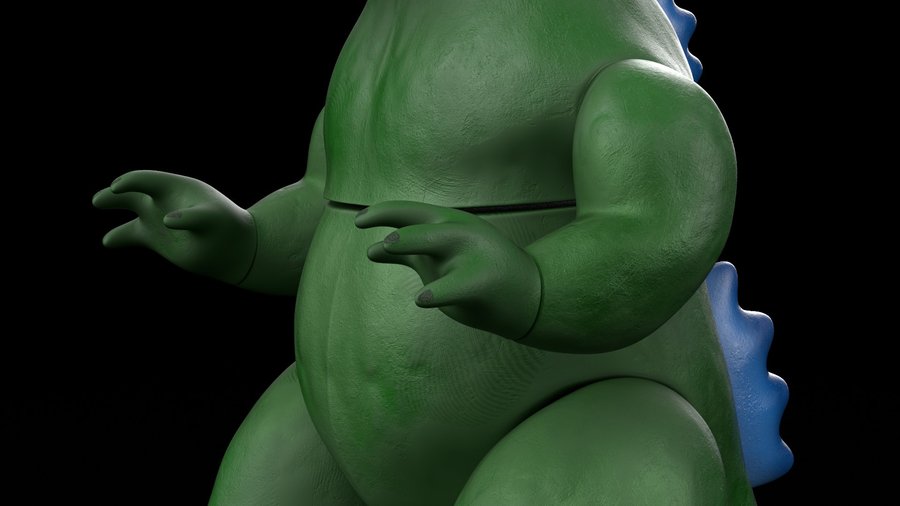
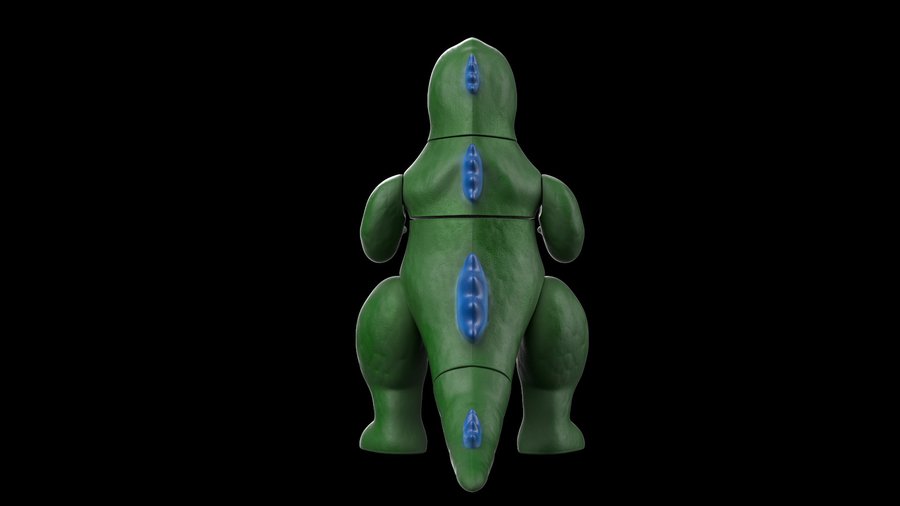
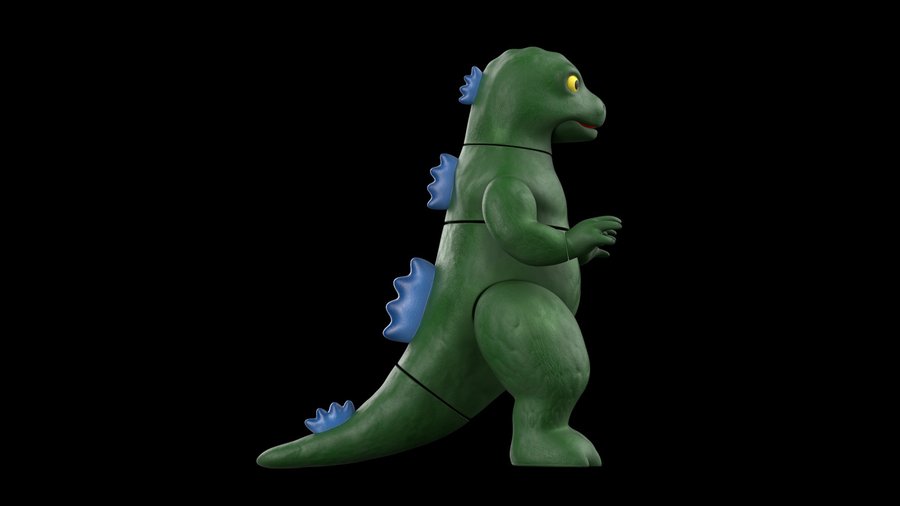
Grayshade
UV Checker
Wireframe
Сетап
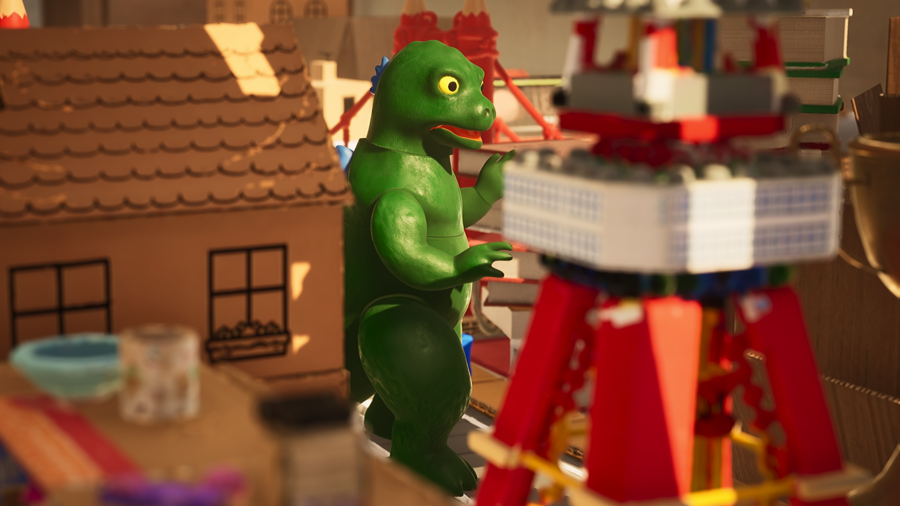
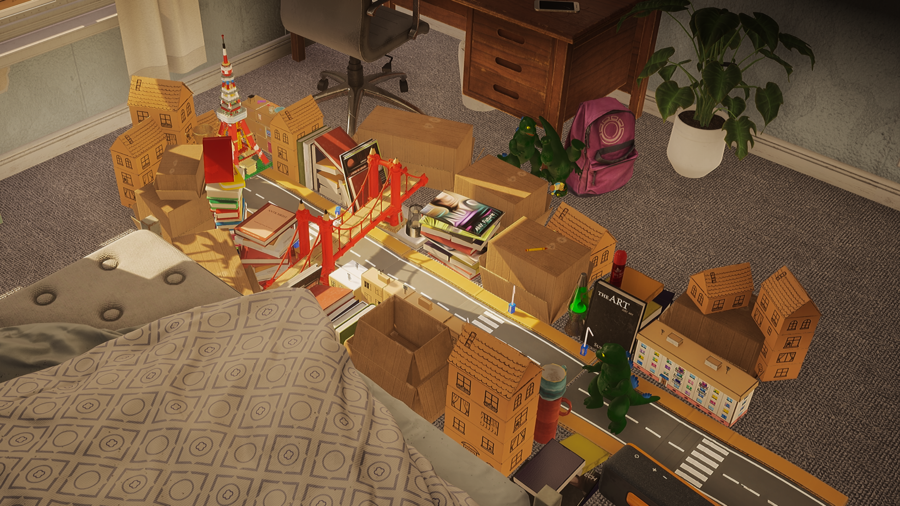
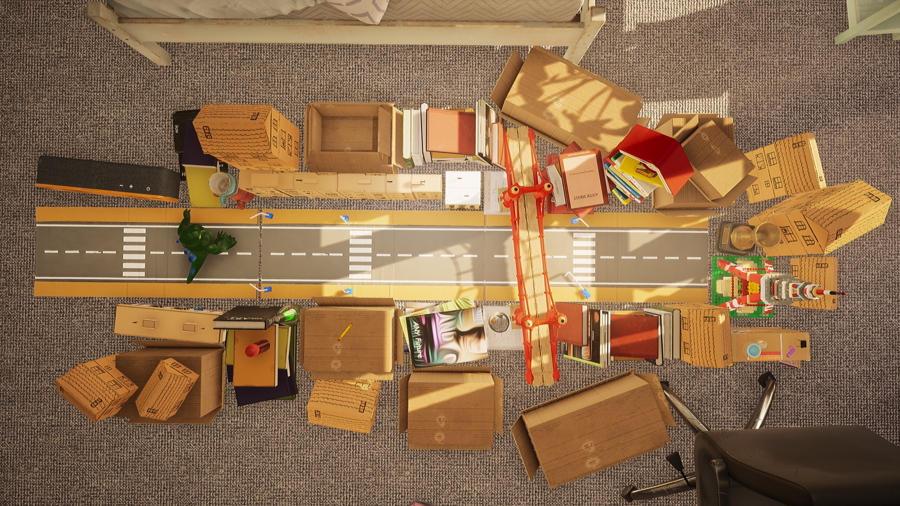
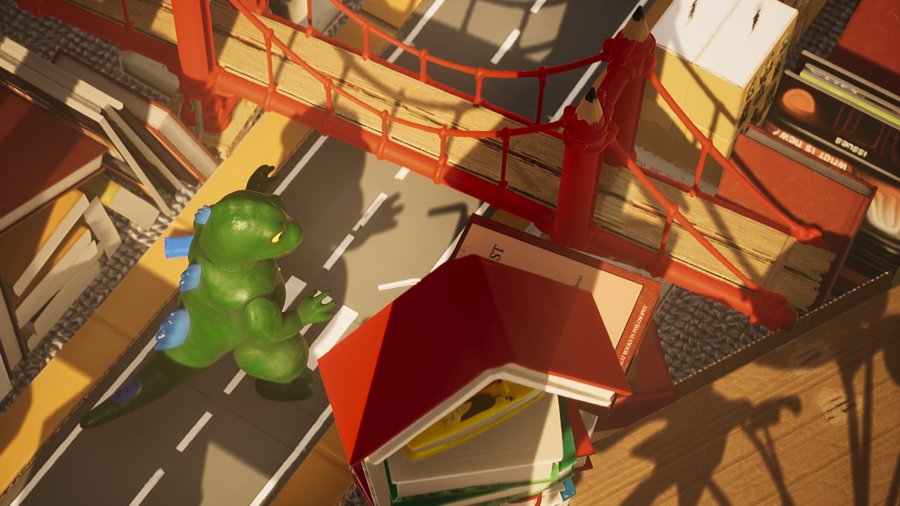
The project’s location is a children’s playroom featuring a miniature city street set. The space is composed of everyday items: houses are constructed from books, boxes, and packaging; a bridge is built from cardboard and pencils; and the surroundings are enhanced with stacks of dishes, stationery, and other daily objects and toys.
All elements of the scene are scaled to a toy Godzilla and maintain the feeling of a homemade play world.
The animation is based on the logic of ball joints characteristic of collectible action figures. The head, torso, hands, legs, and tail move as separate, articulated parts of the toy. This keeps the character flexible in animation, but its movements do not become fully organic—the mechanics of the joints, seams, and pivots remain visible.
GaO!!!
— Годзилла
Let’s play some more.