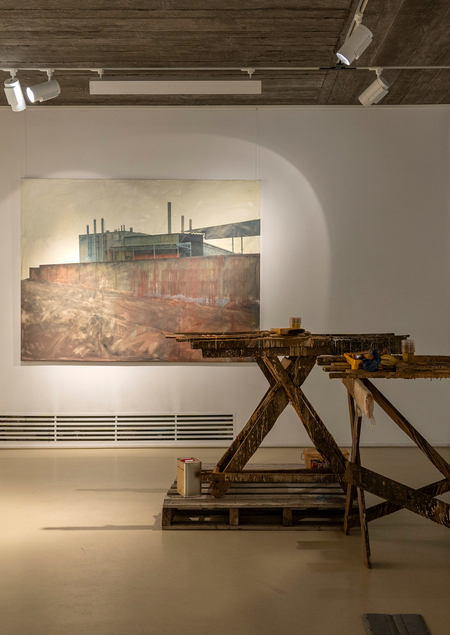
CONCEPT
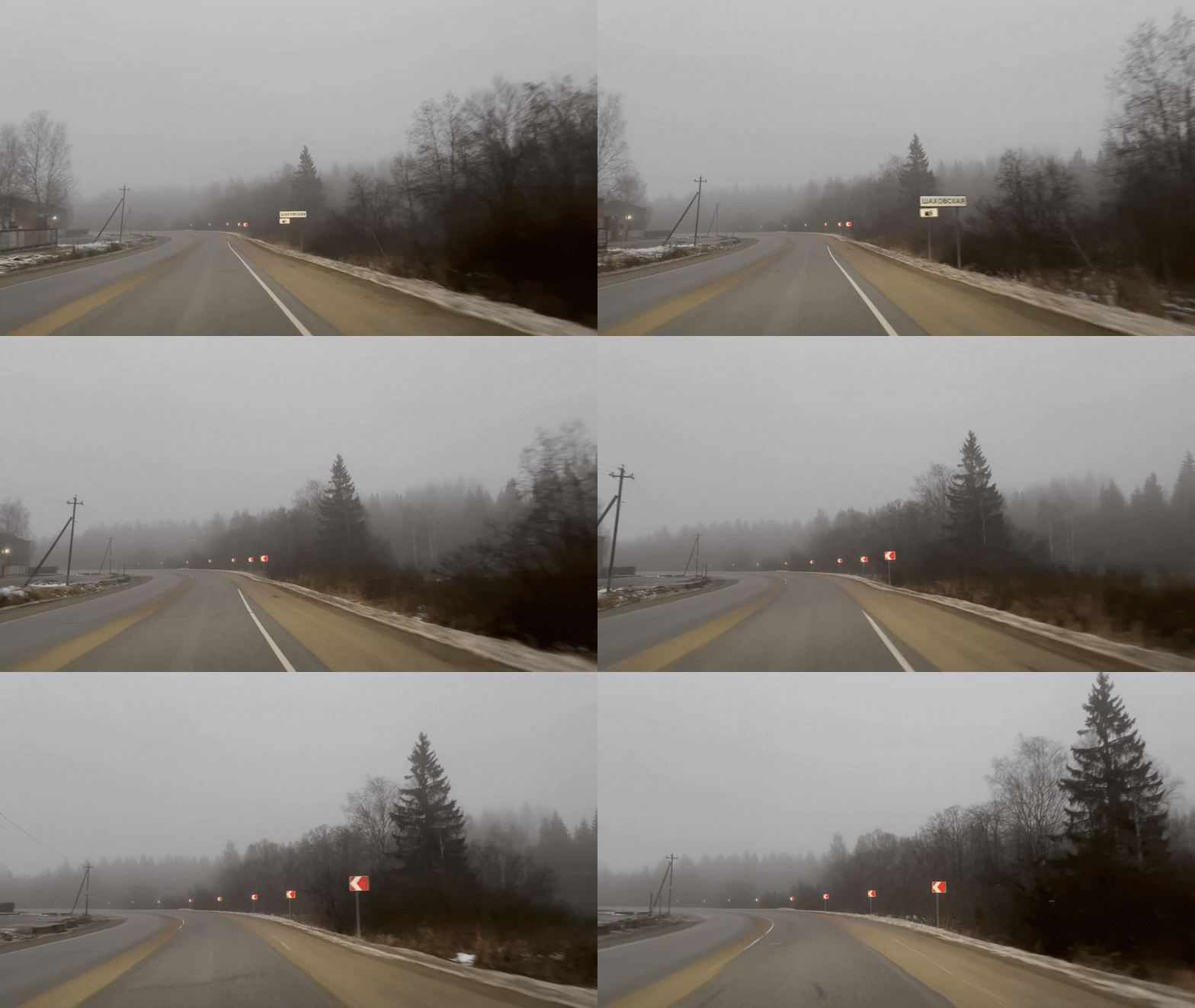
«The project, „Grass Will Grow Here Tomorrow, ” emerged during the artist’s study and observation of industrial and factory spaces in the ShakhoVSky district of the Moscow region. In the absence of people, the workshops and factories seem to operate with their own momentum. In her work, the artist reveals the „life cycle“ of these locations, documenting the transition from active industrial use to abandonment. Influenced by nature and time, these dormant industrial zones begin to exist autonomously and acquire „living“ forms.» — Polina Lola (Curator)
In the first hall, the viewer is presented with something usually only accessible on factory and industrial sites: besides the life of the spaces, one can observe the life of objects. A series of paintings, in turn, immerses the viewer in the overall picture of workshops and factories, with the appearance of humanity in the artist’s work serving as the culmination. In the video «Atlantes,» the worker actively shapes the space, literally holding it up. The human figure emerges as the source of everything incidental within the explored spaces. Simultaneously, the human figure is the root of its own order. Looking back, the viewer can see how everything the artist previously revealed is inextricably linked to humanity. — Polina Lola (Curator)
«For Derrida, deconstruction is not negation or destruction in the usual sense. It is a meticulous analysis that shows how any structure contains internal contradictions and suppressed meanings. The 'dismantling' of these structures is a way not to erase them, but to 'unveil' them—to make visible these hidden possibilities and give rise to something new that was implicitly embedded within them but not yet apparent.» — Olga Drenda
[1]
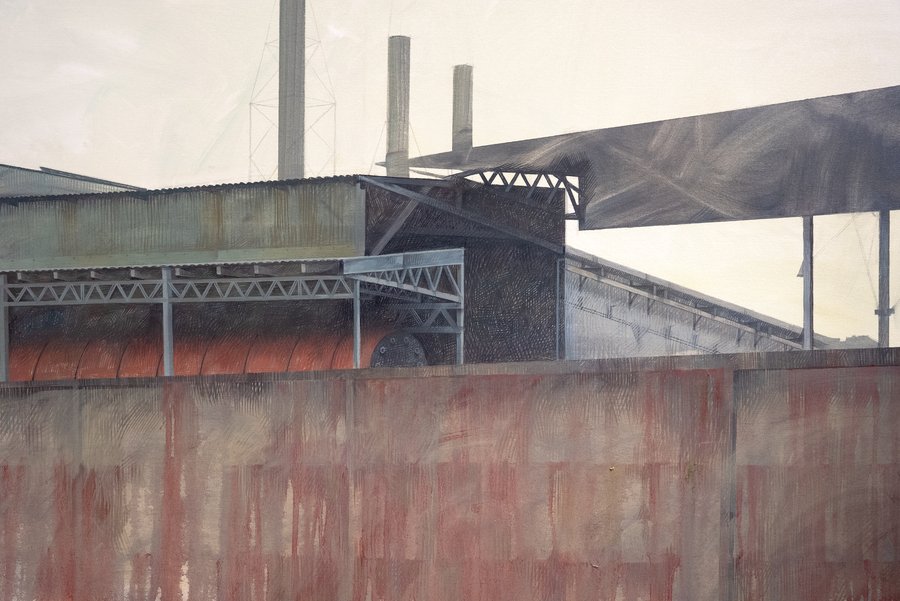
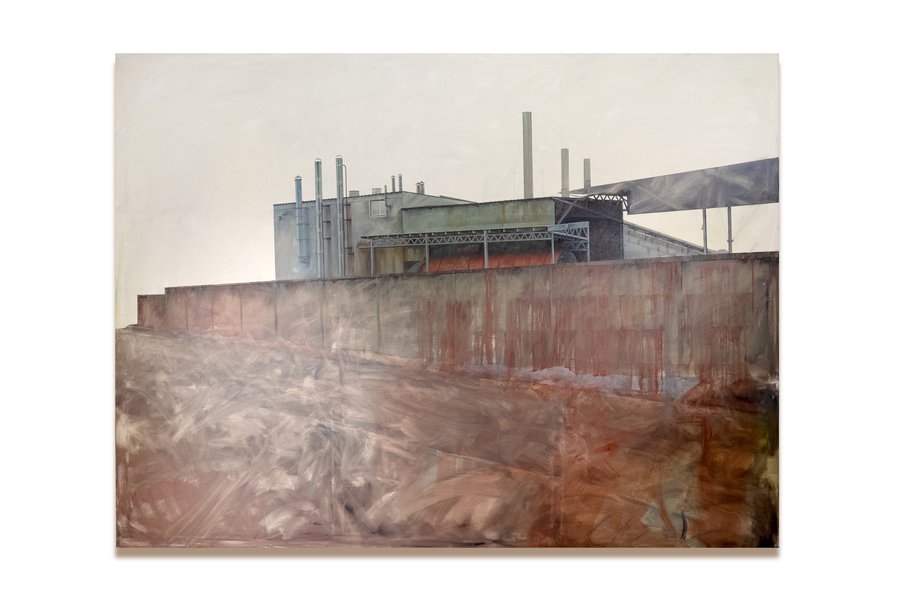
«Workshop Scenes» Painting Series 200×150 cm
General Exhibition
General Exhibition
The «Workshops» series captures a space at the moment of maximum organization, when industrial order sets the rhythm of movement, redistributes roles, and transforms the building into a system where nearly every object occupies its place due to factors related to labor, safety, or time efficiency.
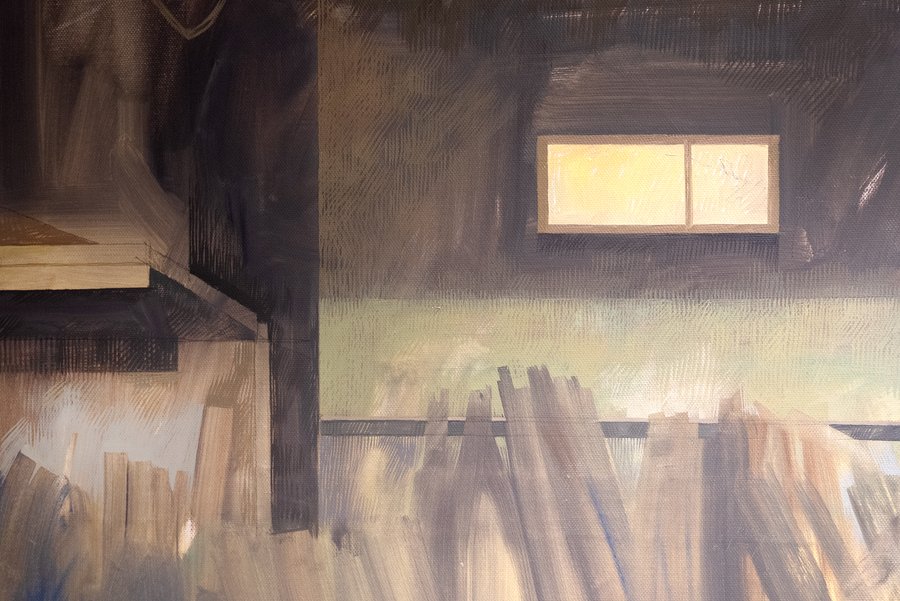
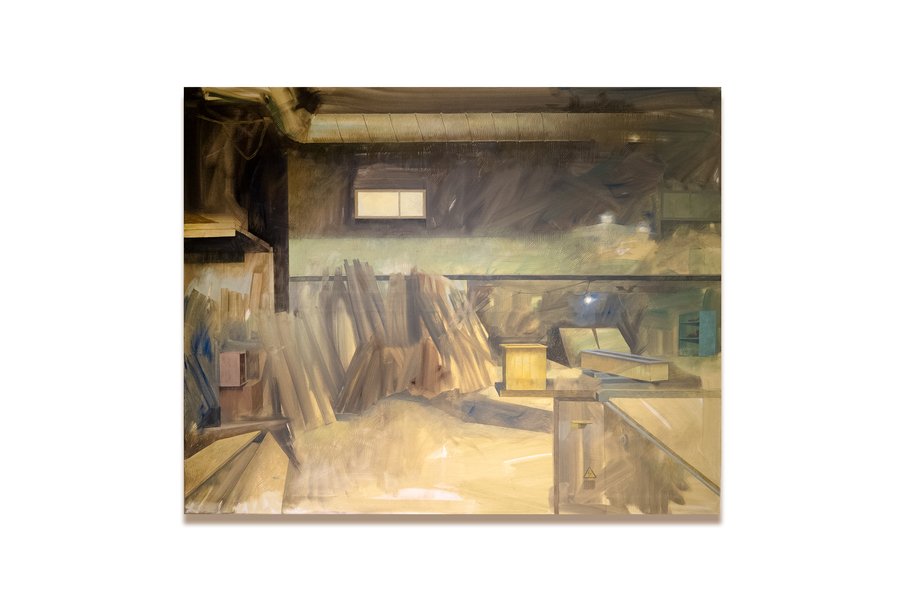
«Workshops» Painting Series 100×80 cm; 60×40 cm; 30×20 cm
It is important to remember, however, that in contemporary culture, labor often loses its public visibility and its meaningful «centrality.» Against this backdrop, the workshop exists as a space where labor remains physical, repetitive, and demanding of the human being. Therefore, documenting active production becomes a way to restore visibility to this experience—without glorification and without moralizing—through simple, precise attention to the structure of repetition.
General Exhibition
General Exhibition
[2]
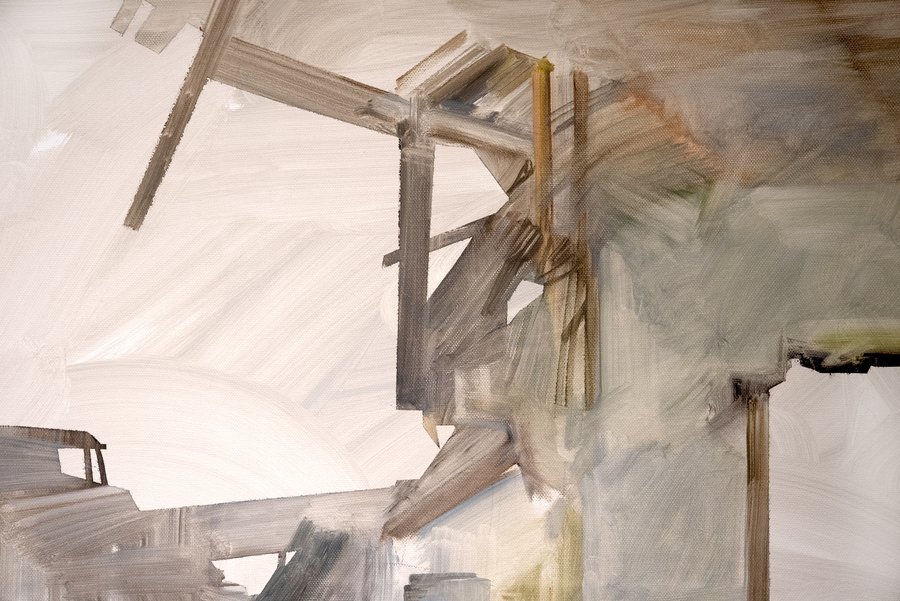
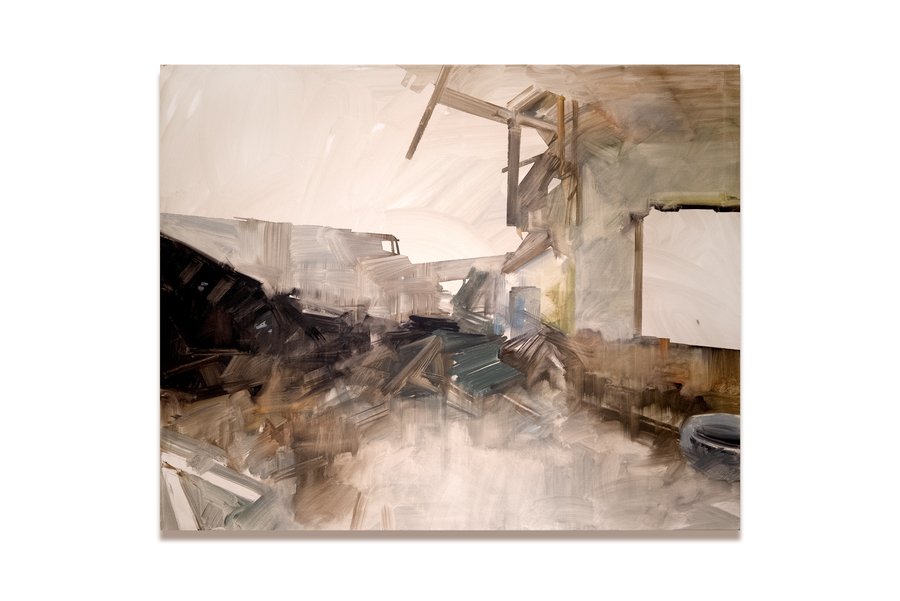
«Abandoned» Painting Series 100×80 cm
«Ruins» Painting Series 60×40 cm
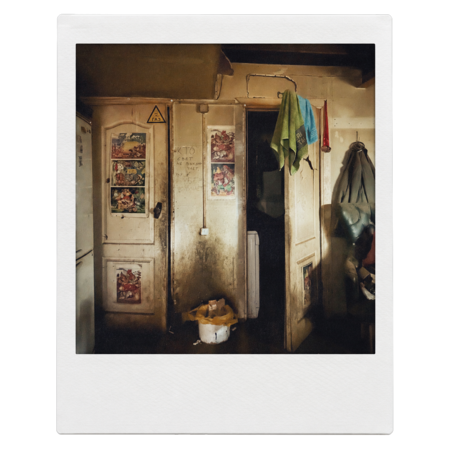
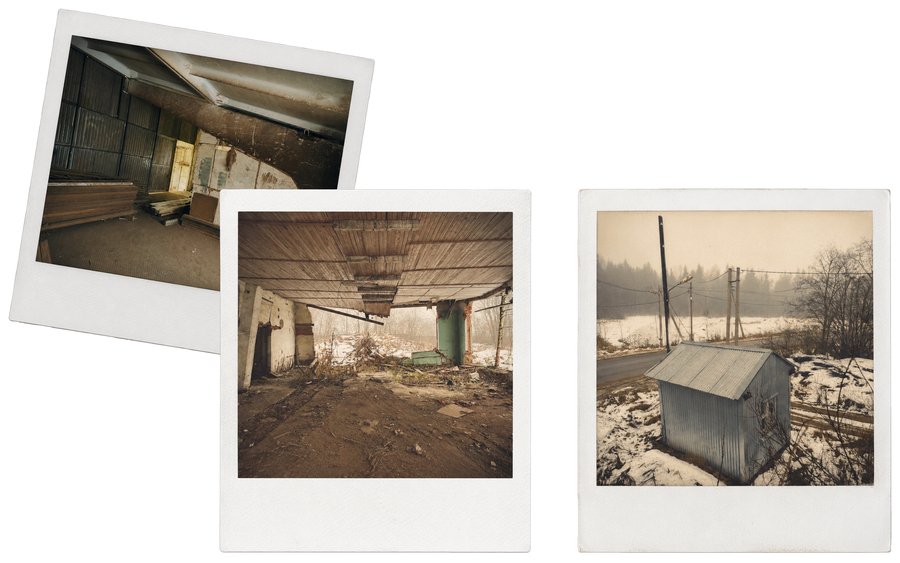
In this part of the series, the imagery of the ruins themselves is not what matters, but rather the specific indicators of how time interacts with the material and how the memory of function persists within the remnants of the infrastructure: in the traces of fixtures, in the fragments of wiring, in the remains of markings, and in doorways that no longer align with the current geometry of the passageways. This perspective aligns with understanding the building as a palimpsest—where the present retains erased layers from other periods—and where the imagination almost automatically connects what has survived with what is being lost, creating a picture in which the past continues to «illuminate» the present.
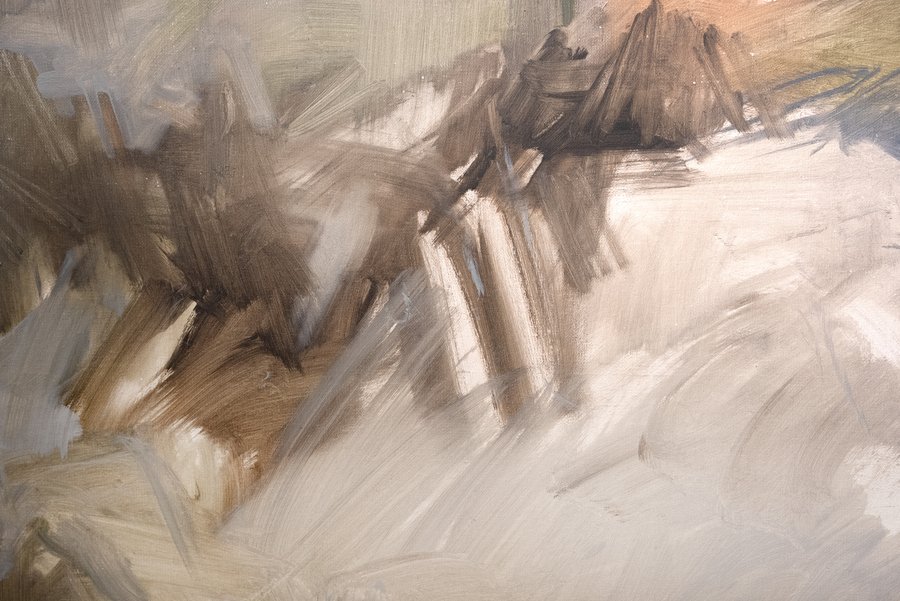
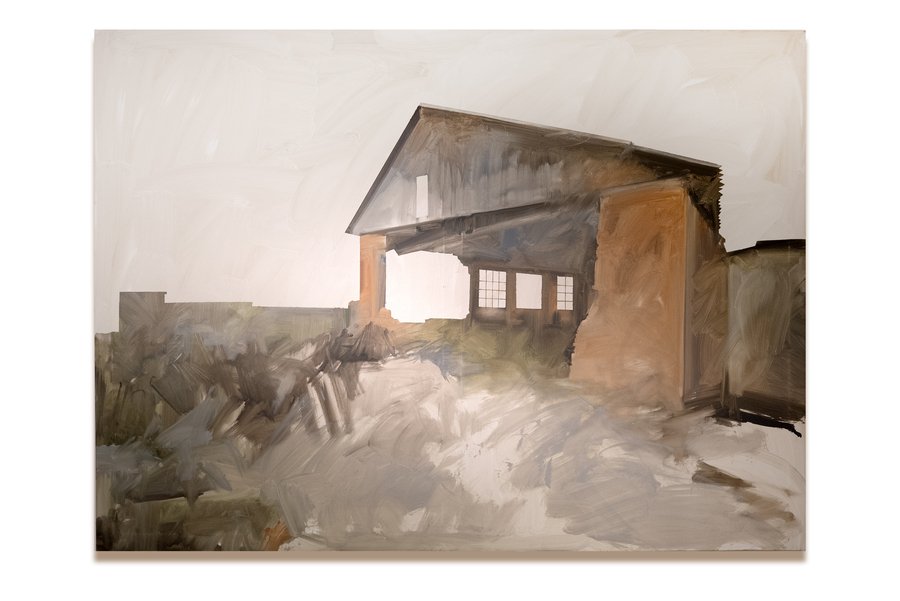
«Ruins» Painting Series 150×110 cm
General Exhibition
[3]
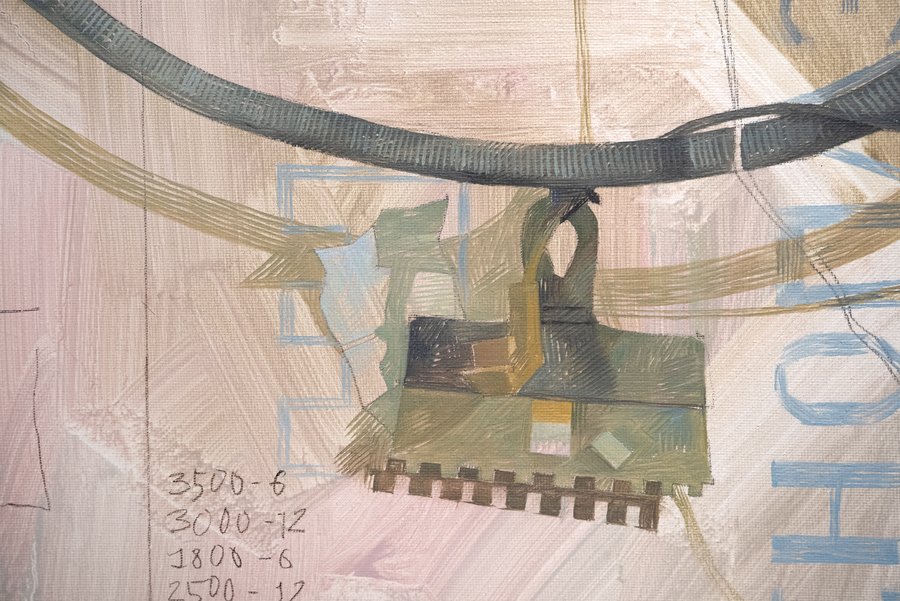
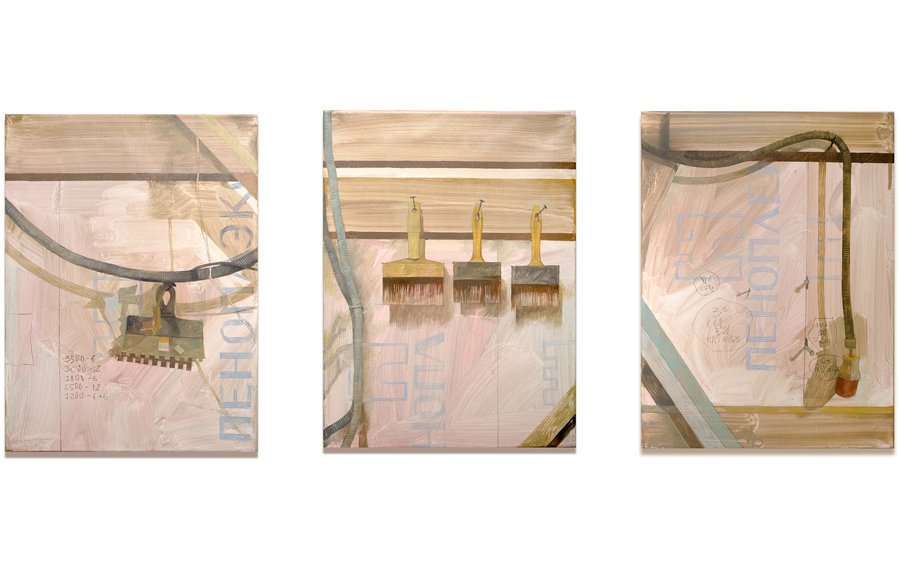
«Vacht» Series of Paintings 30×40 cm; 100×80 cm; 60×40 cm
Shift work—a transitional stage of the cycle where space exists through inclusion and exclusion: during the time of occupancy, a functional order emerges, routes are established, and temporary decisions are made that allow actions within the building as if it were stable, even though this stability is maintained by daily attentiveness and quick, «on-site» repairs.
[4]
Total Installation: «Podpol»
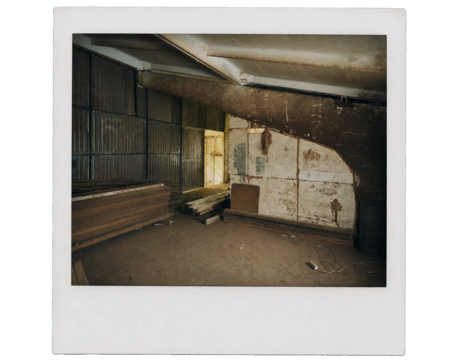
The total installation «Podpol» references the concept of a palimpsest. When renovating the space «on their own, ” the workers use temporary solutions and readily available materials. New flooring conceals the traces left by previous occupants of the space. In pits and holes, trash and dust are deliberately dumped to create an additional layer of insulation. Ultimately, the floor becomes overgrown with layers, and its appearance is in a constant state of transformation. I, in turn, intend to reveal to the viewers everything most secret and deeply hidden.