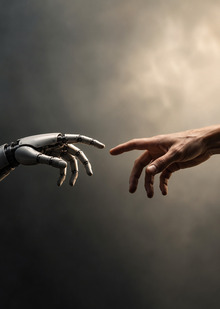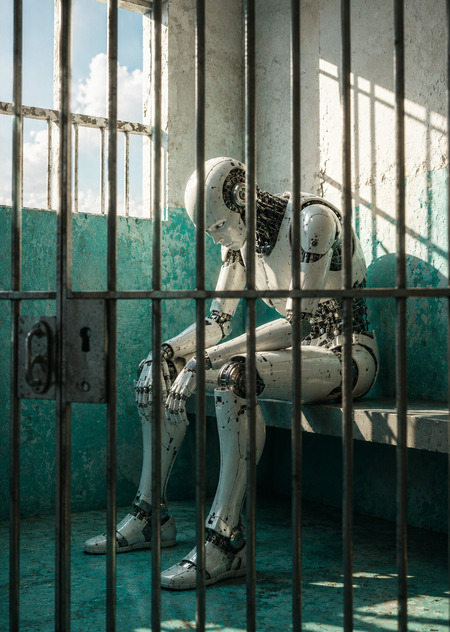
Technology is evolving rapidly, and legislation is failing to keep pace with these changes, forcing industries to autonomously seek a balance between innovation and legal safety.
For example, to whom does the ownership of rights belong if a significant portion of the work is created using artificial intelligence?
This question was discussed by producers, CG supervisors, and creative directors at the Telling Stories Fest at the HSE Art and Design School.
From proprietary models to conscious risk-taking
Approaches to using neural networks vary significantly today depending on the scale of the business and client requirements.
The «Clean» Training Approach
Large corporations working with enterprise clients aim to minimize risk. To achieve this, they deploy proprietary language models and train them exclusively on legally licensed data.This approach allows for control over content provenance and protects intellectual property, but it demands substantial investment.«Such investments increase legal support costs by three to four times,» notes Korney Dravi, editor, producer, and co-founder of the post-production studio sitnikov.pro.The Delayed Risk Model
Medium and smaller studios more often opt for a different path—utilizing public neural networks and ready-made services.«The market essentially operates on the principle: as long as you haven’t been sued, you can use it,» says Nikita Baranov, co-founder and creative director of Mew Studio.This is largely due to the lack of established legal precedent. For many companies, production speed and tool accessibility are more important than potential legal risks.How do major international players operate
Sergey Frolov, a CG Supervisor and Compositor who worked at Pixomondo and Rodeo FX, cites large studios that invest in their own models trained on private datasets. This approach allows them to retain control over rights and minimize the risk of claims from copyright holders. However, such investments remain inaccessible to most companies.
Legislation struggles to keep pace with technology
The main issue is the lack of standardized rules of engagement. Currently, there is virtually no established legal precedent in Russia regarding generative content. Furthermore, there are no universally accepted methodologies to definitively determine the extent of a neural network’s involvement in creating a specific work. Consequently, many questions remain unanswered—from authorship to the allocation of rights to the final output.
What specialists should do now
While the legal status of neural network content remains undefined, experts recommend focusing on protecting those elements of a project that are unequivocally recognized as the result of human labor.
Document the preparation process
Scripts, storyboards, concepts, sketches, and other materials help confirm the authorship and origin of the project.Secure rights to key elements
It is advisable to register or otherwise confirm the creation date of characters, texts, scripts, and other intellectual property objects.Treat prompts as a work asset
In some cases, a well-crafted prompt may be more legally defensible than the final image created by the neural network.What is the conclusion?
Can an image created entirely by an AI be considered a copyrighted work today?There is no definitive answer yet. This is why the industry is gradually shifting focus from protecting the final result to protecting the creative process and the human intellectual contribution.
Neural networks are already a part of production. Now, the main task for specialists is to learn how to utilize their capabilities without losing control over what remains the primary source of value: ideas, concepts, and original artistic vision.