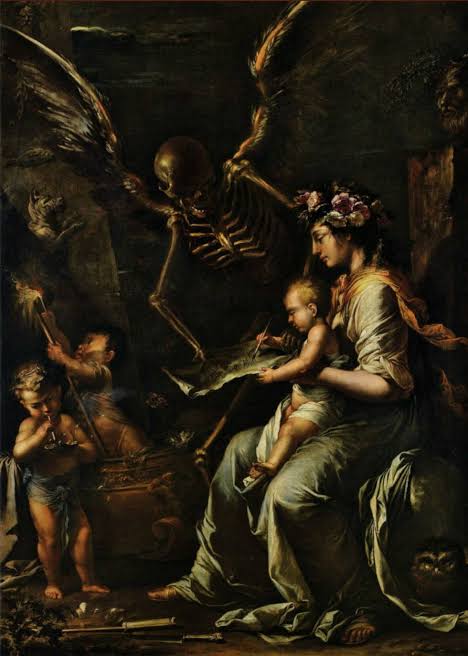
The Black Death and the Metamorphosis of Art in the 14th Century
TABLE OF CONTENTS
1. Introduction and Historical Context
2. The Interrupted Dawn (1300–1347)
3. Crisis and the Return to High Gothic
4. Iconography of Horror: The Triumph of Death
5. Macabre Tradition: The Dance of Death
6. Conclusion and Comparative Style Analysis
Introduction
The arrival of the Black Death (1347–1351) in Western Europe not only claimed the lives of over a third of the continent’s population but also caused a profound psychological rupture that completely transformed medieval painting.
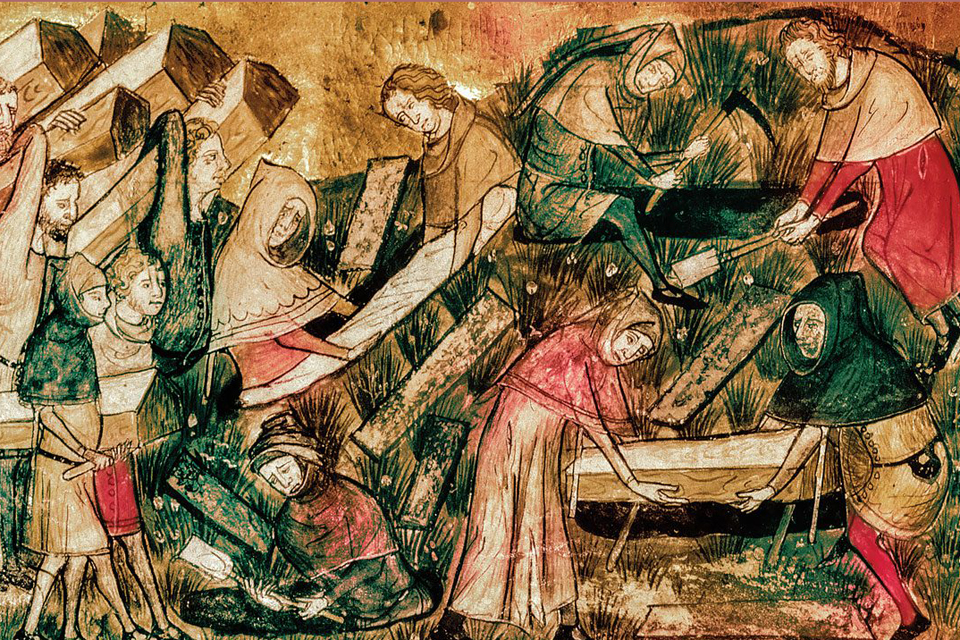
This report analyzes the transition from the optimism and realism of the Early Proto-Renaissance to the dark, moralizing, and macabre iconography of the second half of the 14th century. Collective panic undermined the foundations of medieval scholastic thought; faced with unpredictable death, which spared neither peasants nor noble lords, art abandoned depictions of celestial harmony, focusing instead on the harsh reality of physical decay and divine judgment.
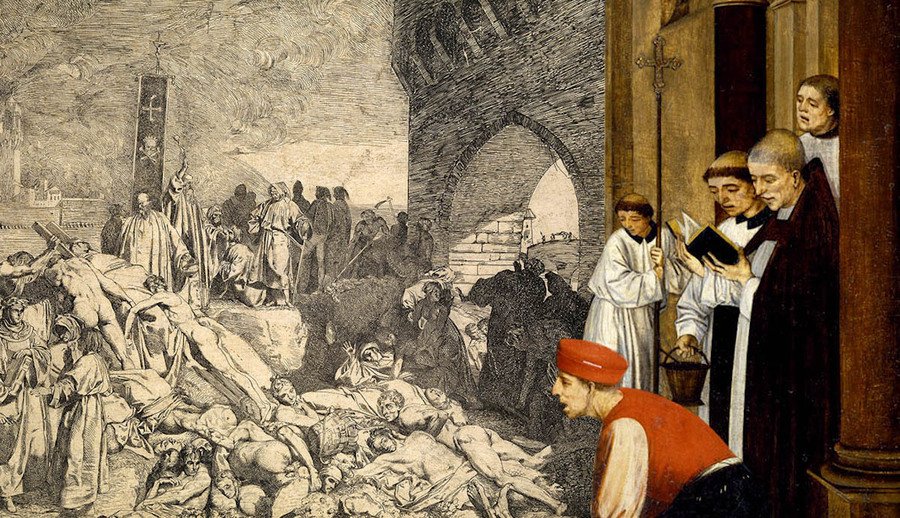
Interrupted Dawn
Before the epidemic, a picturesque revolution was unfolding in northern Italy, paving the way for humanism.
In the Scrovegni Chapel in Padua, Giotto moved away from Byzantine flatness, imbuing figures with three-dimensional volume and genuine human emotion. In Siena, the Ambrogio and Pietro Lorenzetti brothers, in their frescoes on the «Allegory of Good and Bad Government, ” demonstrated that medieval art was capable of depicting landscapes, everyday life, and the prosperity of cities in vibrant colors and harmonious compositions.
The Collapse of 1348
The summer of 1348 marked a complete halt in Europe’s cultural development for two key reasons:
1. Biological Losses: Leading masters of pictorial avant-garde, such as the Lorenzetti brothers or Bernardo Daddi, died from the bubonic plague in the prime of their lives, leading to the closure of major workshops in Florence and Siena.
2. Shift in Patronage: Former bourgeois patrons lost influence or perished. Art funding transitioned to radical religious brotherhoods and survivors of the catastrophe, who demanded penitential art for the atonement of sins.
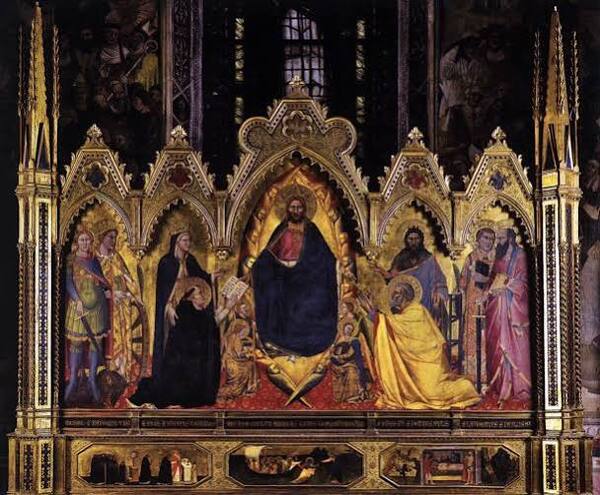
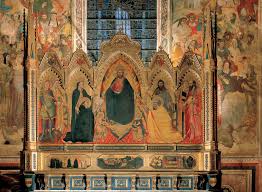
Crisis and the Return to Rigid Gothic
The demographic collapse of 1348 suddenly claimed the lives of leading masters of the pictorial avant-garde (including the Lorenzetti brothers). Following the death of these innovators, surviving artists of the latter half of the 14th century consciously abandoned experimentation with three-dimensional space as a reaction. This resulted in a deliberate return to a flat, austere, strictly hierarchical style with dark gold backgrounds. This painting was intended to evoke exclusive religious repentance, divine fear, and submission in the face of divine punishment.
Iconography of Horror: Triumph of Death
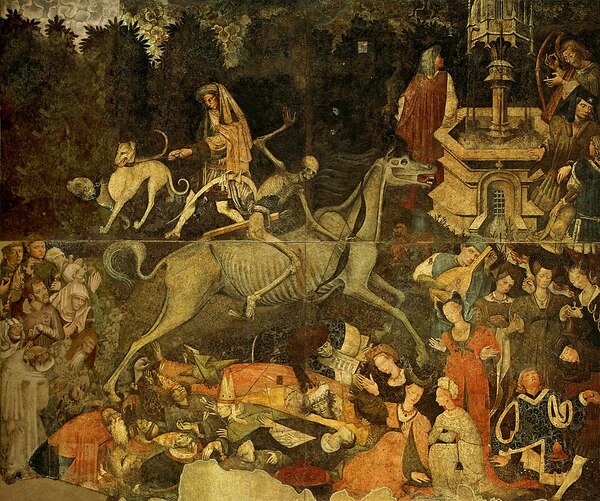
By the late 14th century, innovation shifted from a technical plane to a purely thematic one, focusing on the physical harshness of mortal existence. The apex of this radical shift was the monumental fresco «Triumph of Death» in the Pisan Camposanto. Instead of the previous biblical allegories, art began depicting the terror of aristocrats facing open tombs filled with decaying bodies, while winged monsters and personifications of death mercilessly swept through the rich and the poor with savage scythes.
Macabre Tradition: Dance of Death
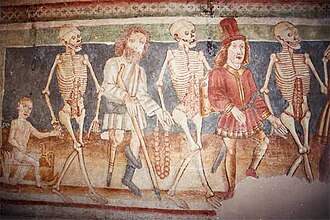
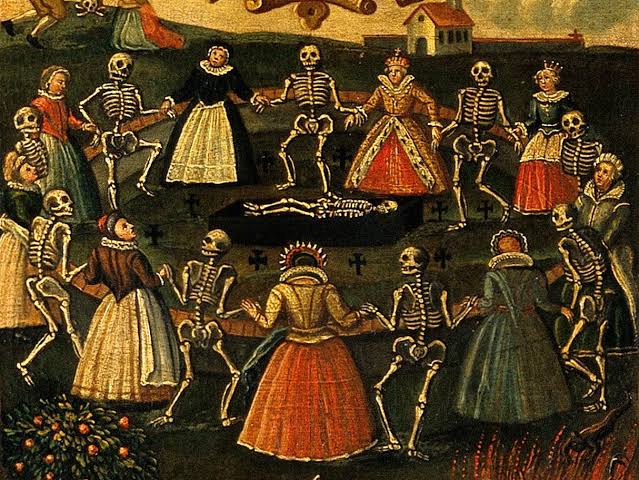
The primary artistic consequence of post-apocalyptic psychological trauma was the emergence and rooting of the «Dance of Death» genre (Danse Macabre). This iconography leveled the biological fate of humanity by depicting grinning skeletons and reanimated corpses engaging the entire medieval hierarchy in a mad dance—from the Pope and Emperor down to the poorest peasant. Art transformed into a mass vehicle for the Memento Mori concept, reminding viewers that social status and wealth become utterly meaningless in the face of decay.
CONCLUSION
An analysis of the art culture of the Trecento proves that late Gothic painting did not develop linearly or in isolation. The demographic collapse triggered by the Black Death acted as a brutal catalyst for social changes that completely redirected the intellectual and spiritual priorities of the era, turning art toward collective penance.
The plague abruptly halted the smooth transition into the Early Renaissance. The physical destruction of the most progressive artists (such as the Lorenzetti brothers) and the economic decline of major urban centers prompted a deliberate regression toward a rigid, planar medieval style. This was dictated by a new societal need for a strict visual language capable of inspiring fear of God.
The emergence and rooting of genres such as the «Triumph of Death» and the «Dance of Death» reflected an unprecedented ideological rupture. Through the concept of Memento Mori, painting acquired a didactic and socio-critical function. Art began to transmit a thought revolutionary for that era: all earthly hierarchies and material wealth are utterly devalued in the face of the absolute biological equality of all classes in the grave.