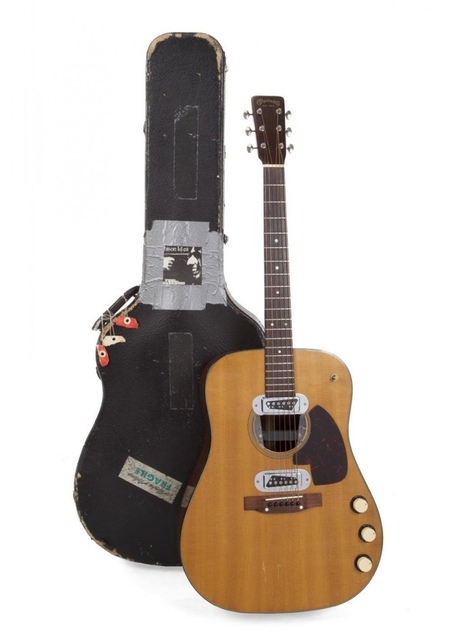
How an unsuccessful 1959 acoustic guitar became a symbol of Kurt Cobain.
In the late 1950s, the American company Martin released an unusual model, the D-18E—an acoustic guitar equipped with two electromagnetic pickups. The company attempted to keep pace with the coming electrical era in music but failed: only 302 units were produced over two years before the model was discontinued. One of those units, bearing serial number 166854, ended up with Kurt Cobain three decades later.
For his group Nirvana’s performance on MTV Unplugged in 1993, Cobain chose this strange and already rare guitar. However, it soon turned out that its original pickups did not perform well with bronze strings, which the musician was accustomed to. Consequently, a technician, inspired by a similar instrument owned by Peter Buck of R.E.M.,
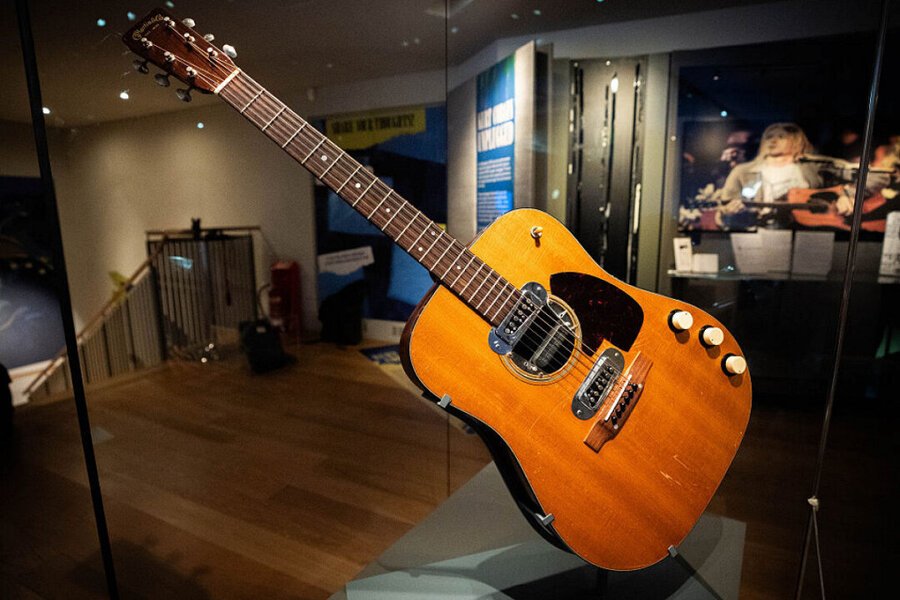
Although the concert was titled «Unplugged”—meaning acoustic, without electrical equipment—the guitar was still connected to effect processors. It was this strange hybrid of acoustic and electric guitar, featuring a worn body and unusual electronics, that achieved its signature sound.
In 2020, the guitar sold for a record-breaking six million dollars. Later, its owner, Peter Friedman, founder of RØDE Microphones, donated the instrument to the Royal College of Music in London.