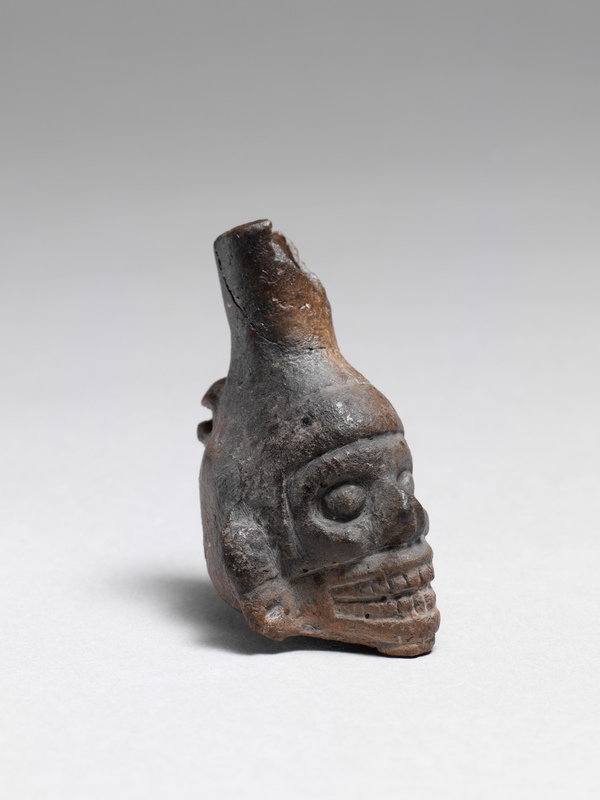
In the late 1980s and 1990s, during excavations in Tlatelolco (now part of Mexico City), archaeologists discovered a temple dedicated to the wind god Ehecatl. At the base of the main staircase lay the skeleton of a man, about 20 years old—a decapitated sacrifice. In each of his hands, he clutched a small ceramic whistle shaped like a skull. This was the first—and still the primary—discovery of these whistles, known as Aztec «death whistles,» in a clear archaeological context. Similar objects had been found before, but without any connection to sacrificial rituals. Dozens of other burials from the same period were found around the temple—perhaps related to the Great Famine of 1454, when the Aztecs performed mass sacrifices to beg for rain and wind.
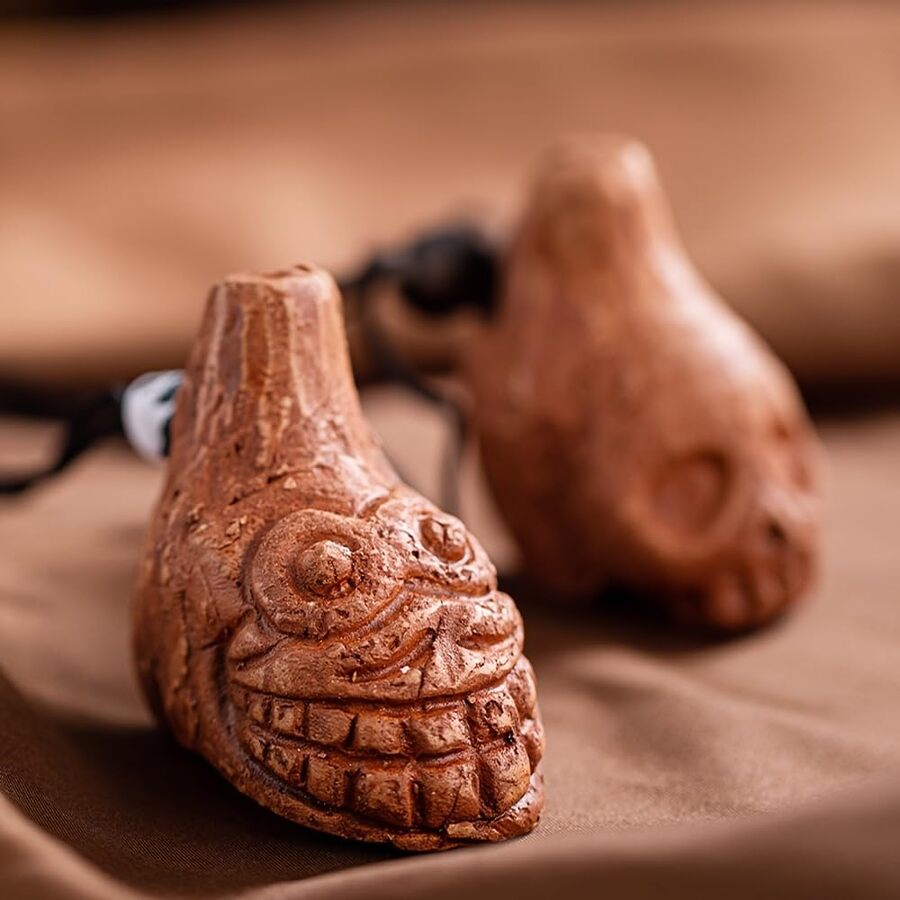
The whistles are very small—3–5 cm—and are made of clay. The face is a grinning skull associated with Mictlantecuhtli, the god of the underworld and death. Inside, there is a unique construction: this is not a regular whistle, but what is called an «air spring.» Air passes through a narrow channel, enters a chamber, where it collides and creates turbulence (the Venturi effect). This results in a distorted, «raspy» sound.
In 2024, a study was published in Communications Psychology (University of Zurich). Scientists took 3D scans of the originals, recorded sounds, and tested human reactions. It turned out that even a relatively soft sound causes strong activation in brain regions associated with fear and disgust—almost like a real human scream. In other words, the acoustic whistle is «tuned» to be unpleasant and anxiety-inducing.