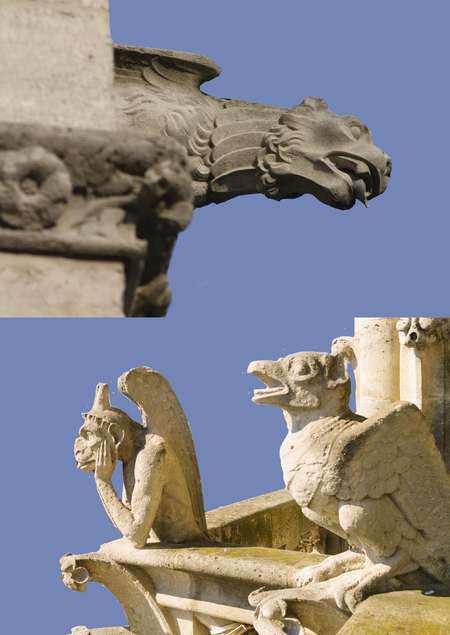
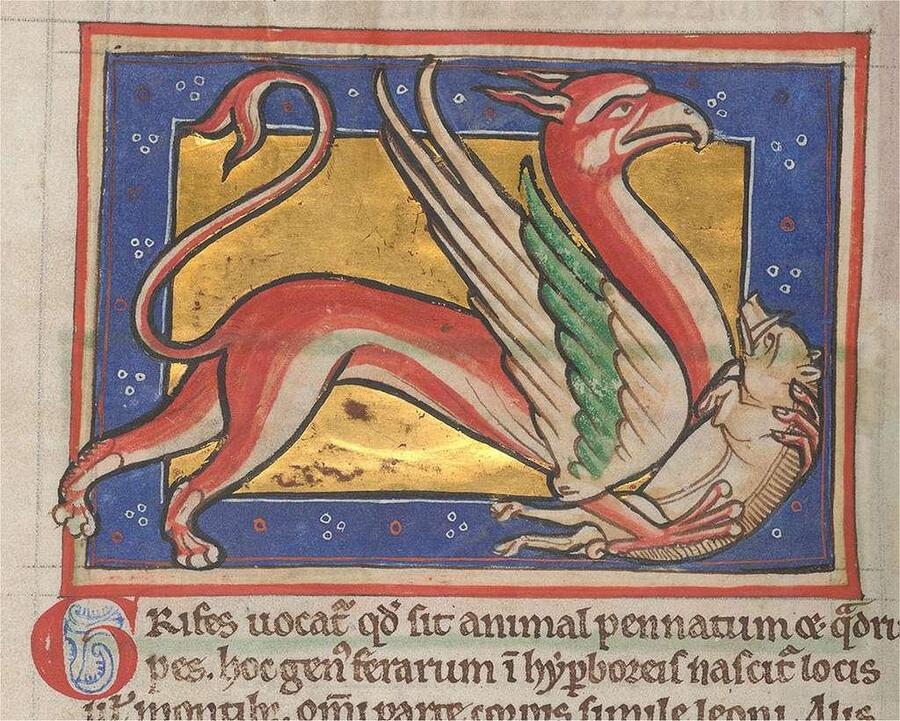
Mythical creatures appeared in architecture long before the Gothic style emerged. Sphinxes, griffins, centaurs, and chimeras held a significant place in mythology and artistic culture.In ancient art, these creatures often combined traits of several animals or merged human and animal forms. They could serve as elements of architectural ornamentation, guardian figures, or characters in mythical narratives.
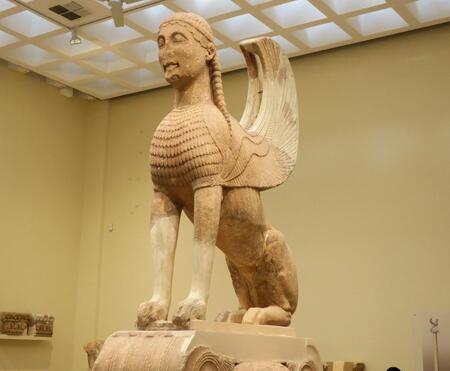
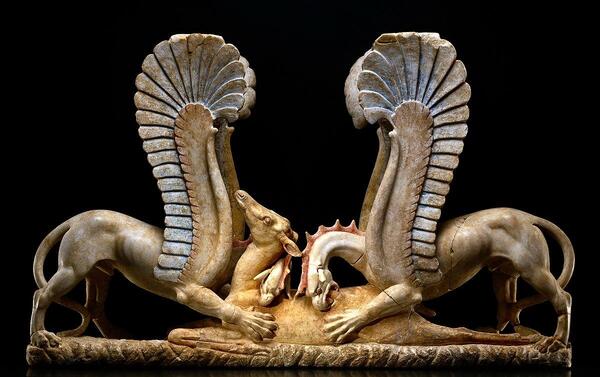
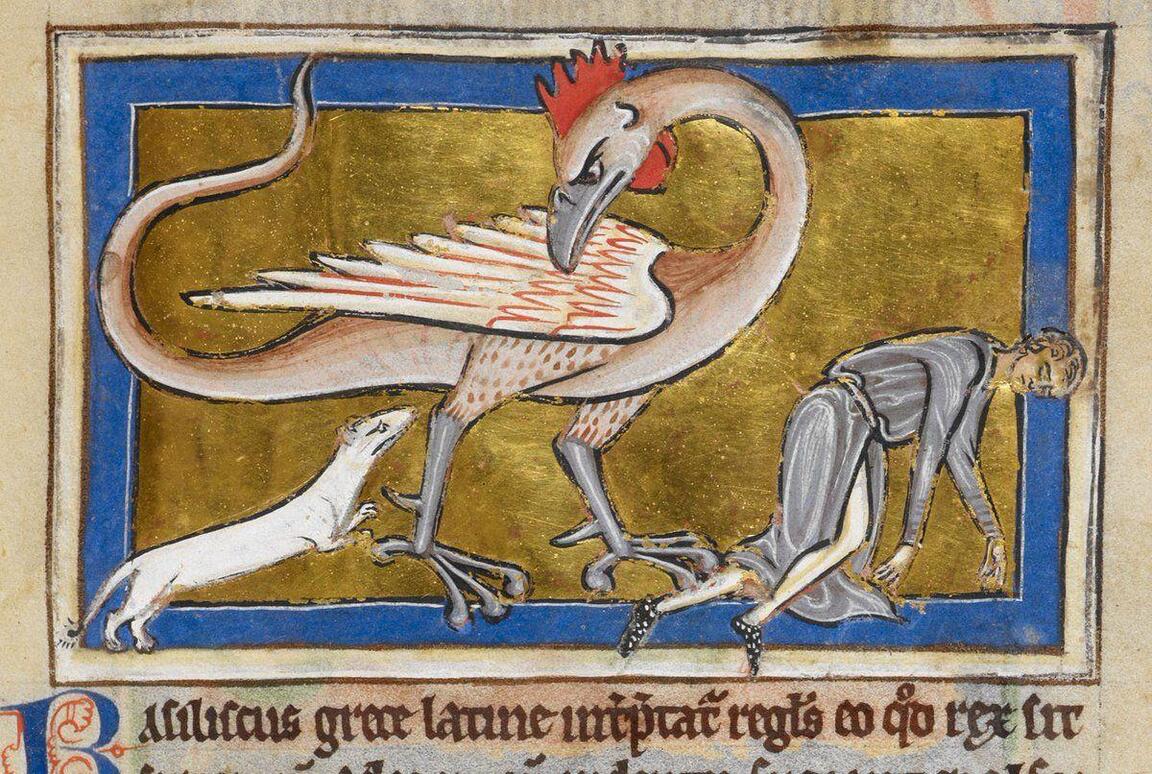
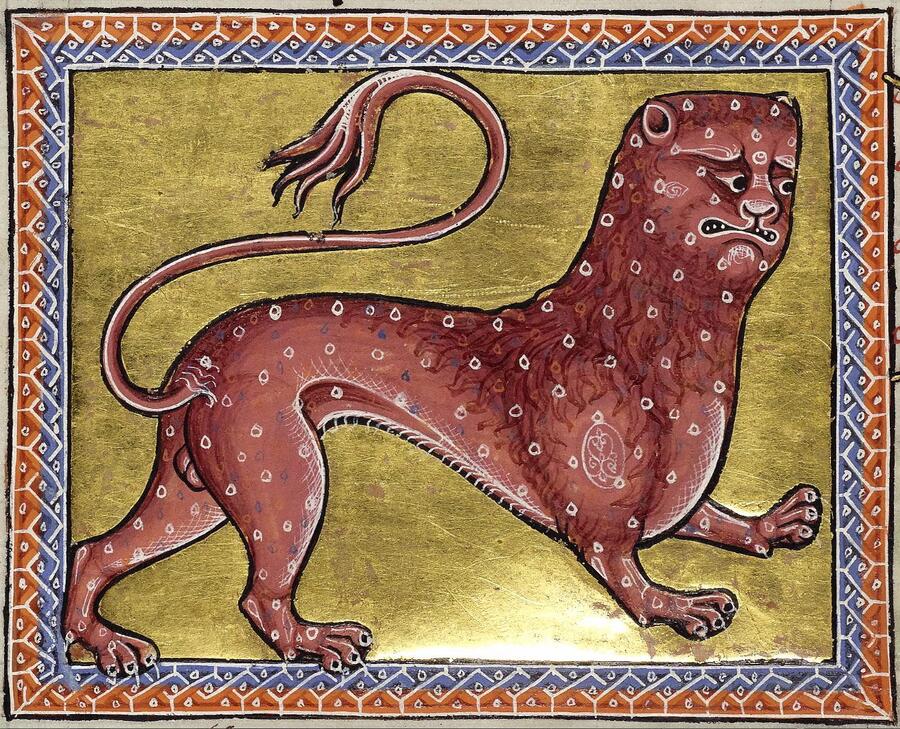
Medieval culture reinterpreted this heritage within the framework of a Christian worldview. Fantastic creatures became integral to understandings of nature, sin, temptation, and the supernatural.Bestiaries—medieval manuscripts featuring illustrations and descriptions of animals—played a particularly significant role. Both real and mythical creatures within them were imbued with moral and religious significance. However, their symbolism was not always unambiguous: the meaning of a specific image depended on the accompanying text, the visual representation, and the context.
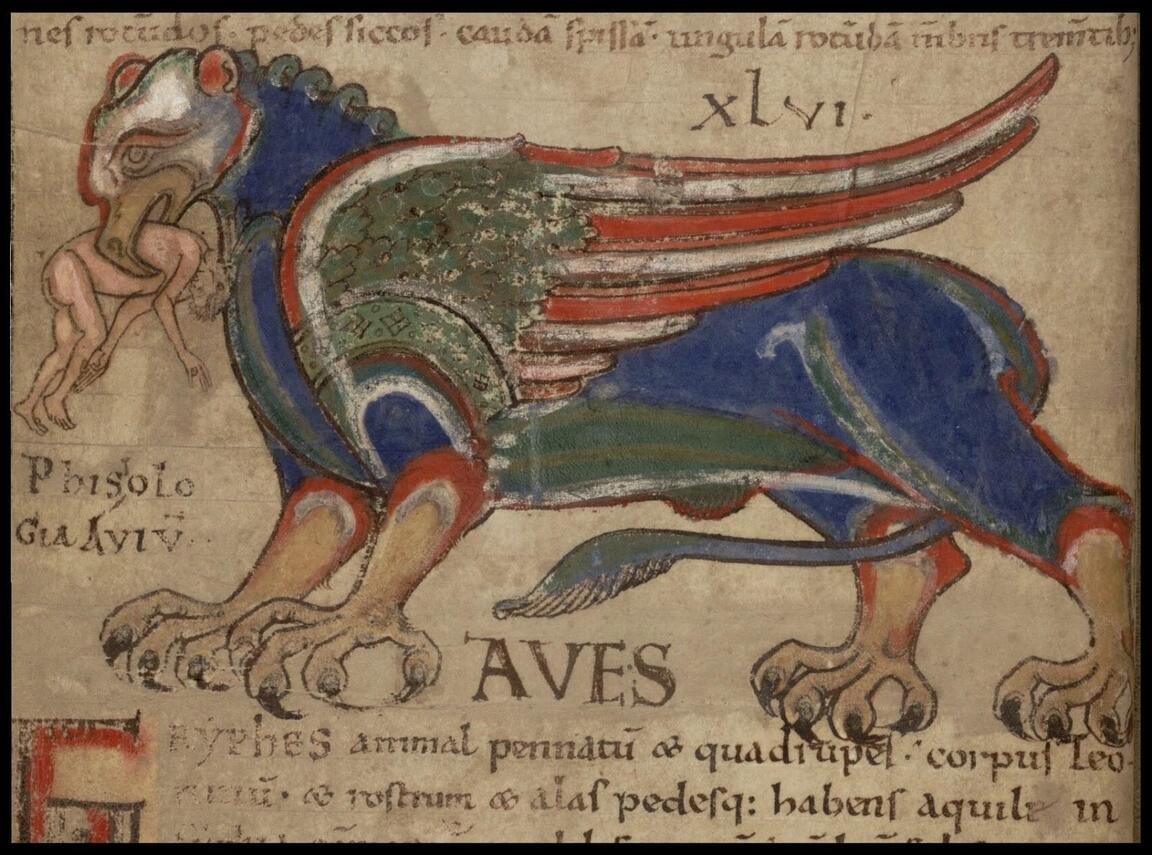
1.1. The Gothic Cathedral as a Space for the Monstrous Image
The development of Gothic architecture during the 12th–13th centuries transformed not only the structural system of the cathedral but also its external appearance. Pointed arches, rib vaults, and the system of buttresses allowed for taller structures and more complex organization of the exterior space.
Buttresses, flying buttresses, cornices, and towers formed numerous projecting architectural elements. These not only fulfilled structural functions but also created additional surfaces for sculptural ornamentation.
Fantastic creatures gradually became part of this system. They were placed on roofs, cornices, downspouts, and other elements of the building. In some instances, the sculptural form was directly linked to an engineering function; in others, it served as a decorative addition.
2. Basic Types of Monstrous Imagery
2.1. Gargoyles
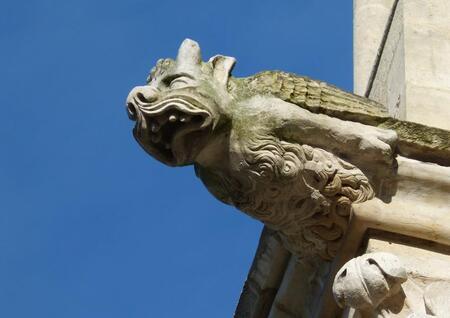
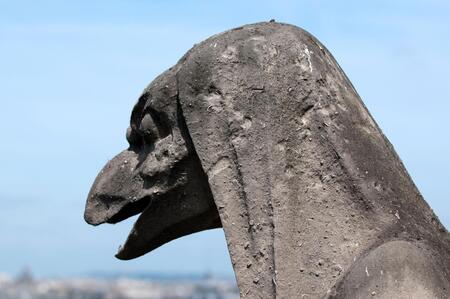
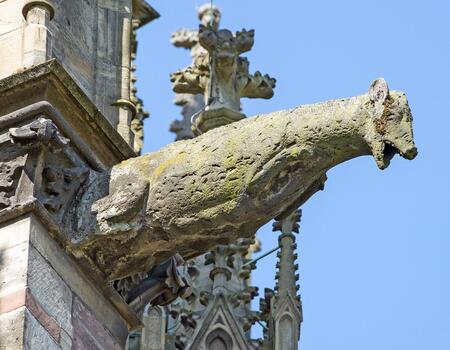
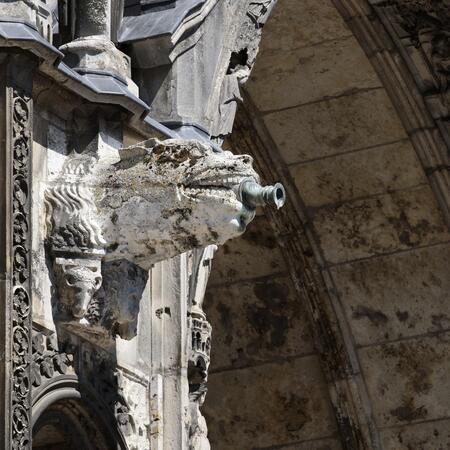
A gargoyle is a projecting drainage element designed to divert rainwater away from the building’s walls. Its design allows the water flow to be directed outside the façade, thus reducing the impact of precipitation on the masonry. In Gothic architecture, these spouts often took the form of animals or mythical creatures.Thus, the gargoyle combines two functions: a practical one and an artistic one. It is part of the building’s engineering system while simultaneously contributing to its exterior appearance.
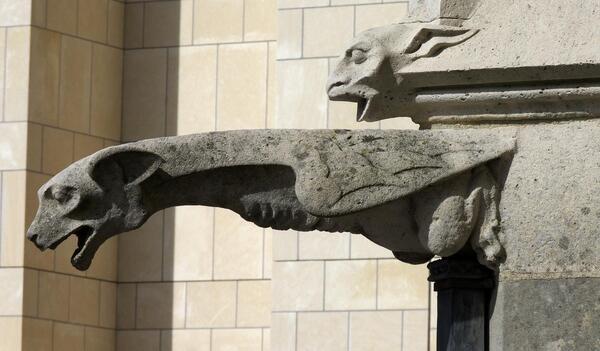
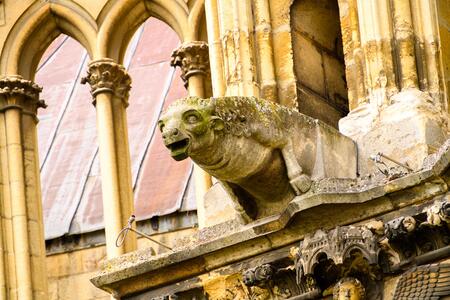
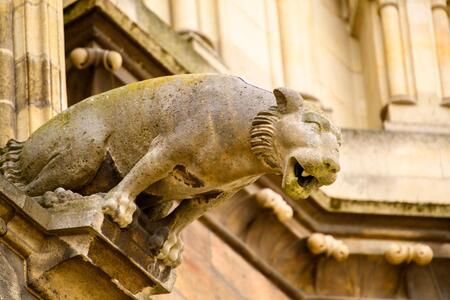
2.2. Chimeras
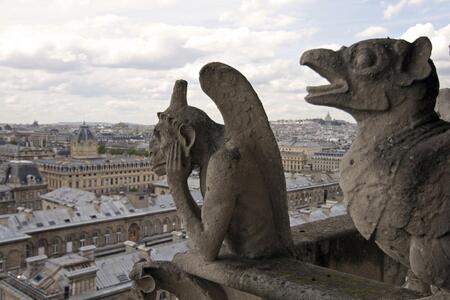
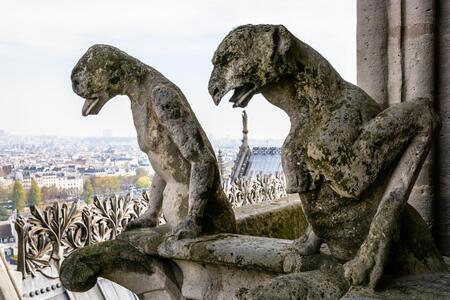
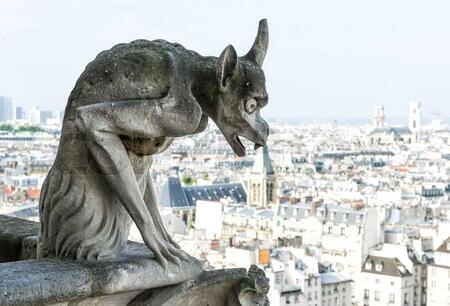
In a broad artistic sense, a chimera is a fantastic creature that combines traits of different animals or humans and animals.Unlike a gargoyle, a chimera does not necessarily have a practical function. It might be placed on an architectural projection or gallery solely as a decorative sculpture.
2.3. Grotesque
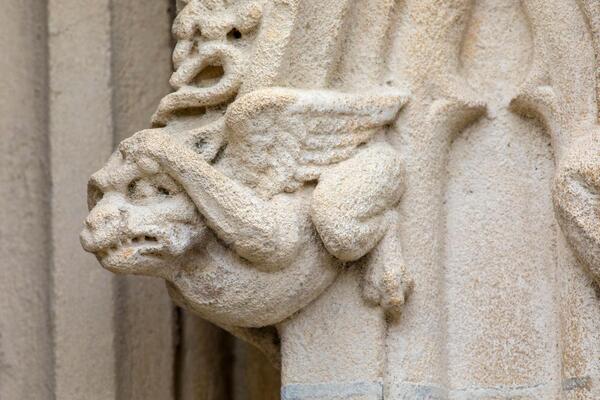
Grotesque represents a broader artistic category. It is associated with depicting fantastic, bizarre, and distorted forms.Grotesque figures may combine human, animal, and plant elements. Their expressiveness is based on the disruption of familiar proportions and the joining of incompatible elements.
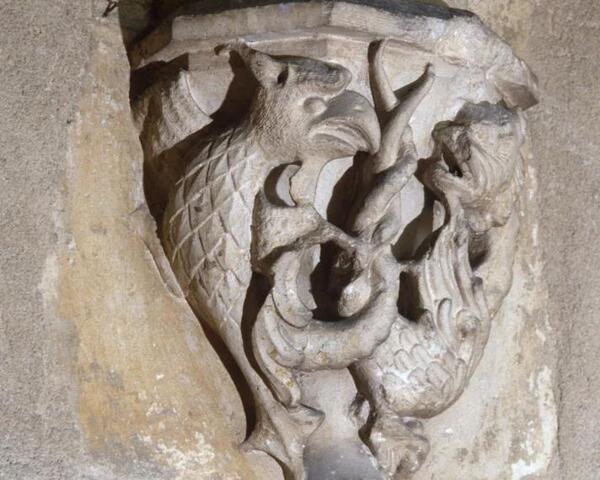
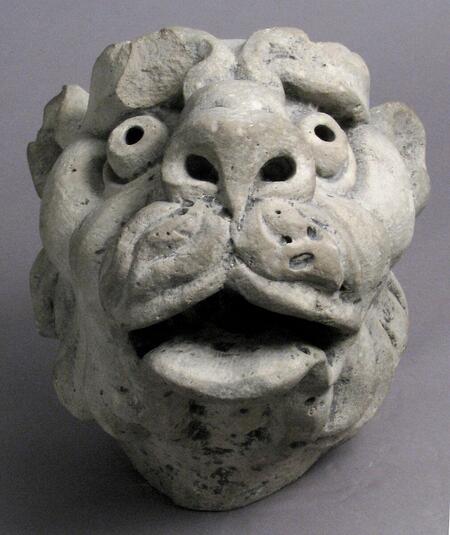
In Gothic cathedral architecture, grotesque motifs could appear on consoles, capitals, cornices, and other elements of sculptural ornamentation.
3. Architectural Function and Monster Placement
Fantastic creatures in the Gothic cathedral were placed not just for ornamentation. Their placement was often determined by the architectural structure and the function of a specific element.
The most characteristic example is gargoyles, which were placed at the top of the building, at points where rainwater was diverted. Their form was related to the flow direction, and their projecting position allowed precipitation to be channeled away from the walls.
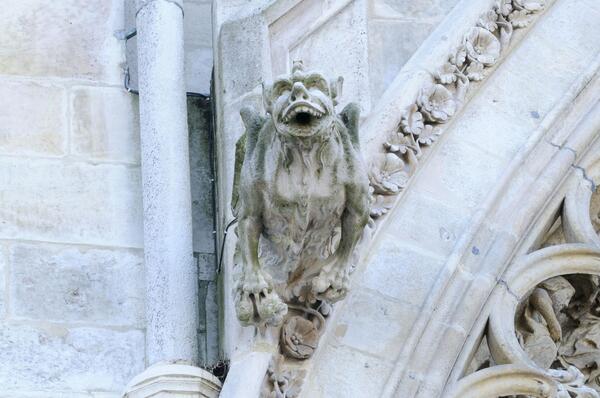
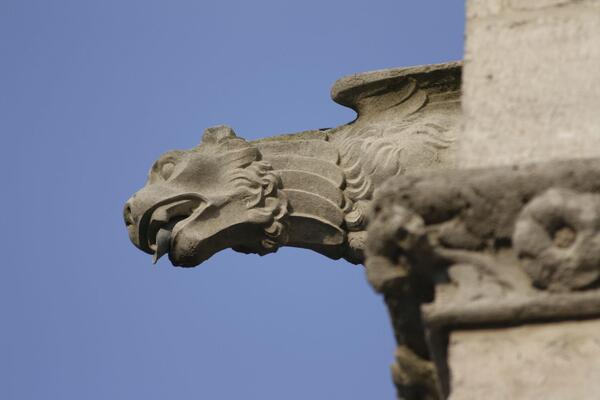
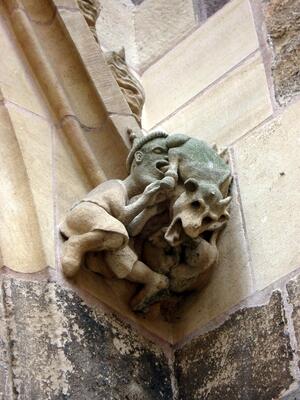
Other fantastic figures might have been situated on cornices, corbels, and decorative projections. They were not necessarily functional, but contributed to the overall facade composition.The interaction of the sculptures with the vertical structure of the Gothic cathedral is particularly interesting. Buttresses and flying buttresses created a rhythm of projecting volumes, while the fantastic figures complemented it with horizontal and diagonal silhouettes.