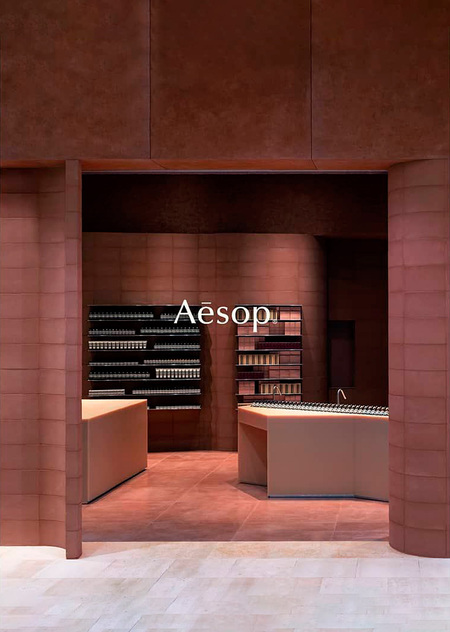
Aesop is an Australian brand specializing in skincare and haircare. It was founded in 1987 and has become known for its restrained visual identity, architectural retail spaces, and intellectual approach to beauty.

key positioning


The brand positions itself as intellectual, minimalist, sensory, and lifestyle-oriented. It can also be described as an example of premium slow luxury.
Aesop does not sell cosmetics only. It offers a complete experience: a ritual, an atmosphere, an aesthetic impression, a sense of calm, and even an architectural environment.
target audience
• young professionals • people from creative industries • designers • architects • the slow living audience • people with a strong visual taste


communication channels
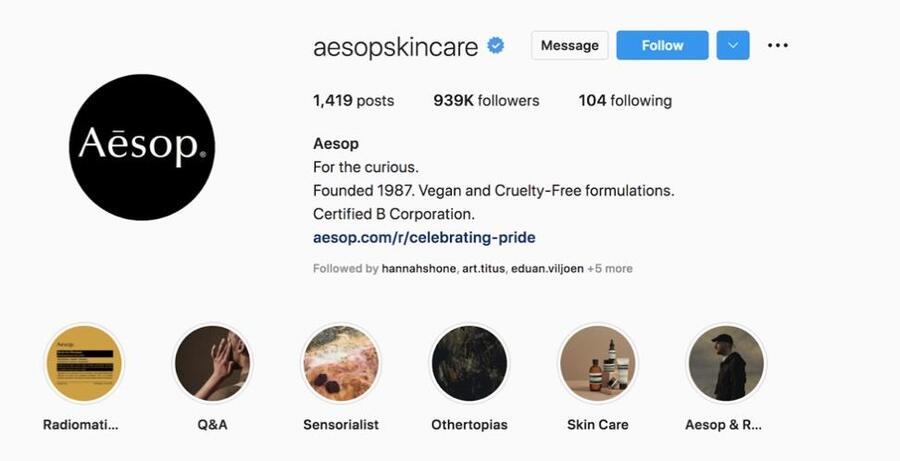
Aesop’s main communication platforms include:
• Instagram • the official website • YouTube • email newsletters
However, it is important to note that the brand rarely uses TikTok-style aggressive marketing.
Instead, Aesop relies on a slower, more restrained and visually curated communication strategy.
public field and PR strategy
Aesop’s PR strategy is based on restraint rather than loud advertising. The brand avoids aggressive promotion, celebrity-driven campaigns, and visual noise. Instead, it communicates through architecture, atmosphere, editorial-style texts, and a consistent visual identity.
Retail architecture as PR Aesop’s stores work as media spaces, communicating the brand’s values through materials, light, and local context.
Editorial communication The website and product texts feel closer to a cultural magazine than to typical beauty marketing.
Visual restraint The brand uses calm colors, minimal design, and quiet language to stand out from the loud beauty industry.
Consistency across channels Instagram, packaging, stores, and the website share the same refined and design-oriented visual language.
what is distinctive about Aesop’s communication?
- STORE ARCHITECTURE AS MEDIA
Each Aesop store is unique. The brand works with: • local architects • the urban context • materials • light • tactile experience
As a result, the store itself becomes part of the brand’s communication.
- SLOW COMMUNICATION
The brand: • almost never «shouts» • does not rely on bright promotional campaigns • avoids visual noise
This approach stands in contrast to mass-market digital culture.
- INTELLECTUAL TONE OF VOICE
Aesop’s texts are: • literary • calm • complex • almost «museum-like» in mood
theoretical framework
THEORY: Uses and Gratifications Theory
Users interact with Aesop not only for the purpose of purchasing products. They also receive:
• aesthetic pleasure • a sense of belonging to a particular cultural group • emotional calmness • visual inspiration • an aspirational lifestyle
Visual evidence: Screenshot of Aesop’s Instagram Story Theory: Uses and Gratifications Theory
Aesop’s Instagram Story works not only as a promotional message, but also as a short aesthetic experience. The restrained composition, calm colors, minimal text, and visual focus on atmosphere allow the audience to receive more than product information. From the perspective of Uses and Gratifications Theory, users engage with this content because it gives them visual inspiration, emotional calmness, and a sense of belonging to a refined lifestyle associated with the brand.
THEORY: Elaboration Likelihood Model
Aesop relies on peripheral persuasion. The brand persuades through:
• atmosphere • material • architecture • photography • light • typography
rather than through:
• aggressive discounts • rational arguments • direct advertising
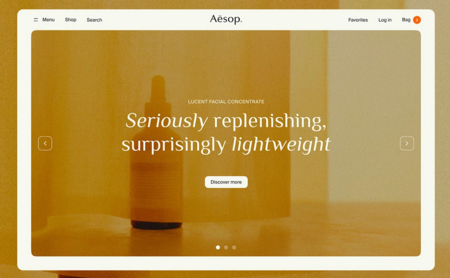
Visual evidence: Screenshot of Aesop’s website homepage Theory: Elaboration Likelihood Model
This website banner demonstrates the use of peripheral persuasion. Aesop does not rely on aggressive advertising, bright promotional signs, or discount messages. Instead, the brand persuades the viewer through warm amber tones, soft light, minimalist interface, elegant typography, and a calm product image. These visual cues create associations with trust, refinement, sensory pleasure, and premium skincare.
The phrase «Seriously replenishing, surprisingly lightweight» also gives the user a small rational product message, but the main persuasive effect comes from the atmosphere of the page. From the perspective of the Elaboration Likelihood Model, Aesop mainly uses the peripheral route: the audience is influenced by mood, visual style, and aesthetic experience before making a detailed evaluation of the product.
analysis
- INSTAGRAM AS A CURATED VISUAL SPACE
Aesop’s Instagram works not only as a promotional platform, but also as a carefully curated visual space. The brand uses muted colors, minimalist compositions, tactile textures, and architectural images. As a result, the feed looks closer to an editorial magazine or a design archive than to a typical beauty brand account.
The absence of loud colors, aggressive slogans, and excessive product promotion creates a sense of calmness and visual discipline. From the perspective of the Elaboration Likelihood Model, this strategy supports peripheral persuasion: the audience is influenced not by direct arguments, but by atmosphere, mood, and aesthetic associations.
Aesop’s Instagram also satisfies the audience’s need for visual inspiration and cultural belonging. Users interact with the brand because it represents a certain lifestyle: quiet, intellectual, refined, and design-oriented.