
This Course Teaches Animation — From Basic Principles to Complex Dynamic Scenes
From its earliest development, animation captivated viewers with its ability to bring static images to life, starting with simple optical toys. Over time, artists transformed this technical experiment into an art form, creating films with developing narratives, distinct characterizations, and expressive movements. Animation grants artists the power to breathe life into inanimate objects, make animals speak, resurrect dinosaurs, or construct universes governed by unique laws unbound by physics.
Today, animation integrates traditional techniques with digital technologies, permeating film, video games, advertising, and other fields. It has become a universal language of visual storytelling—a tool for entertainment, a method of exploration, and a form of artistic expression. An animator creates a world limited only by their imagination.
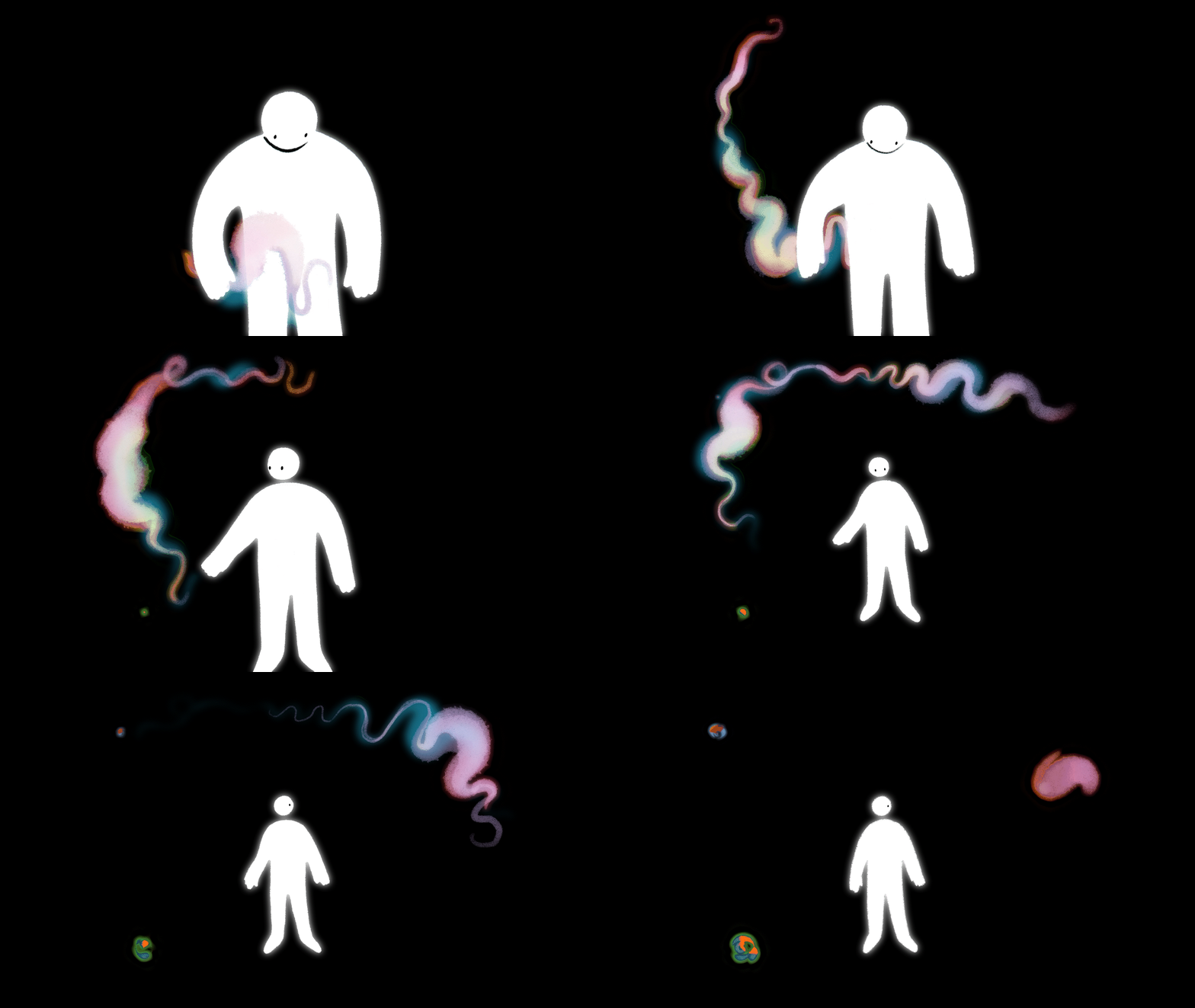
Yaroslava Yevsa, Nane Virabyan, Aigul Orazbaeva, «Secretes, ” 2024.
The course covers the full spectrum of skills necessary to learn animation from scratch. Starting with simple exercises and the basic principles of movement, students gradually move on to creating complex scenes featuring multiple characters and camera dynamics. Throughout the process, they master various animation techniques, learn editing, and work with sound, transforming individual frames into a cohesive work.
The culmination of the course will be a professional portfolio, including a series of studies and a showreel, as well as their own documentary film, which can subsequently be submitted to festivals.
Who is this course for?
This course is designed for those who are just beginning to study animation and wish to enhance their professional skills.
Program Duration: 4 Modules. Total Contact Hours: 284 academic hours. Classes are held in an in-person format.
Course Prerequisites.
Basic proficiency in frame-by-frame animation software (Photoshop, TVPaint, Procreate, or similar) and video editors.
What Will Students Learn in This Course?
Module 1
— Apply animation principles (easing/acceleration, stretching/squashing, pendulum trajectory, wave trajectory, object damping/residual motion), utilizing staged and pose-to-pose animation methods based on the task. — Edit frames to build diverse narratives. — Create clay stop-motion animation. — Edit videos in synchronization with the musical rhythm.
Module 2
— Convey character movement through special effects and animate characters in space. — Create cutout animation. — Build walk cycles, understanding how movement expresses a character’s personality and mood.
Module 3
— Maintain character proportions during camera rotation. — Construct scenes of dynamic character interaction, emphasizing key movements. — Organize the interaction of character groups, considering the choreography of movement. — Create musical accompaniment for the animation.
Module 4
— Create object stop-motion animation, applying its techniques. — Develop sound design for animation using documentary soundscapes. — Assemble documentary material into a cohesive statement. — Edit using the characteristics of music video editing.
What practical assignments will the participants complete?
Module 1
— An animation study to create a mechanism using basic principles of motion — Exercise in editing three frames into a unified statement — Animation study using stop-motion techniques — A montage video set to music
Module 2
— A dynamic animation study incorporating special effects and camera movement — Exercise in animating a character’s gait on an animation rig — An animation study of a character’s gait across five different animation techniques
Module 3
— Exercise in rotating a character 360° — An animation study featuring dynamic interaction between two characters and a 360° camera orbit — A musical-rhythmic study involving five characters in a single frame — A musical or sound track for the animation study
Module 4
— An animation study using object animation techniques — A documentary animation based on visual and auditory impressions — A soundscape for a documentary study — Showreel
Module 1. Fundamental Principles of Animation
This module is dedicated to mastering the fundamental principles of animated movement and the basics of editing.
Thematic Plan: Principles of Animated Movement Construction Animation Principles Creating Mechanics: Theatricality and Exaggeration Morphing. Motion Blurring. Working on a Plasticine Animation Study Composition, Color, and Light Editing and Meaning Fundamentals of Editing Music in Editing
Module 2. Dynamics in Animation
The second module focuses on character animation, working with gait, perspective, camera angles, and dynamic movement.
Thematic Plan: Character Design for Animation Puppet Creation Walk Cycle Animation Run Cycle Animation Perspective Angles and Camera Movement Key Poses Experimental Animation Techniques Special Effects Animation Dynamic Studies
Module 3. Character Interaction
This module focuses on composition and character interaction. Students learn to animate characters in 360 degrees, create scenes with multiple figures, choreograph movement, place focal accents, and understand the influence of music on the perception of animated sequences.
Thematic Plan: Interaction from Various Angles Animating Character Rotation In Place Narrative of the Orbit Orbit and Focal Point Color Script Character Action Lines Animated Orbit in Interaction Choreography of Movement Framing Depth Character Personality and Interaction Sound in Space Compositing: Placing Characters in Space
Module 4. Subject Animation and Animadocs
This module focuses on object-based and authorial documentary animation. Students work with a stop-motion rig, create an object study, develop a documentary animation film, assemble the soundscape for it, and compile a showreel to present their work.
Thematic Plan: Object Composition Possibilities of Object Animation Concept, Format, and Selection of Objects for the Study Filming the Object Study Compositing and Sound Design for the Object Study Documentary Animation Plein Air: Portrait of a Place Plein Air: Place as History Cornerstones of Documentary Animation Technique as a Narrative Tool Creating the Showreel
Course Outcomes
Upon completing the program, students create their own documentary animation film, applying the knowledge gained in animation, composition, sound design, and editing.
They also create an animation showreel—a short compilation of the best work produced throughout the course, including exercises, studies, experimental scenes, and the final film. The showreel serves as the student’s first professional portfolio and aids in future employment within the animation industry.