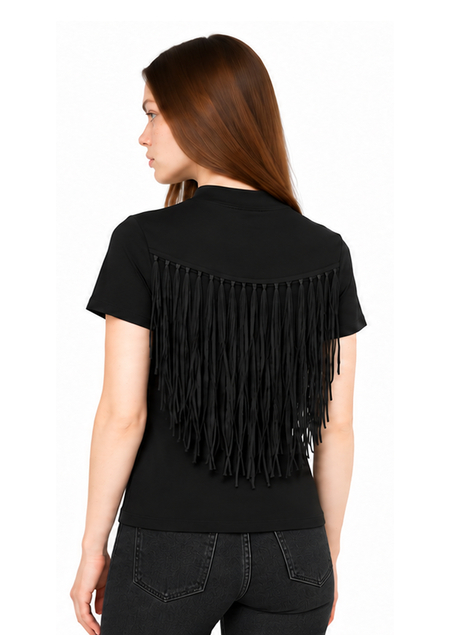
Concept
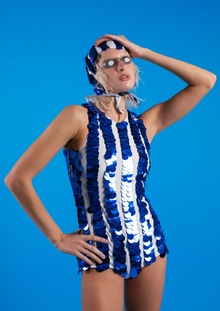
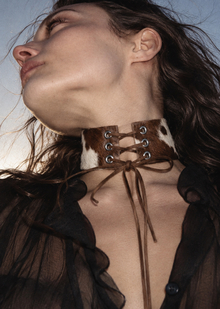
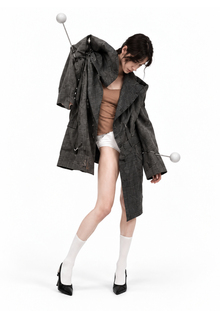
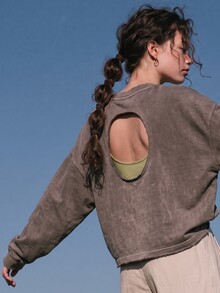
The ANIMA project explores the connection between human and animal, the natural and the man-made. Clothing is examined as a new bodily sheath through which a woman can express sensuality, inner freedom, and the instinctual side of her nature.
The visual starting point was the work of artist Isabel Albuquerque and the imagery of the model Verushka.
Albuquerque merges the human figure and the body of a fawn in his sculpture, embodying the concept of a creature existing at the boundary of two worlds. Verushka explored similar transformations through body art: she dissolved her silhouette into the natural environment and covered her body with animalistic patterns, making her an integral part of the landscape. These artistic images resonate with ancient myths where deities assumed animal forms, transcending the limits of the human body.
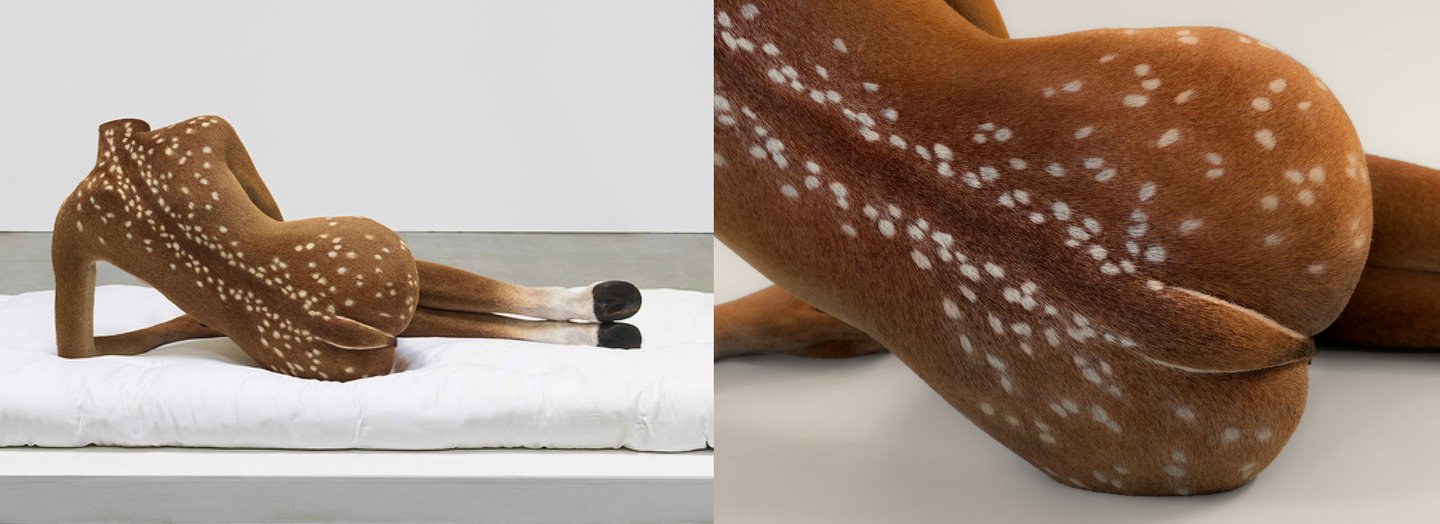
Isabel Albuquerque
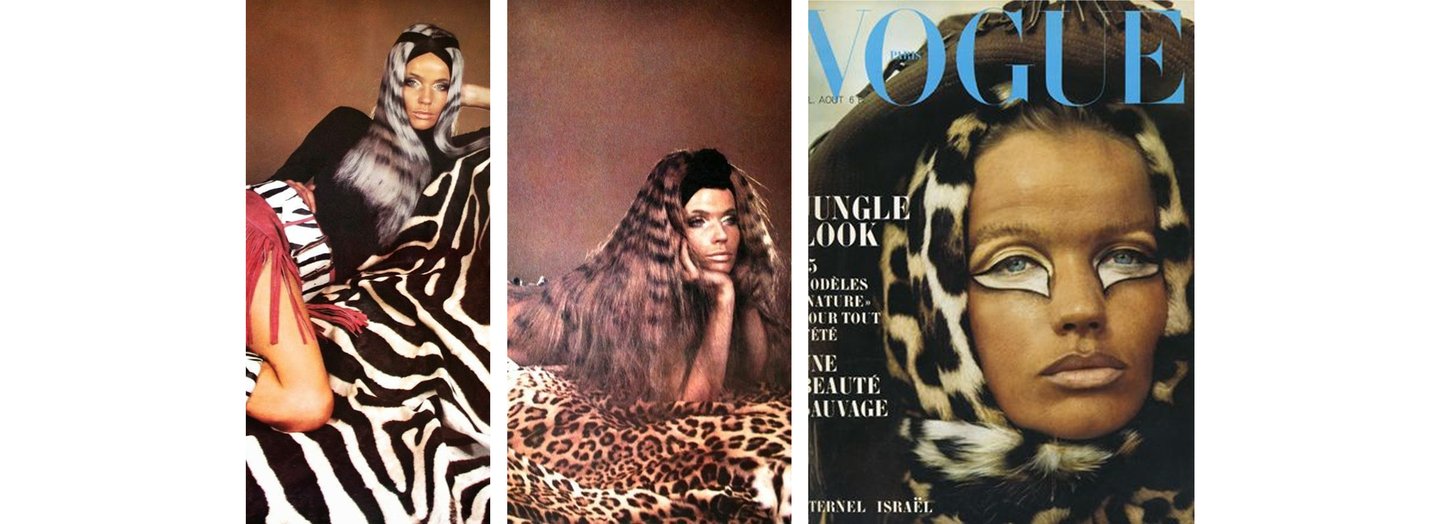
Verushka
Sketches and Visualization
The T-shirt features an elongated, fitted silhouette with short set-in sleeves and a low, stand-up collar. The garment length ends at the upper hip, approximately at the level of the pubic bone. The hemline is straight, and the front of the piece remains clean, lacking additional decorative elements.
Mockups
The back is composed of two parts: an upper yoke and a lower piece, connected by a shaped, arched seam. Along the seam line, there is raffia fringe, 28–30 cm long. It drapes freely down the back and ends at the waist or upper hip line, without extending below the bottom edge of the T-shirt.
Visualization
Visualization
The model is presented in two color variations: black and light lilac. In each variation, the fringe matches the color of the main fabric, which maintains the silhouette’s integrity and eliminates stark decorative contrast.
Technical Documentation
The T-shirt is released in one universal size, One Size, designed for Russian sizes 40–44. The elasticity of the knit fabric ensures a close fit and allows the garment to adapt to individual body shapes.
Bust circumference of garment: 72–80 cm;
Waist circumference of garment: 58–66 cm;
Hip circumference: 72–82 cm;
Back length of garment: 48 cm.
Technical Sketch
The shelf is cut from a single piece with a center crease in the front.
The back panel is divided by a figure-shaped arch into an upper yoke and a lower piece. This construction allows the fringe to be secured inside the joining seam, concealing its trim on the exterior.
The sleeves are short, set-in, and single-seamed. The shoulder line is placed in a natural position. The armhole has a moderate depth, corresponding to the fitted silhouette of the garment.
The neckline is finished with a double collar made from the main fabric. The collar piece is cut into a ring shape, folded in half, and attached to the neckline with an elastic stitch.
The bottom of the T-shirt and the sleeves are finished with a turned-and-stitched hem using a flatlock machine.
Color Variations
Patterns
Materials and Hardware
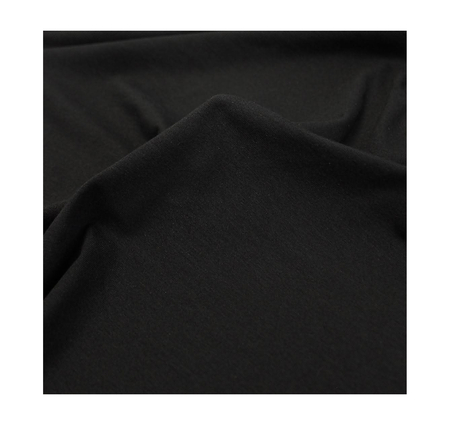
Main FabricDense, stretchy cotton jersey.Composition: 95% cotton, 5% elastane;
Density: 220–240 g/m²;
Fabric width: 170–180 cm;
Stretch: Primarily cross-grain;
Finish: Matte;
Colors: Black and light lilac.
Decorative Material
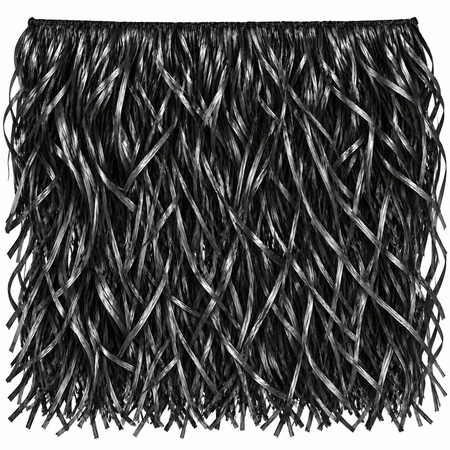
Fringe made of artificial raffia on textile trim.
Length — 28–30 cm; Trim width — 10–15 mm; Density — medium; Surface — slightly glossy; Colors — black and light lilac to match the main fabric; Composition — viscose or polyester, depending on the selected sample.
Production Information
Preliminary Cost Estimate for ProductionThe cost estimate for one item is formed from the following components:main knitwear — usage of 0.80–0.90 m × cost per meter;
decorative fringe — usage of 0.60–0.70 m × cost per meter;
reinforcing materials and thread;
pattern cutting;
sewing the item;
separate operation for applying and securing the fringe;
wet-heat treatment;
quality control;
packaging and labeling.
For calculating mass production, the creation and grading of patterns, the experimental sample, the production process map, the layout, the potential defect rate for the trim, and a minimum material reserve of 5% are taken into account. The final cost is determined after approving the fabric, the raffia supplier, the trim fastening method, and sewing a control sample.
Preliminary BudgetCost to produce one experimental sample t-shirt — 4,140 ₽.Unit cost for one t-shirt in mass production — 2,500 ₽.Cost to produce a batch of 20 t-shirts — 50,000 ₽.Total cost for the sample and batch production — 54,140 ₽.Proposed retail price per t-shirt — 4,200 ₽.Requested grant amount — 60,000 ₽. Funds are needed to develop and produce the experimental sample, launch a small series of 20 items, and conduct a collection photoshoot.*If the production run increases, the unit cost may decrease due to spreading setup and production costs across a larger quantity of items.