Analysis of Organic Transformation Creation Technologies in Film: Practical Effects and Digital Simulation
Organic transformation of bodies in cinema demands the highest level of realism: the slightest error in materiality, texture, or movement immediately shatters the illusion of life. This is the unique complexity of such VFX effects. For instance, Rob Bottin admitted that during the filming of The Thing (1982), he had to use «everything at hand”—mayonnaise, strawberry jam, latex, and even KY jelly—to make the monster appear realistically slimy and repulsive. Unlike digital sets and destroyed locations, here every change to the body interacted directly with the camera light and the weight of the materials. On the other hand, digital technologies removed the constraints of mechanics and weight: now shapes can be smoothly deformed and mutation stages combined seamlessly, but this sometimes comes at the cost of losing materiality. The director of The Thing (2011), Matthieu van Heeghen, even noted that his digital models ended up looking „too smooth“ and „more like CGI, ” and confessed that replacing practical effects with CG was a mistake—a point difficult to dispute.
Navigation
- Introduction - Timeline of Organic Transformation Technology Development - Visual Effects Specialists - «The Thing» (1982) - «The Fly» (1986) - «The Thing» (2011) - «Annihilation» (2018) - Conclusion
Chronology of Organic Transformation Technologies
1982 — «The Thing» Rob Bottin, Stan Winston — foam latex, animatronics, reverse-motion, stop-motion, mechanical puppets.
1986 — «The Fly» Chris Wallace, Stéphane Dupuis — multi-stage prosthetic makeup, animatronic heads, mechanical prosthetics, body-horror makeup.
2011 — «The Thing» ADI (Alex Gillis, Tom Woodruff Jr.), Eric Sandon — a hybrid of animatronics and CGI, digital replacements for practical creatures.
2018 — «Annihilation» Double Negative, Andrew Whitehurst — procedural CG simulations, muscle systems, subsurface scattering, volumetric FX.
Visual Effects Specialists
The Thing (1982)
John Carpenter — Director Rob Bottin — Special Makeup Effects Supervisor Stan Winston — Additional Creature Effects Randall William Cook — Stop-Motion Animator Dean Cundey — Cinematographer Peter Kuran — Optical Effects
The Fly (1986)
David Cronenberg — Director Chris Walas — Makeup Effects Supervisor Stephan Dupuis — Prosthetic Makeup Designer Rob Bottin — Additional Effects Consultant Mark Shostrom — Creature Effects
The Thing (2011)
Matthijs van Heijningen Jr. — Director Eric Sandon — VFX Supervisor Alec Gillis — Creature Design (ADI) Tom Woodruff Jr. — Animatronics Supervisor Amalgamated Dynamics Inc. — Practical Creature Effects
Annihilation (2018)
Alex Garland — Director Andrew Whitehurst — VFX Supervisor Double Negative (DNEG) — Main VFX Studio Pablo Grillo — Animation Supervisor David Cordon — Creature FX Artist
«Something» (1982): Practical Biomechanics
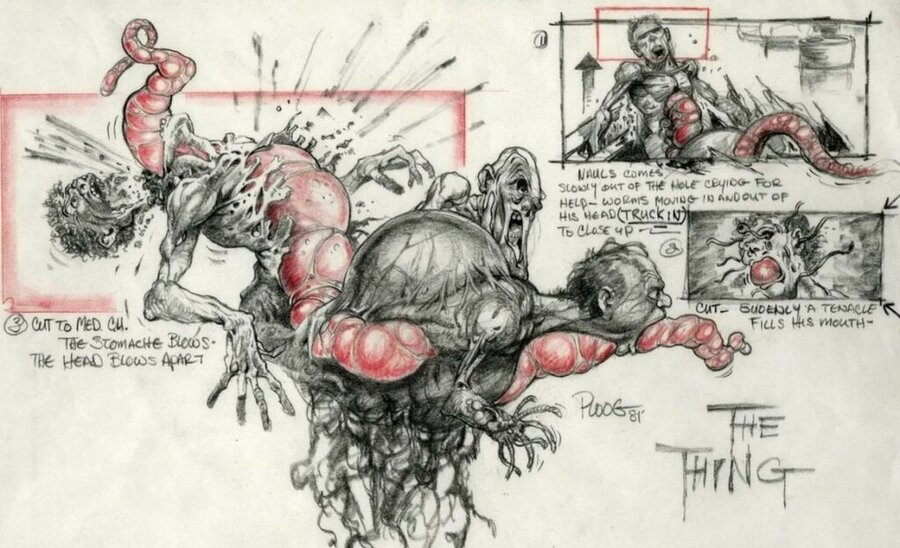
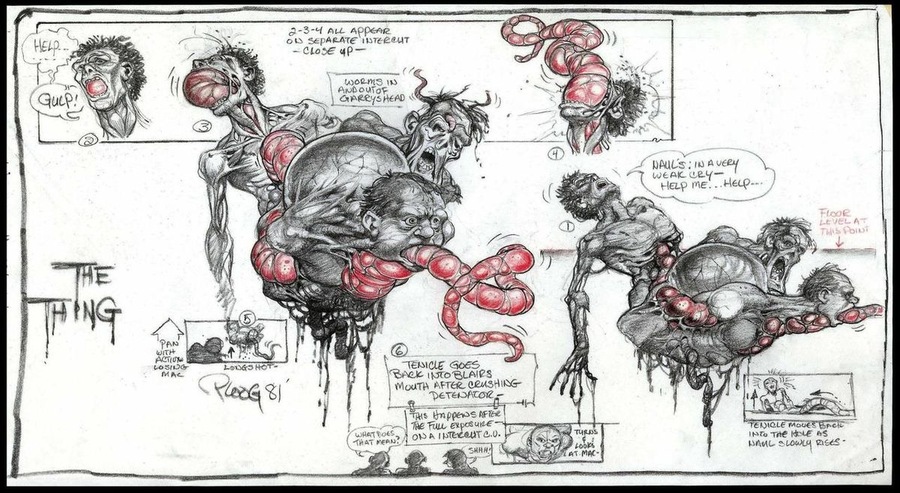
Nouls' cut-out death storyboard. The scene was executed in frame-by-frame animation, but it appeared too unreal to the creators.
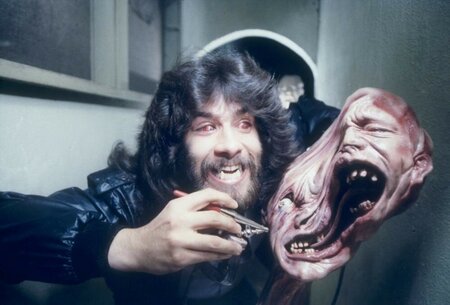
John Carpenter’s film became a benchmark for practical organic effects thanks to the work of special effects supervisor Rob Bottin, with the participation of Stan Winston and stop-motion animator Randall William Cook, making it a true masterpiece in the field of practical organic effects. (Rob Bottin during head painting)
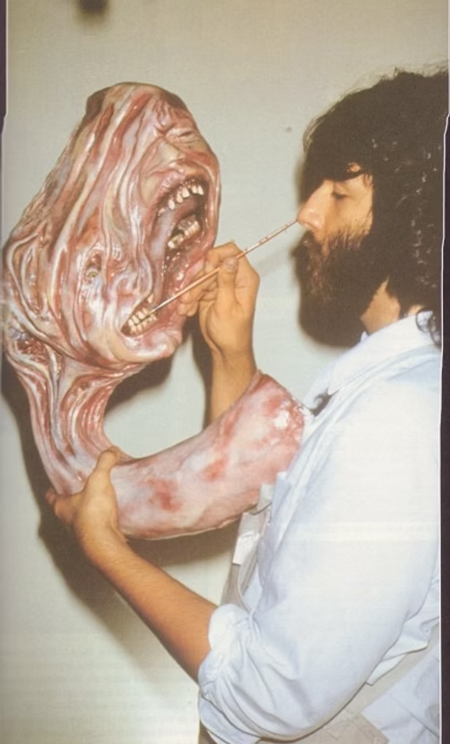
The film relies on physical effects: foam latex models, hydraulic and cable mechanisms, reverse-motion shooting, animatronics, stop-motion, and practical gore effects. As the creators note, «everything possible was used» to create the monsters—ordinary household products and medical gels were mixed with latex to achieve a believable slime texture. One of the first complete portrayals of a transformed organism in the film was the so-called «Norwegian Thing”—a charred and deformed body found at the station. Rob Bottin created this effect as a stationary latex sculpture, emphasizing not movement, but the complex texture of the tissues and the sensation of biological decay.
Norwegian something
Exhibition Scene
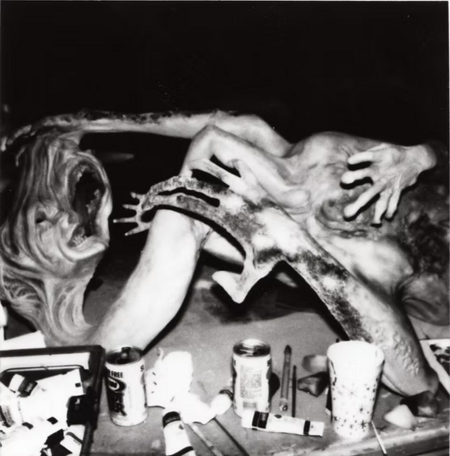
The model was constructed from rubber and foam latex elements, featuring multi-layered painting to simulate burnt skin, exposed muscle tissue, and deformed bone structures. KY Jelly and thick carbopol-based gels were used to create the moist surfaces, giving the tissues a slick, partially decomposed appearance under directional light.
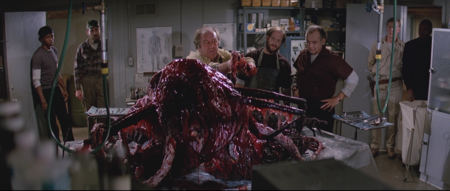
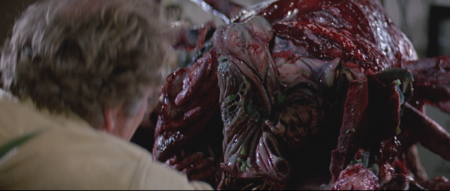
Model dissection with a top layer coated in paint and lubricant—a plastic sculpture under vinyl skin.
The additional effect of «living» vapor was created using a mixture of ammonia and acetic acid—a classic practical method for generating dense white smoke directly within the frame. The vapor exited the creature’s cavities, enhancing the sense that the organism was still biologically active.
During the autopsy scene, real animal organs were placed inside the model so that when the tissue and internal structures were cut, they reacted with physical authenticity. Because of this, even a stationary mannequin was perceived as an object with real mass and internal volume, rather than just a decorative prop.
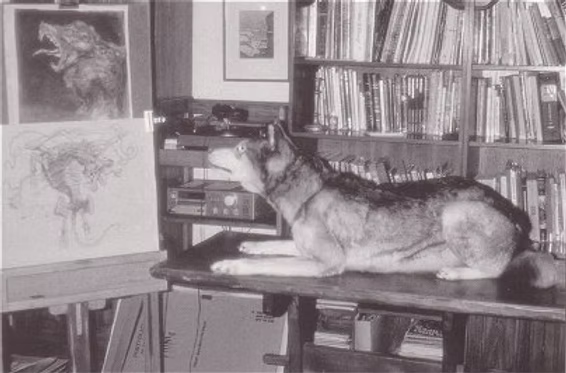
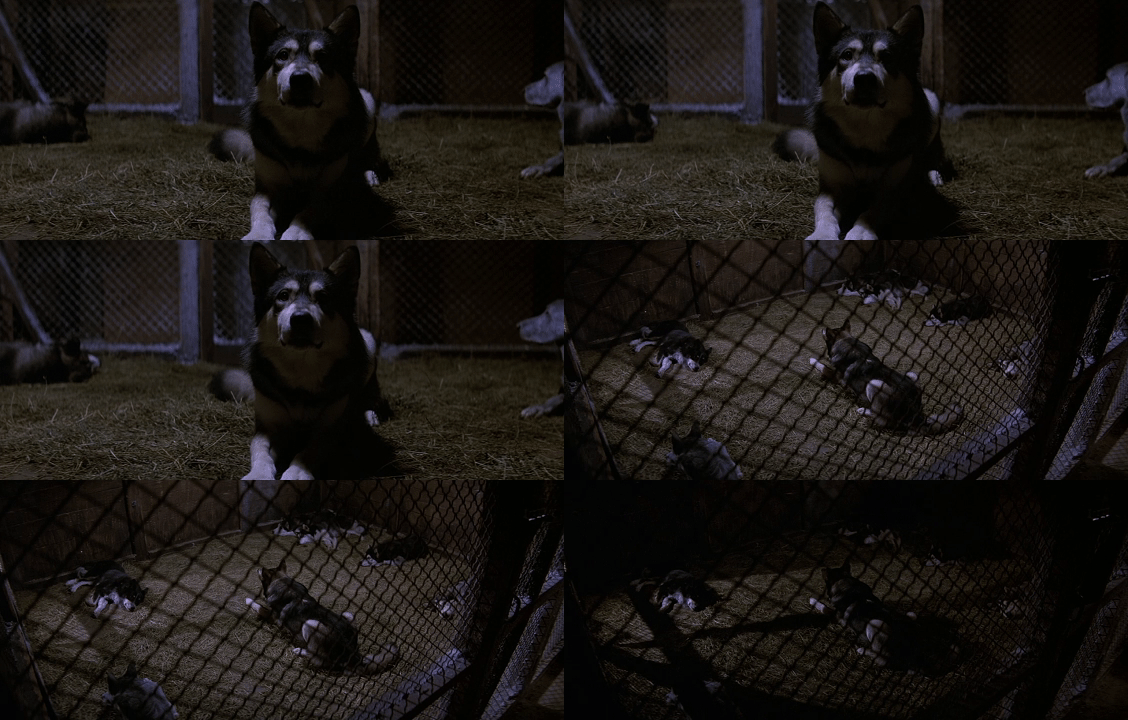
Dog-to-Model Montage/Stitching
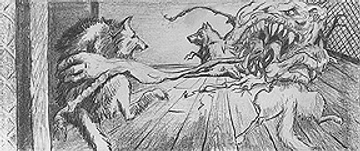
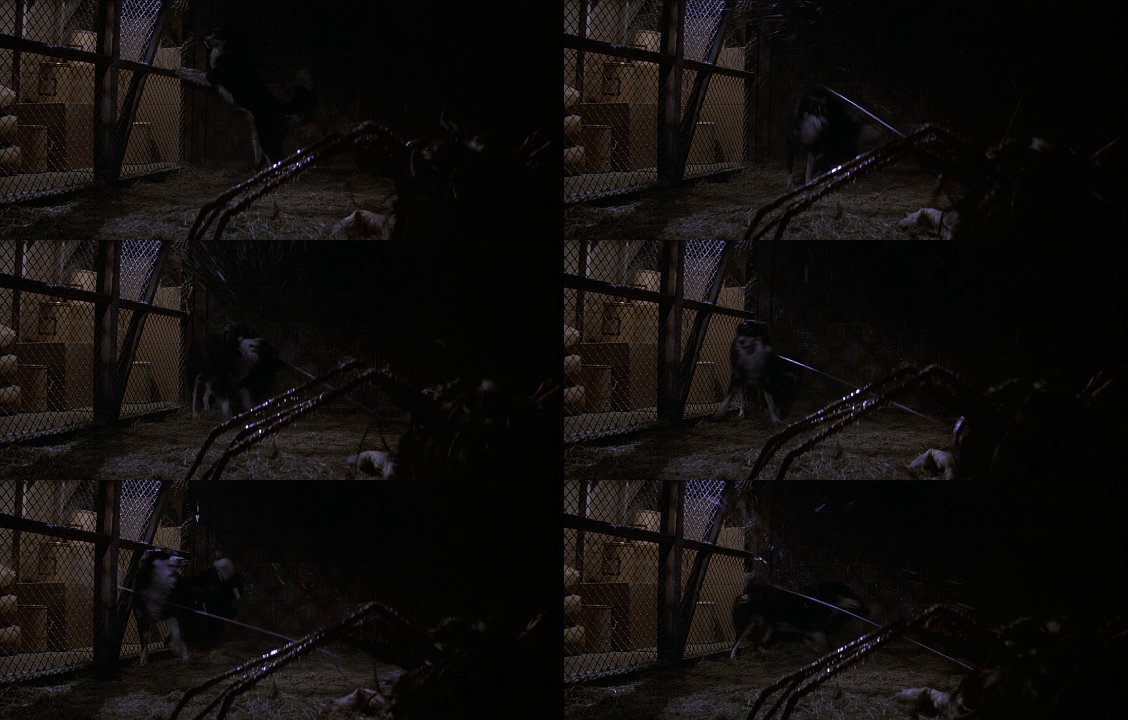
Sketch for the scene and scene from the film «The Thing» (1982)
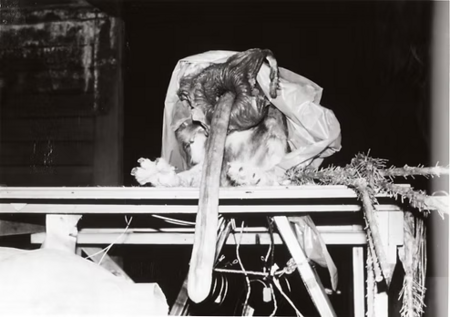
The scene depicting the dog’s mutation in the enclosure was created using several separate foam latex puppets, each responsible for a particular stage of the transformation. After assembly and gluing, the real dog was replaced by a mechanical model, controlled by assistants who operated it through cables and manual drives hidden within the set design. Special attention was paid to the effect of «spreading» flesh. The latex shells were stretched mechanically, and the surfaces were coated with thick gels and lubricants to create the sensation of wet, organic tissue. In individual shots, the tentacles were pre-attached to the set walls and then removed in reverse motion, which made the movements appear unnaturally lifelike. (Photograph showing the wires controlling the model’s limbs)
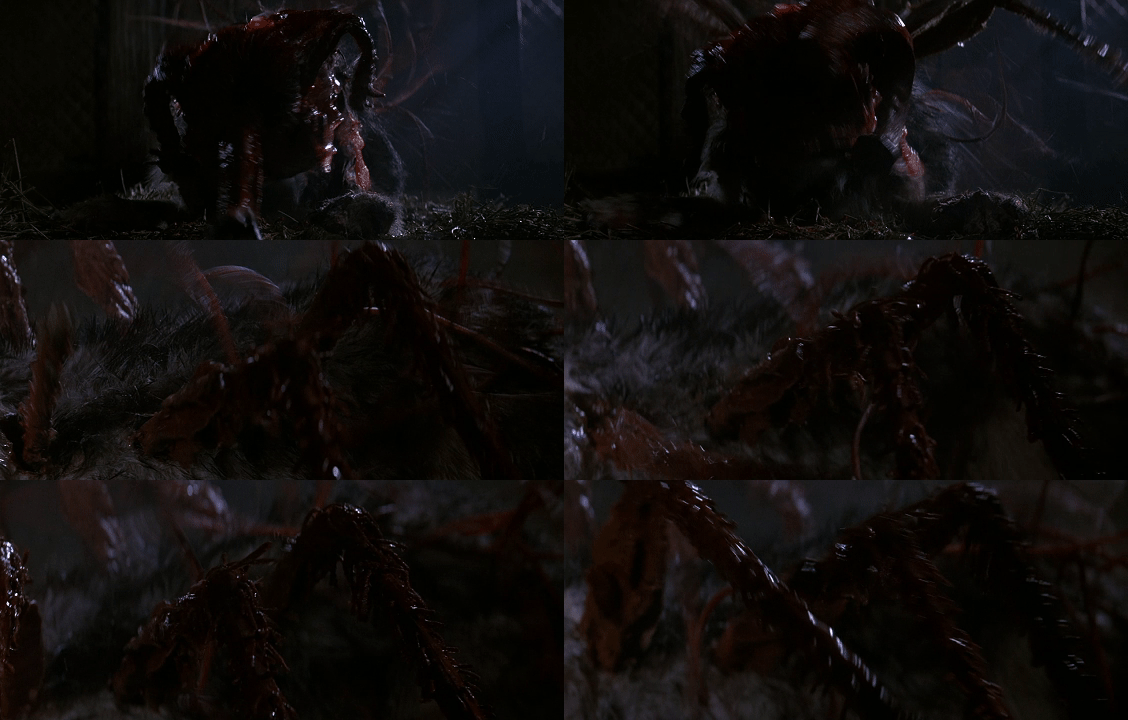
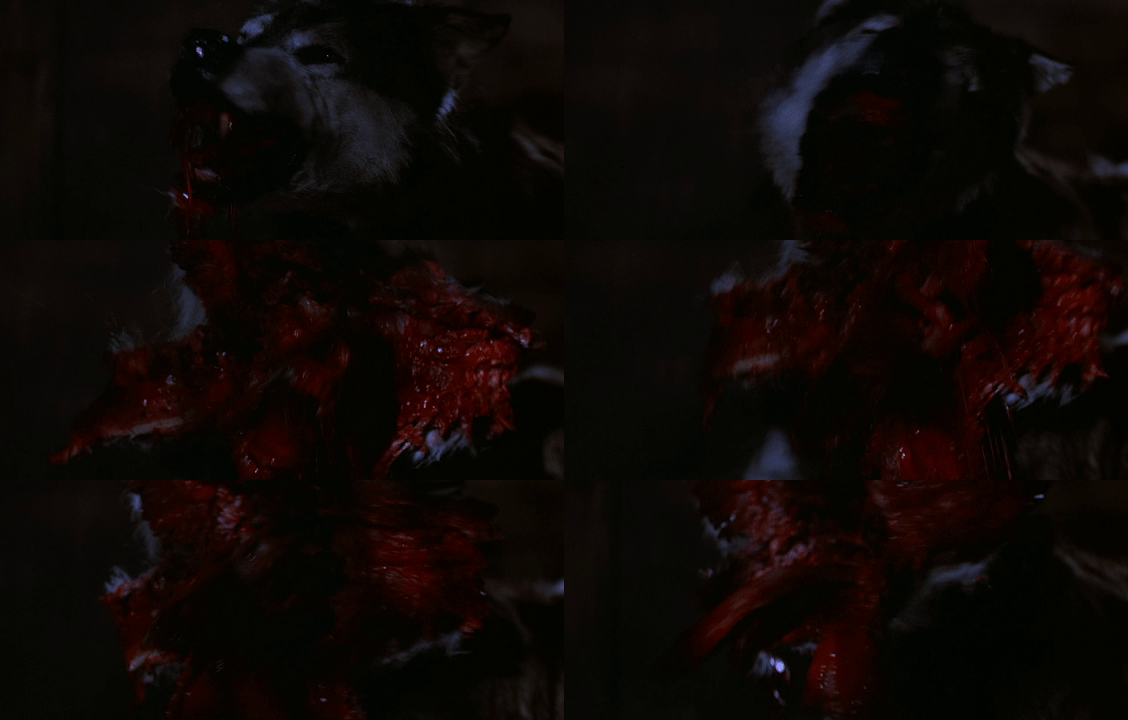
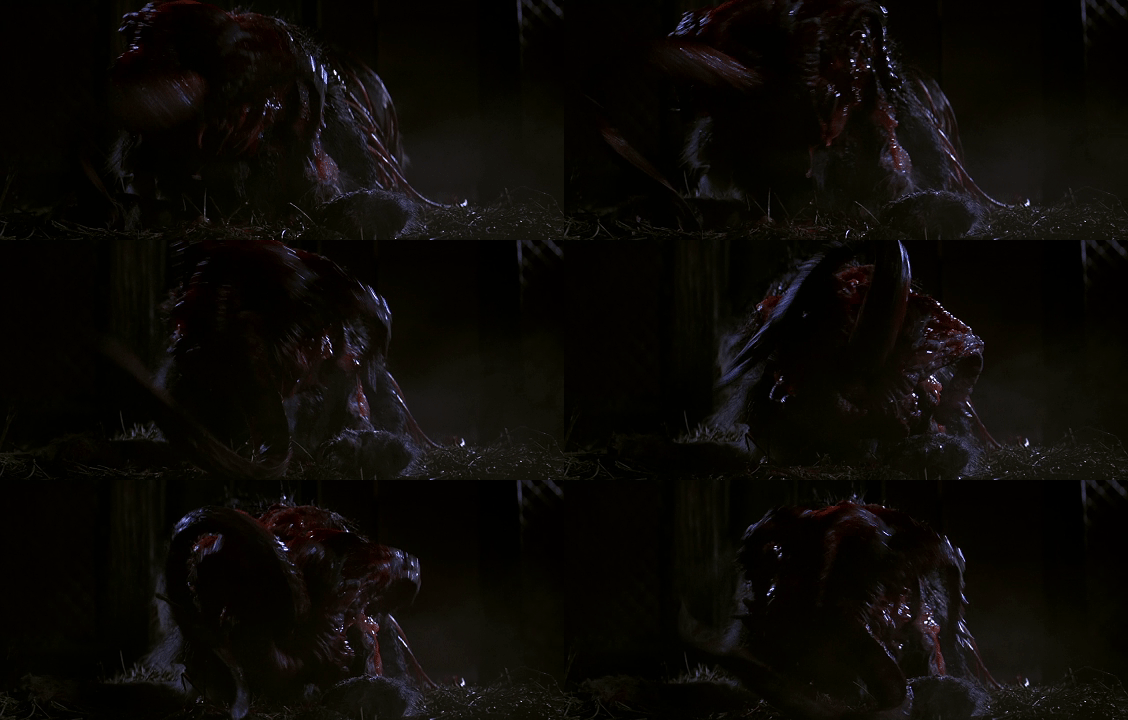
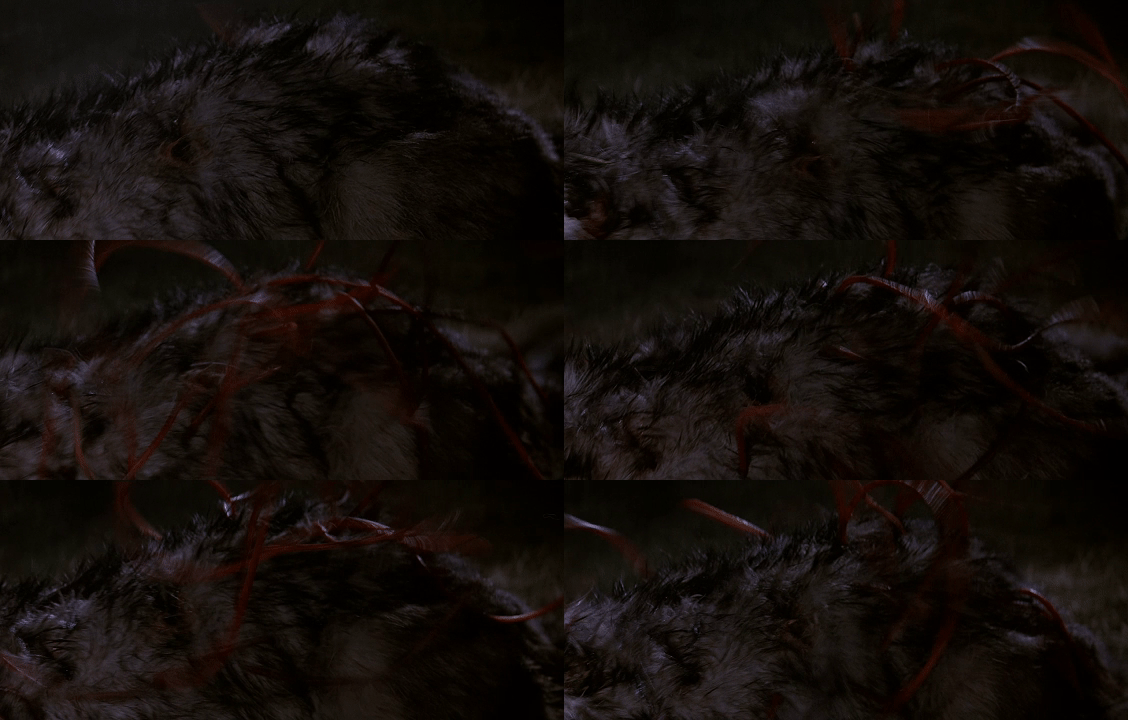
Scenes of the dog’s transformation from the film The Thing (1982)
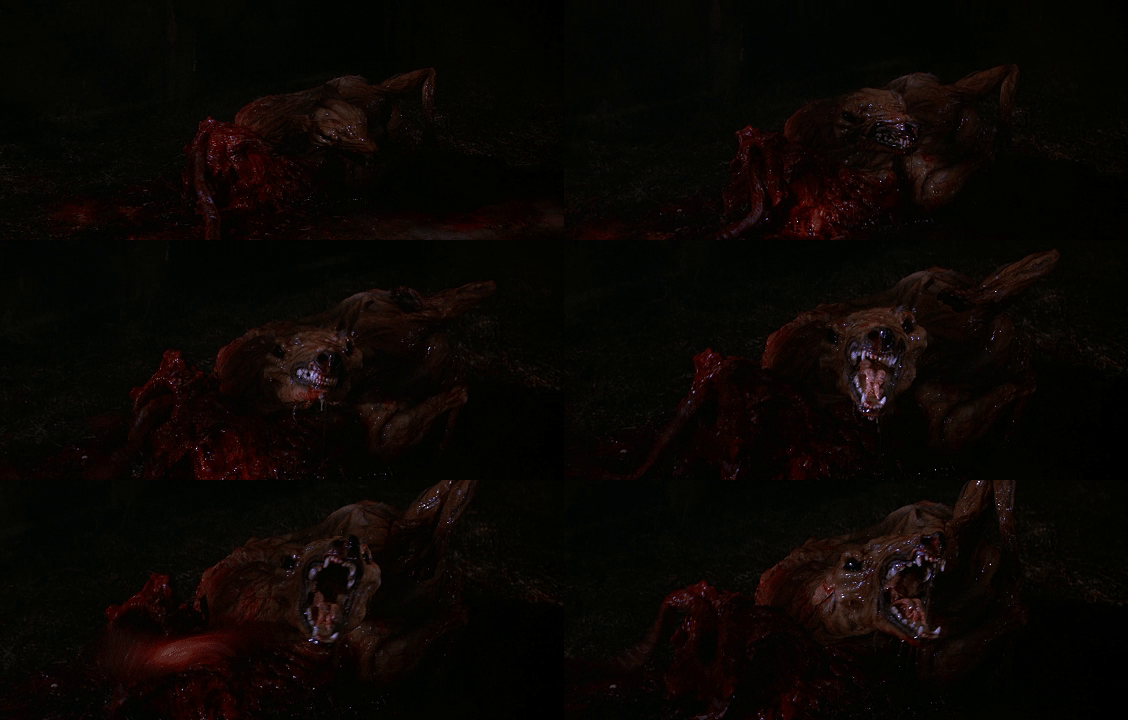
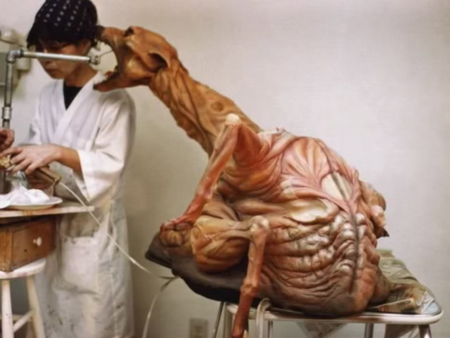
A smoothly moving dog head—a model no longer entirely controlled by threads; the entire essence lies in the empty neck, through which the head is pulled like a glove, while everything else remains strung.
This shot was filmed in reverse; the tentacles were arranged and pulled under the model, and then the footage was edited in reverse order.
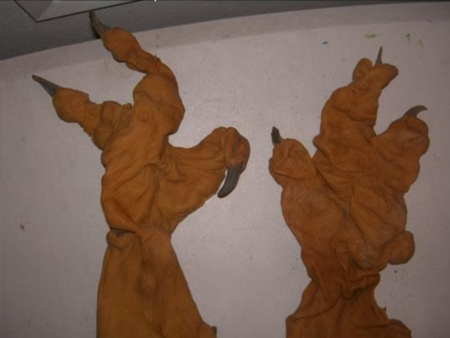
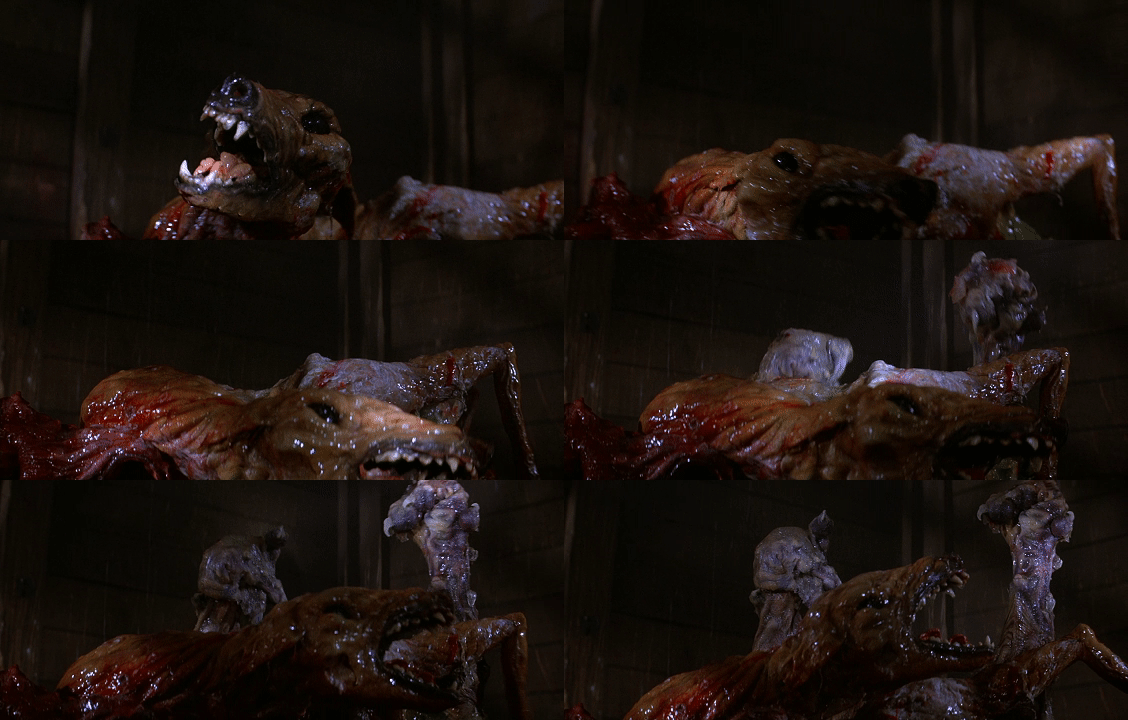
New appendages sprouting from the back — puppet gloves
In the film, the dolls change within the frame, break, tear, and cover. Many scenes required shooting in one continuous take because of this. We succeeded with the dog, but from then on, everything became much more complicated.
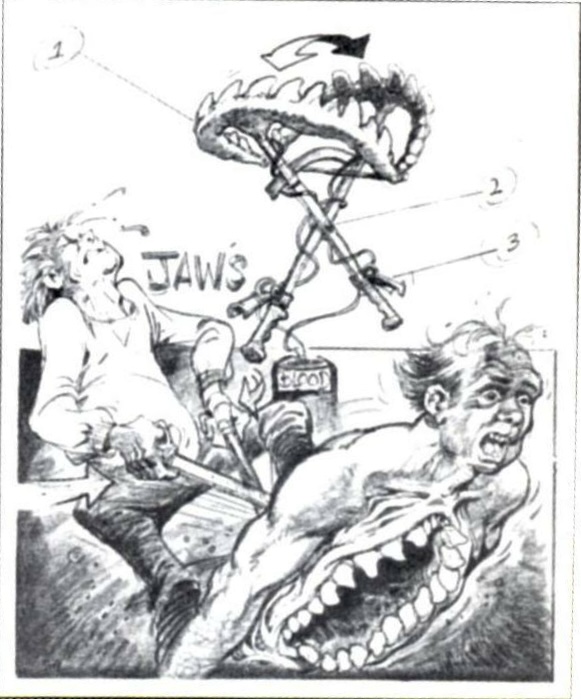
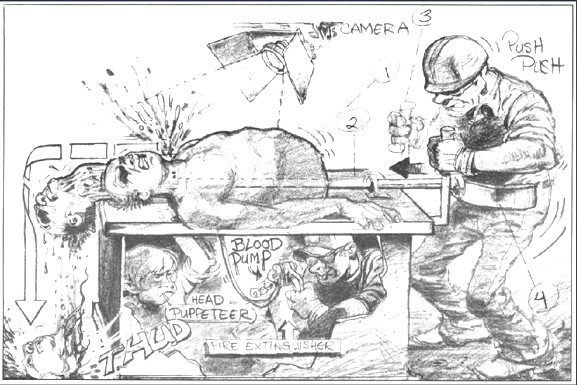
«Something,» 1982, directed by John Carpenter, concept art by storyboard artist Mike Plug.
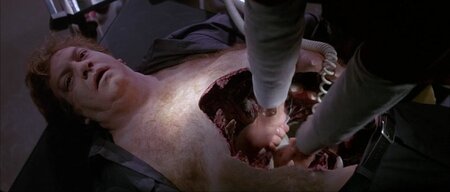
The Norris defibrillation scene was set using a hydraulic rig with a silicone replica of an actor’s torso. At the critical moment, the mechanism literally tore open the shell, revealing jaws, tentacles, and fragments of internal «flesh.» In the scene, the actor was beneath the table; only his head, neck, and shoulders were visible in the shot.