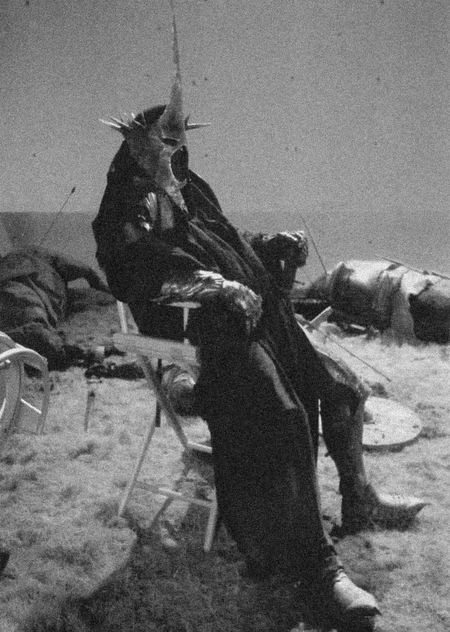
Index
- Concept
- Creators (Weta Workshop and Weta Digital)
- Technological Context 3.1 Material Basis of The Lord of the Rings Trilogy: Prosthetics and Appliances 3.2 Limitations of the Film Era and Material Wear on Set 3.3 The Digital Shift of The Hobbit Trilogy: The Challenge of Shooting at 48 fps 3.4 Virtual Pipeline: Digital Sculpting and Fabric Simulation
- Comparative Analysis of Screen Realizations 4.1 The Leaders: Lurtz’s Physics vs. Azog’s Anatomy 4.2 Flesh Deformation: Gothmog’s Mass vs. The Great Goblin’s Dynamics 4.3 Commander Expressions: Grishnak’s Appliances vs. Bolg’s CG Model 4.4 Extras: Stunt Performers in Masks vs. Procedural Crowds
- Environmental Interaction Features 5.1 Material Optics: Silicone Behavior vs. SSS Algorithms 5.2 Camera Dynamics: Set Constraints vs. Virtual Camera 5.3 Plate Integration: Real Contact vs. Digital Compositing
- Conclusion
- Sources
Concept
This study examines how the technologies for creating fantastic creatures in cinema evolved at the transition point between the analog and digital eras. In the early 2000s, monsters were created using practical effects: hours of prosthetic makeup, matte paintings, and puppetry. By the 2010s, however, the industry had shifted to computer graphics. Peter Jackson’s Lord of the Rings trilogy (2001–2003) and The Hobbit (2012–2014) serve as a clear case study for this transformation. Both franchises shared similar artistic objectives and were developed by the same studios—Weta Workshop and Weta Digital. Yet, in the first trilogy, orcs were played by stunt performers in heavy prosthetics, while in the second, they were replaced by digital models. Our goal is to understand how this transition altered cinema’s visual language and why the studio moved away from physical effects in favor of pixels.
The central question of this work is: How did replacing prosthetic makeup with computer graphics change the appearance of the orcs and goblins, and what technological compromises did this necessitate? We hypothesize that the change in tools influenced several key aspects. First, the graphics liberated anatomy—artists were able to create proportions impossible for a human body in costume. Second, the handling of light changed: silicone prosthetics naturally reacted to the set lighting, whereas digital skin required complex subsurface scattering algorithms to achieve a waxy appearance in certain areas. Third, abandoning makeup was a forced move due to the 48 fps format, where matte seams became noticeable. Finally, the virtual camera removed editorial limitations, allowing creatures to be viewed from 360 degrees.
To prove this, we will compare screen captures taken at paired freeze-frames, correlating them with production dailies and studio breakdowns. We will compare the work of makeup artists Richard Taylor and Gino Ascvedo (Weta Workshop) with the digital characters designed by VFX supervisors Joe Letteri and Eric Sheldon (Weta Digital). The analysis is structured around three pairs of similar characters: Lurtz and Azog, Gotmog and the Supreme Goblin, Grishnak and Bolg, as well as battle scenes in enclosed spaces.
The work is divided into four parts. First, we will examine the artists and the technological context: the properties of foam latex and silicone versus digital sculpting and shaders. In the second part, we will conduct a pairwise analysis of character anatomy, gaze, and facial expressions. The third part is dedicated to environmental interaction: how materials behave under light and compositing within the shot plate. Finally, we will synthesize conclusions regarding why the tactility of analog makeup continues to successfully compete with digital graphics.
Authors of the Practical Age: The «Lord of the Rings» Trilogy
Richard Taylor | Gino Acevedo | Jim Rigel
Richard Taylor — co-founder and director of Weta Workshop. Special Effects Makeup Supervisor, responsible for creature creation, props, and miniatures. He oversaw the development of concepts, the coordination of production workshops, armor casting, and the organization of the assembly line for creating thousands of makeup elements for orcs and orc-hai.
Gino Acevedo — Plastic Makeup Supervisor and Lead Creature Artist at Weta Workshop. He developed individual facial sculptures, directed the creation of delicate silicone and latex prosthetics, personally applied complex makeup to key characters (including Lurtz and Gothmog), and fine-tuned multilayer coloring formulas for artificial skin.
Jim Rigel — Lead Visual Effects Supervisor for the project. He coordinated the integration of practical on-set elements with digital effects from Weta Digital, ensuring a seamless blend of stunt performers in prosthetic makeup within scalable battle scenes.
Authors of the Digital Age: The «Hobbit» Trilogy
Joe Letteri | Eric Saindon | Matt Aitken
Joe Letteri — Senior Visual Effects Supervisor and Director at Weta Digital. A four-time Academy Award winner. He led the studio’s global technological overhaul of the pipeline, implementing deep subsurface scattering algorithms for digital skin, physically accurate rendering, and integrating graphics into a revolutionary 48 frames per second shooting format.Eric Seandon — VFX Supervisor for the project. He was directly responsible for creating the key digital characters of the trilogy, including Azog the Scourger and the Supreme Goblin. He oversaw the process of replacing practical masks with 3D models during post-production and managed the integration of CG elements with live actors on set.Matt Aitken — VFX Supervisor. He led the digital creature and procedural crowd simulation department. He was responsible for developing the architecture of the Goblin underground city, the dynamic movement of hundreds of digital antagonists in the frame, and the interaction of their virtual bodies with torchlight and dust.
Technological Context
The foundation of the analog makeup work at Weta Workshop was the technology of taking individual, full-scale (1:1) anatomical molds. To ensure a tight fit of the prosthetics, the stunt performer’s face was covered with medical alginate and reinforced with plaster to create an exact replica of the head. For the actors playing the two-meter-tall Uruk-Hai, Gino Acevedo’s team cast monolithic 40-kilogram plaster torsos. This allowed them to model the neck, chest, and shoulders as a single, seamless canvas, eliminating visible seams on camera. The main drawback of the method was its static nature: the mold captured the face in a neutral expression, so the behavior of the elastic materials during the stunt performers' screams and active facial expressions had to be manually adjusted on set.
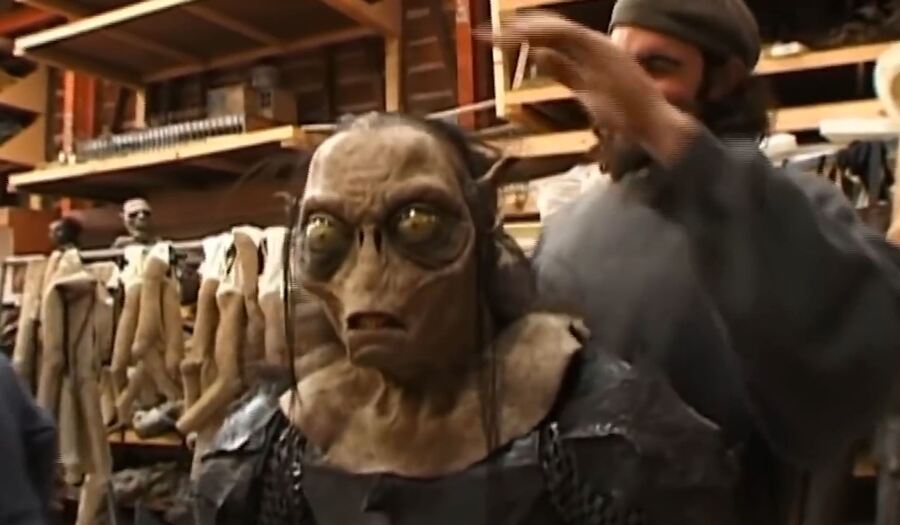
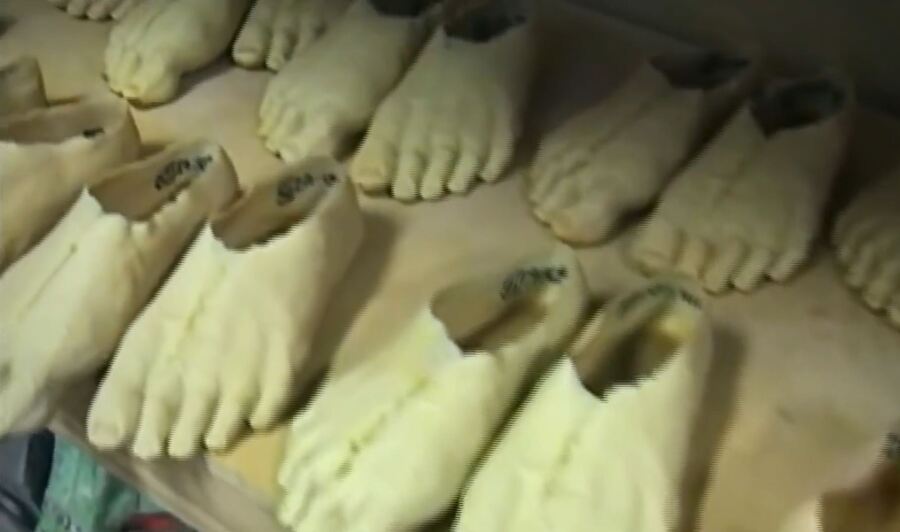
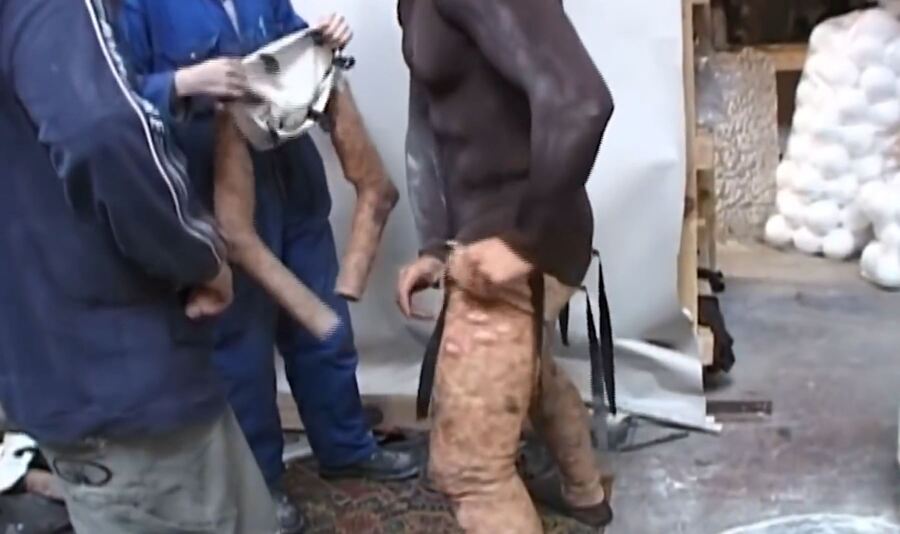
Orc Costume Creation Process | https://www.youtube.com/watch?v=8JStweEgfyg&list=PLcB9l9LB8GcleS7hiEChAGHs2nie7ujwC&index=1