How I Created a Viral Video: From Analytics to Trend
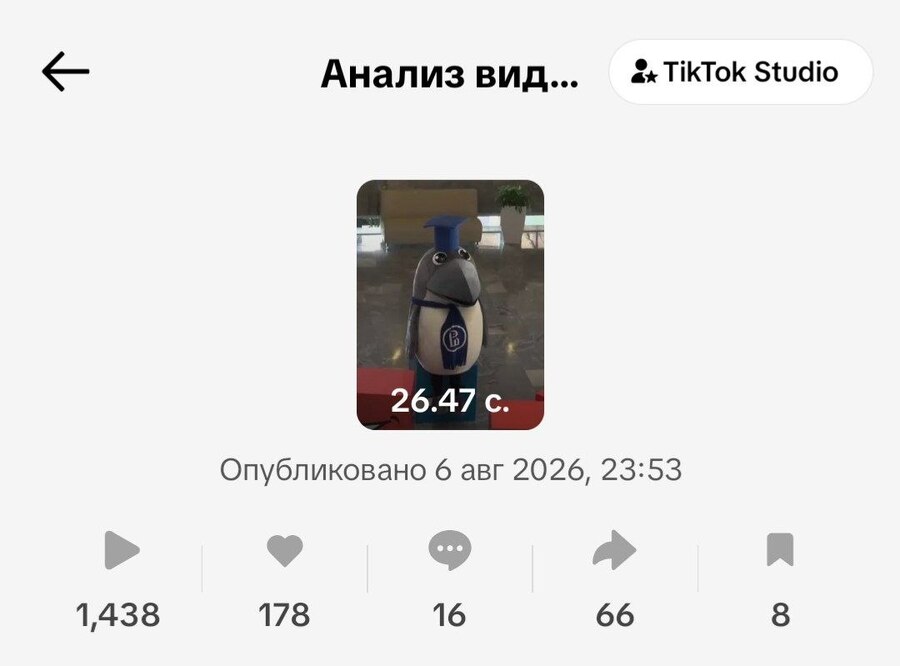
In my work, I always base my approach on data and current trends. Screenshots show the results of my latest experiment on TikTok: 1,438 views, 178 likes, 66 shares, and 16 comments. The engagement rate (ER) was very high—people actively saved and shared the video.
Here is how I arrived at this result:
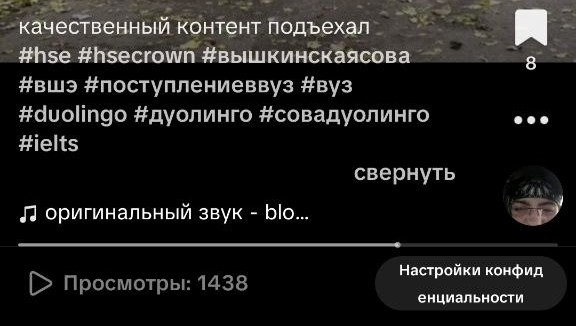
· Audience Analysis and Relevance: I recognized that my target audience consists of current students and prospective applicants (indicated by hashtags like #hse and #college_admission). I decided to tap into their anxieties and local internet humor by creating a joke about «encounters» with the university’s mascot and the educational platform’s mascot (the HSE raven and the Duolingo owl). · Utilizing Trendy Formats: I hitched a ride on the wave of the popular video meme, «POV: your gallery if you were…». This format is perfect for short, dynamic videos. I adapted it for a specific niche, making the text highly recognizable to both high school students and university students. · Visual Selection: The image of the Duolingo owl strolling in a park fit the context perfectly. It served as a visual anchor and amplified the humorous effect of the text. · SEO and Hashtags: I carefully selected tags, dividing them into three categories: branded (hse, vyshkinsky_sova), educational (hse, college_admission), and meme-related (duolingo, дуолинго). This helped the TikTok algorithms quickly identify the intended audience and push the video into the recommendation feed.
Ultimately, the platform’s algorithms gave the video a strong launch (the chart shows a sharp spike in views), and viewers supported the clip with likes and shares. This proves that even a simple format requires a deep understanding of the audience and timely relevance to current trends.