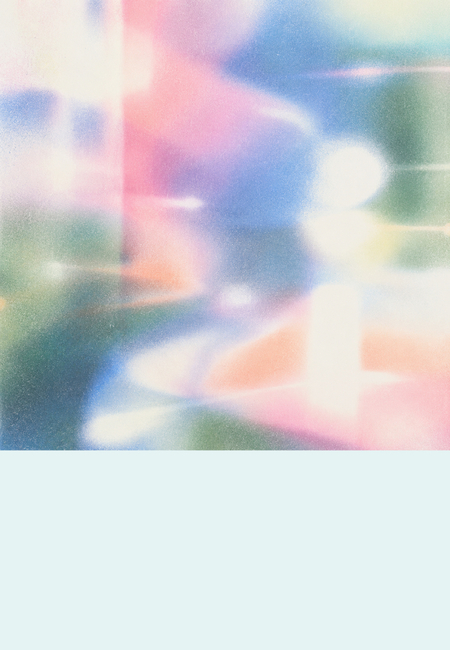
AFTERIMAGE — an experiment to teach a generative model the visual language of analog imagery. The core of the research focuses on graphic effects that arise when the conventional conditions for forming and reproducing photographs are disrupted: overexposure, blurred contours, grain, noise, color distortions, and signs of media damage.
The project investigates the possibility of reproducing these characteristics without physical film, chemical processes, or a photographic subject. Instead of representing reality, the neural network generates its presumed visual traces.
A crucial element of the experiment is the tension between the physical origin of analog effects and their entirely digital reproduction.
Core concept:
Can a neural network reproduce the visual properties of an analog image if trained on textures, distortions, overexposures, and other effects, but not on specific objects?
02 / Dataset
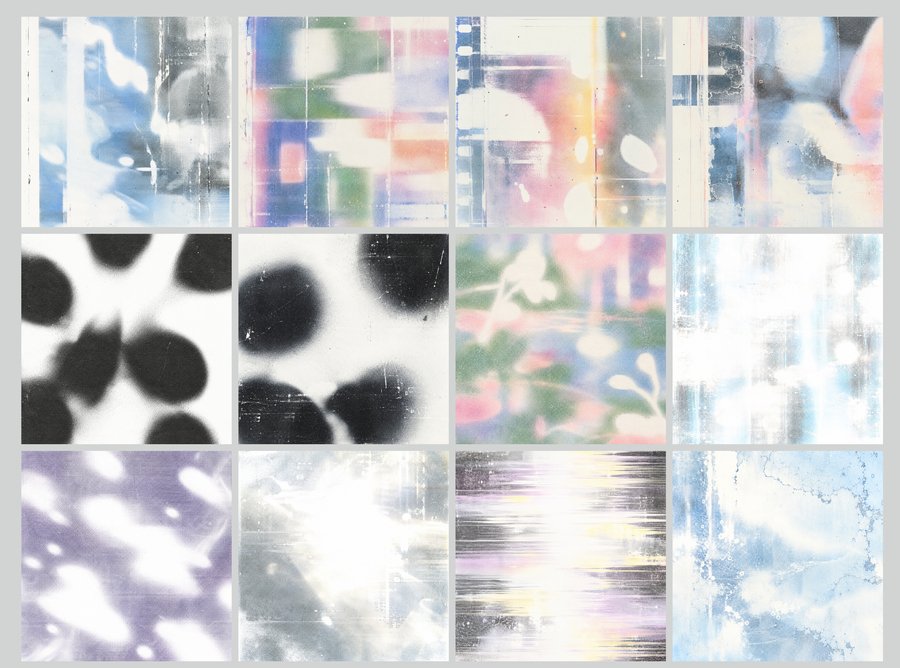
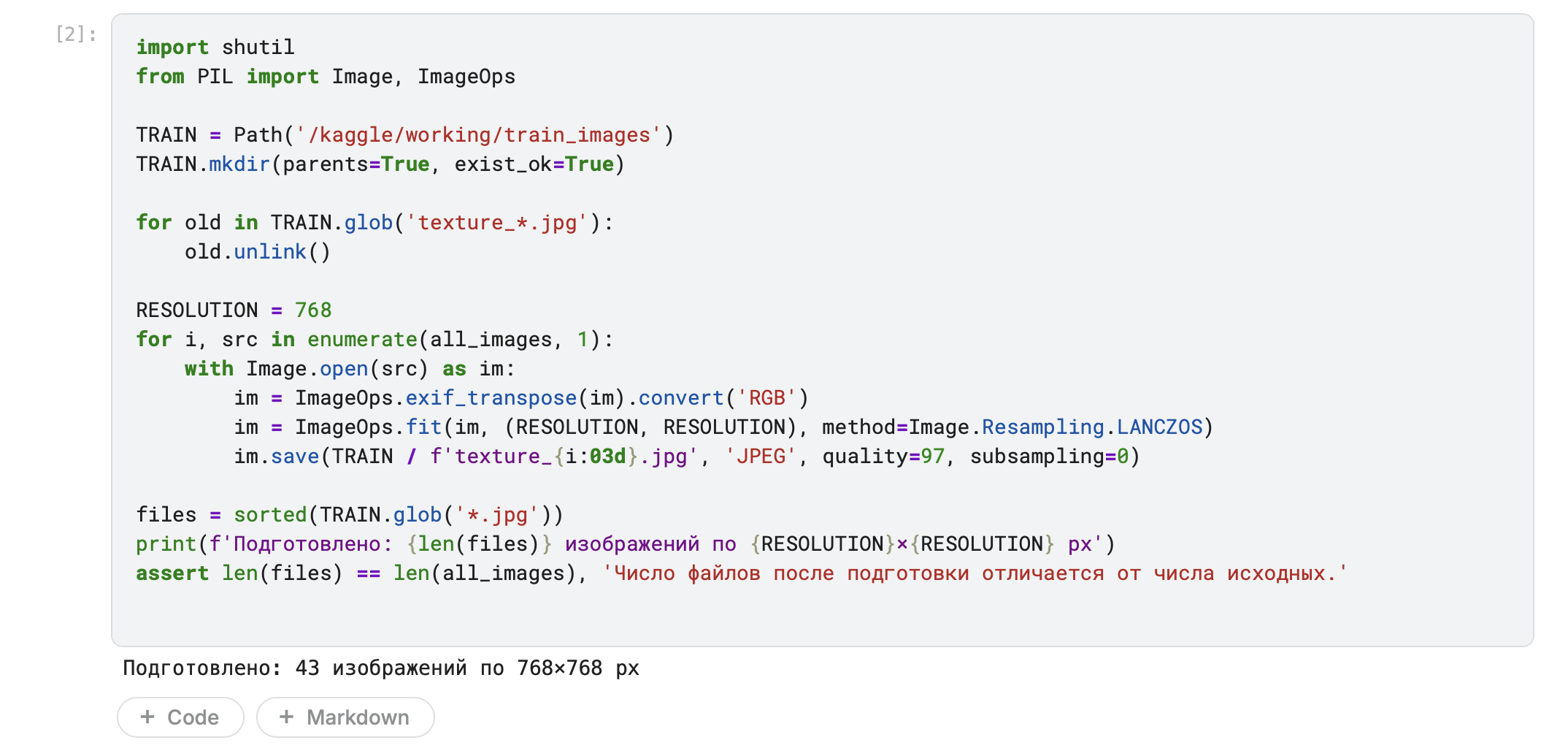
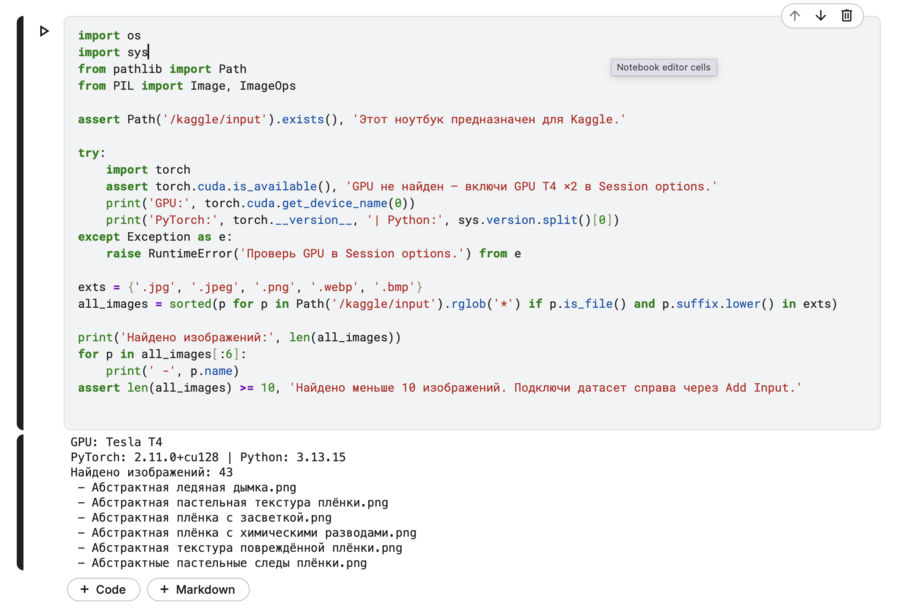
A dataset of 43 square images was compiled to train the model. The materials share common visual characteristics: limited contrast, diffused lighting, uneven grain, abstract spots, and distortions in color and image structure.
The dataset includes several types of effects, ranging from monochromatic blurred silhouettes to light-colored textures reminiscent of overexposed film and damaged photographic prints.
03 / Model Training
Stable Diffusion XL 1.0 was selected as the base model. To adapt it, the DreamBooth LoRA method was used, which allows training additional model parameters on a custom dataset without retraining the entire neural network.
The training was conducted in the Kaggle environment using an NVIDIA Tesla T4 GPU. The code specified the path to the source model, the location of the training images, the resolution, the number of training steps, and the text identifier for the new visual style.
The learned characteristics were invoked using a specific token, «zyvra,» which was included in the image text descriptions.
The training process involved 350 steps. At each step, the neural network processed images from the dataset, compared the results of its work against the training material, and updated the LoRA parameters.
Mixed precision FP16, the 8-bit Adam optimizer, and gradient checkpointing were utilized to reduce VRAM load.
Upon completion of training, the resulting parameters were saved in the file pytorch_lora_weights.safetensors. This file contains the trained LoRA, which can be integrated with a base model to generate new images.
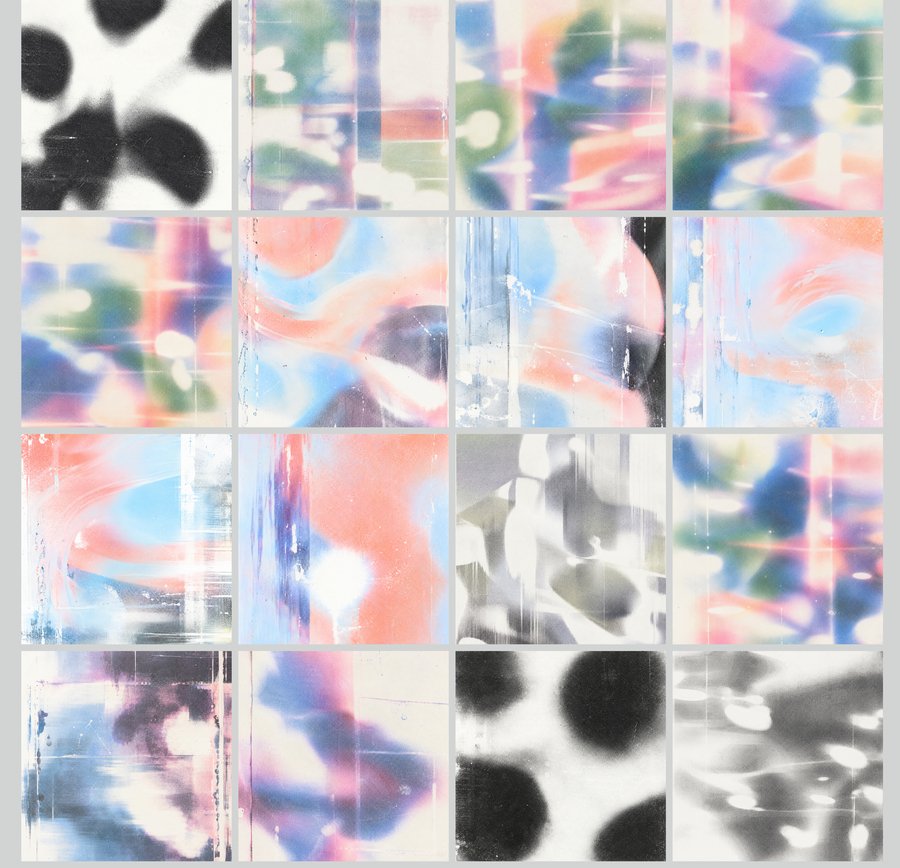
After training, the saved LoRA was connected to Stable Diffusion XL. Text prompts containing the «zyvra» token were used for generation, describing various characteristics of analog graphic effects. The prompts varied in color palette, shape of light spots, grain density, degree of blur, and distortion character. However, a unified prompt base, consistent with the visual language of the training dataset, was maintained. Generation was performed using 30 inference steps for each image. In total, 12 square images measuring 1024×1024 pixels were obtained.