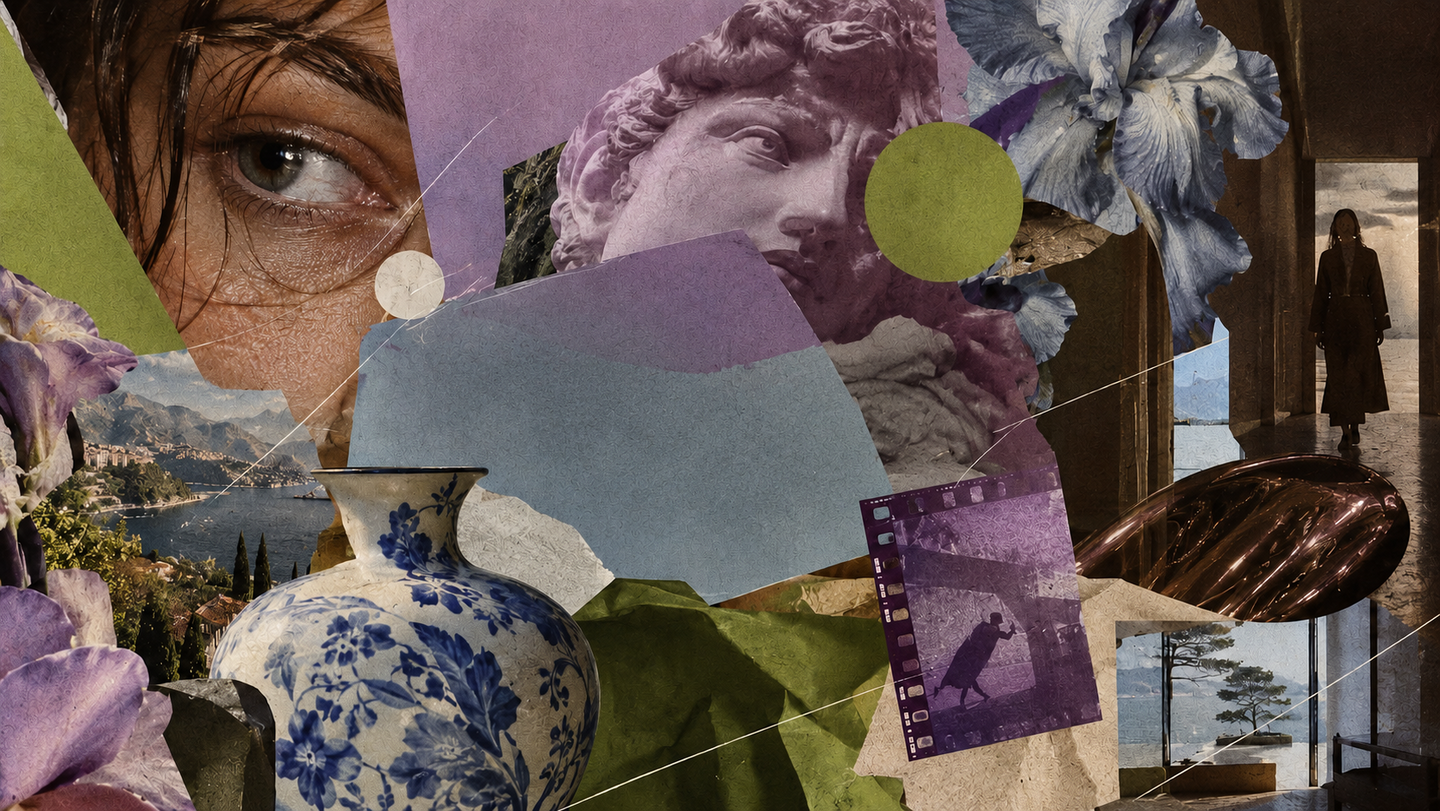
AFTER IMAGE — a media platform about visual impressions that linger in memory.
01. Media Goal
AFTER IMAGE explores visual memory and addresses the question—why a particular interior from a film, a color, an object, an architectural element, or an image from an advertisement lingers in the mind and becomes part of visual culture.
Media doesn’t just display beautiful images; it dissects the mechanism of their impact.
— color
— composition
— form
— material
— context
— cultural associations
GOAL — to teach the user to view their surrounding visual environment differently and to provide new sources of inspiration for creators.
02. Future Media Topics
SEGMENT — Visual Culture / Design / Art
NARROW TOPIC — Visual Memory and Mechanisms of the Memorable Image

Cinema (interiors, costumes, color palettes, iconic shots)
Design (objects, graphics, interiors, branding)
Architecture (buildings, symbols)
Fashion (images, silhouettes, colors)
Art (works and visual techniques)
Material Examples:
Why can’t Barbie be forgotten?
Why do we remember the yellow cape from this film?
Why did three buildings become visual icons?
Each issue is structured according to one schema:
— 01 image (visual)
— 02 reaction (feelings, why we pay attention)
— 03 breakdown (what makes up the effect)
— 04 context (where the image originated)
— 05 after image (what remains in memory)
03. Competitor Analysis
DIRECT COMPETITORS
1. The Blueprint
Themes: Design, Fashion, Art, Architecture, Culture
Similarity: Visual culture + presentation
Difference: «Afterimage» doesn’t just describe a phenomenon; it focuses on the question, «Why is this image memorable?»
Elements to borrow: The combination of visuals with cultural context
2. Living Rules
Themes: design, culture, film, art, visual phenomena
Similarity: cultural media
Difference: after image has a much narrower focus—the visual image and its impact
Can borrow: strong art direction, metaphorical visuals
3. Daily Poster
Topics: cinema, culture, design, fashion
Similarity: engaging with current visual culture
Difference: After Image is less about news and more about analyzing phenomena
To borrow: the breadth of the cultural field, the «deep dive» format
Conclusion: Cultural media are already actively integrating fashion, photography, cinema, and design, yet they still treat them as separate subjects.
INDIRECT COMPETITORS
1. Pinterest
Theme: A person seeking visual inspiration
Can borrow: Visual navigation
2. Design mate
Topic: Design, Graphics, Art
Material inspiration: Expert analyses
3. It’s great that the theme—creative media encompassing design, illustration, photography, and advertising—can draw inspiration from: showcasing the process and techniques, and discussing how the final image is created.
conclusion: people may come for the image, but stay for the story or the research
POTENTIAL COMPETITORS
1. Creative media — threat: possess recognizability and their visual language; ability to create a narrative can be borrowed.
2. New Digital Media and Personal Projects
Threat: High competition for user attention
Potential Takeaway: The ability to create unique visuals
Conclusion: The threshold for creating visual content is constantly lowering, leading to an increasing number of original projects with strong aesthetics. It is crucial to establish a unique visual language and integrate that aesthetic with an educational format, incorporating AI generations.
04. Distribution Channel