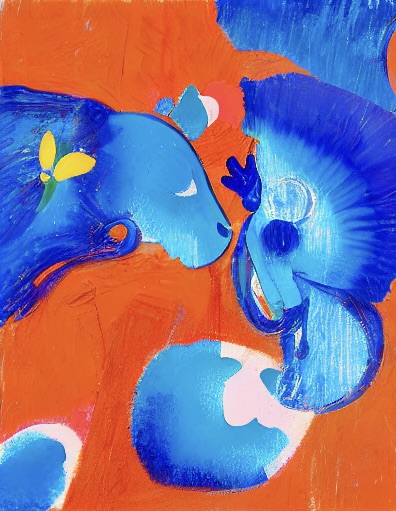
Concept
I have always been drawn to people who see the world through their own lens—those capable of doing things that are unclear to the majority. For me, abstraction in art is precisely about that. Therefore, I am especially interested in how a neural network will handle this direction—because here, essentially, you don’t need to reproduce silhouettes or specific forms.
Body of Work for Learning
I selected pieces that shared a similar mood and resonated with me personally—it was important that the dataset could truly teach the neural network what I intended. All images have been resized to 512×512 pixels.
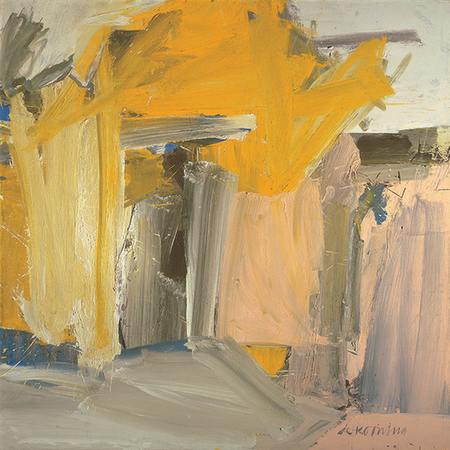
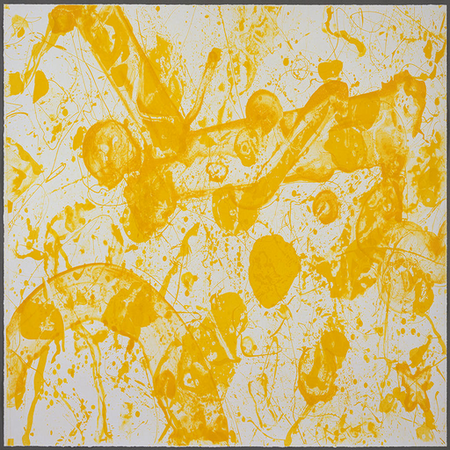
Images for neural network training
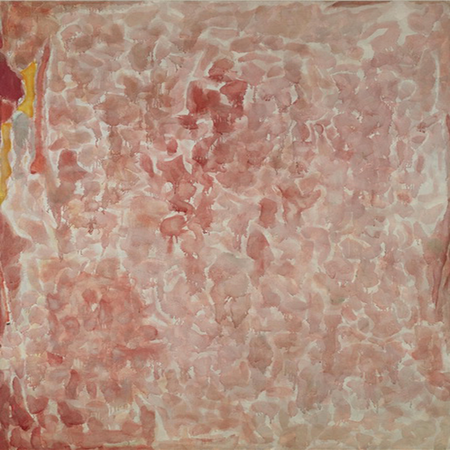
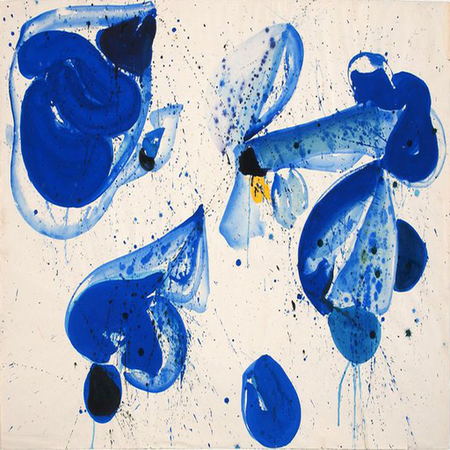
Images for training a neural network
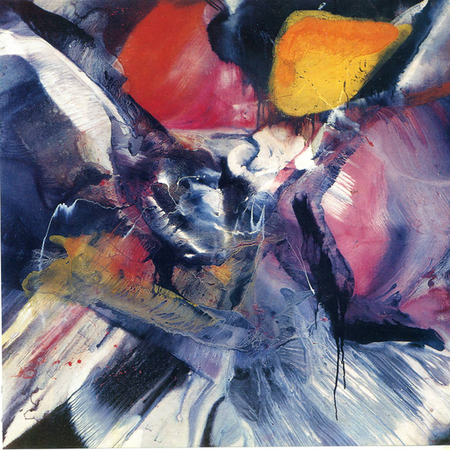
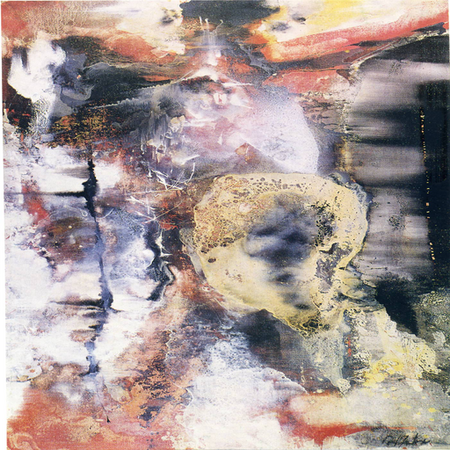
Images for training neural networks
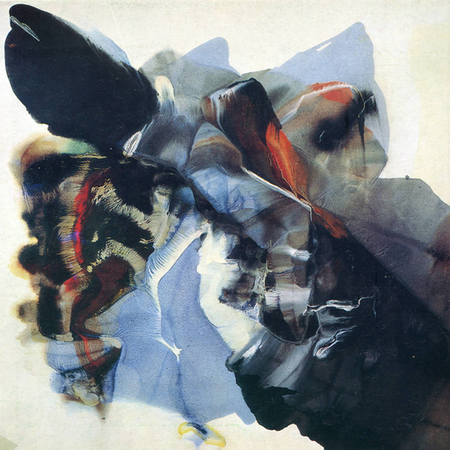
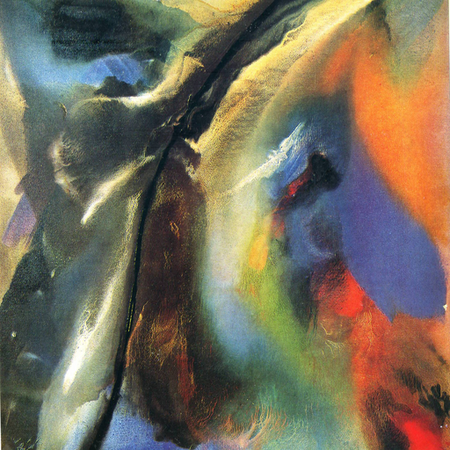
Images for neural network training
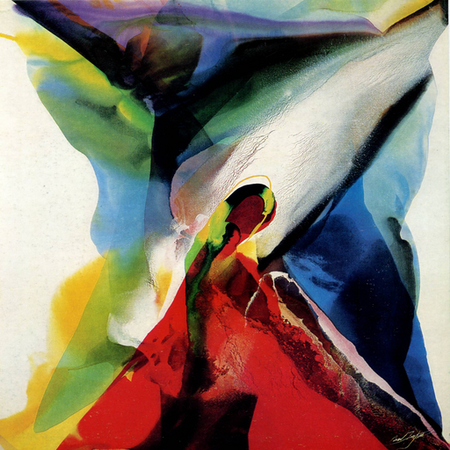
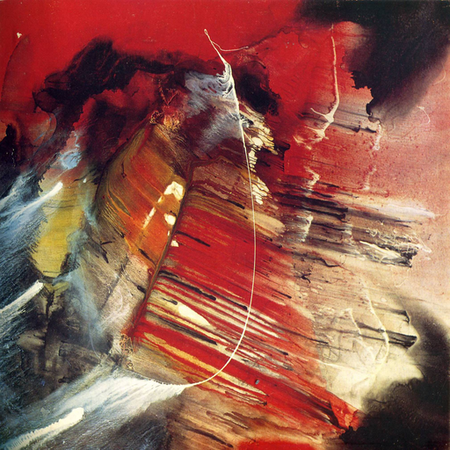
Images for neural network training
Final Generations
The prompts were deliberately bizarre—"sad pink flower in the bright sky,» «orange monkey with blue flower,» etc. The goal was to test how the model interprets imagery that is literally impossible to render. In every case, it moved away from literal specificity toward color and mood—exactly where it should have gone.
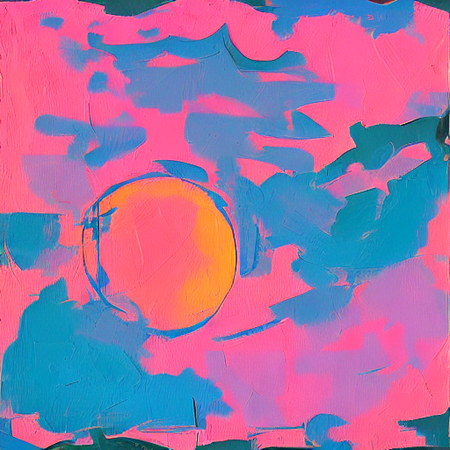
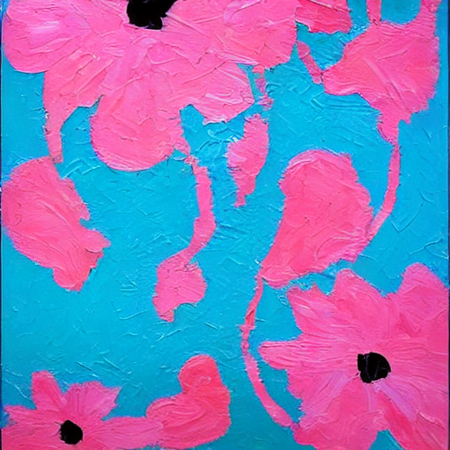
Generation Results Prompt: «rising of the blue sun on the moon with a pink sky, ” „sad pink flower in the bright sky.“
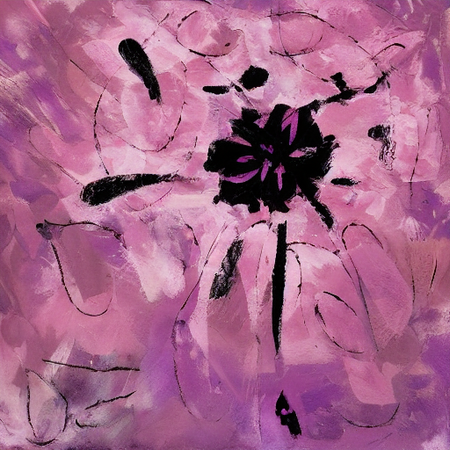
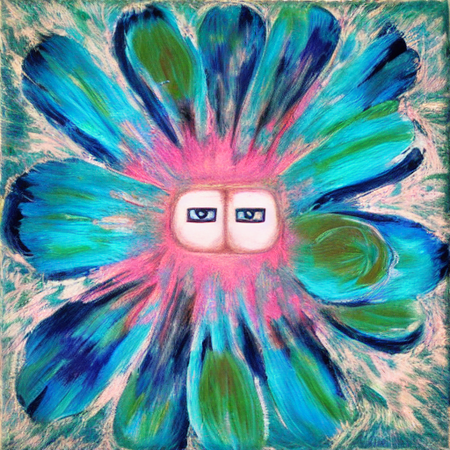
Generation Results Prompt: «sad pink flower», «orange monkey with blue flower».
Despite the uniformity of the color palette, the images noticeably differ in composition and degree of abstraction. Some lean toward organic, almost botanical forms; others favor more chaotic color fields.
The work generated from the prompt «monkey with a flower» is particularly telling: the model did not depict the animal’s figure, but rather dissolved it into floral forms—the monkey literally became the flower.
This is not an error, but a direct consequence of training on abstraction: the network learned to think in terms of essence rather than outline.
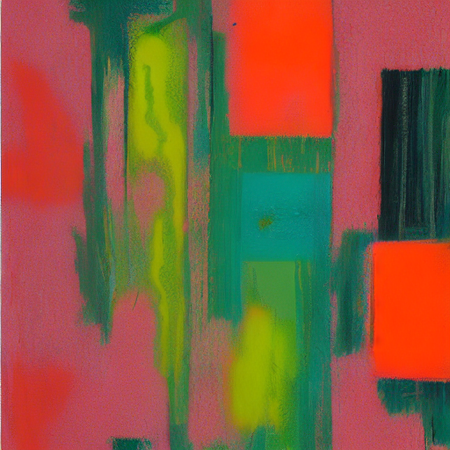
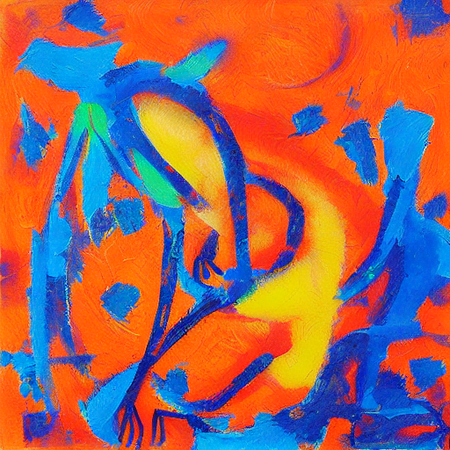
Generation Results Prompt: «abstract orange, pink, green», «orange monkey with blue flower».
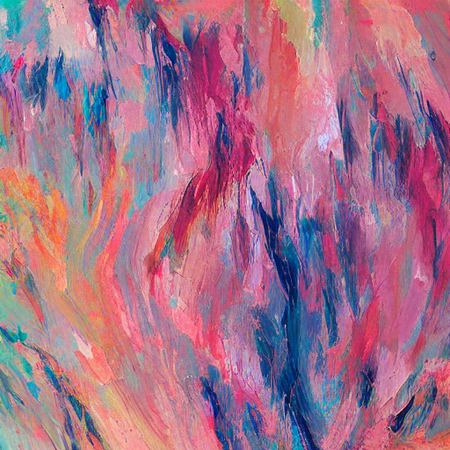
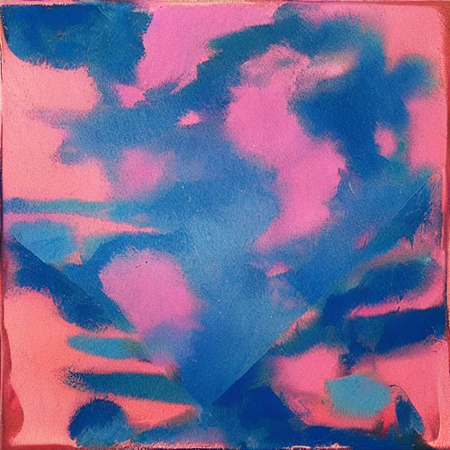
Generation Results Prompt: «pink eyes with blue flowers».
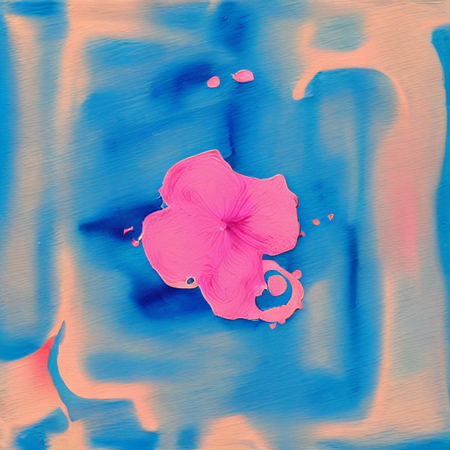
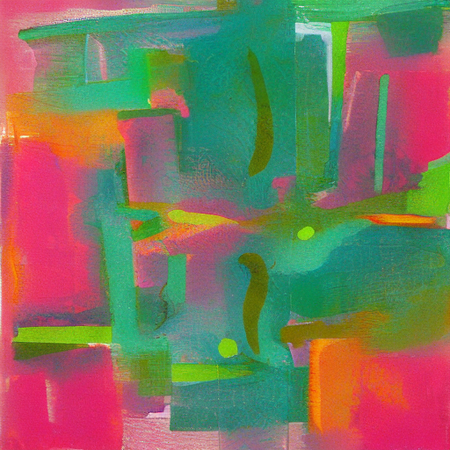
Generation Results Prompt: «sad pink flower, in blue water», «abstract orange, pink, green».
The model confidently absorbed the key characteristics of the dataset: soft, blurred form boundaries, a rich color palette emphasizing pink, orange, and cyan, and an overall lyrical, almost dreamlike mood. The images do not directly replicate the training samples, but they all recognizably belong to a single visual language.
The Learning Process
Stable Diffusion v1.5 was chosen as the tool, utilizing the LoRA fine-tuning method. LoRA does not retrain the model entirely—instead, it adds a small layer that captures the style. This process is faster and requires fewer resources.
Training took place in Google Colab on a Tesla T4 GPU using the train_text_to_image_lora.py script from Hugging Face. The dataset consisted of 36 images of abstract painting, manually compiled from the Kaggle platform (CC0 license). Training parameters: 8 epochs, a learning rate of 1e-4, and a batch size of 1. The entire process took approximately 5 hours.
Using GenAI.
When revising the project texts and comments, Claude (Anthropic) was utilized.
Image generation and model training were performed independently.
To explain specific parts of the code and make corrections to it, Claude (Anthropic) was also used.