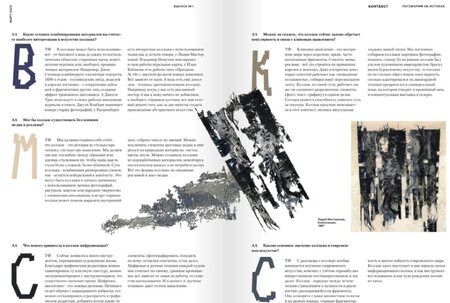
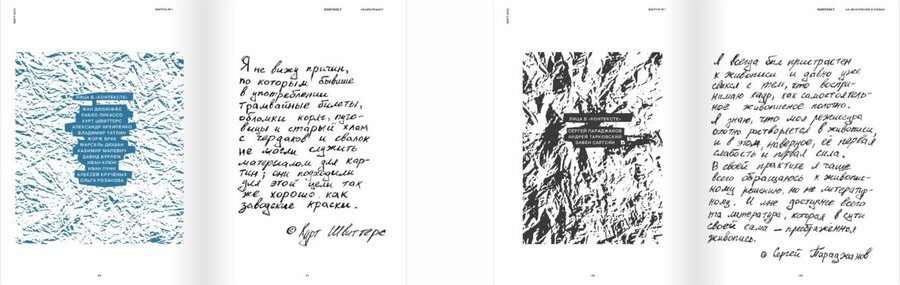
This is the text of an interview (with supplements for Longrid) by Tatiana Fadayeva for the student magazine «Context», a monthly magazine, each issue devoted to a particular technique or method of art creation. Anastasia Archipov asks questions. The project can be viewed at .
At what point did collage become popular among artists? What prompted the authors to take active advantage of this technology?
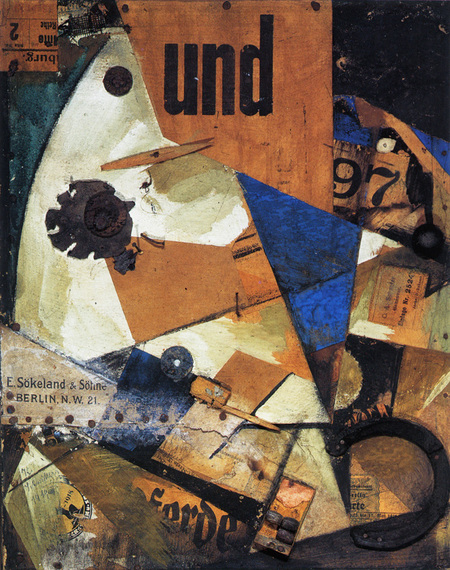
The collage arose in the early 1910s, in the work of artists Pablo Picasso and Georges Brac. This is his official date of birth as a form of artistic expression. Very soon Juan Gris, Kurt Schwitters and many other artists turn to this technique. Of course, the collage technology has appeared much earlier, and in ancient cultures the appliments of various materials have been used extensively. We know examples of Egyptian art, the work of Japanese calligraphers who wrote text on pieces of colour paper, but it all exists within the art of textiles, calligraphy, and so on. And it was only in the 20th century that the collage gained its modern content, meaning, within an artistic direction called «coubism». What? Curt Schwitters. Non-image (Das Undbild/The And-Picture). 1919.
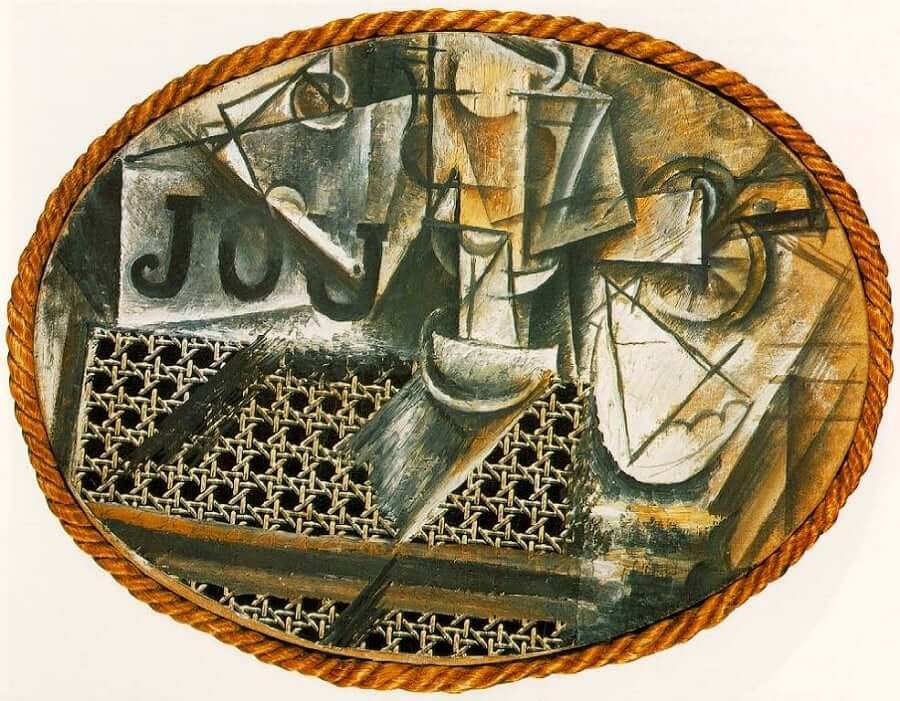
Pablo Picasso. Naturmort with a braid chair. 1912.
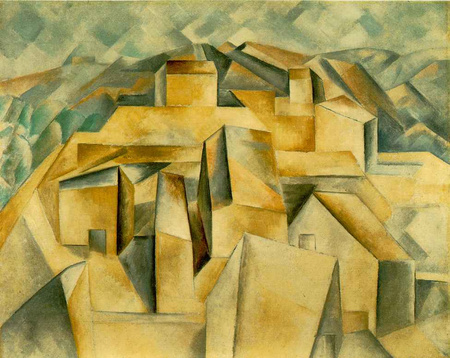
It is important to bear in mind here that Picasso and Marriage are beginning to create their collages in the third stage of cubism, which is also called synthetic. It was a natural continuation of cubism. Before that, artists had already taken the first stage, sezannov, simplified objects, reduced all shapes to a cone, a ball and a cylinder, and then, in the second stage, analytically, they began to place these objects into composite parts, creating complex puzzles. In the third phase, they began to combine the elements into completely new structures that are quite far from the original things. Pablo Picasso. Home on the slope. 1909. «The Cesannovian Period.»
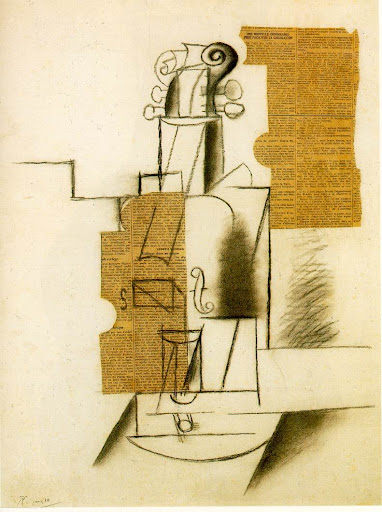
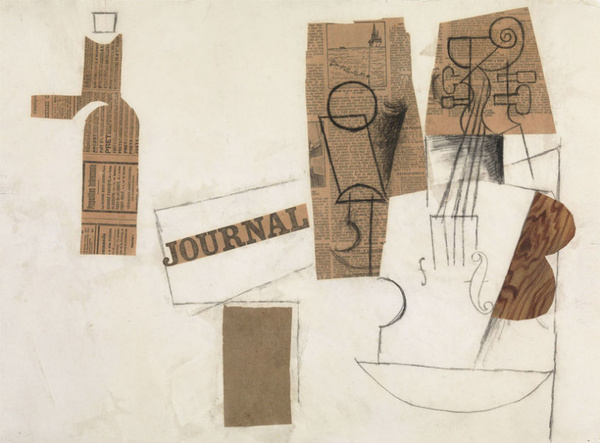
Pablo Picasso. The violin. 1912. ♪ Cyphon, a glass, a newspaper, and a violin ♪ 1912.
And in these structures, artists began to include pieces of reality — newspaper clippings, flyers, wallpaper elements, ropes. So we had a violin, let’s say, as a starting point. We brought it down to the simplest volume, turned it inside out, crushed it into pieces, and put a piece of the paper in it. Why? That’s the best part.
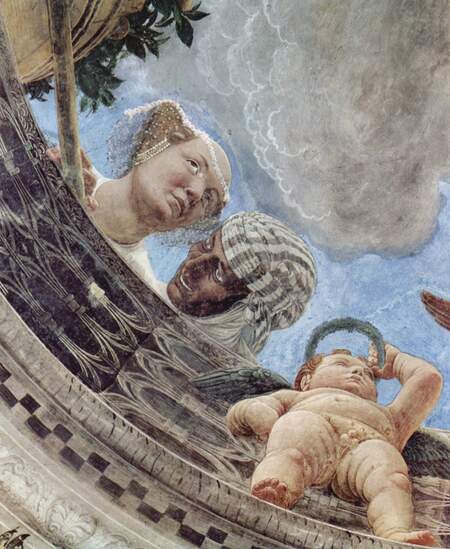
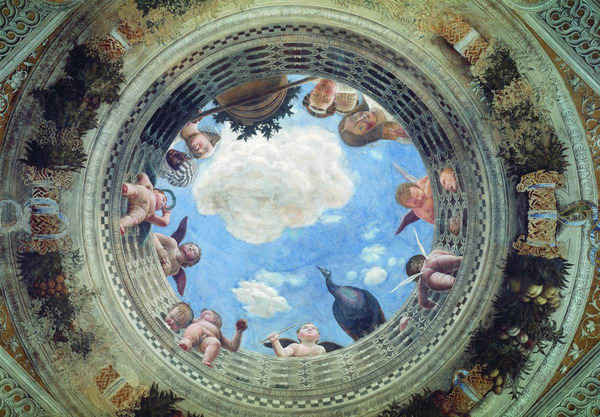
Andrea Mantenya… uh, uh, uh, uh, uh, uh, uh, uh, uh, uh, uh, uh, uh, uh, uh, uh, uh, uh, uh, uh, uh, uh, uh, uh, uh, uh, uh, uh, uh, uh, uh, uh, uh, uh, uh, uh, uh, uh, uh, uh, uh, uh, uh, uh, uh, uh, uh, uh, uh, uh, uh, uh, uh, uh, uh, uh, uh, uh, uh, uh, uh, uh, uh, uh, uh, uh, uh… Dela Spozy’s camera. Palaczo Dukale, Mantua. 1465-1474
Giulio Romano. The fall of the giants. 1532
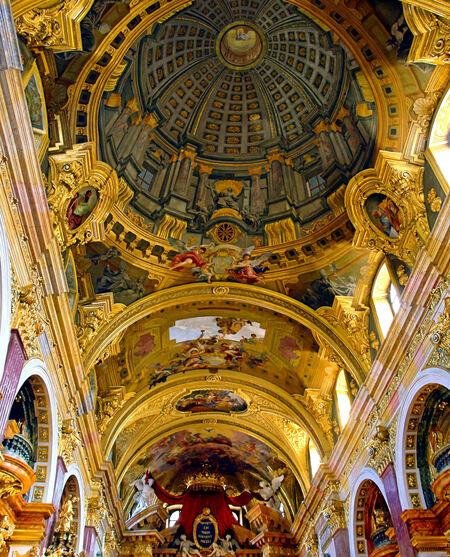
And artists used to like to play with this dychotomy real/painted — you can remember the plaque in Spozie Andrea Mantena’s cell, where the gallery with a breakthrough into the open sky — is an impressive illusional setup! An example of palazzo del Giulio Romano, a student of Rafael, is also very difficult to distinguish from the actual architecture. Other cases may be remembered (e.g., the famous Jesuit Plateau in Vienna, Andrea Pozzo), but there was one task for the artist: to demonstrate in this way his virtual ability to mimic reality: I will draw that you will not know! Platon of Andrea Pozzo at the Jesuit Church of Vienna. 1703
Georges Marriage. Tube, drink, playbone and newspaper. 1963
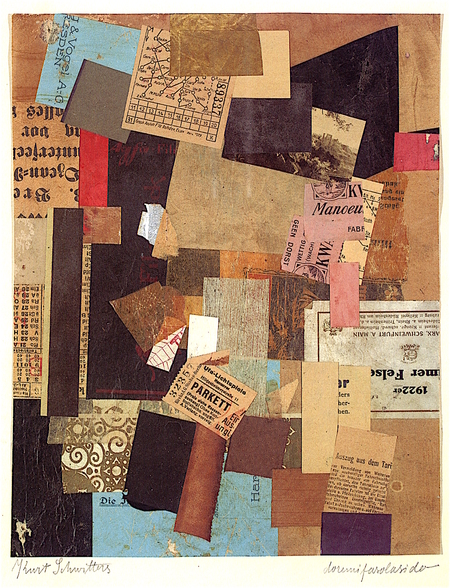
And cubes don’t show us the landscape, they focus on the materiality of canvas and paint, and they suggest going, let’s just say, not deep into the painting, but out into reality. You can put something on the canvas, you can put something on it. To organize this plane according to our view of beauty, using not only paint but also other materials, and here, of course, the sea of possibilities is opening: you can take paper, cardboard, fabric, skin. Besides, you can attach something more meaningful to the plane, and we’re gonna get a high profile, an assembly (that’s such a spatial collage). It is at this moment that the artist ceases to imitate reality, mimic it, and begins to work with it: he takes diverse materials and combines them. Curth Schwitters. Doremefasolasido. 1930
Andrei Xiaov. 21 in the «Purpose» series (machine, glue, mirror). 2009.
The next question is, what kind of materials do you actually take? And we have an answer, let’s say, from Vladimir Tatlin. This is the key figure of the Russian vanguard, the founder of designism. He first worked in the spirit of cubism, then from this practice he went logically to the creation of topography: he started using skin, wire, wood, other materials, turning his work into an environment, real space. This art no longer depicts an object, but it is, exists as an autonomous object that can inform us of the materials it is made of. This approach Tatlin called a «familiar work» that pre-empts designism when the form becomes subject to the ideas of rationality.
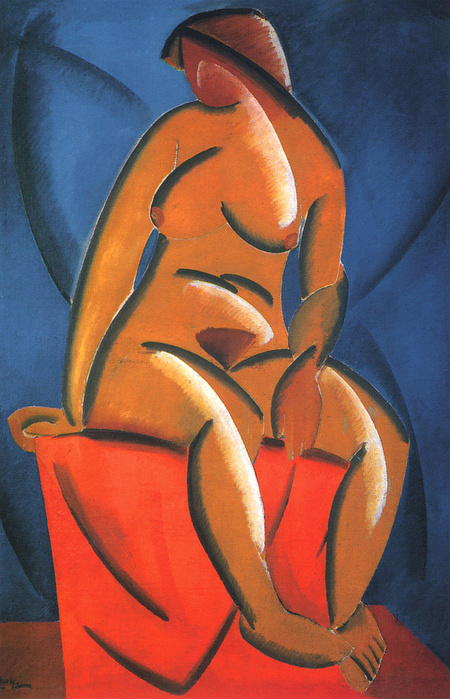
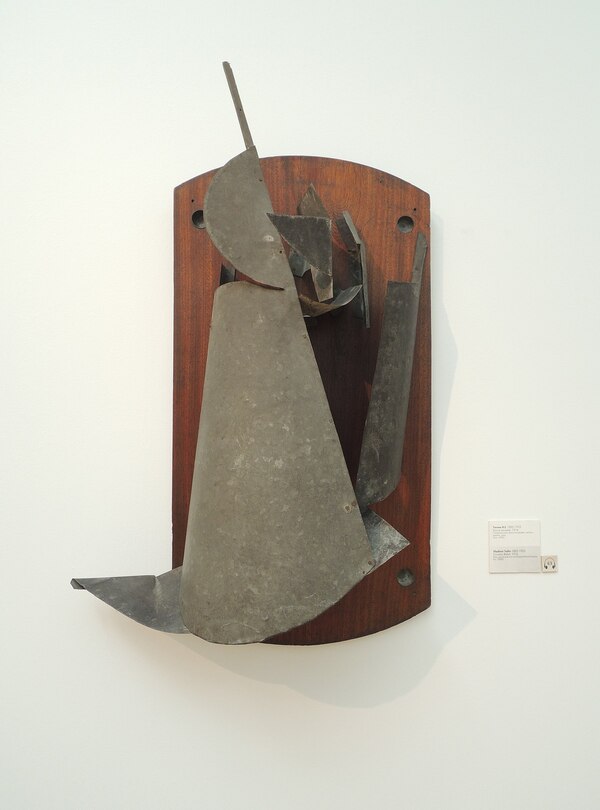
Vladimir Tatlin. A model. 1913. / Counter-rail. 1916.
Designers (Tatlin, Rodchenko) emphasized the invoice of materials — cold smooth iron, rough wood. Art ceases to be a «image» and becomes a physical object that can be touched. This changes perception: the viewer realizes that art is not an illusion, but a material artifact created directly from specific «sucks of life».
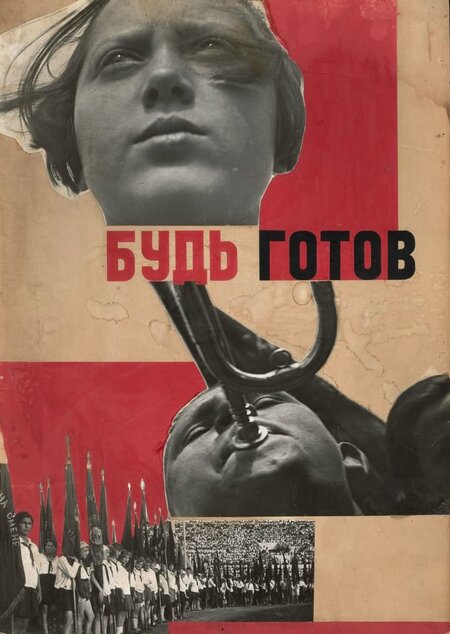
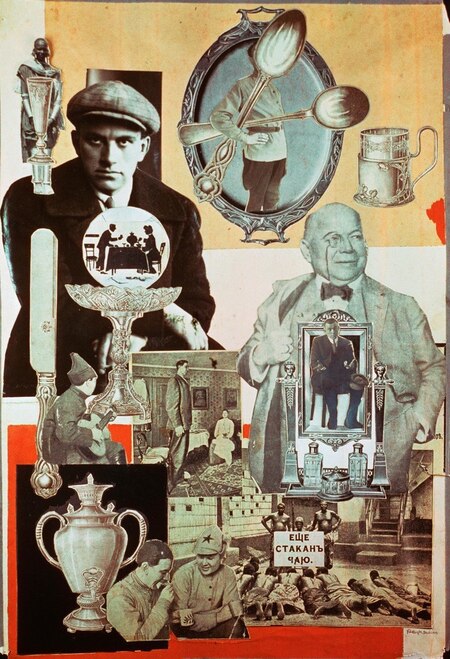
Varvara Stepanov and Alexander Rodchenko. «Be ready.» 1932. Alexander Rodchenko. An illustration of Vladimir Mayakovsky’s poem about this. 1923
However, as we have already found out, metal and skin do not provide us with any additional information other than themselves. For example, you can take material from a newspaper — photos, slogans, headlines, and collages, alluded to by political allusions.
That’s exactly what Berlin artists were doing, members of the Dada’s club. They called themselves photo mentors to highlight their solidarity with the working class.
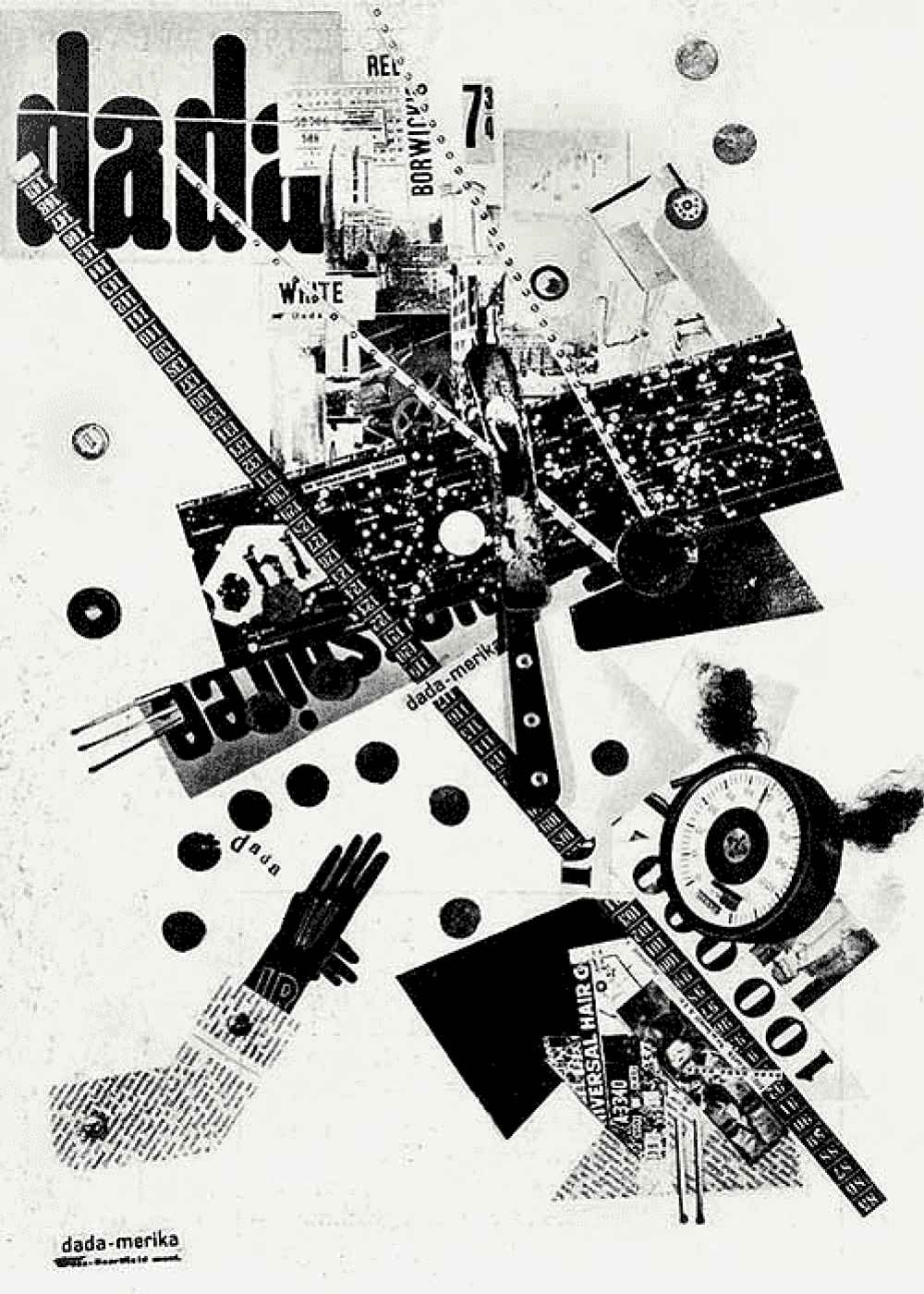
The principle of apropriation was important: the materials produced were taken, and their re-companation allowed the construction of absurd anti-narratives that destroyed the original Massage, including official German propaganda. Berlin in the late 1910s drilled: the rejection of the Kaiser, the November 1918 revolution with street fighting, the birth of the Weimar Republic. That’s where the Berlin dadists — Raul Housemann, Georg Gross, John Hartfield, Hanna Hyoh — went to the collage. As we can see, collage in different countries and contexts has proved to be a very useful form of expression. Gross-Hartfield. «Dada Merica» (college). 1919
What material did artists generally use? Were they trying to achieve an accidental effect, or was there a certain algorithm in their work at first?
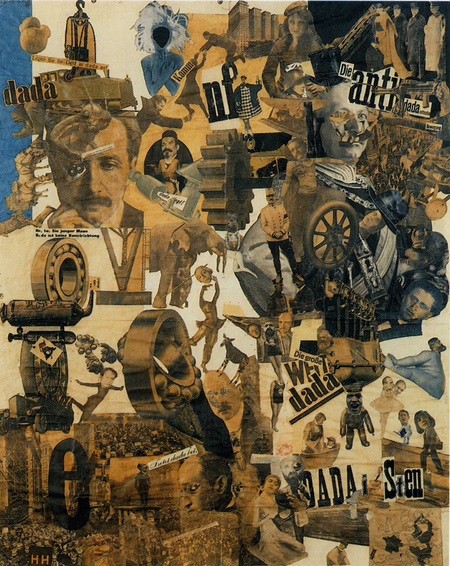
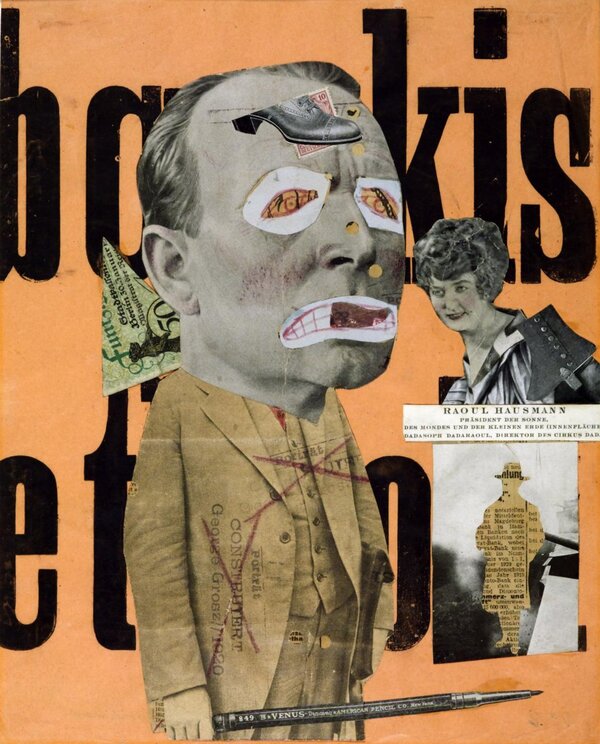
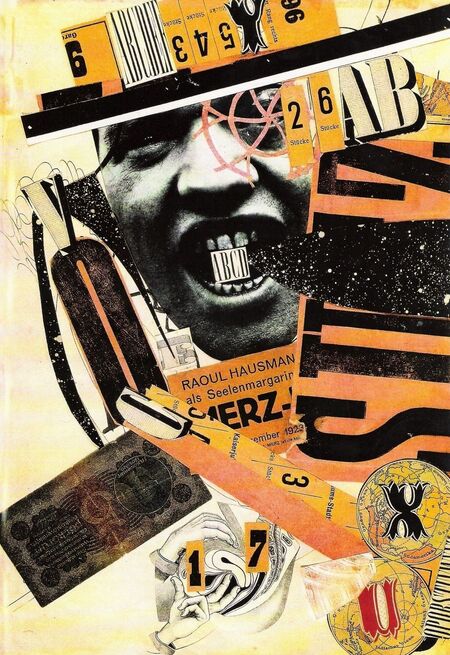
Raul Houseman. Art Critic. 1920 / ABCD. 1920
The Dadaists challenged the traditional rules of art. The rejection of rational design, predictability and aesthetic canons turned the collage process into an act of freedom. The accident here was not a reception, but a manifesto: the destruction of logic, the irony of «thinking» creativity, and the challenge to the very idea of art. The surrealists will work on these topics later.
Did Chaos in collage excite (perhaps as a form of space chaos) or criticize (e.g., as a reference to social confusion) artists?
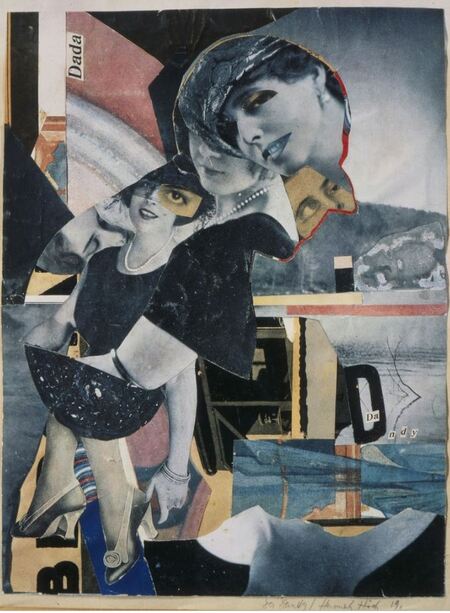
Hanna Hueh. Yeah, Dandy. 1919. Fragment.
Hanna Hueh. Weird beauty. 1929