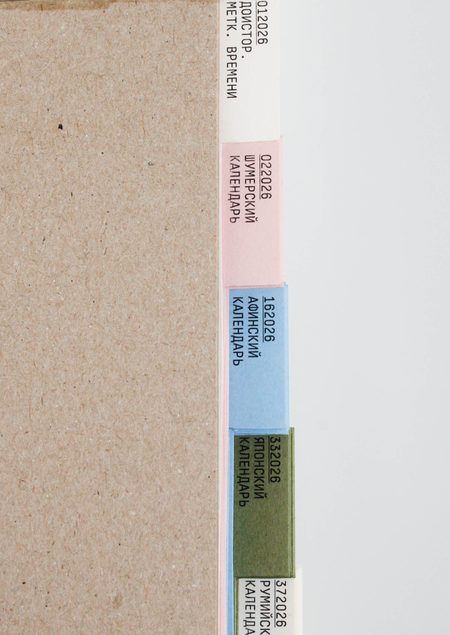
Many civilizations existed at the same time — we cannot perceive time linearly, because every conditional moment exists at one real moment. In the calendar, I’m trying to capture not movement, but the presence of all phases at one point.
All over the world, in different times, people took time differently. For some, it was cyclical — returning like the change of the seasons or the movement of the celestial bodies; for others, linear, directed towards some kind of conclusion or revelation. In some nations, time was not measured at all: it was experienced through events, rituals, myths.
The anticalendar is not a time-accounting tool, but an object that shows no account. In this case, the calendar loses the measurement function but acquires the memory function.
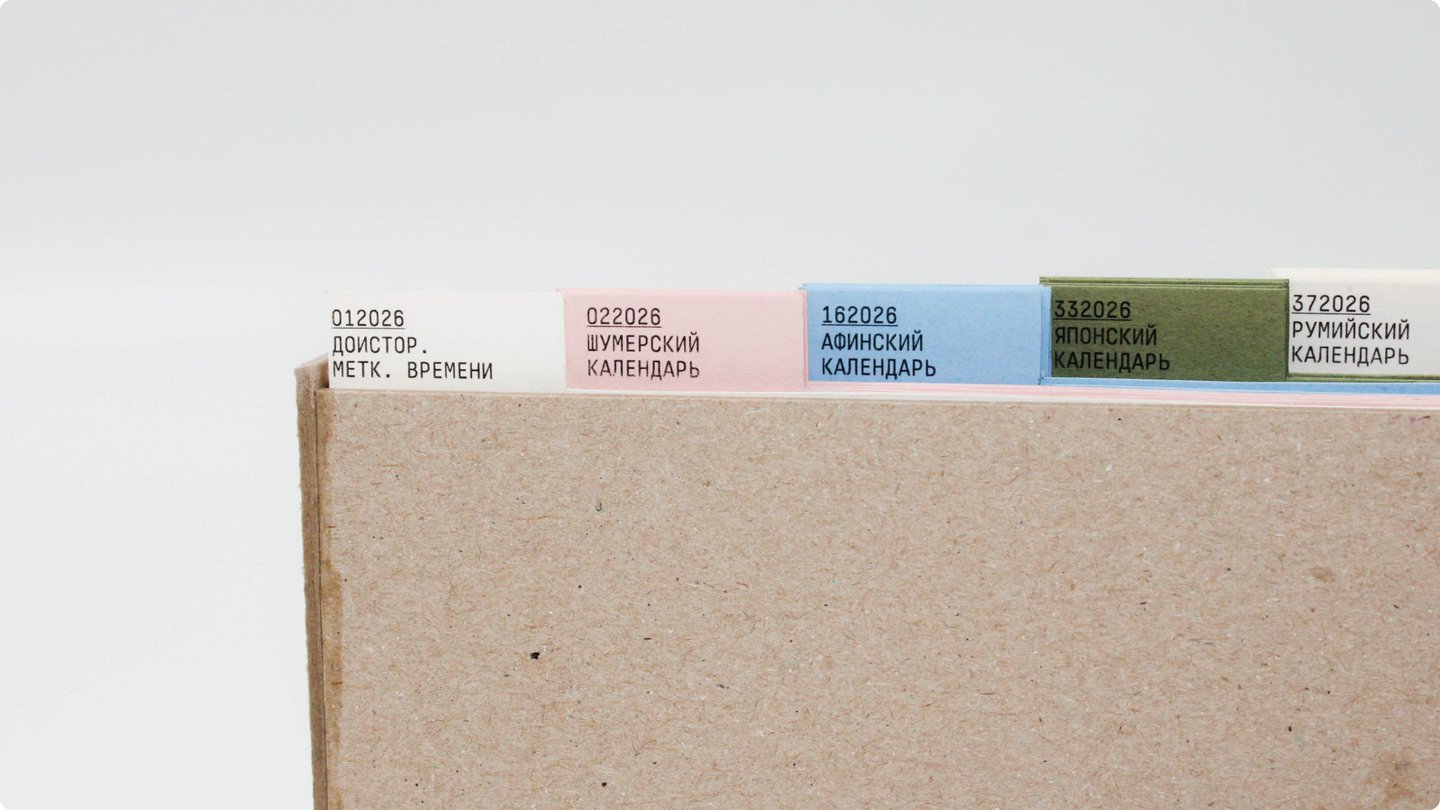
The project is a calendar in the form of a set of 52 archival cards, each of which corresponds to one week of the year and the moon phase per week. Each card is dedicated to a single calendar. The cards are placed in an «archive box».
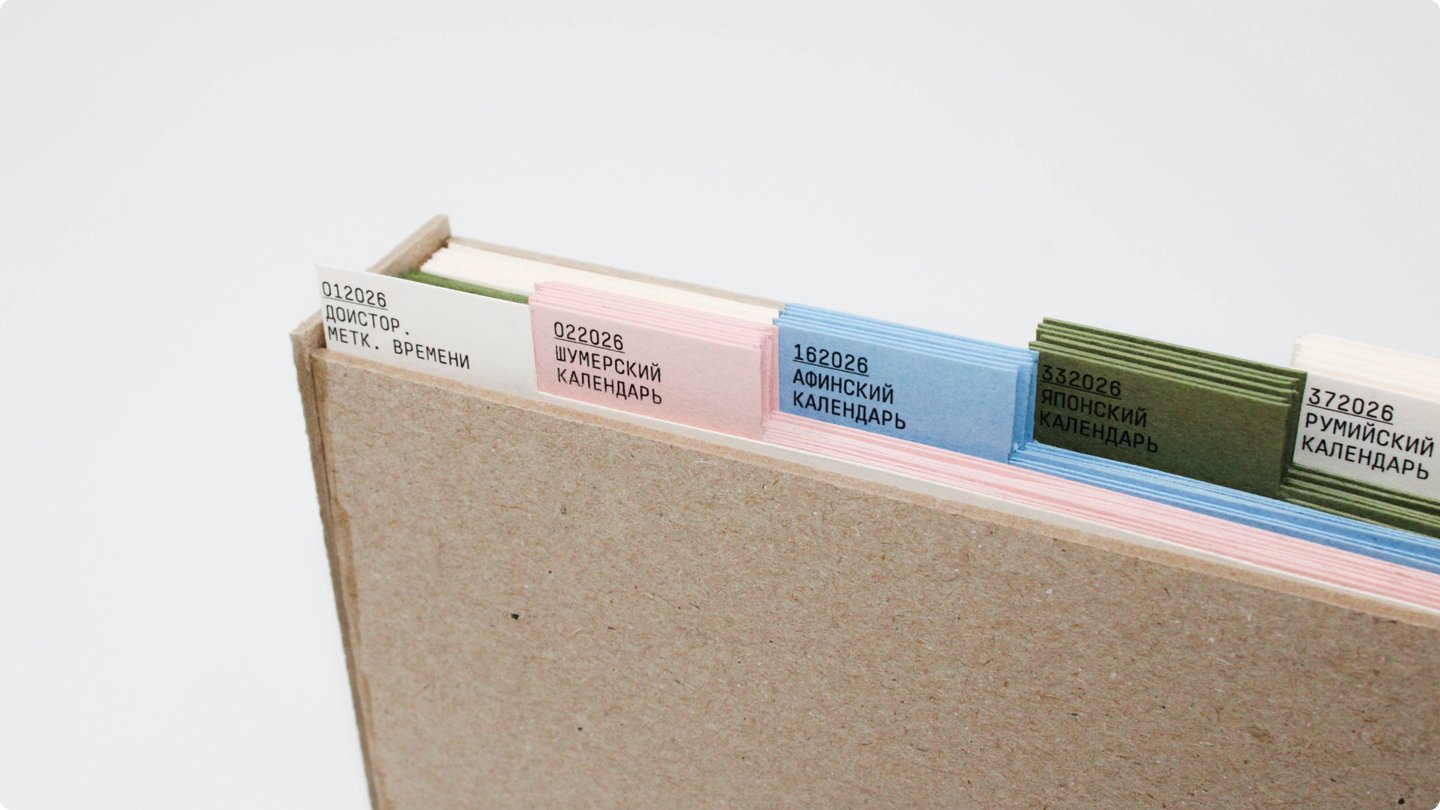
First section: Prehistoric period
Second section: Ancient civilizations
Section 3: Antiquity
Section 4: Middle Ages
Section 5: New Time
Thank you.